For years, my homemade chicken soup always seemed to be missing something. It was fine, but it lacked that depth of flavor, that unquantifiable “oomph” that elevates a simple soup to something truly special. The missing piece, as I discovered, was the science of flavor itself; specifically, searing the chicken and properly developing the fond.
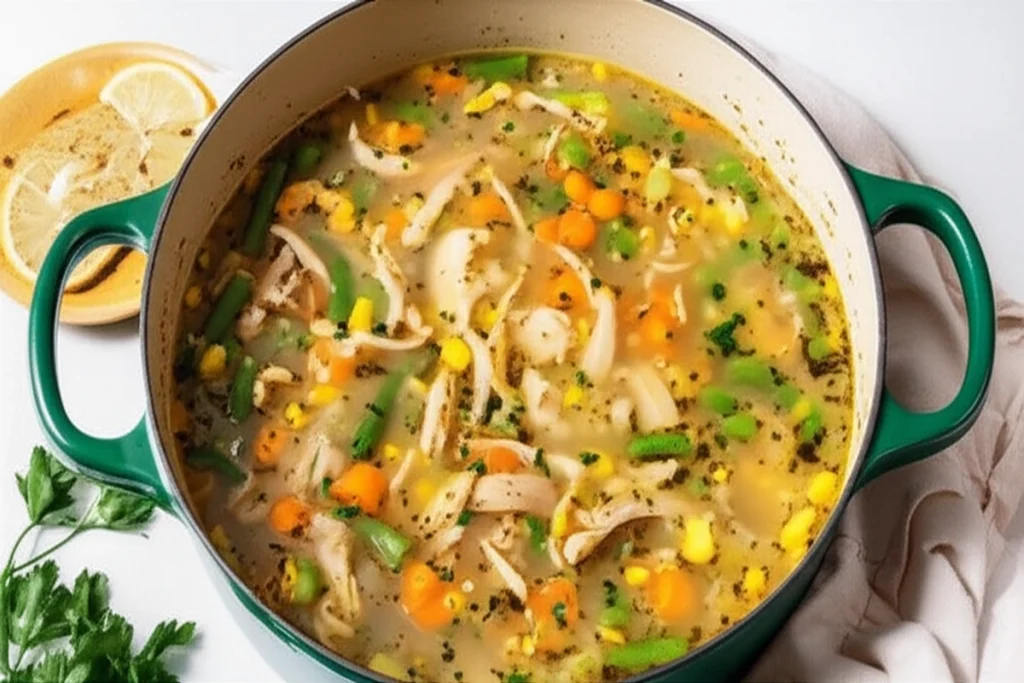
As an engineer, I tend to see recipes as systems, and this chicken and vegetable soup is a finely-tuned machine designed for maximum flavor output. It’s more than just throwing ingredients into a pot; it’s about understanding how each step contributes to the final result. With a Prep Time of 10 minutes and a Cook Time of 45 minutes (Total Time: 55 minutes), you’re less than an hour away from a comforting bowl of chicken and vegetable soup.
Table of Content
The Fond Factor: How Vegetable Shortening “Cleans” the Pot and Creates Unbeatable Flavor
Following the chicken sear, melting vegetable shortening may seem like an odd step, but it’s absolutely crucial. The goal here is to “clean” the bottom of the pot, releasing all those flavorful browned bits, also known as fond.
This fond is created by the Maillard reaction, a chemical reaction between amino acids and reducing sugars that occurs when the chicken is seared at high heat. These browned bits are intensely flavorful, and I consider them liquid gold in this recipe.
Melting the vegetable shortening allows me to scrape up every last bit of that goodness, incorporating it back into the soup base. This simple act layers in richness and complexity, resulting in a chicken and vegetable soup with a depth of flavor you simply can’t achieve otherwise.
The Chicken Conundrum: Searing vs. Simmering for Optimal Texture and Taste
That deeply colored fond comes from searing the chicken. Searing isn’t just about browning; it’s about building flavor through the Maillard reaction. This process creates hundreds of complex flavor compounds that simmering alone simply cannot replicate. That’s why I always opt to sear first.
While searing is my preferred method for developing the richest flavor, it’s not the only way to prepare chicken for soup. I understand that sometimes convenience wins. Raw chicken can certainly be added directly to the broth, but there are a few things I’ve learned to keep in mind.
If you choose to add raw chicken, bring the broth to a boil for at least 5 minutes to ensure any harmful bacteria are eliminated. Boiling the chicken will result in a more tender texture, but at the cost of that intense, seared flavor. Ultimately, searing delivers a depth and complexity that simmering simply cannot match.
Broth Basics: How to Elevate Store-Bought Broth Like a Chef
Even with the best searing and fond development, the broth itself is the foundation upon which this chicken and vegetable soup is built. I’ve found that starting with a high-quality store-bought broth and then layering in additional flavors yields consistently excellent results.
Aromatics, herbs, and seasonings can transform a basic broth into a complex flavor base. Remember, building flavor is about layering; each addition should complement the others. Even a simple splash of Worcestershire sauce can add a savory depth that elevates the entire soup.
I strongly recommend using low-sodium broth. Controlling the salt level is critical. This allows you to season the soup to your preference and prevents it from becoming overly salty as it simmers and reduces.
Ingredients
- 1-2 tablespoons olive oil
- 1 ¼ lbs. chicken (see notes)
- Salt/Pepper
- 2 tablespoons vegetable shortening
- 1 small yellow onion (diced)
- ¾ cup carrots (diced)
- 2 ribs celery (diced)
- 3 cloves garlic (minced)
- 1 teaspoon hot sauce
- 1 teaspoon Worcestershire sauce
- 7 cups chicken broth
- 1 ½ cups frozen mixed vegetables ((corn/green beans))
- 1 teaspoon dried parsley
- ½ teaspoon EACH: Dried basil, oregano, mustard powder
- ¼ teaspoon pepper
I tested this recipe with both regular and low-sodium chicken broth. While regular broth works in a pinch, the low-sodium version allows you to control the saltiness and prevents the soup from becoming overly salty as it simmers down.
Instructions
- Pat chicken dry and season with salt/pepper. Heat olive oil in a 4.5-quart soup pot over medium high heat. Add the chicken and sear on each side for about 3 minutes, until a golden crust develops. (It’s okay if the middle isn’t cooked, it will simmer and finish cooking in the soup later.)
Searing the chicken before it simmers is non-negotiable, in my opinion. This is where we build that foundational layer of rich, complex flavor. Searing initiates the Maillard reaction, which creates hundreds of flavor compounds that you simply can’t achieve by simmering alone. - Remove the chicken and set aside. Let it rest for 10 minutes, then dice or shred.
- Melt vegetable shortening in the same pot over medium heat. Use a silicone spatula to “clean” the bottom and sides of the pot. This will work the brown “fond” into the broth, which adds a ton of flavor.
- Add the onions, carrots, and celery and soften for 5 minutes.
- Add the garlic, hot sauce, Worcestershire sauce, and seasonings. Stir to combine.
- Add the chicken broth. Bring to a boil, then reduce to a simmer. Add the chicken back to the soup along with any juice from the plate and simmer, uncovered, for 15 minutes.
- Add the frozen vegetables. Cover partially and simmer for 10-15 more minutes. Serve!
Frequently Asked Questions
What are the best vegetables to use in chicken and vegetable soup?
While the recipe calls for frozen mixed vegetables for convenience, I often adjust based on what I have on hand or what’s in season. Diced potatoes hold up well during simmering, and I’ve found that adding spinach or kale in the last few minutes of cooking adds a boost of nutrients and color. Ultimately, the best vegetables are the ones you enjoy most.
What are common mistakes to avoid when making chicken and vegetable soup?
One mistake I see often is skipping the searing process for the chicken. Searing is essential for developing that rich, complex flavor, as it kicks off the Maillard reaction. Another pitfall is over-salting the broth, which is why I strongly recommend using a low-sodium option.
Can I cook raw chicken directly in the soup?
Yes, you can add raw chicken directly to the soup, but it will impact the final flavor profile. When I’ve done this, I bring the broth to a boil for at least 5 minutes to ensure the chicken is cooked through and any harmful bacteria are eliminated. Keep in mind that skipping the sear means you’ll miss out on the deeply developed, browned flavors.
How do I properly store and reheat chicken and vegetable soup?
I’ve found that chicken and vegetable soup stores well in the refrigerator for up to 3 days in an airtight container. For longer storage, I recommend freezing it. When reheating, gently simmer on the stovetop until heated through. Microwaving is also an option, but I’ve noticed that it can sometimes alter the texture of the vegetables.
Practical Details: Yield, Storage, and Variations
This recipe for chicken and vegetable soup makes approximately 6-8 servings. It’s perfect for a family dinner or for meal prepping lunches throughout the week.
Leftovers should be refrigerated in an airtight container for up to 3 days. For longer storage, I recommend freezing the soup in individual portions. I’ve found that freezing it in smaller containers makes it easier to thaw only what you need, and prevents any degradation in quality.
One of the things I love most about this soup is its versatility. For a seasonal variation, especially in the fall, I often add diced butternut squash or sweet potatoes. I’ve found that these additions lend a touch of sweetness and heartiness that perfectly complements the savory broth.
Conclusion
This chicken and vegetable soup is a testament to the idea that even simple recipes can be elevated through an understanding of the science of flavor. By searing the chicken, prioritizing the fond, and approaching each step with intention, you can transform humble ingredients into a deeply satisfying meal. This engineered approach to soup-making ensures a consistently delicious result every time.
Now, I want to hear from you! What’s your favorite vegetable to add to chicken and vegetable soup? Do you have any secret ingredients that you swear by to elevate the flavor? Share your thoughts and variations in the comments below. I always love learning new ways to tweak and improve my recipes. Your insights might just be the missing piece I’ve been looking for.

Chicken Vegetable Soup
Equipment
- 4.5-quart soup pot
- silicone spatula
Ingredients
Ingredients
- 1-2 tablespoons olive oil
- 1 ¼ lbs. chicken see notes
- Salt/Pepper
- 2 tablespoons vegetable shortening
- 1 small yellow onion diced
- ¾ cup carrots diced
- 2 ribs celery diced
- 3 cloves garlic minced
- 1 teaspoon hot sauce
- 1 teaspoon Worcestershire sauce
- 7 cups chicken broth
- 1 ½ cups frozen mixed vegetables (corn/green beans)
- 1 teaspoon dried parsley
- ½ teaspoon Dried basil
- ½ teaspoon oregano
- ½ teaspoon mustard powder
- ¼ teaspoon pepper
Instructions
Instructions
- Pat chicken dry and season with salt/pepper. Heat olive oil in a 4.5-quart soup pot over medium high heat. Add the chicken and sear on each side for about 3 minutes, until a golden crust develops. (It’s okay if the middle isn’t cooked, it will simmer and finish cooking in the soup later.)
- Remove the chicken and set aside. Let it rest for 10 minutes, then dice or shred.
- Melt vegetable shortening in the same pot over medium heat. Use a silicone spatula to “clean” the bottom and sides of the pot. This will work the brown “fond” into the broth, which adds a ton of flavor.
- Add the onions, carrots, and celery and soften for 5 minutes.
- Add the garlic, hot sauce, Worcestershire sauce, and seasonings. Stir to combine.
- Add the chicken broth. Bring to a boil, then reduce to a simmer. Add the chicken back to the soup along with any juice from the plate and simmer, uncovered, for 15 minutes.
- Add the frozen vegetables. Cover partially and simmer for 10-15 more minutes. Serve!