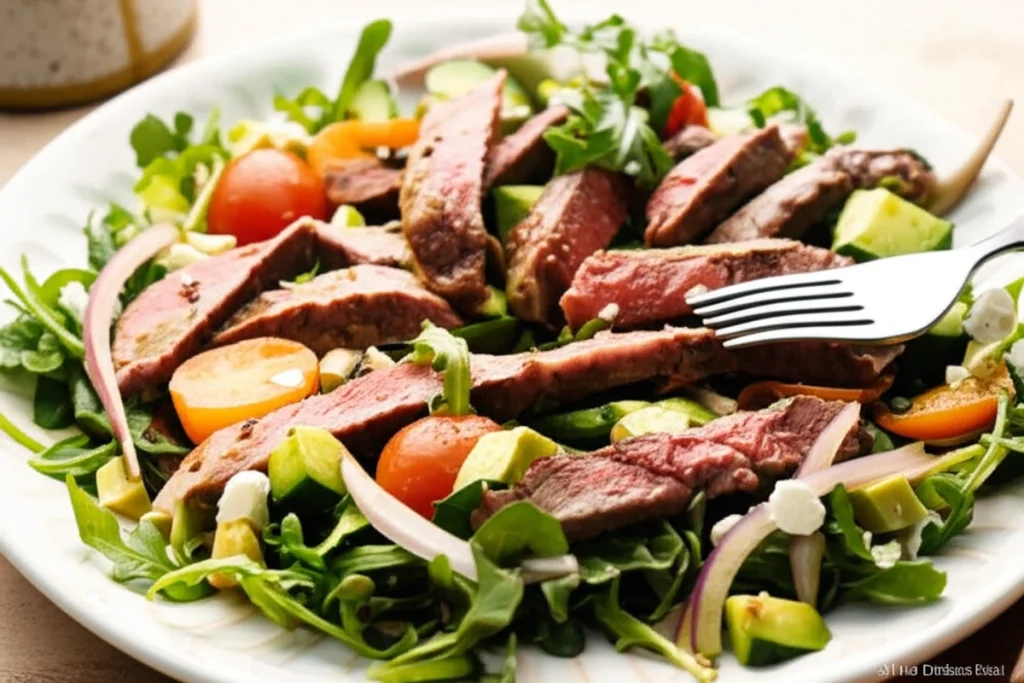
The quest for the perfect sear consumed me for a while. Countless steaks went into the testing phase, some charred beyond recognition, others pale and lifeless. However, through careful experimentation with pan temperatures, oil types, and timing, I discovered the secrets to achieving that beautiful, flavorful crust. It is this hard-won knowledge that elevates a simple steak salad to something truly extraordinary.
This steak salad recipe, a testament to my systematic approach, transforms readily available ingredients into a restaurant-quality meal in just 20 minutes. With a prep time of 15 minutes and a cook time of only 5, this seared steak salad is perfect for a quick yet impressive lunch or dinner. Consider this your foolproof guide to crafting the best steak salad you’ve ever tasted, the product of my relentless pursuit of culinary perfection.
Table of Content
The Engineering of a Great Steak Salad: Why Simplicity Matters
The beauty of this steak salad lies not in a laundry list of exotic ingredients, but in the strategic selection of a few key players, each chosen for a specific role in the overall composition. Every element is there for a reason; this is where the engineering mindset comes into play.
The peppery bite of the arugula, for example, provides a counterpoint to the richness of the steak. That subtle bitterness cuts through the fat, awakening the palate and preparing it for the next flavor dimension.
The sweetness of the cherry tomatoes and the cool, crisp cucumber add textural contrast and freshness. Each ingredient contributes to a symphony of sensations that elevate this simple steak salad far beyond the ordinary. The avocado offers a creamy richness, while the red onion gives a sharp, pungent bite. I chose blue cheese as an optional ingredient as it offers a salty tang that enhances the flavor profile even further.
The dressing I chose is a delicate balance between the acidity of balsamic vinegar and the pungent warmth of mustard. This combination is designed to complement the steak without overpowering the other ingredients in the salad.
Ingredients
- 10 ounce grilling steak (boneless prime rib)
- ½ teaspoon salt
- ½ teaspoon pepper
- 2 teaspoons avocado oil
- 4 ounces arugula
- 1 cup cherry tomatoes (cut in half)
- ½ English cucumber (diced)
- ½ avocado (sliced)
- ¼ cup thinly sliced red onions
- ¼ cup crumbled blue cheese (optional)
- ½ tablespoon grainy mustard
- ½ tablespoon dijon mustard
- ½ tablespoon balsamic vinegar
- 2 tablespoons olive oil
- A pinch of salt and pepper
I found that using a thinner cut of steak, like flank steak, resulted in a tougher salad experience. That’s why I specifically call for a 10-ounce boneless ribeye: its marbling delivers the tenderness we’re looking for in a great steak salad.
Instructions
- Take the steak out of the fridge and season both sides evenly with the salt and pepper.
- Heat a cast-iron pan over medium-high heat. Drizzle the avocado oil over both sides of the steak. When the pan starts to smoke, add the steak and cook it undisturbed for 2 minutes. Flip the steak over and let it cook for an additional 2-3 minutes. Transfer the steak to a cutting board and let it rest while you prepare the salad.
That deep, rich crust on the steak? It’s all thanks to the Maillard reaction, a chemical process between amino acids and reducing sugars that requires a specific temperature range, typically between 280°F and 330°F. This is why I call for medium-high heat; it allows the surface of the steak to reach that optimal zone for browning without overcooking the inside. It is worth noting that every stove is different, so knowing your equipment is key to getting optimal results when cooking your steak.
- While the steak is resting, whisk the salad dressing ingredients in a small bowl. Thin the dressing with up to a tablespoon of water, as needed.
- Add the arugula, tomatoes, cucumber, avocado, red onion, and if using, the blue cheese to a salad bowl.
- Pour the dressing over top and toss to coat.
- Thinly slice the steak across the grain.
- Add the dressed salad to a serving platter and place the sliced steak on top. Alternatively, divide the salad between two plates with ½ of the steak over each.
- Last step:
Visual Cues for the Perfect Sear: Know When Your Steak Is Ready
Perfecting the sear on a steak is about more than just following a timer; it requires understanding the visual cues that indicate what’s happening inside the pan. Over time, I’ve developed a clear sense of when to flip, when to adjust the heat, and when to pull the steak for perfectly medium-rare results. Here’s what I look for:
| Visual Cue | Action |
|---|---|
| Pan starts to lightly smoke | Add seasoned steak |
| Steak easily releases from the pan (no sticking) and has a golden crust | Flip the steak to the other side |
| Internal temperature reaches 130°F (for medium-rare), measured with an instant-read thermometer | Remove the steak from the pan and let it rest |
Pro tip: Trust your senses more than the clock. Steak thickness, pan material, and stove output affect cooking time. By focusing on these visual cues, I can get consistent results no matter the variables. The steps above will help ensure that your seared steak is delicious atop your steak salad.
Frequently Asked Questions
What are the best ingredients to include in a steak salad?
In my experience, the best steak salads strike a balance between richness, freshness, and texture. I prefer a base of peppery arugula to stand up to the steak’s flavor. Consider adding juicy cherry tomatoes for sweetness, crisp cucumber for coolness, creamy avocado for richness, and thinly sliced red onion for a pungent bite. Blue cheese, though optional, adds a salty tang that I find really elevates the flavor profile, contrasting with the steak itself.
What kind of steak is best for steak salad?
After testing multiple cuts, I’ve found that a boneless ribeye is the ideal choice for steak salad. Its generous marbling ensures tenderness, even when cooked to medium-rare. I avoid leaner cuts like flank steak as they can become tough when sliced thinly. The fat content in the ribeye helps to keep the steak moist and flavorful, complementing the fresh vegetables in the salad.
What are some good dressing options for steak salad?
I consistently return to a vinaigrette-based dressing for my steak salads. The acidity cuts through the richness of the steak and complements the other ingredients. My go-to blend includes a combination of grainy and Dijon mustard for depth, balsamic vinegar for tang, and good quality olive oil for richness. If the dressing seems too thick, I’ll thin it out with a touch of water to ensure it evenly coats the salad greens.
What are good side dishes or accompaniments for steak salad?
While the steak salad is a complete meal in itself, I sometimes like to serve it with a light, complementary side. Grilled vegetables, such as asparagus or bell peppers, offer a smoky char that pairs well with the seared steak. Alternatively, a simple piece of crusty bread is excellent for soaking up any extra dressing from the salad. Both will nicely round out this flavorful offering.
Storage Instructions and Variations
To best enjoy any leftovers, I recommend storing the steak separately from the salad. I’ve found that keeping them separate prevents the salad from becoming soggy and the steak from losing its perfectly seared crust. The dressed salad will keep for about a day, while the steak is best consumed within two days when stored properly.
This recipe yields approximately 2 servings.
Spicy Steak Salad: A simple way to add a kick is to introduce a pinch of red pepper flakes to the steak while it’s cooking. I’ve found that this small addition adds a pleasant warmth that complements the richness of the steak, taking the steak salad to the next level.
Conclusion
This steak salad recipe is more than just a collection of ingredients; it’s the result of meticulous testing and refinement. I strived to engineer the perfect balance of flavors and textures. The science of the sear is what truly elevates this salad, transforming a simple steak into a culinary experience.
Mastering the sear unlocks a depth of flavor that permeates every bite. I hope this recipe inspires you to experiment in your own kitchen and discover the joys of the perfect steak salad.
I encourage you to share your experiences, variations, and tips in the comments below; your feedback helps me refine my recipes even further, and helps other home chefs learn new skills. If you enjoyed this recipe, please share it with your friends on social media so you can share the joy of a perfectly seared steak.
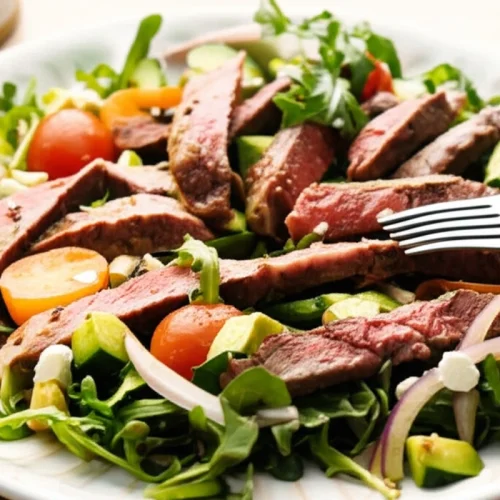
Best Steak Salad with Creamy Balsamic Vinaigrette
Equipment
- cast-iron pan
- Small bowl
- salad bowl
- serving platter
Ingredients
Salad
- 10 ounce grilling steak (boneless prime rib)
- ½ teaspoon salt
- ½ teaspoon pepper
- 2 teaspoons avocado oil
- 4 ounces arugula
- 1 cup cherry tomatoes (cut in half)
- ½ English cucumber (diced)
- ½ avocado (sliced)
- ¼ cup thinly sliced red onions
- ¼ cup crumbled blue cheese (optional)
Dressing
- ½ tablespoon grainy mustard
- ½ tablespoon dijon mustard
- ½ tablespoon balsamic vinegar
- 2 tablespoons olive oil
- A pinch salt and pepper
Instructions
Instructions
- Take the steak out of the fridge and season both sides evenly with the salt and pepper.
- Heat a cast-iron pan over medium-high heat. Drizzle the avocado oil over both sides of the steak. When the pan starts to smoke, add the steak and cook it undisturbed for 2 minutes. Flip the steak over and let it cook for an additional 2-3 minutes. Transfer the steak to a cutting board and let it rest while you prepare the salad.
- While the steak is resting, whisk the salad dressing ingredients in a small bowl. Thin the dressing with up to a tablespoon of water, as needed.
- Add the arugula, tomatoes, cucumber, avocado, red onion, and if using, the blue cheese to a salad bowl.
- Pour the dressing over top and toss to coat.
- Thinly slice the steak across the grain.
- Add the dressed salad to a serving platter and place the sliced steak on top. Alternatively, divide the salad between two plates with ½ of the steak over each.
- Last step: