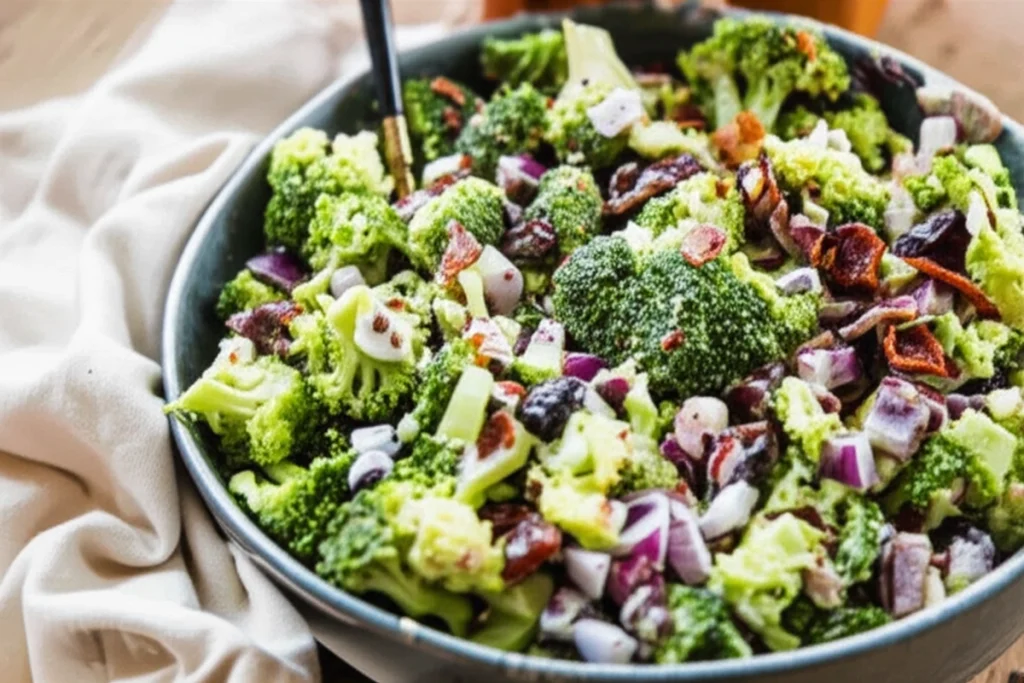
I’ll never forget the first time I attempted broccoli salad. I envisioned a vibrant, crunchy dish bursting with flavor; instead, I ended up with a watery, bland mess. The broccoli was limp, the dressing tasted thin, and the overall experience was deeply unsatisfying.
That failed attempt launched me on a quest to understand the science behind the perfect broccoli salad. Through countless iterations, I’ve uncovered the secrets to achieving the ideal balance of crunch, flavor, and creaminess in this classic dish. This recipe for broccoli salad with apple cider vinaigrette is the culmination of that journey.
Prep Time clocks in at 20 minutes, with no cook time, and a total time of just 80 minutes, factoring in refrigeration. Let’s engineer a delicious, repeatable success, transforming humble broccoli into a show-stopping side.
Table of Content
Blanching Broccoli: Raw vs. Cooked – The Texture Showdown
The texture of the broccoli is paramount to the success of this salad. I quickly discovered that choosing between raw or blanched broccoli is a critical decision. Both options offer distinct advantages, and the best choice depends on your personal preference.
Raw broccoli delivers an intense crunch and a slightly bitter flavor. Some find this invigorating, while others might find it overpowering. If you opt for raw broccoli, ensure the florets are cut into small, uniform pieces for a pleasant eating experience.
Blanching, on the other hand, mellows the broccoli’s harshness and creates a more tender-crisp texture. Through experimentation, I found that a quick, one-minute blanch in boiling water softens the cell walls without sacrificing all the satisfying snap. This brief cooking process also brightens the broccoli’s color, making the salad more visually appealing.
The science behind blanching involves disrupting the broccoli’s cell structure. Heat denatures enzymes that cause wilting and discoloration, while also partially breaking down the tough fibers. It’s a fine line; too long in the boiling water, and you’ll end up with mushy, unappetizing broccoli.
I worried about nutrient loss when I first started blanching my broccoli. To minimize this, I make sure to use only a small amount of water, and I quickly transfer the blanched broccoli to an ice bath to stop the cooking process. This helps retain more of the broccoli’s valuable vitamins and minerals.
The Science of Flavor Fusion: Why Apple Cider Vinaigrette & Smoked Bacon are a Match Made in Heaven
The dressing is where the magic truly happens; the bright tang of the apple cider vinaigrette elevates the entire dish. I quickly learned that combining apple cider vinegar, sugar, and mayonnaise isn’t just about mixing ingredients, it’s about orchestrating a symphony of chemical reactions.
The vinegar’s acidity interacts with the sugar, creating new flavor compounds that are both sweet and tart. This heightened flavor complexity balances the richness of the mayonnaise, preventing the dressing from becoming heavy or cloying. The sugar not only adds sweetness but also helps to emulsify the vinaigrette, creating a smoother, more cohesive sauce.
The sweet and tangy apple cider vinaigrette is the ideal foil for the salty, smoky flavor of the beef bacon. I found that the Maillard reaction is key to the bacon’s allure; it’s the browning process that occurs when amino acids and reducing sugars are heated, creating hundreds of flavor compounds.
That smoky, savory intensity needs a counterpoint, and the apple cider vinegar does just that. I made sure that the vinegar cuts through the richness of the other ingredients, ensuring that this broccoli salad remains light and refreshing.
Ingredients
- 7-8 cups fresh broccoli florets ((about 500 grams/1lb))
- 1 cup mayonnaise ((I often use half plain Greek yogurt))
- 2 Tablespoons apple cider vinegar
- 3 Tablespoons granulated sugar
- 8 slices smoked beef bacon (, cooked and crumbled)
- 1/4 cup red onion (, chopped)
- 1/2 cup dried cranberries ((or raisins))
- 1/2 cup almonds (, chopped (*see note below))
I tested this recipe with several different brands of apple cider vinegar, ranging from mass-produced to artisanal. I found that the more refined brands with lower acidity levels produced a smoother, more balanced vinaigrette, which is why I suggest using a high-quality apple cider vinegar for the best results.
Instructions
- Blanch broccoli (optional, or keep raw) in boiling water for 1 minute.
- Drain and rinse with cold water. Set aside to drain completely.
- Mix sauce in a large bowl: mayonnaise, vinegar and sugar. Stir well.
- Add broccoli, smoked beef bacon, onion, cranberries or raisins and almonds to a large bowl.
- Drizzle with desired amount of sauce (you may not want to use it all).
- Refrigerate for at least 1 hour before serving. Toss again to coat before serving. Store in the fridge for up to 2 days.
Refrigerating the salad for at least an hour is more than just a matter of chilling it. I discovered that this rest period allows the flavors to meld together, creating a more harmonious and cohesive taste profile. The apple cider vinaigrette permeates the broccoli, bacon, and other ingredients, resulting in a richer, more satisfying flavor experience.
Watery Salad SOS: How Osmosis Affects Your Broccoli and What to Do About It
One of the biggest challenges I faced when perfecting this broccoli salad was preventing it from becoming watery over time. The culprit? A natural process called osmosis.
Osmosis is the movement of water from an area of high concentration (inside the broccoli) to an area of low concentration (the dressing), through a semipermeable membrane. In simpler terms, the water inside the broccoli florets is drawn out into the dressing, diluting it and making the salad soggy. America’s Test Kitchen describes how, in order to equalize the salt concentration levels, the water deep within the cells migrates outward in a process called osmosis.
Through trial and error, I’ve found several ways to combat this. Thoroughly drying the broccoli after blanching is crucial; the less surface moisture, the better. I also discovered that using a slightly thicker dressing helps to slow down the process.
Roasting or lightly steaming the broccoli instead of blanching can also minimize water retention. These methods remove some of the initial moisture, so the broccoli is less likely to leach water into the salad later on.
Frequently Asked Questions
What ingredients are essential for a delicious apple cider vinaigrette in this salad?
The foundation of a great apple cider vinaigrette, in my experience, lies in balancing the acidity, sweetness, and creaminess. Apple cider vinegar provides the necessary tang, while sugar adds a touch of sweetness to round out the flavor. Mayonnaise or Greek yogurt contributes to the creamy texture, binding the vinaigrette together.
Can apple cider vinegar be directly substituted for apple cider vinaigrette? If not, what adjustments are needed?
I learned that apple cider vinegar on its own is far too intense to use as a direct substitute. It lacks the sweetness and creaminess that defines a vinaigrette. To make it work, I suggest whisking it with sugar to mellow the sharpness and mayonnaise or Greek yogurt for body.
What are the best ways to prevent the broccoli from becoming soggy?
Preventing a soggy salad is always a top priority. The most effective trick I’ve found is to thoroughly dry the broccoli after blanching or steaming. Patting it down with paper towels removes excess surface moisture that can dilute the dressing. Also, I recommend adding the dressing just before serving to maintain the broccoli’s crispness.
Is it possible to make a creamy version of this salad without using mayonnaise?
Absolutely; I often substitute Greek yogurt for some or all of the mayonnaise to lighten the salad without sacrificing creaminess. Greek yogurt delivers a similar texture, along with a pleasant tang that complements the apple cider vinaigrette. I would also suggest trying avocado for creaminess.
Variations and Storage Tips for Broccoli Salad
This recipe makes approximately 6-8 servings, making it perfect for potlucks or family gatherings. For optimal enjoyment, I recommend storing any leftover broccoli salad in an airtight container in the refrigerator for up to 2 days.
One crucial trick I’ve learned to minimize sogginess is to store the salad without the dressing, adding it just before serving. This simple step makes a world of difference in maintaining the broccoli’s desired crunch.
For those seeking a vegetarian twist, I’ve found a fantastic substitution: replace the beef bacon with toasted pecans or walnuts. The nuts provide a satisfying crunch and a rich, earthy flavor that complements the other ingredients beautifully.
Conclusion
This broccoli salad is more than just a collection of ingredients; it’s an engineered system designed for optimal crunch, flavor, and creaminess. I’ve shown you how understanding the science behind each step—from blanching to dressing—unlocks the potential for a truly exceptional dish. The key is mastering the art of texture and flavor balance.
I hope this deep dive into the world of broccoli salad with apple cider vinaigrette inspires you to experiment in your own kitchen. Try playing with different ingredients and techniques to discover what works best for your palate.
I’d love to hear about your own experiences! Did you try any variations? What were the results? Share your questions, rate the recipe, and let me know what you think. Let’s continue to engineer deliciousness, together.
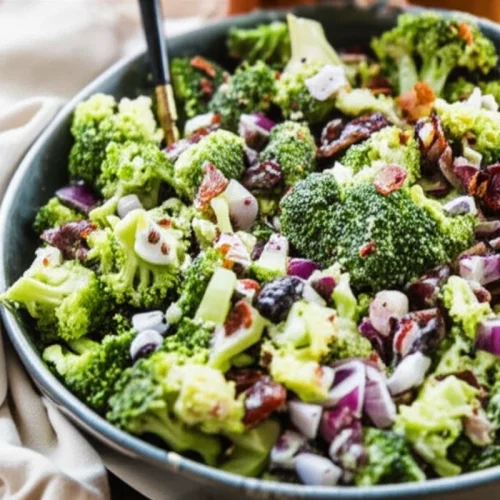
Broccoli Salad
Ingredients
Salad
- 7-8 cups fresh broccoli florets (about 500 grams/1lb)
- 8 slices smoked beef bacon cooked and crumbled
- 1/4 cup red onion chopped
- 1/2 cup dried cranberries (or raisins)
- 1/2 cup almonds chopped
Dressing
- 1 cup mayonnaise I often use half plain Greek yogurt
- 2 Tablespoons apple cider vinegar
- 3 Tablespoons granulated sugar
Instructions
Instructions
- Blanch broccoli (optional, or keep raw) in boiling water for 1 minute.
- Drain and rinse with cold water. Set aside to drain completely.
- Mix sauce in a large bowl: mayonnaise, vinegar and sugar. Stir well.
- Add broccoli, smoked beef bacon, onion, cranberries or raisins and almonds to a large bowl.
- Drizzle with desired amount of sauce (you may not want to use it all).
- Refrigerate for at least 1 hour before serving. Toss again to coat before serving. Store in the fridge for up to 2 days.