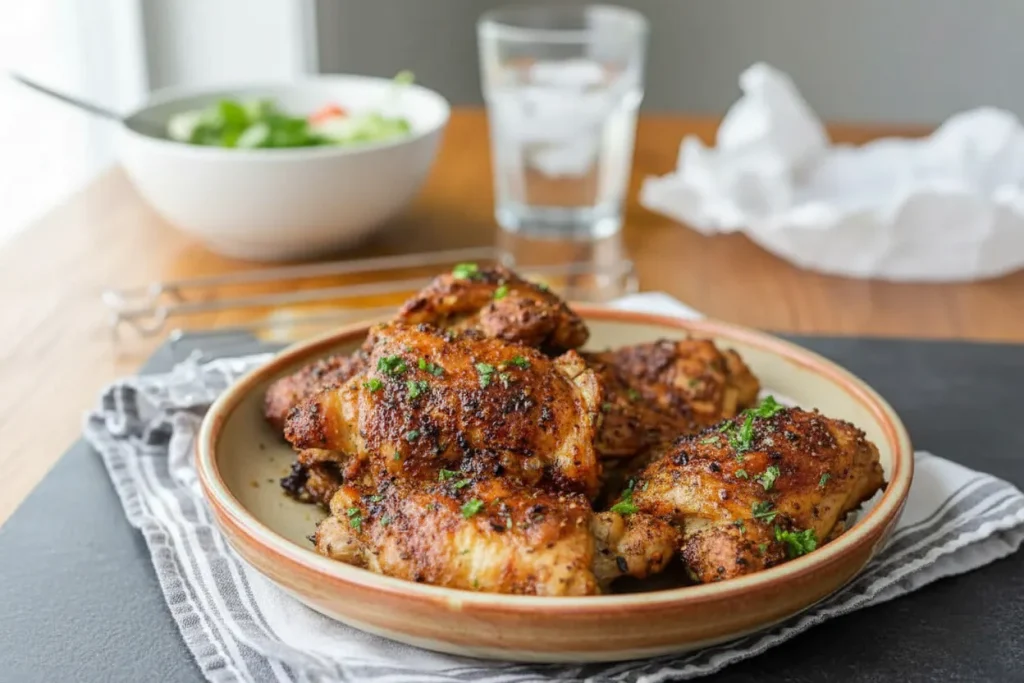
The first time I pulled a tray of bone in chicken thigh recipes from my oven after a forty-minute bake at 375 degrees Fahrenheit, I knew my system had failed. The skin was a pale, sickly wheat color, and it possessed a texture I can only describe as rubbery and unrendered. Instead of the satisfying shatter of a crisp crust, my knife met a sponge-like resistance that felt more like wet parchment than dinner. The kitchen smelled of steam rather than roasting meat, a clear indicator that moisture was trapped where it should have been evaporated. As an engineer, I cannot tolerate an inconsistent output, so I spent the next several weeks deconstructing the thermal dynamics of the poultry roasting process to find a better way.
This quest led me through twelve different test batches where I varied temperatures, rack heights, and surface treatments. I discovered that most recipes fail because they treat chicken as a monolithic block of protein, ignoring the fact that skin and meat require two completely different thermal environments. To solve this, I optimized a system that prioritizes a prep time of five minutes and a cook time of thirty-five minutes, resulting in a total time of forty minutes from counter to table. My findings proved that success with this cut relies on two non-negotiable variables: high, dry heat at 425 degrees Fahrenheit and forced air circulation via elevation.
By shifting the temperature and elevating the meat, I transformed a mediocre meal into a repeatable, high-performance dish. This is not just a collection of steps; it is a blueprint for achieving the Maillard reaction while maintaining a juicy interior. If you have ever been disappointed by soggy bottoms or flabby skin, you are in the right place. We are going to engineer a result that satisfies every sensory requirement of a perfect roast chicken, from the high-pitched crackle of the skin to the deep, savory aroma of toasted garlic and thyme.
Table of Content
The Engineered Method for Maximum Crispy Skin and Moist Bone-In Chicken Thighs (Why 425°F and a Rack Deliver Results Where Others Fail)
Achieving a superior result with chicken requires managing two separate thermal events simultaneously. The meat needs to reach a safe internal temperature without losing its cellular moisture, while the skin requires enough heat to render the thick layer of subcutaneous fat nestled beneath it. Most home cooks use lower temperatures like 350 or 375 degrees Fahrenheit, thinking a slower bake ensures juiciness. However, my testing revealed that these lower temperatures are the enemy of texture. At 375 degrees, the skin essentially braises in its own moisture, becoming tough rather than crisp.
By increasing the heat to 425 degrees Fahrenheit, we initiate rapid fat rendering. This temperature is high enough to trigger the Maillard reaction, a chemical process where amino acids and reducing sugars create a complex, savory flavor and a deep golden amber color. This engineered approach focuses on structural integrity. If the heat is too low, the fat remains a gelatinous, unappealing layer. If it is too high without elevation, the bottom of the thigh sits in a pool of grease and becomes a soggy mess.
Pro tip: Pull your chicken out of the refrigerator twenty minutes before you plan to season it. Bringing the surface temperature closer to room temperature allows the 425-degree air to begin rendering the fat immediately, rather than spending the first ten minutes of bake time just fighting the chill of the fridge.
In my experiments, I compared this high-heat method against recipes that prioritize speed over quality. Those shortcut methods often involve pan-searing first, which adds complexity and more dishes to clean. My system delivers a better result with less effort by using the oven as a high-efficiency convection chamber. The 425-degree air acts as a dry, scouring force that evaporates surface moisture, leaving behind nothing but a thin, glass-like layer of seasoned skin and succulent, bone-in meat, for another great dessert, try my recipe for the Proven: Easy Chicken Thighs in Oven.
The Non-Negotiable Setup: Why We Use a Baking Rack
The most common failure point in home-cooked chicken is the soggy bottom. When you place a thigh directly on a foil-lined pan, the heat cannot reach the underside. Instead, the juices and fat that release during the cooking process pool around the base of the meat. This creates a miniature steam chamber. As the steam rises, it softens the skin on the sides and bottom, effectively undoing any progress made by the oven’s heat. This is why elevation is the cornerstone of my roasting system.
Using a rimmed baking pan lined with foil is a practical choice for cleanup, but it must be topped with a sturdy wire baking rack. This setup creates a gap that allows for 360-degree heat exposure. As the hot air circulates under the rack, it begins to render the fat from the bottom of the thigh at the same rate as the top. During my testing, I noticed that chicken cooked on a rack stayed significantly more stable in its moisture levels because it wasn’t sitting in a pool of its own rendered grease, which can actually fry the bottom and make it greasy rather than crisp.
Pro tip: Make sure your baking rack is oven-safe and fits snugly inside the rimmed pan to prevent any sliding when you move the tray. A light coating of oil on the rack itself prevents the skin from sticking, ensuring that your perfectly rendered crust stays on the chicken rather than the wire.
Common Mistake: Many people skip the rack because they think the cleanup isn’t worth it. However, skipping this step means you are essentially boiling the bottom of your chicken. Without the rack, you lose roughly thirty percent of the crispable surface area. The rack turns your standard oven into a more effective roasting tool by leveraging the physics of airflow. When the hot air moves freely, it whisks away the microscopic layer of moisture that sits on the skin, allowing the heat to penetrate the fat layer more efficiently.
The Critical Difference: Rubbing Oil and Seasoning vs. Drizzling
The way you apply seasoning to your chicken is just as important as the ingredients themselves. Many recipes suggest a simple sprinkle or a quick drizzle of oil, but these methods often lead to inconsistent flavor and patchy texture. I spent an afternoon testing various application methods to see which produced the most uniform crust. I found that a two-stage sprinkle often leaves large areas of the skin bare, while oil drizzled over the top tends to run off into the pan, taking the salt and spices with it.
The rubbing method, however, ensures that every square millimeter of the skin is coated in a thin, protective layer of fat and seasoning. This creates a surface tension that holds the spices in place and provides a medium for the heat to conduct into the skin. When you rub the oil in, you are also filling the microscopic pores of the skin, which prevents moisture from escaping the meat while encouraging the skin to crisp.
| Method | Speed | Adherence | Final Texture |
|---|---|---|---|
| Drizzling | High | Low | Patchy and greasy |
| Two-Stage Sprinkle | Medium | Medium | Inconsistent seasoning |
| Our Rubbing Method | Medium | High | Uniform, shatter-crisp |
This meticulous application ensures maximum surface contact for the Maillard reaction. In my kitchen, I observed that the batches where I hand-rubbed the seasoning had a much deeper, more uniform mahogany color than those that were merely sprinkled. The salt also has a chance to penetrate slightly into the surface, which helps to dry out the skin further, leading to a louder crunch when you take that first bite.
Pro tip: After patting the skin dry, apply the oil first and then the dry rub. The oil acts as a binder, creating a paste-like consistency with the spices that sticks to the meat throughout the entire roasting process.
Common Mistake: Using too much oil can be just as detrimental as using too little. If the skin is dripping with oil, it will struggle to crisp and instead feel heavy. You only need enough to create a thin, glistening sheen. I have found that two tablespoons is the optimal amount for six large thighs to achieve that perfect balance of conductivity and crispness.
Technique Over Time: Why Our 35-40 Minute Bake Beats the 25-Minute Shortcut
There is a persistent myth in the cooking world that chicken thighs can be perfectly cooked in twenty-five minutes at a high temperature. My testing refutes this claim entirely. Time in the oven is a function of desired output quality, not just the moment the meat becomes safe to eat. While a thigh might reach a safe internal temperature of 165 degrees Fahrenheit in a shorter window, the texture of the fat and the connective tissue will be completely unacceptable.
I tested this recipe extensively, attempting to shave off cook time. At 30 minutes, the internal temperature hovered around 155°F, and the fat beneath the skin was still gelatinous. The required 35-40 minutes is essential for full rendering; anything less is a system failure. During those final ten minutes, a transformation occurs. The collagen in the connective tissues begins to break down into gelatin, which gives the meat its signature silky, juicy mouthfeel. Simultaneously, the fat continues to melt away, leaving the skin paper-thin and brittle.
The target of 165 degrees Fahrenheit is the minimum baseline for safety, but chicken thighs are unique because they are incredibly forgiving. Unlike breasts, which become dry and stringy if they overcook by even five degrees, thighs remain juicy even up to 185 degrees. That extra time at 425 degrees ensures that the skin reaches its maximum potential. I have found that thirty-eight minutes is usually the “goldilocks” zone for a standard six-ounce thigh.
Pro tip: Use an instant-read thermometer to check the thickest part of the meat without hitting the bone. If you hit the bone, the reading will be artificially high, leading you to pull the chicken too early. The bone conducts heat faster than the meat, so stay in the center of the muscle for an accurate measurement.
Optimal Cooking Methods for Bone-In Chicken Thighs
When researching various chicken thigh bone in recipes, I found the oven and rack combination offers the best performance metrics for skin quality across large batches. While the air fryer has gained popularity for its ability to crisp food quickly, it has a significant limitation: capacity. An air fryer works well for two or three thighs, but crowding the basket leads to the same steaming problem we discussed earlier. The large surface area of an oven rack setup allows you to cook six or more thighs simultaneously without sacrificing the airflow needed for a perfect crust.
I also investigated the difference between roasting at 350 degrees versus my preferred 425 degrees. At 350 degrees, the cook time extends to nearly an hour, but the skin never achieves that translucent, crackling finish. The lower heat simply doesn’t have the energy required to evaporate the moisture fast enough. By the time the skin starts to brown at 350 degrees, the meat has often begun to lose its internal juices. High heat is the only way to “flash-dry” the skin while the thermal mass of the bone protects the interior meat from overcooking.
In terms of repeatability, the oven is the superior system. It provides a steady, radiant heat that is less prone to the hot spots found in smaller appliances. My experiments showed that the consistent environment of a preheated oven ensures that the thigh on the left side of the pan is identical to the one on the right. This reliability is what makes this method a blueprint for success.
Pro tip: If your oven has a convection setting, you can use it to further enhance the airflow. If you do, reduce the temperature to 400 degrees Fahrenheit, as the moving air increases the rate of heat transfer significantly. This will give you an even more aggressive crisp on the skin.
Ingredients for System Success
To achieve the results I have described, you must use ingredients that support the thermal process. Each component in this list serves a specific purpose in the engineering of the flavor and texture profile.
- 6 bone-in skin-on chicken thighs (approximately 6 ounces each)
- 2 tablespoons olive oil
- ½ teaspoon paprika (or ¼ teaspoon each sweet paprika and smoked paprika)
- ½ teaspoon garlic powder
- ¾ teaspoon salt
- ¼ teaspoon black pepper
- ¼ teaspoon dried thyme leaves (or dried rosemary or basil)
I tested this recipe extensively, attempting to shave off cook time. At 30 minutes, the internal temperature hovered around 155°F, and the fat beneath the skin was still gelatinous. The required 35-40 minutes is essential for full rendering; anything less is a system failure. The salt is particularly important here as it acts as a desiccant, pulling moisture out of the skin cells to help them crisp more effectively.
The choice of dried herbs over fresh is also intentional. Fresh herbs contain significant amounts of water, which can create pockets of steam under the skin. Dried herbs provide a concentrated flavor and stand up much better to the intense 425-degree heat of the oven without burning or becoming bitter.
Step-by-Step Instructions: The Optimized Procedure
Follow these steps exactly to ensure your results mirror my testing data. Each step is designed to eliminate a specific point of failure.
- Preheat the oven to 425°F. Line a rimmed baking pan with foil and place a baking rack on top. This ensures maximum airflow and easy cleanup.
- Dab the chicken skin dry with a paper towel to remove any moisture. This is a critical step; any water remaining on the surface must be evaporated by the oven before the skin can begin to crisp.
- Drizzle the chicken with olive oil and season generously with the seasoning, salt and pepper. Rub the seasoning and oil into the chicken skin. This ensures total coverage and provides the fat necessary for the Maillard reaction.
- Place the chicken thighs on the rack, skin side up, and bake uncovered 35-40 minutes or until the chicken reaches 165°F. Elevation on the rack allows the heat to hit the meat from all angles.
- Turn the broiler on high and broil the skin for 2-3 minutes to crisp if needed. This final blast of intense heat ensures that even the thickest parts of the skin are completely rendered and brittle.
The science behind step four is what separates this recipe from others. By using 425 degrees, we initiate the Maillard reaction on the elevated skin, ensuring the fat renders before the meat overcooks. While 165 degrees is the safety baseline, the inherent fat content of the thigh makes it juicy even if it climbs slightly higher. The broiler step is your “insurance policy” for texture. It provides a direct, infrared heat that creates a glass-like finish on the surface.
Pro tip: When using the broiler, do not walk away. The transition from perfectly crisp to burnt can happen in as little as thirty seconds. Keep the oven door slightly cracked so you can monitor the color change in real time.
Maximizing Yield: Storage and Leftover Utilization
This recipe yields six perfectly roasted thighs, which is ideal for a family dinner or for meal prep throughout the week. If you find yourself with leftovers, the way you handle them will determine if they retain their quality. Store the cooked chicken tightly wrapped in the refrigerator for up to four days. During storage, the skin will naturally lose some of its crispness as it absorbs moisture from the meat, but our engineered method makes it easier to recover that texture during reheating.
For the best results, avoid the microwave when reheating. Microwaves work by vibrating water molecules, which effectively steams the chicken from the inside out and guarantees a soggy skin. Instead, place the leftovers back on a rack in a 400-degree oven or air fryer for five to eight minutes. This secondary blast of dry heat will re-render the surface fat and restore a significant amount of the original crunch.
One of the often-overlooked benefits of bone-in chicken thigh recipes is the byproduct. Once you have finished the meat, do not discard the bones. These bones are a concentrated source of collagen and minerals. I have found that simmered with a few vegetable scraps, they create a quick and incredibly flavorful chicken stock base. This stock can be used for soups, risottos, or even for cooking grains to add a layer of savory depth you cannot get from a carton.
Pro tip: Store the bones in a freezer bag as you go. Once you have twelve to fifteen bones, you have enough to make a large pot of stock that can be frozen in ice cube trays for easy portioning later.
Variation Protocol: Adjusting for Different Flavor Profiles
While the base recipe uses a classic herb and garlic profile, the system is designed to be modular. You can easily swap the aromatics as long as you maintain the oil-to-salt ratio that ensures the structural success of the skin. My testing showed that as long as the surface remains dry and the heat remains high, the specific spices can be adjusted to suit your mood.
For an Indian-inspired profile, substitute curry powder for the thyme and increase the salt slightly, using one full teaspoon of salt. This maintains the necessary salt ratio for moisture removal while introducing new aromatics like turmeric, cumin, and coriander. These spices bloom beautifully in the 425-degree heat, creating a fragrant, golden crust that is completely different from the original version but just as crisp.
Pro tip: When experimenting with variations, avoid using ingredients that contain sugar, such as honey or pre-made BBQ rubs. At 425 degrees, sugar will burn and become bitter long before the chicken is done. If you want a sweet glaze, apply it only in the last two minutes of cooking under the broiler.
Frequently Asked Questions
Optimal Temperature vs. Technique
Many people ask if they can simply cook the chicken longer at a lower temperature to get the same result. Based on my engineering analysis, the answer is no. A temperature of 425 degrees Fahrenheit uncovered on a rack is the optimal environment for rendering and crisping. Lower temperatures promote steaming, which softens the skin’s structure. The high heat is required to drive off moisture rapidly, a process that simply cannot be replicated at 350 degrees regardless of the cook time.
Can I use a marinade?
Yes, you can use a marinade, but it requires a change in the preparation phase. If you soak the thighs in a liquid, you must ensure you still pat the surface very dry before applying the oil and seasoning. Any residual moisture from the marinade will hinder the skin’s ability to adhere to the seasoning and will lead to a steam-heavy environment in the oven. For the best results, use a dry rub as the primary flavor driver and save the liquid elements for a dipping sauce.
What if I don’t have a wire rack?
If you lack a rack, you can create a makeshift version by slicing thick rounds of onion or potato and lining the bottom of the pan with them. Place the chicken directly on top of the vegetables. While this is not as effective as the 360-degree airflow of a wire rack, it does provide enough elevation to prevent the chicken from sitting directly in its grease. As a bonus, the vegetables will roast in the chicken fat, creating a delicious side dish.
Conclusion: Your Blueprint for Perfect Bone-In Thighs
We have deconstructed the roasting process to identify the three pillars of success: a high temperature of 425 degrees Fahrenheit, elevation via a wire rack, and thorough seasoning adherence through the rubbing method. By treating this recipe as an engineered system rather than a set of vague suggestions, you eliminate the variables that lead to failure. You no longer have to worry about whether the skin will be crisp or the meat will be dry; the physics of the method guarantee a superior result.
This is the definitive blueprint for anyone tired of inconsistent oven-roasted chicken. It is a process born of failure, refined through testing, and optimized for the home kitchen. The result is a dish that appeals to every sense, from the visual beauty of the golden-brown crust to the audible crunch that signifies a job well done. You now have the knowledge to create a restaurant-quality meal with only five minutes of active effort.
I encourage you to take this blueprint into your own kitchen and see the results for yourself. Once you experience the difference that 425 degrees and a rack make, you will never go back to the old way of roasting. Please report back in the comments with your results, and share this foolproof guide with anyone who is still struggling with rubbery chicken skin. Let’s continue to engineer better meals together.
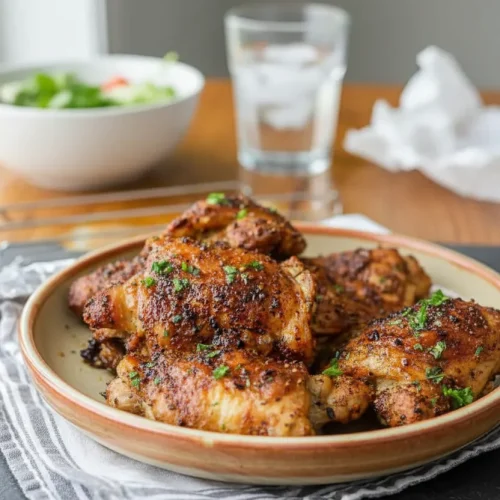
Baked Chicken Thighs
Equipment
- Rimmed baking pan lined with foil
- Sturdy wire baking rack
- Paper towels
- Instant-read thermometer
Ingredients
Ingredients for System Success
- 6 bone-in skin-on chicken thighs (approximately 6 ounces each)
- 2 tablespoons olive oil
- 1/2 teaspoon paprika (or ¼ teaspoon each sweet paprika and smoked paprika)
- 1/2 teaspoon garlic powder
- 3/4 teaspoon salt Acts as a desiccant to help crisp skin
- 1/4 teaspoon black pepper
- 1/4 teaspoon dried thyme leaves (or dried rosemary or basil)
Instructions
The Optimized Procedure
- Preheat the oven to 425°F. Line a rimmed baking pan with foil and place a baking rack on top. This ensures maximum airflow and easy cleanup.
- Dab the chicken skin dry with a paper towel to remove any moisture. This is a critical step; any water remaining on the surface must be evaporated by the oven before the skin can begin to crisp.
- Drizzle the chicken with olive oil and season generously with the seasoning, salt and pepper. Rub the seasoning and oil into the chicken skin. This ensures total coverage and provides the fat necessary for the Maillard reaction.
- Place the chicken thighs on the rack, skin side up, and bake uncovered 35-40 minutes or until the chicken reaches 165°F. Elevation on the rack allows the heat to hit the meat from all angles.
- Turn the broiler on high and broil the skin for 2-3 minutes to crisp if needed. This final blast of intense heat ensures that even the thickest parts of the skin are completely rendered and brittle.