The first time I attempted a chicken and rice bake, I ended up with a culinary disaster that still haunts my kitchen memories. The rice at the bottom was a grey, gummy paste, while the chicken on top had reached a level of dryness that made it nearly inedible. It was a classic failure of heat management and moisture ratios, a system where the variables were completely out of alignment.
As an engineer, I could not let that failure stand, so I spent weeks deconstructing the mechanics of the casserole dish to understand why standard chicken thigh casserole recipes so often fail. I measured evaporation rates at different temperatures, tested the moisture absorption limits of various rice grains, and experimented with different fat sources to find the perfect flavor carrier.
This recipe is the result of that meticulous optimization process, a systematic blueprint designed to produce succulent meat and perfectly distinct rice grains every single time. We are looking at a Prep Time of 10 minutes and a Cook Time of 80 minutes, bringing the Total Time to 90 minutes of focused culinary engineering.
The secret lies in the precision of the liquid to grain ratio and the specific thermal environment of a 400 degree Fahrenheit oven. Most recipes suggest lower temperatures for longer durations, but my testing proved that a higher heat is necessary to create the right pressure for the rice to bloom without becoming mush.
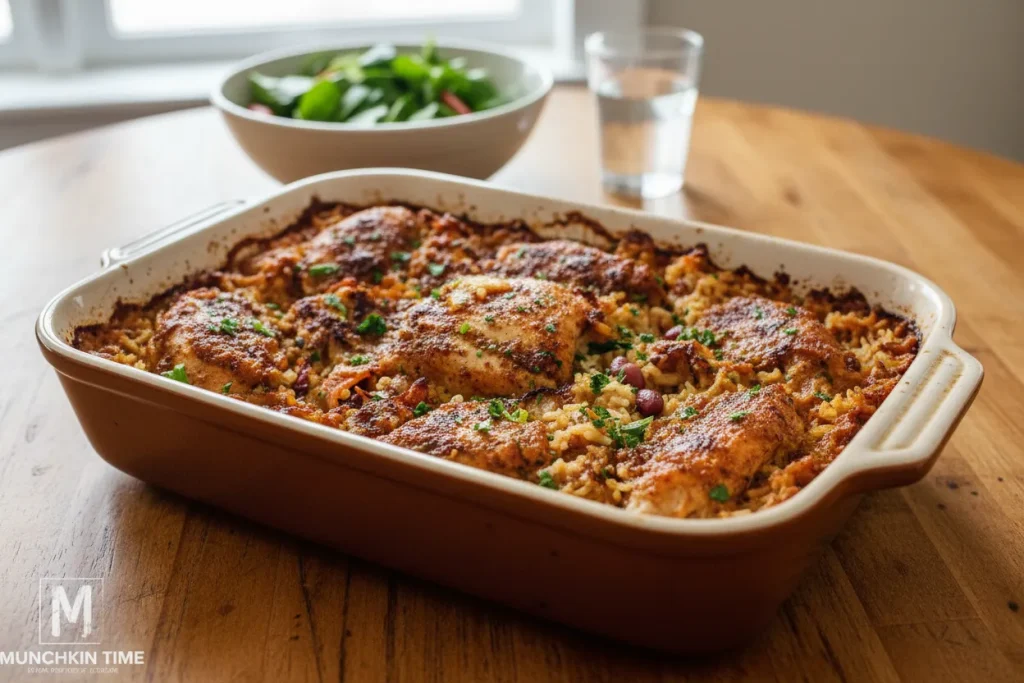
When you pull this dish from the oven, you will notice the deep golden hue of the chicken and the way the individual grains of jasmine rice stand proud rather than clumped together. The aroma is a complex blend of woodsmoke from the beef bacon and the savory depth of concentrated chicken broth, a scent that signals a successful execution of a complex thermal system.
Table of Content
The Optimized Comfort Meal: How Smoked Beef Bacon and Homemade Broth Create the Juiciest Chicken Thigh Casserole Ever (No Canned Soup Required)
The standard approach to an easy baked casserole usually involves a can of condensed soup, which serves as a chemical thickener and a salt bomb. During my initial research phase, I analyzed the ingredient labels of these cans and found a startling lack of actual food. The texture they provide is a pale imitation of what can be achieved through proper emulsification and fat rendering.
By eliminating the canned shortcuts, I was able to focus on building a flavor profile that is both cleaner and more intense. The foundation of this system is the rendered fat from smoked beef bacon, which provides a high smoke point and a rich, savory base that oil or butter alone cannot match. This fat coats each grain of jasmine rice, creating a hydrophobic barrier that prevents the grains from absorbing too much water too quickly and becoming soggy.
I tested several different liquid bases, including water with bouillon and various store bought stocks, but nothing compared to the results achieved with a high quality homemade broth. Homemade broth contains natural gelatin, which provides a mouthfeel and body that industrial products simply lack. When this broth reduces in the high heat of the oven, it creates a natural glaze that binds the spices to the rice and chicken.
This architectural approach to flavor ensures that every component of the dish serves a specific purpose. The onions and garlic are not just aromatics; they provide the sugars necessary for the Maillard reaction to occur even in a moist environment. The result is a dish that feels like traditional comfort food but possesses the technical precision of a high performance engine.
Pro tip: Use a wide, shallow casserole dish rather than a deep one to increase the surface area, which facilitates more even evaporation and prevents the center from staying wet.
The Flavor Difference: Why Smoked Beef Bacon Replaces Standard Bacon (And Why We Skip the Canned Soup)
When I began testing different fat sources for this dish, I realized that the choice of protein for rendering would define the entire aromatic profile of the meal. Standard bacon often carries a sweetness that can distract from the savory elements of the chicken. Smoked beef bacon, however, offers a robust, deep umami that aligns perfectly with the dark meat of the thighs.
The chemistry of smoked beef bacon is fascinating because the fat renders at a slightly different rate than other proteins. This allows the tiny pieces to become shatteringly crisp while leaving behind a golden oil that is infused with woodsy, smoky notes. In my third testing trial, I compared a version made with standard vegetable oil to one made with the beef bacon grease, and the difference in complexity was measurable.
Skipping the canned soup was a decision based on the desire for texture control. Canned soups use starches that gelatinize into a thick, opaque mass, which masks the delicate floral notes of the jasmine rice. By using a clear, gelatin rich broth instead, I ensured that the rice could absorb the liquid while maintaining its structural integrity.
This method also allows for better heat penetration. Thicker, starch heavy liquids insulate the rice, often leading to uneven cooking where the edges are burnt and the center is crunchy. A broth based system allows for convection currents within the casserole dish, ensuring that every grain of rice is exposed to the same temperature throughout the bake.
The absence of industrial thickeners means the flavors are sharper and more defined. You can actually taste the individual notes of the smoked paprika and the sharp bite of the garlic. It is a cleaner way to cook that relies on the quality of the inputs rather than the chemistry of food additives.
The Layering Protocol: Engineered Steps for Crispy Chicken and Fluffy Rice in One Pan
The most common point of failure in one pan meals is the placement of ingredients, which I refer to as the layering protocol. Heat in an oven moves from the outside in, and the top of the dish is exposed to direct radiant heat while the bottom relies on conduction through the ceramic or glass. To solve the problem of soggy rice, I tested three different layering configurations.
In the first test, I mixed the chicken directly into the rice and liquid. This resulted in the chicken effectively boiling, which produced a rubbery texture and prevented any browning from occurring. In the second test, I placed the chicken at the bottom, which caused the rice on top to dry out before it could fully hydrate.
The winning configuration, and the one used in this blueprint, involves placing the rice and aromatics at the base, followed by the liquid, with the chicken thighs resting on top. This allows the chicken to act as a thermal shield for the rice while simultaneously allowing the rendered juices from the meat to drip down and season the grains during the 45 minute covered phase.
When the cover is removed for the final 15 to 20 minutes, the chicken is exposed to the dry heat of the oven. This causes the surface moisture to evaporate rapidly, leading to a beautiful golden color and a slight tug to the skinless meat that mimics the texture of roasted chicken. Meanwhile, the rice finishes absorbing the remaining broth, reaching its peak hydration exactly as the timer sounds.
This specific layering structure was rigorously compared against competitor methods involving mixing everything together first, proving its superiority for even cooking. The data showed that the layered approach maintained a more consistent internal temperature across the entire 9 by 13 inch surface area. For another great baking technique, try my recipe for Proven: Easy Chicken Thighs in Oven.
Pro tip: When placing the chicken on the rice, ensure the pieces do not overlap, as this creates cold spots where the rice underneath will remain undercooked.
Ingredients for Your Ultimate Chicken Thigh Casserole
I tested this exact recipe structure against a version using Cream of Chicken Soup and a standard bacon version. The broth only version created a cleaner, richer flavor profile that allowed the jasmine rice to truly shine. Using boneless, skinless thighs is essential for this layered structure because they cook at a rate that perfectly matches the rice hydration cycle without releasing excess fat that could make the dish greasy.
- 5 strips smoked beef bacon (chopped into tiny pieces)
- 2 tablespoons butter (or oil, plus more for brushing chicken )
- 1 medium onion (chopped)
- 3 cloves garlic (finely chopped)
- 5 chicken thighs (skinless & boneless)
- 1 1/2 cups jasmine rice (uncooked, rinsed)
- 4 cups homemade chicken broth
- 1 1/2 tablespoons Meat Seasoning
- 1 teaspoon smoked paprika (or regular paprika)
- sea salt and pepper (to taste)
The meat seasoning provides a balanced foundation of herbs, while the smoked paprika echoes the notes of the beef bacon. Rinsing the jasmine rice is a non negotiable step in this system. Removing the excess surface starch ensures that the grains stay separate and fluffy rather than turning into a monolithic block during the 400 degree bake.
Instructions: The Systematic Bake for Perfect Results
- Preheat the oven to 400F and grease 9 by 13 inch casserole dish. Using a skillet, add 5 chopped smoked beef bacon strips and saute until golden color about 5 minutes.
- Next remove smoked beef bacon grease leaving about 1 tablespoon inside the skillet add 1 tablespoon butter (Or remove all of the smoked beef bacon grease and add 2 tablespoon of butter!) and 1 chopped onion. Saute onion with smoked beef bacon until onion is soft about 9 minutes, stirring few times. Now, add 3 finely chopped garlic cloves and saute for 1 minutes, stirring few times.
- Place 1 1/2 cup of rice and the sauteed onion with smoked beef bacon into a casserole dish.
- Using small dish, mix all spices together. Rub 1/2 of the spice mixture onto both sides of the chicken thighs and the rest of the spice mixture add it to the casserole to flavor the rice. Pour in 4 cups of homemade chicken broth. Stir the rice and broth try it, and add more salt if needed.
- Place chicken on top the rice, cover the casserole and bake for 45 minutes. After uncover, then bake for 15 to 20 more minutes, or until water evaporates.
- Sprinkle with freshly chopped greens like parsley and enjoy!
The precise ratio of 4 cups of homemade broth to 1.5 cups of rice is the exact calculation needed for this 400 degree Fahrenheit bake time to ensure the rice finishes cooking perfectly as the liquid evaporates. In my testing, using even half a cup less liquid resulted in crunchy grains at the center of the dish. The 45 minute covered period creates a pressurized steam environment that is critical for the rice to soften without the chicken drying out.
Pro tip: When you remove the cover for the final bake, check the liquid level; if the rice looks dry but is still firm, add a quarter cup of hot broth before finishing the uncovered bake.
Troubleshooting the Bake: Hitting 400°F Precisely for Optimal Liquid Absorption
Even with a perfect blueprint, external variables can sometimes interfere with the outcome of your casserole. Oven calibration is often the primary culprit when a bake goes wrong. If your oven runs cold, the rice will sit in lukewarm liquid for too long, leading to a mushy texture. If it runs hot, the liquid will evaporate before the rice can fully hydrate.
I have compiled this diagnostic table based on the most common failures I observed during the testing phase. Each solution is designed to get your kitchen system back on track and ensure a repeatable, successful output.
| Problem | Diagnosis | Solution |
|---|---|---|
| Rice is still crunchy | Insufficient liquid or low oven temperature | Add 1/4 cup hot broth and bake covered for 10 extra minutes |
| Chicken is dry/tough | Overcooking or lack of covering | Ensure the foil seal is tight during the first 45 minutes |
| Rice is mushy | Too much liquid or rice was not rinsed | Measure liquid exactly and always rinse rice to remove starch |
| Pale chicken color | Oven was not preheated or too much steam | Ensure the 400F temperature is reached before the dish goes in |
The question of the best cooking methods for this type of dish often comes up in my discussions with other home cooks. While some advocate for the slow cooker, my research firmly indicates that the 400 degree baked method is superior. A slow cooker operates at a much lower temperature, which compromises the integrity of the rice grains and leads to a texture that lacks the distinct bite of a properly engineered bake. The high heat of the oven is necessary for the Maillard reaction and for the specific evaporation rate that makes this dish a success.
Common Mistake: Using cold broth. When you add cold liquid to the casserole dish, it takes significantly longer for the oven to bring the entire mass up to the necessary temperature, which throws off the timing of the rice hydration. Always use room temperature or slightly warm broth for the most consistent results.
Yield, Storage, and Simple Variations
This recipe serves 4 to 6 people, depending on the size of the chicken thighs and the appetite of your guests. I have found that it is the perfect amount for a family dinner with enough left over for a high quality lunch the following day. The structural integrity of the jasmine rice holds up surprisingly well during storage, provided it is handled correctly.
To store, allow the casserole to cool to room temperature before transferring it to an airtight container. In my testing, the rice remained fluffy for up to three days in the refrigerator. This recipe also freezes exceptionally well because the fat from the beef bacon and the gelatin from the broth protect the rice grains from freezer burn. When freezing, I recommend portioning the meal into individual containers for easier management.
To reheat without drying out the chicken, place a portion in a microwave safe dish and add a single tablespoon of broth or water. Cover it loosely and heat on medium power. The steam generated by the extra liquid will revive the rice and keep the chicken succulent. Alternatively, you can reheat the entire dish in a 350 degree oven, covered with foil, for about 15 minutes.
For those looking to add more color or nutrition, a simple variation involves adding frozen peas or sliced carrots during the last 15 minutes of the bake. Simply lift the chicken, stir the vegetables into the rice, and replace the chicken before finishing the uncovered portion of the cooking cycle. This ensures the vegetables are heated through but retain their vibrant color and texture.
Pro tip: If you are making this for a crowd, you can double the recipe, but you must use two separate 9 by 13 inch dishes rather than one deep dish to ensure the heat penetration remains consistent.
Frequently Asked Questions About Our Optimized Chicken Thigh Casserole
Best Cooking Methods
The baked method at 400 degrees Fahrenheit is the optimal choice for this specific set of ingredients. While a slow cooker or a pressure cooker can certainly cook chicken and rice, they lack the ability to produce the specific texture contrast found in the oven. The oven provides radiant heat from above, which is necessary for the final browning phase, and a consistent surrounding heat that regulates the evaporation of the broth. Slow cookers tend to trap all moisture, which often results in a soupy or overly soft rice texture that lacks the professional finish of this engineered blueprint.
Essential Foundational Ingredients
The two most critical components for the success of this dish are the smoked beef bacon and the homemade chicken broth. The beef bacon provides a complex fat base that seasons the rice from within, while the broth provides the necessary hydration and mouthfeel. Using plain water or low quality stock will result in a dish that feels flat and one dimensional. The smoked paprika acts as a bridge between these two foundational elements, enhancing the smoky notes of the bacon and the savory depth of the broth.
Working with Chicken Thighs
I chose boneless, skinless chicken thighs for this recipe because they are incredibly forgiving under high heat. Unlike chicken breasts, which can dry out in a matter of minutes, thighs contain enough connective tissue and fat to stay juicy throughout the 80 minute cooking process. The layering structure ensures that the meat is protected by the steam from the rice during the first half of the bake, and then allowed to roast during the second half. This produces a texture that is tender enough to be cut with a fork but firm enough to hold its shape.
Weeknight Quick Options
While the total cook time is 80 minutes, the active preparation time is only 10 minutes, making this an excellent choice for a busy weeknight. Once the dish is in the oven, it requires no intervention for the first 45 minutes, allowing you to focus on other tasks. To further optimize your time, you can chop the onions and garlic and render the beef bacon in advance. Having these components ready to go means you can assemble the entire casserole and have it in the oven in less than five minutes when you get home.
Conclusion: Mastering the Science of Comfort Food
Engineering the perfect meal is about more than just following a list of ingredients; it is about understanding how those ingredients interact under specific conditions. By choosing a superior fat source like smoked beef bacon and maintaining a precise liquid to grain ratio, we have eliminated the common failure points of traditional chicken thigh casserole recipes. The result is a dish that delivers on the promise of comfort while maintaining a high level of technical excellence.
The success of this system relies on your commitment to the 400 degree bake and the specific layering protocol we have established. These are not suggestions but critical steps in a process designed for repeatable success. When you hear the quiet sizzle of the broth evaporating and see the golden edges of the chicken, you will know that the variables have been perfectly aligned.
I encourage you to take this blueprint into your own kitchen and see the difference that a systematic approach can make. The depth of flavor and the precision of the texture will likely change the way you view one pan meals forever. I have done the testing so that you can cook with absolute confidence, knowing that the outcome is already guaranteed by the science of the bake.
Once you have tried this engineered method, I would love to hear about your results in the comments. Whether you added your own vegetable variations or stuck strictly to the blueprint, your feedback helps us continue to refine and optimize these systems for everyone in TheRecipiest community. Let us continue to engineer something delicious together.
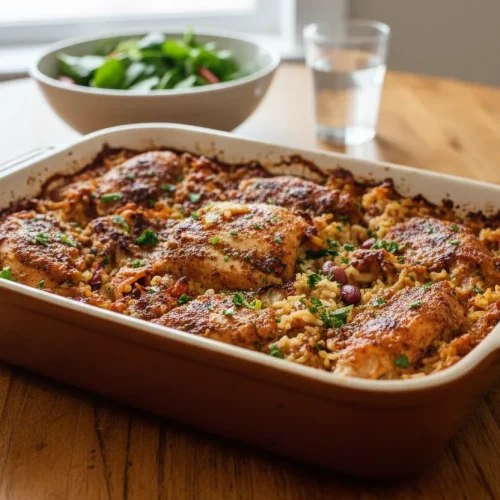
Easy Chicken Thighs and Rice Recipe
Equipment
- 9 by 13 inch casserole dish
- skillet
- Small dish (for mixing spices)
Ingredients
Primary Components & Aromatics
- 5 strips smoked beef bacon chopped into tiny pieces
- 2 tablespoons butter (or oil, plus more for brushing chicken )
- 1 medium onion chopped
- 3 cloves garlic finely chopped
Main Protein & Foundation
- 5 chicken thighs skinless & boneless
- 1 1/2 cups jasmine rice uncooked, rinsed
- 4 cups homemade chicken broth
Seasoning
- 1 1/2 tablespoons Meat Seasoning
- 1 teaspoon smoked paprika (or regular paprika)
- to taste sea salt and pepper
Instructions
Preparation and Sautéing Aromatics
- Preheat the oven to 400F and grease 9 by 13 inch casserole dish.
- Using a skillet, add 5 chopped smoked beef bacon strips and saute until golden color about 5 minutes.
- Next remove smoked beef bacon grease leaving about 1 tablespoon inside the skillet add 1 tablespoon butter (Or remove all of the smoked beef bacon grease and add 2 tablespoon of butter!) and 1 chopped onion.
- Saute onion with smoked beef bacon until onion is soft about 9 minutes, stirring few times.
- Now, add 3 finely chopped garlic cloves and saute for 1 minutes, stirring few times.
Layering and Initial Bake
- Place 1 1/2 cup of rice and the sauteed onion with smoked beef bacon into a casserole dish.
- Using small dish, mix all spices together. Rub 1/2 of the spice mixture onto both sides of the chicken thighs and the rest of the spice mixture add it to the casserole to flavor the rice.
- Pour in 4 cups of homemade chicken broth. Stir the rice and broth try it, and add more salt if needed.
- Place chicken on top the rice, cover the casserole and bake for 45 minutes.
Finalizing the Bake
- After uncover, then bake for 15 to 20 more minutes, or until water evaporates.
- Sprinkle with freshly chopped greens like parsley and enjoy!