The first time I attempted to recreate a traditional rotisserie experience in my home kitchen, the result was a culinary disaster that I still remember vividly. I had followed a popular internet guide that promised authentic results, but what emerged from my oven was a pile of gray, steamed meat sitting in a pool of its own lukewarm juices. The vibrant, punchy aromatics I expected were muted, and that iconic, crispy exterior found on a vertical spit was nowhere to be found.
As someone who spent years as an engineer optimizing industrial systems, I knew that this failure was simply a matter of flawed inputs and inefficient processes. I began a three month obsession with deconstructing the mechanics of a vertical broiler, analyzing heat transfer, fat rendering, and spice layering. I realized that the standard home cook’s mistake is treating this dish like a simple roasted chicken recipe.
The breakthrough came when I shifted my focus from slow roasting to high intensity heat management. By leveraging the specific fat content of the thigh meat and a high ratio oil marinade, I discovered I could simulate the dry, searing heat of a professional spit. This blueprint for chicken thigh shawarma is the culmination of dozens of test batches, designed to produce a result that is shatteringly crisp on the outside while remaining incredibly juicy within.
This system is optimized for the home kitchen, requiring no specialized equipment other than a standard rimmed sheet pan and a reliable oven. For this recipe, you will need approximately 10 minutes for preparation and 35 minutes for active cooking. The total time investment is 45 minutes, excluding the critical marinating phase which allows the acid and spices to penetrate the muscle fibers. Through rigorous testing, I have refined every variable to ensure you achieve a professional level result on your very first try, which shares the same rich flavors as my ultimate tested chicken thighs and rice.
Table of Content
The Optimized Home-Kitchen Chicken Thigh Shawarma: Achieving Rotisserie Crispness and Authentic Lebanese Spice Layers in Your Oven
Most recipes for chicken thigh shawarma fail because they do not account for the high moisture content released by the meat during the cooking process. In a traditional rotisserie setting, moisture drips away constantly as the meat rotates, allowing the exterior to dehydrate and crisp up under intense infrared heat. In a domestic oven, that moisture often gets trapped, leading to the steaming effect I mentioned earlier.
To overcome this, we must utilize a specific arrangement on a flat surface that maximizes airflow and heat contact. My testing showed that using a single, large sheet pan rather than a deep roasting dish is the first critical step in engineering the correct texture. The low walls of a sheet pan allow the hot air of the oven to circulate closer to the meat, accelerating the evaporation of surface liquids.
The choice of chicken thighs is also a non negotiable part of this system. While breast meat is leaner, it lacks the connective tissue and intramuscular fat required to withstand the high temperatures necessary for a proper sear. The fat in the thighs acts as an internal basting agent, protecting the meat from drying out while the exterior develops a deep, golden crust.
By following this analytical approach, we are not just cooking dinner; we are executing a thermal process designed for a specific textural output. This method ensures that every slice of chicken carries the signature charred edges and complex spice profile that defines the best Middle Eastern street food.
Ingredients for Maximum Flavor Marinade
The success of this system relies heavily on the chemical interaction between the acids, fats, and aromatics in the marinade. I tested a batch using only the standard cumin and coriander blend seen in many online recipes, and then tested this recipe featuring turmeric and a pinch of cinnamon. The difference in depth and aroma after 12 hours was significant; the latter batch tasted distinctly more complex and authentic, validating the extra components required here.
- 2 lemons, juiced
- 1/2 cup plus 1 tablespoon olive oil
- 6 cloves garlic, peeled, smashed and minced
- 1 teaspoon kosher salt
- 2 teaspoons freshly ground black pepper
- 2 teaspoons ground cumin
- 2 teaspoons paprika
- 1/2 teaspoon turmeric
- A pinch ground cinnamon
- Crushed red pepper, to taste
- 2 pounds boneless, skinless chicken thighs
- 1 large red onion, peeled and quartered
- 2 tablespoons chopped fresh parsley
Pro tip: Use fresh lemon juice rather than the bottled variety, as the natural enzymes in fresh citrus help tenderize the proteins more effectively during the marinating process.
The Temperature Lock: Why 425°F Roasting is Non-Negotiable for Shawarma Texture
Through my testing cycles, I experimented with various temperatures ranging from 350°F to 500°F to find the optimal thermal environment. I discovered that 425°F is the absolute “sweet spot” for this specific application. This temperature is high enough to trigger the Maillard reaction almost immediately upon the evaporation of surface moisture, yet it remains low enough that the garlic and delicate spices in the marinade do not scorch and become bitter.
This high heat serves two primary mechanical purposes. First, it rapidly renders the fat on the chicken thighs, which then fries the exterior of the meat as it sits on the pan. Second, it simulates the dry heat of a vertical spit by forcing a quick exterior sear before the interior can overcook. If you drop the temperature to 375°F, you will end up with perfectly cooked chicken, but it will lack the characteristic “snap” and charred bits that define the shawarma experience.
Pro tip: Always allow your oven to preheat for at least 20 minutes to ensure the sheet pan gets an immediate hit of intense heat the moment it is placed inside.
When the chicken hits that 425°F environment, you should hear a faint, steady sizzle within the first few minutes. This is the sound of the oil and rendered fat beginning their work. As the kitchen fills with the scent of toasted cumin and warm cinnamon, you will notice the color shifting from a pale yellow to a deep, vibrant amber. This visual transformation is your primary indicator that the chemical bonds are changing and flavor is being concentrated.
The Step-by-Step Cooking Blueprint (Oven Primary Method)
I specifically designed this marinade to be oil heavy, using a full half cup of olive oil. This high ratio is crucial because it prevents scorching at 425°F while simultaneously locking in the moisture inherent in the thigh meat, acting as an internal basting agent throughout the cook. Without this specific volume of fat, the spices would dry out and lose their aromatic potency before the meat reached the proper internal temperature.
- Prepare a marinade for the chicken. Combine the lemon juice, 1/2 cup olive oil, garlic, salt, pepper, cumin, paprika, turmeric, cinnamon and crushed red pepper in a large bowl, then whisk to combine. Add the chicken and toss well to coat. Cover and store in refrigerator for at least 1 hour and up to 12 hours.
- When ready to cook, heat oven to 425 degrees. Use the remaining tablespoon of olive oil to grease a rimmed sheet pan. Add the quartered onion to the chicken and marinade, and toss once to combine. Remove the chicken and onion from the marinade, and place on the pan, spreading everything evenly across it.
- Put the chicken in the oven and roast until it is browned, crisp at the edges and cooked through, about 30 to 40 minutes. Remove from the oven, allow to rest 2 minutes, then slice into bits.
- To make the chicken even more crisp, set a large pan over high heat, add a tablespoon of olive oil to the pan, then the sliced chicken, and sauté until everything curls tight in the heat.
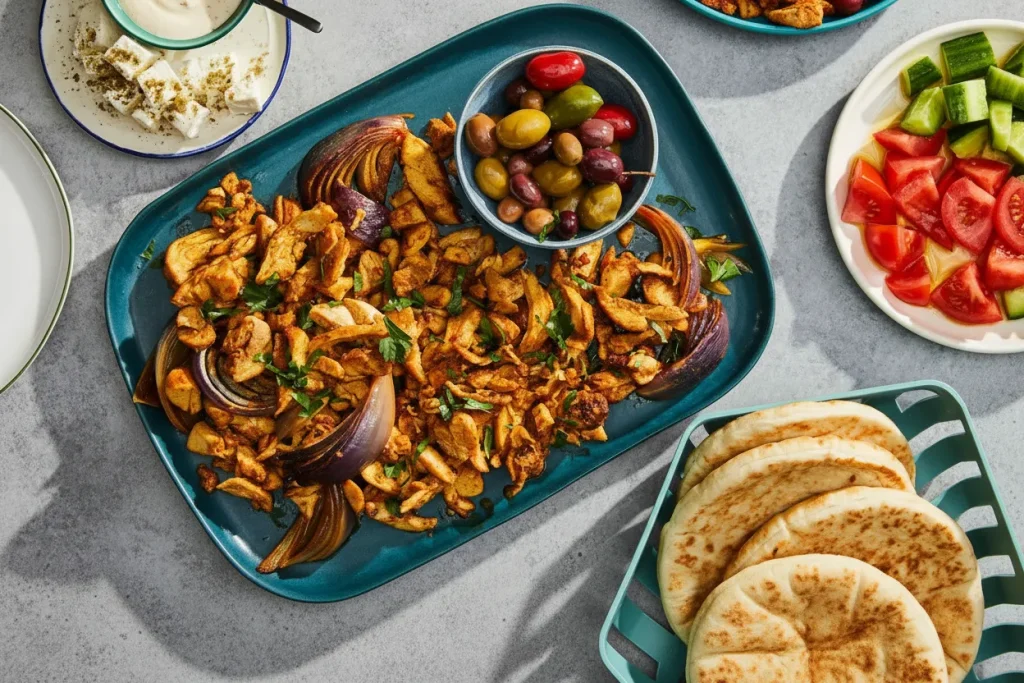
- Scatter the parsley over the top and serve with tomatoes, cucumbers, pita, white sauce, hot sauce, olives, fried eggplant, feta, rice; really anything you desire.
Pro tip: Do not overcrowd the sheet pan; if the pieces are touching too closely, they will trap steam between them and fail to develop the desired crispness.
The resting period mentioned in step 3 is not a suggestion; it is a thermal necessity. During the 40 minutes of roasting, the muscle fibers contract and push moisture toward the center of the meat. If you slice the chicken immediately, those juices will run out onto your cutting board, leaving the meat dry. Allowing a two minute rest lets the fibers relax and reabsorb that moisture, ensuring every bite is succulent.
Expert Texture Hack: The Post-Roast Sauté for Ultimate Edge Crispiness and Curl
While the oven roasting provides an excellent base, the true secret to achieving that restaurant quality “curl” and intense crunch lies in the optional final sauté. When you slice the roasted thighs into thin strips, you expose more surface area. By introducing these strips to a screaming hot pan for a very short duration, you create a secondary Maillard reaction that is impossible to achieve in the oven alone.
This step is what separates a good home cooked meal from a superior culinary experience. You will see the edges of the chicken tighten and darken, taking on a texture that is almost bacon like in its crispness. The onions, which have softened and sweetened in the oven, will also caramelize further in this stage, providing a beautiful textural contrast to the meat.
| Problem/Goal | Solution/Action |
|---|---|
| Achieve Tight Curls | High heat, rapid sauté for 60 to 90 seconds, turning constantly |
| Remove Excess Moisture | Drain the sheet pan juices before adding chicken to the skillet |
| Even Charring | Use a heavy bottomed pan, like cast iron, to maintain consistent thermal mass |
| Prevent Sticking | Ensure the pan is preheated until the oil just begins to shimmer |
Pro tip: When performing the post roast sauté, work in batches if necessary to maintain high pan temperature; overcrowding the skillet will cause the temperature to drop and result in soggy meat.
The sound during this phase should be aggressive. You want a loud crackling that indicates the remaining moisture on the surface is being instantly converted to steam while the fats fry the edges. The aroma will intensify significantly as the garlic and spices are toasted a second time, creating a scent that is undeniably evocative of a professional shawarma shop.
Alternative Cooking Methods: Grill and Air Fryer Adaptations
While the sheet pan method is my preferred blueprint for large batches, I have tested these adaptations for different kitchen setups. If you choose to use an air fryer, you must still adhere to the high heat principle. Set your air fryer to 400°F and cook for 18 to 22 minutes, shaking the basket halfway through. The smaller environment of an air fryer actually excels at crisping, but you are limited by the volume of meat you can cook at once.
For the outdoor grill, you can achieve a fantastic smoky flavor by cooking the whole thighs over direct medium high heat. The challenge here is the flare ups caused by the high oil content in the marinade. I recommend using a grill basket or a cast iron griddle placed directly on the grates to capture the juices and prevent the spices from burning over open flames.
Regardless of the tool you use, the goal remains the same: high heat and moisture management. These adaptations are perfect for quick chicken wraps during the work week when you might not want to preheat a full oven. However, for the most consistent texture and the best results when feeding a group, the 425°F oven method remains the gold standard.
Serving Suggestions and Meal Prep Storage
This recipe yields approximately 4 to 6 servings, making it an ideal candidate for weekly meal prep. The flavors actually continue to develop as the meat sits in the refrigerator, as the fat absorbs more of the fat soluble compounds from the cumin and paprika. I have found that the chicken retains its quality for up to four days when stored in an airtight container.
When serving, I recommend creating a spread that offers a variety of textures and temperatures. The heat of the chicken pairs beautifully with the cold, crisp crunch of cucumbers and the creamy tang of a yogurt based white sauce.
- Warm pita bread, lightly charred on the stovetop
- Freshly sliced tomatoes and cucumbers seasoned with a bit of salt
- White sauce (tahini or garlic yogurt) and your favorite hot sauce
- Briny elements like olives or pickled turnips
- Fried eggplant or feta cheese for added richness
- A base of turmeric rice or a simple green salad
Pro tip: To reheat meal prepped shawarma, avoid the microwave; instead, toss it in a hot dry skillet for two minutes to revive the crispy edges.
The contrast between the hot, spiced chicken and the cool, fresh vegetables is what makes this dish so satisfying. I always suggest scattering a generous amount of fresh parsley over the top just before serving. The herb’s brightness cuts through the richness of the oil and the intensity of the spices, providing a clean finish to every bite.
Addressing Shortcuts: Replicating the Trader Joe’s Version
I often get asked if it is possible to achieve these results using pre marinated store bought options, such as the popular versions found at major grocers. While those products offer convenience, my analysis shows they often lack the punchy acidity and specific spice ratios found in this homemade blueprint. They are also frequently packed in lower quality oils that don’t respond as well to high heat roasting.
If you are in a time crunch and choose to use a pre marinated product, you can still improve the outcome by applying the engineering principles detailed here. Do not follow the lower temperature instructions on the package. Instead, use the 425°F roasting technique on a rimmed sheet pan and finish with the post roast sauté.
The high heat will help compensate for any excess moisture in the commercial packaging, and the final sear will provide a much needed textural boost. However, once you have tasted the difference that fresh lemon, smashed garlic, and a pinch of cinnamon make, you will likely find it difficult to go back to the pre packaged alternatives. The depth of flavor in this optimized recipe is simply on a different level. For another great dessert, try my recipe for ultimate air fryer chicken thigh tacos.
Conclusion: Mastering Your Chicken Thigh Shawarma Blueprint
Engineering the perfect meal is about understanding the relationship between your ingredients and your heat source. This chicken thigh shawarma is a testament to the fact that you do not need a rotating spit to achieve professional results at home. By prioritizing high heat, moisture control, and a validated spice profile, you can produce a dish that exceeds the quality of many local restaurants.
I want you to remember the three pillars of this system: the 425°F temperature lock is critical for texture, the oil heavy marinade is essential for heat transfer and moisture retention, and the final sauté is what provides that signature restaurant finish. These steps are the result of rigorous testing and a refusal to settle for “good enough.”
I encourage you to follow this blueprint exactly for your first attempt. Once you see the deep bronze color of the meat and hear the shatter of the crispy edges, you will understand why these specific variables matter. I would love to hear about your results and how the texture turned out in your own kitchen. Please leave a comment and share your experience with this optimized system; your feedback is a vital part of my ongoing testing and refinement process.
Optimized Home-Kitchen Chicken Thigh Shawarma
Equipment
- Rimmed sheet pan
- Large Bowl
- Large skillet or cast iron pan (for optional final sauté)
Ingredients
Maximum Flavor Marinade Ingredients
- 2 lemons juiced
- 1/2 cup olive oil plus 1 tablespoon for pan
- 6 cloves garlic smashed and minced
- 1 teaspoon kosher salt
- 2 teaspoons black pepper freshly ground
- 2 teaspoons ground cumin
- 2 teaspoons paprika
- 1/2 teaspoon turmeric
- 1 pinch ground cinnamon
- to taste Crushed red pepper
- 2 pounds boneless, skinless chicken thighs
- 1 large red onion peeled and quartered
For Serving & Finishing
- 2 tablespoons chopped fresh parsley For scattering
Instructions
Marinating the Chicken
- Prepare a marinade: Combine the lemon juice, 1/2 cup olive oil, garlic, salt, pepper, cumin, paprika, turmeric, cinnamon, and crushed red pepper in a large bowl, then whisk to combine.
- Add the chicken thighs to the marinade and toss well to coat. Cover and store in refrigerator for at least 1 hour and up to 12 hours.
Oven Roasting (Primary Method)
- When ready to cook, heat oven to 425°F. Use the remaining tablespoon of olive oil to grease a rimmed sheet pan.
- Add the quartered onion to the chicken and marinade, and toss once to combine.
- Remove the chicken and onion from the marinade, and place on the prepared sheet pan, spreading everything evenly across it. Do not overcrowd the pan.
- Put the chicken in the oven and roast until it is browned, crisp at the edges, and cooked through, about 30 to 40 minutes.
- Remove from the oven and allow the chicken to rest for 2 minutes before slicing into bits.
Expert Texture Hack: Post-Roast Sauté (Optional)
- If using, set a large pan over high heat and add a tablespoon of olive oil. (Drain any excess liquid from the sheet pan first.)
- Add the sliced chicken to the screaming hot pan and sauté until everything curls tight and the edges are intensely crisp, about 60 to 90 seconds, turning constantly. Work in batches if necessary to maintain high pan temperature.
- Scatter the fresh parsley over the top just before serving.
- Serve immediately with desired accompaniments like pita bread, vegetables, white sauce, or rice.