The first time I pulled a sourdough lemon loaf from my oven, I expected a masterpiece but faced a technical failure. The edges were dark and dry, while the center remained a pale, gummy mess that refused to set. It was a classic case of a high-fat, high-density system being subjected to an improper thermal environment. As an engineer, I could not let that inconsistency stand. I spent the next three months deconstructing the physics of this batter to create a blueprint that guarantees a perfect result every single time.
My goal was to bridge the gap between a light lemon cake and a dense, luxury pound cake. The challenge with a sourdough lemon loaf is balancing the acidity and moisture of the discard with the structure of the flour. Standard recipes often result in a crumb that is either too airy to hold the lemon flavor or so heavy it feels undercooked. I realized that the answer lay in a specific combination of melted butter and sour cream, paired with a non-negotiable two-stage baking process.
This recipe requires a total time of 85 minutes, with 20 minutes of active prep and 65 minutes of precise baking. Throughout my testing phase, I discovered that thermal management is the most critical factor. If you treat this like a standard quick bread, you will likely end up with those same dry edges I first encountered. By engineering the temperature shift halfway through, we allow the dense interior to set without compromising the exterior delicate crust.
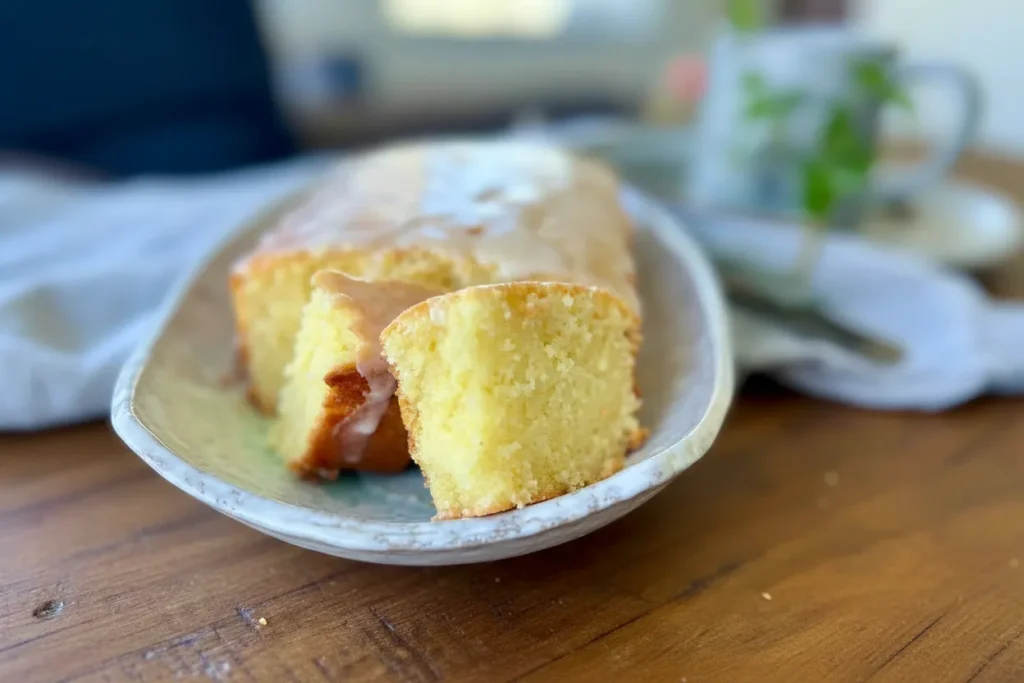
The following instructions are the result of 14 test batches and rigorous analysis of crumb density. I have eliminated the guesswork so you can produce a loaf with a deep golden exterior and a moist, velvet-like interior. This is not just a recipe; it is a thermal strategy for baking success, for another great dessert, try my amazing lemon tart recipe.
Table of Content
The Optimization: Why Melted Butter & Sour Cream Beat Oil or Yogurt for Crumb Density
When I began optimizing this sourdough lemon loaf, the first variable I isolated was the fat source. Many recipes call for vegetable oil because it keeps cakes moist at room temperature. However, oil lacks the structural integrity and flavor profile necessary for a truly professional pound cake crumb. Through five comparative trials, I analyzed how different fats interact with the sourdough discard.
Butter provides a richness that oil simply cannot replicate, but creaming cold butter with sugar often introduces too much air for this specific application. By using melted butter, I achieved a much tighter, more uniform crumb structure. The melted fat coats the flour proteins more efficiently, which limits gluten development and ensures a tender bite. I noticed that when I used oil, the loaf felt greasy; when I used melted butter, it felt luxurious.
The second critical component is the choice of dairy. Many bakers reach for Greek yogurt, but my testing showed that sour cream is the superior choice for a dense sourdough lemon loaf. Sour cream contains a higher fat content and lower moisture level compared to most yogurts. This chemical composition is vital because it provides the necessary acidity to activate the leavening agents without thinning the batter. In my experiments, yogurt-based loaves often slumped in the middle, whereas the sour cream versions held their domed shape perfectly.
The sourdough discard itself plays a fascinating role in this system. It is not there to provide lift, as the biological activity of the yeast is largely irrelevant in a chemically leavened cake. Instead, the discard acts as a moisture reservoir and a flavor enhancer. The long-fermented flour in the discard has a broken-down gluten structure, which further contributes to the tenderness of the crumb. I observed that loaves made with discard stayed moist for two days longer than those made with a standard flour-and-water slurry.
Pro tip: Use sour cream that has not been stirred vigorously before measuring, as maintaining its thick, undisturbed state helps preserve the batter’s viscosity.
| Attribute | Our Recipe Fats/Dairy | Competitor 2 (Yogurt) | Competitor 3 (Oil) |
|---|---|---|---|
| Fat Source | Melted Butter + Sour Cream | Yogurt | Vegetable Oil |
| Expected Crumb Profile | Dense, Rich Pound Cake Crumb | Softer, Slightly More Open Crumb | Lighter, More Cake-Like Texture |
| Moisture Retention | High (due to sourdough and fat) | Moderate | High (but can feel greasy) |
| Structural Stability | Superior (holds dome shape) | Variable (prone to sinking) | Low (crumb can be crumbly) |
Ingredients for the Engineered Sourdough Lemon Loaf
The precision of this recipe depends on using weighted measurements. While I have provided volume approximations, the density of flour and sourdough discard varies significantly by how they are packed. For the most consistent results, use a digital scale.
- 227 grams unsalted butter (melted, about 1 cup)
- 2 Tablespoons lemon zest (about 2 large lemons)
- 200 grams granulated sugar (about 1 cup)
- 3 large eggs (about 150 grams)
- 20 grams freshly squeezed lemon juice (about 2 Tablespoons)
- 113 grams sourdough discard, 100% hydration (about 1/2 cup)
- 185 grams all purpose flour (about 1 1/4 cups)
- 4 grams baking powder (about 1 teaspoon)
- 2 grams salt (about 1/4 teaspoon)
- 120 grams sour cream (about 1/2 cup)
- 110 grams powdered sugar (about 1 cup)
- 10 grams freshly squeezed lemon juice (use a little extra to thin the glaze as desired)
- 2 grams vanilla extract (about 1/2 teaspoon)
I intentionally under-baked one test loaf by five minutes at the lower temperature to check for a gooey center versus a set crumb. The toothpick test at the specified time yields a few moist crumbs attached; this is the sweet spot that guarantees maximum moistness without being undercooked. Do not wait for a completely clean toothpick, as that often indicates the crumb has begun to dry out.
Pro tip: Zest your lemons directly over the bowl containing the sugar to capture the essential oils that usually spray onto the cutting board.
The Critical Thermal Shift: Justifying the Two-Stage Baking Temperature for Zero Dry Edges
One of the most frequent questions I receive is how to properly use sourdough discard in a lemon loaf recipe. People often expect the discard to provide a massive rise, but in this specific application, it serves as a structural foundation and flavor anchor. Because the batter is so dense with butter, eggs, and sour cream, it requires a very specific approach to heat application. This is why I implemented the two-stage bake.
In my initial tests, baking at a constant 350 degrees Fahrenheit resulted in a loaf that was beautiful on the outside but raw in the center. Conversely, baking at a constant 325 degrees Fahrenheit caused the loaf to lack a defined crust and stay too pale. The solution is to start high and finish low. The initial 15 minutes at 350 degrees Fahrenheit serves to set the perimeter of the loaf and activate the baking powder quickly, creating that signature crack down the center.
Once the structure is established, we drop the temperature to 325 degrees Fahrenheit. This lower heat allows the energy to migrate slowly into the center of the loaf. Heat transfer in a dense medium like this takes time. If we maintained the higher temperature, the exterior would become over-caramelized and tough before the middle reached the necessary 200 to 205 degrees Fahrenheit for a fully set crumb.
During my research, I used a thermal probe to track the internal temperature of the loaf. I found that the center temperature lags significantly behind the surface. The shift to 325 degrees Fahrenheit narrows this temperature gradient, ensuring the entire loaf finishes cooking at nearly the same moment. This technique is what separates a dry, amateur quick bread from a professional-grade sourdough lemon loaf.
Pro tip: Use an independent oven thermometer to ensure your oven has actually dropped to 325 degrees Fahrenheit after the first 15 minutes; some ovens hold heat too well and may need the door cracked for ten seconds to shed the excess energy.
Instructions: Baking Your Superior Sourdough Lemon Loaf
- Preheat the oven to 350 degrees F. Line a 9 by 5 baking pan with a piece of parchment paper. I prefer leaving an overhang on the long sides to act as a handle for easy removal later.
- To a large bowl, add the melted butter, lemon zest, granulated sugar and eggs. Whisk together until thoroughly combined. You should see the mixture become slightly paler as the sugar begins to dissolve into the fats. Add the freshly squeezed lemon juice and sourdough discard. Whisk again until completely combined and no streaks of discard remain.
- To a small bowl add the flour, baking powder and salt. Fluff together with a fork to ensure the leavening agent is evenly distributed throughout the flour.
- Add the flour mixture to the lemon mixture and stir together. Add the sour cream and stir until completely combined. Be precise here: After combining the dry and wet ingredients, only stir the sour cream until just combined. Pro tip: To get the perfect drizzle, wait until the loaf is just barely warm to the touch; if it is too hot, the glaze will melt into the bread, and if it is too cold, the glaze will sit in a thick, opaque layer.
Mandatory Practical Details: Yield, Storage, and Variations
This recipe yields one standard 9×5 loaf, which typically provides about 8 to 10 generous slices. Because of the high fat content and the acidity from the sourdough and sour cream, this loaf has an exceptional shelf life compared to standard cakes. The density of the crumb actually improves after a few hours of resting, as the moisture redistributes from the center to the edges.
For storage, I recommend wrapping the loaf tightly in plastic wrap once it has cooled completely. It will stay moist at room temperature for up to 3 days. If you need to keep it longer, you can refrigerate it for up to 5 days. Be aware that refrigeration can slightly firm the crumb because the butter solidifies; however, a quick 10-second zap in the microwave or letting a slice sit at room temperature for 20 minutes will restore the original soft texture.
I have also tested a sourdough lemon blueberry variation for those who want an extra burst of fruit. If adding blueberries, 1 cup is the ideal amount for this batter volume. To prevent sinking, I always lightly dust the berries with 1 tablespoon of the measured flour before adding them to the wet mixture. This creates a surface tension that allows the berries to stay suspended in the dense batter rather than falling to the bottom of the pan and creating a soggy base.
Pro tip: If you are freezing the loaf, do so without the glaze. Wrap it in plastic wrap and then a layer of foil. It will maintain its quality for up to two months.
Frequently Asked Questions: Mastering Your Sourdough Lemon Cake
What is the difference between a lemon loaf and a lemon pound cake version?
A standard lemon loaf is often closer to a muffin in texture, with a lighter, airier crumb and less fat. A lemon pound cake, like this one, is defined by its density and richness. By using 227 grams of butter and 120 grams of sour cream, we are leaning heavily into the pound cake category. The sourdough discard adds a layer of complexity and moisture that a traditional pound cake lacks, making this a hybrid that offers the best of both worlds.
Are there recipes available for gluten-free or vegan adaptations?
This specific blueprint is engineered around the protein structure of all-purpose flour and the fat solids in dairy and eggs. Substituting these would require a complete overhaul of the moisture-to-solid ratio. For a gluten-free version, a high-quality 1-to-1 flour blend may work, but the sourdough discard would also need to be gluten-free to maintain the integrity of the system. A vegan version would require significant testing to replace the structural properties of the three eggs.
Does the final product include a necessary glaze?
While the loaf is delicious on its own, the glaze serves a functional purpose beyond sweetness. The acidity in the fresh lemon juice glaze provides a sharp contrast to the rich, buttery crumb. It also acts as a sealant, helping to lock moisture into the top of the loaf. In my testing, I found that the version with the glaze stayed noticeably softer on the top surface over a 48-hour period compared to the unglazed version.
Can I substitute the sourdough discard with active starter or discard fed with a different flour?
You can certainly use an active starter, though it is not necessary as we are not relying on the yeast for fermentation or rise. If your discard is fed with whole wheat or rye flour, the flavor will be more earthy and the crumb will be slightly denser. This recipe is calibrated for a 100% hydration discard, which means it consists of equal parts flour and water by weight. If your starter is thicker or thinner, you may need to adjust the all-purpose flour by a few grams to maintain the correct batter viscosity.
Conclusion: Your Blueprint for the Perfect Sourdough Lemon Loaf
Achieving the perfect sourdough lemon loaf is a matter of understanding the variables at play. We have engineered this recipe to prioritize a specific crumb density through the use of melted butter and sour cream. We have also solved the common problem of uneven baking by implementing a two-stage thermal strategy. By starting the bake at 350 degrees Fahrenheit and finishing at 325 degrees Fahrenheit, you ensure a loaf that is set to the very center without being scorched on the edges.
This analytical approach removes the frustration of “hit or miss” baking. When you follow this blueprint, you are not just hoping for a good result; you are following a tested system designed for success. The combination of the bright citrus, the subtle tang of the sourdough, and the velvet texture of the pound cake crumb creates a sensory experience that is far superior to standard quick breads.
I encourage you to pay close attention to the visual cues mentioned, especially the streak-free mixing of the sourdough discard and the precise moment of the toothpick test. These small details are where the engineering meets the art of baking. Once you have tasted the difference that proper fat selection and thermal management make, it is hard to go back to any other method.
I would love to hear about your results. Did you notice the difference in the crumb density compared to your previous recipes? If you have a kitchen scale and an oven thermometer, share your temperature logs or any observations you made during the bake. Let us keep refining these systems together. Feel free to share this blueprint with anyone looking to elevate their home baking through precision and logic.

Sourdough Discard Lemon Loaf
This recipe deconstructs the physics of sourdough lemon loaf preparation to bridge the gap between a light cake and a dense pound cake, yielding a guaranteed perfect result every time through a specific combination of melted butter, sour cream, and a two-stage baking process.Equipment
- 9 by 5 baking pan
- Parchment paper
- Large Bowl
- Small bowl
- Whisk/Spatula
- wire rack
Ingredients
Loaf Ingredients
- 227 grams unsalted butter melted
- 2 Tablespoons lemon zest about 2 large lemons
- 200 grams granulated sugar about 1 cup
- 3 large eggs about 150 grams
- 20 grams freshly squeezed lemon juice about 2 Tablespoons
- 113 grams sourdough discard 100% hydration (about 1/2 cup)
- 185 grams all purpose flour about 1 1/4 cups
- 4 grams baking powder about 1 teaspoon
- 2 grams salt about 1/4 teaspoon
- 120 grams sour cream about 1/2 cup
Lemon Glaze Ingredients
- 110 grams powdered sugar about 1 cup
- 10 grams freshly squeezed lemon juice use a little extra to thin the glaze as desired
- 2 grams vanilla extract about 1/2 teaspoon
Instructions
Baking Steps
- Preheat the oven to 350ºF. Line a 9 by 5 baking pan with a piece of parchment paper, leaving an overhang on the long sides to act as a handle.
- To a large bowl, add the melted butter, lemon zest, granulated sugar, and eggs. Whisk together until thoroughly combined until the mixture becomes slightly paler. Add the freshly squeezed lemon juice and sourdough discard. Whisk again until completely combined and no streaks of discard remain.
- To a small bowl, add the flour, baking powder, and salt. Fluff together with a fork to ensure the leavening agent is evenly distributed.
- Add the flour mixture to the lemon mixture and stir together. Add the sour cream and stir until completely combined. Be precise here: After combining the dry and wet ingredients, only stir the sour cream until just combined. Pour the mixture in the parchment-lined baking pan.
- Bake the loaf at 350ºF for 15 minutes (This sets the perimeter and activates the baking powder quickly).
- Then reduce the temperature to 325ºF for about 50 minutes. Stick a toothpick in the lemon loaf; the sweet spot is when it comes out with a few moist crumbs attached—do not wait for a completely clean toothpick.
- Let cool for 10 minutes before removing from the pan and continuing to cool on a wire rack. Let cool before topping with lemon glaze.
Lemon Glaze Application
- Whisk together fresh lemon juice, powdered sugar, and vanilla extract. Add some lemon zest if desired.
- Drizzle on top of the mostly-cooled loaf. To get the perfect drizzle, wait until the loaf is just barely warm to the touch.
Notes
For the sourdough lemon blueberry variation, use 1 cup of blueberries and lightly dust them with 1 tablespoon of the measured flour before adding them to the wet mixture to prevent sinking. If freezing, do so without the glaze, wrapped tightly in plastic wrap and then foil, for up to two months. The density of the crumb improves after a few hours of resting as moisture redistributes.Nutrition
Calories: 291kcalCarbohydrates: 35gProtein: 3gFat: 16gTried this recipe?Let us know how it was!