Welcome to The Definitive Guide to Pesto Zucchini Noodle Salad: Mastering Texture, Taste, and Technique. This recipe is more than just a quick summer meal; it’s an exploration of flavor and texture, built upon techniques that banish grainy, bitter pesto forever. I’m going to share the secrets that have eluded me for so long, so you can make the perfect pesto zucchini noodle salad with pesto every time.
My pesto journey began with frustration. I remember batch after batch turning out either acridly bitter or disappointingly grainy. I tried everything: different ingredients, various blending times, even changing the order in which I added things to the food processor. The turning point came when I started focusing on the why behind each step, analyzing how each ingredient interacted, and understanding the impact of blending techniques on the final result.
These hard-won techniques are now yours. Inside, you’ll find the critical steps to achieving a vibrant, smooth, and perfectly balanced pesto. From prepping the zucchini to coaxing the best flavor from your basil, I’ve got you covered. Get ready to create a zucchini noodle salad with pesto that’s both healthy and bursting with fresh flavor. Prep Time: 10 minutes. Total Time: 10 minutes.
Table of Content
Spiralizing Secrets: Achieving the Perfect Zucchini Noodle Texture
The texture of zucchini noodles can make or break a salad. Over the years, I’ve experimented with every spiralizing method imaginable, and the nuances are significant.
I find that the thickness of the noodles dramatically affects both taste and mouthfeel. Thicker noodles tend to be slightly more watery and can dilute the pesto’s flavor. Finer noodles, on the other hand, better absorb the pesto, creating a more cohesive and flavorful bite.
To combat watery noodles, I’ve learned a few tricks. Salting the zucchini noodles in a colander draws out excess moisture; however, I discovered that a quick blanch in boiling water (followed by an ice bath) works wonders. This briefly cooks the zucchini, which helps it retain its texture and prevents it from becoming soggy. The science here is simple: the brief heat denatures some of the enzymes that contribute to water release.
Pesto Perfection: The Visual Cues for the Ideal Consistency
Building on the foundation of perfectly textured zucchini noodles, let’s talk pesto. I’ve found that visual cues are invaluable in determining the pesto’s final consistency; it shouldn’t just taste great, it should look the part too.
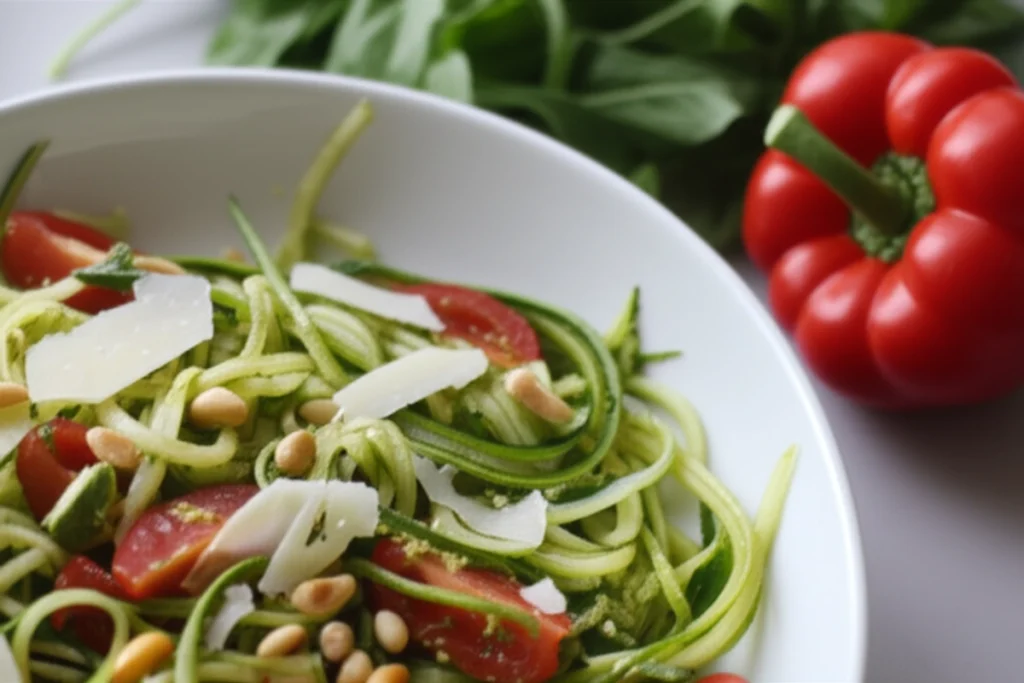
Perfect pesto is a vibrant, bright green, reminiscent of freshly cut grass, but richer. The texture is thick enough to coat the zucchini noodles evenly, yet fluid enough to blend effortlessly, much like melted ice cream.
The ratio of ingredients is key. Too many nuts can lead to a grainy pesto, while too much oil can make it overly slick. I aim for a balance where the basil is the star, complemented by the nutty richness of the pine nuts (or walnuts) and the sharp tang of Parmesan. When making pesto zucchini noodles, adjusting the amount of oil is the easiest way to correct the consistency.
Ingredients
- 2 medium zucchinis
- 1 cup grape tomatoes, halved
- 1 ¼ cup fresh basil leaves, packed
- 1 cup fresh baby spinach leaves, packed
- ¼ cup pine nuts or chopped walnuts, plus more for garnish
- 4 cloves fresh garlic
- ½ tsp coarse salt
- ⅛ tsp cracked black pepper
- ½ cup extra virgin olive oil
- ½ cup freshly grated Parmesan cheese plus more for garnish
I tested this recipe with both pine nuts and walnuts. While pine nuts offer a classic flavor, walnuts provide a heartier texture and are more budget-friendly. I find that the slightly bitter note in walnuts can be offset by a tiny pinch of sugar in the pesto.
Instructions
- Prep the zucchini: Spiralize the zucchini using the thinnest setting or use a vegetable peeler (see video and notes below). Set aside in a colander.
- Make the pesto: In a high power blender, add the spinach, basil, nuts, garlic, salt, pepper, Parmesan, and olive oil and blend until smooth. The key to a smooth, emulsified pesto lies in the blending process. The science behind emulsification is simple: it’s about creating a stable mixture of oil and water-based ingredients. To prevent separation, add the basil gradually while the blender is running, ensuring the oil is slowly incorporated. This technique is a must, as it keeps the pesto emulsified. Our specific blending instructions (e.g., basil to oil ratio, speed of blending) prevent this.
- In a large bowl, toss the pesto with the zucchini noodles and tomatoes until combined. Add extra Parmesan cheese and/or cooked shrimp to make it a full meal.
Frequently Asked Questions
How do I make zucchini noodles?
I’ve experimented with several methods, and spiralizing is my preferred way to create zucchini noodles. Using a spiralizer on the thinnest setting yields strands that mimic the texture of traditional pasta; however, a vegetable peeler will work in a pinch to create wider ribbons. I recommend either a spiralizer or vegetable peeler to make consistent strands.
What are the nutritional benefits of zucchini noodles?
Zucchini noodles are a lighter alternative to traditional pasta, packed with vitamins and low in carbohydrates. I consider them a great way to enjoy a pasta-like dish while increasing your vegetable intake. Zucchini also provides fiber, which aids in digestion.
How do I store leftover zucchini noodle salad?
The key to storing leftover zucchini noodle salad without it becoming soggy is to keep the noodles separate from the pesto until just before serving. I store the zucchini noodles in an airtight container lined with a paper towel to absorb excess moisture. The pesto should be stored separately in another airtight container. This method prevents the noodles from absorbing too much pesto and becoming mushy.
What other ingredients pair well with zucchini noodles and pesto?
Through trial and error, I’ve found that zucchini noodles and pesto are incredibly versatile. Grilled shrimp or chicken adds protein, while roasted vegetables like bell peppers or eggplant bring depth. I sometimes add a sprinkle of red pepper flakes for a touch of heat, or a squeeze of lemon juice to brighten the flavors. I’ve found the possibilities are endless; experiment to find your perfect combination.
Practical Tips and Variations
This recipe yields approximately 2-4 servings, depending on whether it’s served as a main course or a side. I consider this recipe a quick light lunch for 2, or a side dish for 4.
For optimal leftovers, I’ve found that storing the pesto and zucchini noodles separately prevents sogginess. The zucchini noodles can be stored in an airtight container lined with paper towels to absorb excess moisture, while the pesto should be kept in a separate sealed container. Combining them just before serving preserves the salad’s texture and flavor.
For a winter twist, I sometimes add roasted butternut squash cubes or toasted pumpkin seeds to this dish. I’ve also experimented with different herbs, like mint or parsley, to complement the basil. These variations make the recipe enjoyable year-round, adapting to the seasonal ingredients available.
Conclusion
So, there you have it: The Definitive Guide to Pesto Zucchini Noodle Salad: Mastering Texture, Taste, and Technique. I’ve shared every technique I’ve learned, from spiralizing secrets to pesto perfection, to ensure your success.
Remember, the key to a truly exceptional zucchini noodle salad with pesto lies in the details. Pay attention to the thickness of your zucchini noodles, aim for that vibrant green, melted-ice-cream consistency in your pesto, and don’t be afraid to experiment with seasonal variations.
Now it’s your turn! I’d love to hear about your own pesto-making adventures and any unique twists you’ve discovered. Leave a comment below sharing your experiences, and don’t forget to share this recipe with your friends. Together, let’s banish bland pesto and soggy noodles forever, one perfect zucchini noodle salad with pesto at a time.
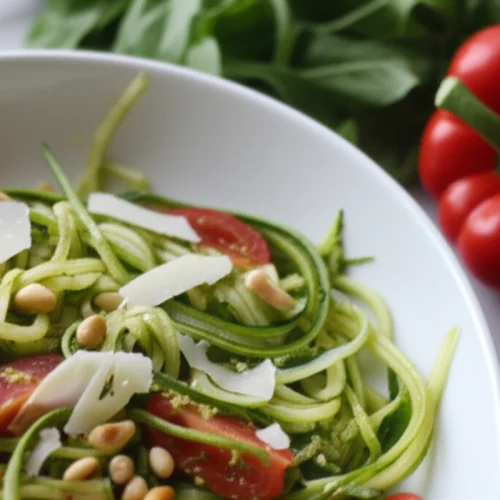
Pesto Zucchini Noodle Salad
Equipment
- Spiralizer
- Vegetable peeler
- High power blender
- Large Bowl
- colander
Ingredients
Ingredients
- 2 medium zucchinis
- 1 cup grape tomatoes, halved
- 1 ¼ cup fresh basil leaves, packed
- 1 cup fresh baby spinach leaves, packed
- ¼ cup pine nuts or chopped walnuts, plus more for garnish
- 4 cloves fresh garlic
- ½ tsp coarse salt
- ⅛ tsp cracked black pepper
- ½ cup extra virgin olive oil
- ½ cup freshly grated Parmesan cheese plus more for garnish
Instructions
Instructions
- Prep the zucchini: Spiralize the zucchini using the thinnest setting or use a vegetable peeler (see video and notes below). Set aside in a colander.
- Make the pesto: In a high power blender, add the spinach, basil, nuts, garlic, salt, pepper, Parmesan, and olive oil and blend until smooth. The key to a smooth, emulsified pesto lies in the blending process. The science behind emulsification is simple: it's about creating a stable mixture of oil and water-based ingredients. To prevent separation, add the basil gradually while the blender is running, ensuring the oil is slowly incorporated. This technique is a must, as it keeps the pesto emulsified. Our specific blending instructions (e.g., basil to oil ratio, speed of blending) prevent this.
- In a large bowl, toss the pesto with the zucchini noodles and tomatoes until combined. Add extra Parmesan cheese and/or cooked shrimp to make it a full meal.