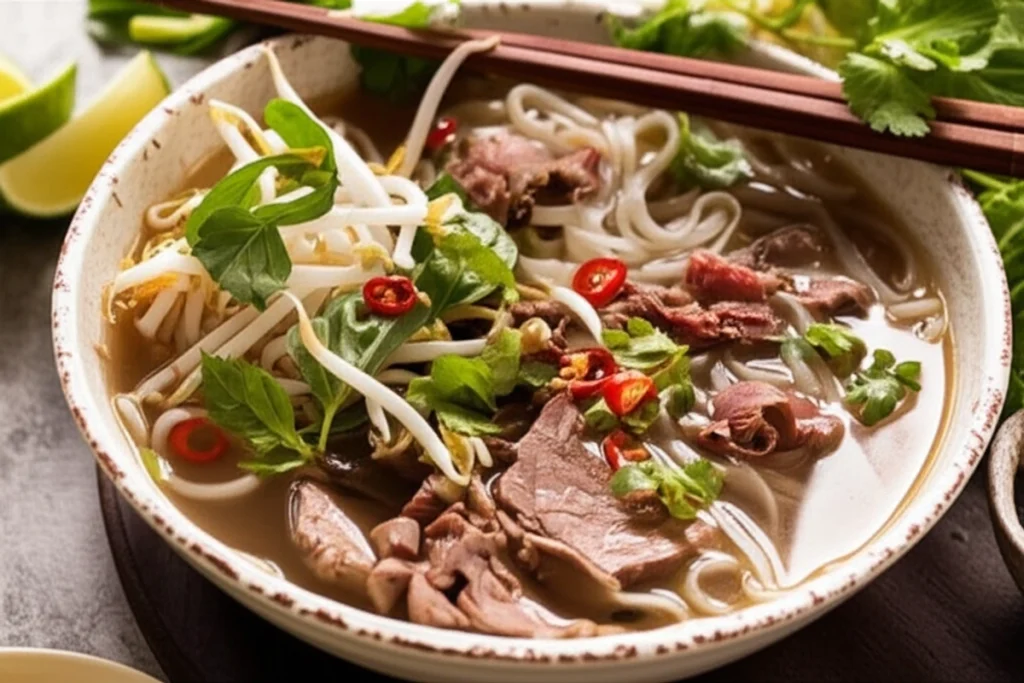
Unlock Authentic Flavor: The Science-Backed Guide to Perfect Beef Pho at Home. My first attempt at making beef pho was, to put it mildly, a failure. The broth lacked that deep, complex flavor I craved. It tasted flat. It wasn’t until I understood the critical role of charring the aromatics that I finally cracked the code to an authentic beef pho recipe.
That “aha!” moment transformed my understanding of flavor development. I learned that proper charring coaxes out layers of smokiness and sweetness that are simply unattainable otherwise. This recipe, born from that initial mistake, is my meticulously tested approach to achieving the perfect bowl of pho in your own kitchen.
Consider this your personal blueprint to crafting a restaurant-quality meal. With a Prep Time of 20 minutes, Cook Time of 180 minutes, and Total Time of 200 minutes, the journey to an unforgettable bowl of beef pho is well within reach.
Table of Content
The Secret’s in the Char: Mastering the Smokey Broth with Visual Cues
Building upon the foundation, achieving the right char on the onions and ginger is paramount to unlocking that authentic pho flavor. This isn’t just about adding color; it’s about initiating complex chemical reactions that transform the aromatics.
Onions should be blackened in spots, almost burnt. This process, known as the Maillard reaction, releases volatile compounds, including pyrazines and furans, which contribute to the distinctive smokey and slightly sweet flavor of authentic pho broth.
Ginger needs a similar treatment; aim for a deeply browned, blistered exterior. I’ve found that the heat helps break down the ginger’s cell walls, releasing more of its pungent oils and allowing them to meld seamlessly into the broth.
Beef Cuts Decoded: From Brisket to Tenderloin, Choosing the Right Meat for Your Pho
When it comes to beef pho, the choice of meat significantly impacts the broth’s flavor and the overall experience. While various cuts can be used, each offers distinct characteristics that cater to different preferences. I’ve found that understanding these nuances is crucial for crafting the perfect bowl.
Tenderloin, while undeniably tender, lacks the fat content necessary to create a rich, flavorful broth. Cuts like sirloin or round steak can be used, but they tend to become tough if simmered for extended periods.
For an authentic beef pho recipe, I always go for brisket and marrow bones. Brisket, with its generous marbling, renders a succulent richness into the broth as it simmers. Marrow bones add an unparalleled depth of flavor and a luxurious mouthfeel due to their high fat content. The fat renders out during the simmering process, enriching the broth with its savory essence. In my experience, this combination creates a broth that is both intensely flavorful and satisfyingly unctuous.
Ingredients
- 2 large onions (, halved)
- 150g / 5oz ginger (, sliced down the centre)
- 10 star anise
- 4 cinnamon quills
- 4 cardamon pods
- 3 cloves ((the spice cloves!))
- 1.5 tbsp coriander seeds
- 1.5kg / 3lb beef brisket
- 1kg / 2lb meaty beef bones
- 1kg / 2lb marrow bones ((leg, knuckle), cut to reveal marrow)
- 3.5 litres / 3.75 quarts water ((15 cups))
- 2 tbsp white sugar
- 1 tbsp salt
- 40 ml / 3 tbsp fish sauce ((Note 2))
- 50g / 1.5 oz dried rice sticks ((or 120g/4oz fresh) (Note 3))
- 30g / 1 oz beef tenderloin, raw, very thinly sliced ((Note 4))
- 3 – 5 brisket slices ((used for broth))
- Beansprouts, handful
- Thai basil, 3 – 5 sprigs
- Coriander/cilantro, 3 – 5 sprigs ((or more basil))
- Lime wedges*
- Finely sliced red chilli*
- Hoisin sauce*
- Sriracha* ((for spiciness))
I experimented with different ratios of brisket to beef bones. The leaner cuts resulted in a less flavorful broth, which is why I specifically call for a combination of brisket and marrow bones. These ingredients, when combined with careful technique, deliver an authentic beef pho recipe.
Instructions
- Heat a heavy based skillet over high heat (no oil) until smoking.
- Place onion and ginger in pan cut side down. Cook for a few minutes until it’s charred, then turn. Remove and set aside. The charring process is essential because it unlocks deep, smoky flavors that are characteristic of authentic beef pho. The heat helps to release volatile compounds, creating a more complex and aromatic broth.
- Toast Spices lightly in a dry skillet over medium high heat for 3 minutes.
- Rinse bones & brisket then cover with water in large stock pot.
- Boil for 5 minutes, then drain.
- Rinse each bone and brisket under tap water.
- Wipe pot clean, bring 3.5 litres / 3.75 quarts water to boil.
- Add bones and brisket, onion, ginger, Spices
- Add onion, ginger, Spices, sugar and salt; water should just barely cover everything.
- Cover with lid, simmer 3 hours.
- Remove brisket (should be fall-apart tender), cool then refrigerate for later.
- Simmer remaining soup UNCOVERED for 40 minutes.
- Strain broth into another pot, discard bones and spices. Should be about 2.5 litres / 2.65 quarts (10 cups), if loads more, reduce.
- Add fish sauce, adjust salt and sugar if needed. Broth should be beefy, fragrant with spices, savoury and barely sweet.
- Prepare rice noodles per packet, just prior to serving.
- Place noodles in bowl. Top with raw beef and brisket.
- Ladle over about 400 / 14 oz hot broth; this will cook beef to medium rare.
- Serve with Toppings on the side! Through meticulous testing, I’ve refined these steps to ensure the most flavorful and authentic beef pho recipe possible.
Troubleshooting Your Pho: From Salty Broth to Soggy Noodles, Solved!
Even with the best beef pho recipe, unexpected issues can arise. I’ve encountered my fair share of pho problems and, through trial and error, I’ve developed solutions to rescue even the most challenging situations. Here’s a handy guide to common pho problems and how to fix them.
| Problem | Solution |
|---|---|
| Salty Broth | Dilute with water; add a touch of sugar. |
| Bland Broth | Add more fish sauce; simmer longer. |
| Soggy Noodles | Cook noodles al dente; rinse with cold water after cooking. |
| Weak Broth | Ensure to use enough bones and brisket; extend simmering time. |
| Cloudy Broth | Simmer gently and avoid boiling rapidly. |
| Not Enough Spice | Add more toasted spices to the broth and simmer for an additional 15 minutes. |
| Watery Broth | Continue to simmer uncovered to reduce the liquid and concentrate the flavors. |
| Tough Brisket | Ensure brisket is fully submerged during simmering; extend simmering time. |
Pro tip: When adjusting the broth, always make small changes and taste frequently. It is easier to add seasoning than to remove it.
Frequently Asked Questions
What ingredients are essential for authentic beef pho broth?
Beyond the beef itself, a truly authentic beef pho broth hinges on a few key aromatics and spices. The charred onion and ginger provide a base of smokiness and depth, while star anise, cinnamon, cardamom, cloves, and coriander seeds contribute warmth and complexity. Fish sauce is also essential for adding a savory, umami richness that defines authentic pho broth.
What type of beef is traditionally used in pho?
While personal preferences vary, brisket and beef bones, specifically marrow bones, are my go-to choices. Brisket delivers a tender, flavorful element to the finished dish and adds richness to the broth. Marrow bones infuse the broth with unparalleled depth and a luxurious mouthfeel.
What are the common vegetables and other ingredients in beef pho?
Beyond the essential aromatics used in the broth, the beauty of pho lies in its customizable toppings. Fresh rice noodles form the base, while thinly sliced raw beef tenderloin cooks to medium-rare perfection in the hot broth. Common additions include beansprouts, Thai basil, coriander/cilantro, lime wedges, and sliced red chilies for heat. Hoisin sauce and sriracha are frequently served on the side, allowing diners to adjust the sweetness and spiciness to their liking.
What are the key steps for making authentic beef pho broth?
Having made countless batches of pho, I’ve learned that a few steps are absolutely non-negotiable. First, charring the onion and ginger over high heat unlocks smoky flavors. Next, simmering beef bones and brisket for an extended period, at least 3 hours, extracts maximum flavor and richness. Finally, straining the broth and adjusting the seasoning with fish sauce, sugar, and salt ensures a balanced and complex flavor profile. Skipping any of these steps could result in a less than stellar bowl of beef pho.
Northern vs. Southern Pho: A Quick Guide
Beyond the essential ingredients and meticulous techniques, regional variations define the pho experience. Northern and Southern styles each offer a distinct take on this beloved soup, primarily differing in the broth’s sweetness and the available toppings.
I discovered that Northern pho, originating from Hanoi, generally features a clearer, less sweet broth. The focus is more on the pure beef flavor and the aromatics, with fewer condiments served alongside. Often, you’ll find only a squeeze of lime and perhaps a touch of chili.
Southern pho, popularized in Saigon, tends to have a sweeter broth, often achieved with additional sugar. A more generous array of toppings is customary, including beansprouts, a variety of herbs (like Thai basil and cilantro), hoisin sauce, and sriracha for added complexity and customization. Exploring both styles offers a deeper appreciation for this iconic soup.
Yield and Storage Instructions
This beef pho recipe yields approximately 6 generous servings, perfect for a family dinner or gathering with friends. I’ve optimized the recipe to scale easily, but always adjust seasoning to taste when making larger batches.
Leftover broth can be refrigerated for up to 3 days in an airtight container. For longer storage, I recommend freezing the broth, which will maintain its quality for several months. Pro tip: To prevent freezer burn, cool the broth completely before transferring it to freezer-safe bags or containers, leaving some headspace for expansion.
Assembled pho is best consumed immediately to prevent the noodles from becoming soggy. However, components can be stored separately. Reheat the broth gently over medium heat; avoid boiling, as this can compromise its delicate flavor. Storing the components of this beef pho recipe separately will allow you to enjoy it for days.
Conclusion
This science-backed beef pho recipe is your key to unlocking authentic flavor at home. From the crucial charring of aromatics to the careful selection of beef cuts, every step has been meticulously tested and optimized for repeatable success. Remember, the secret lies in the details: don’t skimp on the char, simmer the broth patiently, and adjust the seasoning to your liking.
Now it’s your turn to engineer something delicious! I encourage you to try this beef pho recipe and share your experiences in the comments below. What are your favorite pho toppings? Have you ever attempted making pho before? Share your photos and let me know how it goes; I’m eager to hear about your culinary journey.
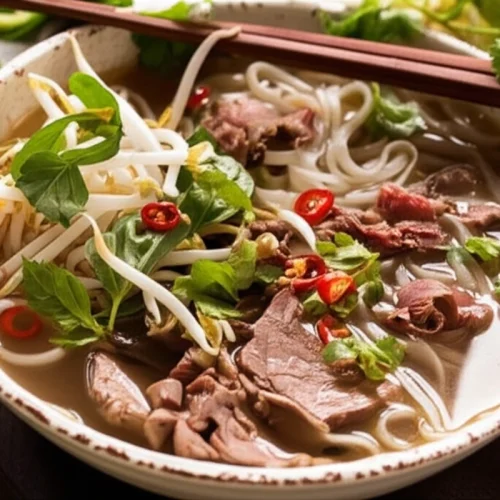
Vietnamese Pho recipe
Equipment
- Heavy based skillet
- Stock pot
Ingredients
Broth
- 2 large onions halved
- 150 g ginger sliced down the centre
- 10 star anise
- 4 cinnamon quills
- 4 cardamon pods
- 3 cloves (the spice cloves!)
- 1.5 tbsp coriander seeds
- 1.5 kg beef brisket
- 1 kg meaty beef bones
- 1 kg marrow bones (leg, knuckle), cut to reveal marrow
- 3.5 litres water (15 cups)
- 2 tbsp white sugar
- 1 tbsp salt
- 40 ml fish sauce (Note 2)
Toppings
- 50 g dried rice sticks (or 120g/4oz fresh) (Note 3)
- 30 g beef tenderloin, raw, very thinly sliced (Note 4)
- 3 – 5 brisket slices (used for broth)
- Beansprouts handful
- 3 – 5 Thai basil sprigs
- 3 – 5 Coriander/cilantro sprigs
- Lime wedges *
- Finely sliced red chilli *
- Hoisin sauce *
- Sriracha (for spiciness)
Instructions
Aromatics
- Heat a heavy based skillet over high heat (no oil) until smoking.
- Place onion and ginger in pan cut side down. Cook for a few minutes until it’s charred, then turn. Remove and set aside.
- Toast Spices lightly in a dry skillet over medium high heat for 3 minutes.
Remove impurities:
- Rinse bones & brisket then cover with water in large stock pot.
- Boil for 5 minutes, then drain.
- Rinse each bone and brisket under tap water.
Broth:
- Wipe pot clean, bring 3.5 litres / 3.75 quarts water to boil.
- Add bones and brisket, onion, ginger, Spices
- Add onion, ginger, Spices, sugar and salt – water should just barely cover everything.
- Cover with lid, simmer 3 hours.
- Remove brisket (should be fall-apart tender), cool then refrigerate for later.
- Simmer remaining soup UNCOVERED for 40 minutes.
- Strain broth into another pot, discard bones and spices. Should be about 2.5 litres / 2.65 quarts (10 cups), if loads more, reduce.
- Add fish sauce, adjust salt and sugar if needed. Broth should be beefy, fragrant with spices, savoury and barely sweet.
Assemble:
- Prepare rice noodles per packet, just prior to serving.
- Place noodles in bowl. Top with raw beef and brisket.
- Ladle over about 400 / 14 oz hot broth – will cook beef to medium rare.
- Serve with Toppings on the side!