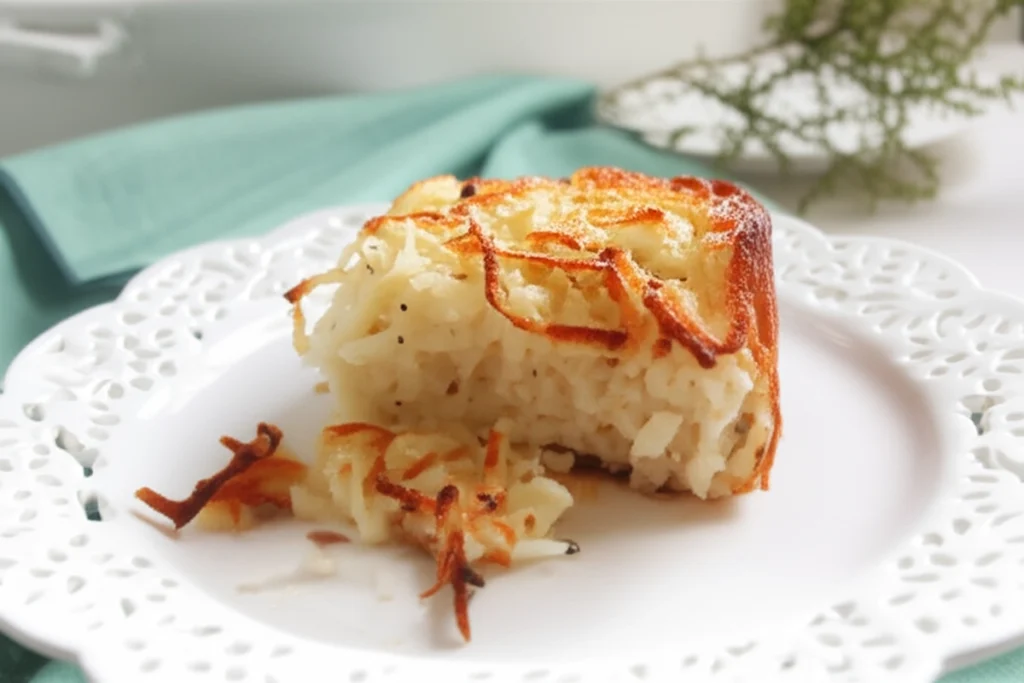
The quest for the perfect potato kugel can feel like chasing a culinary myth. Early in my cooking journey, I remember the frustration of pulling a kugel from the oven, only to find a soggy, unevenly cooked disappointment. Traditional recipes often lacked crucial details, leaving me guessing about doneness and texture. It was during those early trials that I realized the importance of visual cues; a perfectly cooked kugel speaks for itself.
This recipe for potato kugel isn’t just another set of instructions; it’s a visual guide, sharing the secrets I’ve learned to achieve consistently crispy edges and a perfectly cooked interior. From prep to plate, this recipe requires about 90 minutes (20 minutes prep time, 70 minutes cook time). Consider this your definitive resource for mastering this classic dish, engineered for repeatable success.
Table of Content
Mastering the Moisture: The Secret to Crispy Kugel
Achieving the ideal balance of crispy exterior and tender interior in a potato kugel hinges on one crucial element: moisture control. I’ve found that the techniques used to manage moisture during preparation dramatically impact the final texture. Here’s a breakdown of how different approaches affect the potato kugel:
| Technique | Effect on Texture |
|---|---|
| Hand-grating | Preserves potato texture by creating less cell damage compared to a food processor. This reduces the amount of starch released and minimizes excess moisture. |
| Food Processor | Faster but can over-process potatoes, leading to increased moisture release. The resulting kugel may be more prone to sogginess if moisture isn’t properly managed. |
| Russet Potatoes | Ideal due to their high starch content and relatively low moisture. These properties contribute to a drier kugel with a crispier crust. |
| Waxy Potatoes | Tend to yield a softer, denser kugel because of their higher moisture content. If using these, extra care must be taken to remove excess water. |
| Excess Water Removal | Crucial for achieving a crispy texture. Squeezing out the excess moisture from the shredded potatoes concentrates the starch, promoting better browning and crispiness. |
Pro tip: After comparing various potato types, I now exclusively use russets for my kugel. Their inherent dryness makes it easier to achieve that sought-after crispy crust.
Ingredients
- 5 pounds russet potatoes ((about 10 medium-sized potatoes))
- 2 whole large onions
- 6 eggs
- 2 teaspoons salt
- 1/2 teaspoon black pepper
- 6 tablespoons potato starch ((if not serving for Passover you may substitute corn starch))
- 1/4 cup butter or extra virgin olive oil, (divided (butter gives amazing flavor; use olive oil to keep it vegetarian))
I tested this recipe using both a food processor and a hand grater. While the food processor is faster, I found that hand-grating resulted in slightly better texture because it avoids over-processing the potatoes. That’s why I recommend hand-grating when you have the time.
Instructions
Now that you have the ingredients prepared, the next step is to follow these instructions carefully. Each step plays a vital role in achieving the ideal potato kugel texture and flavor.
- Place a 9×13 baking dish or pan in the oven and preheat oven to 400 degrees, letting the dish heat up inside. Peel the potatoes, then use a food processor or hand grater to grate them into large shreds.
- Place the potato shreds in a large mixing bowl and cover with cold water. Let the shreds sit for a few minutes.
- Meanwhile, peel and shred the two large onions in the food processor or with a hand grater. Reserve.
- In a medium mixing bowl, whisk together the eggs, salt and pepper until fluffy.
- Drain the potato shreds in a colander, pushing down firmly on top of the shreds with your hands to push out the excess liquid.
- Place grated potatoes in a large bowl. Add the seasoned eggs, grated onions and potato starch to the bowl. Use your hands to mix all ingredients together until well combined.
- Take the preheated baking dish out of the oven. Quickly pour in 3 tbsp butter or olive oil, then use a pastry brush to carefully spread the fat around the bottom and sides of the hot dish. Careful, don’t burn yourself! The hot dish, while a bit difficult to navigate, will help to form a beautiful brown and crisp crust for the kugel. Preheating the pan is critical for achieving a crispy crust. The initial sizzle when the potato mixture hits the pan contributes to this texture and browning, thanks to the Maillard reaction.
- Carefully and quickly spread the potato mixture into an even layer in the baking dish (it should sizzle!), then drizzle remaining 1 tbsp of melted butter or olive oil across the top.
- Bake uncovered at 400 degrees for 60-70 minutes until the top is nicely browned all across the top. If it seems to be browning too fast (before the center is cooked), cover the kugel to keep it from over-browning. You really want it to have a nice golden crust– at the end of cooking, if it’s not quite brown enough, you can put it 6 inches below the broiler for a minute or two to evenly brown it all across the top. This kugel tastes best served hot directly from the oven. Let it sit for 5-10 minutes before slicing and serving.
Pro tip: Don’t skip letting the kugel rest for a few minutes after baking. It allows the internal structure to set, making it easier to slice and serve, and it ensures you get a perfect potato kugel every time.
Visual Cues for Perfection: How to Know Your Kugel is Done
Knowing when your potato kugel is perfectly cooked involves more than just following a timer; it’s about recognizing specific visual cues developed through experience. These cues tell you that the internal texture is fully set and the crust has reached its optimal crispness, which can be achieved through identifying key visual cues. Here’s what I look for:
First, the crust should be a deep golden brown, not just lightly colored. I’ve found that this rich color indicates the Maillard reaction has fully developed, resulting in a crispy, flavorful exterior. If the top is browning too quickly, tenting it with foil can prevent burning while allowing the center to finish cooking.
Next, watch for bubbling around the edges of the kugel. This bubbling indicates that the potato mixture is thoroughly heated and that moisture is escaping, which helps to create a firm, set texture. I consider this bubbling a sign that the internal temperature is approaching the ideal point.
Finally, gently press the center of the kugel. It should feel firm to the touch, not soft or jiggly. If it still feels soft, it needs more time in the oven. In my experience, the firmness test is the most reliable way to ensure the kugel is cooked through and not underdone.
Frequently Asked Questions
Essential Ingredients and Substitutions
The key ingredient in this recipe is russet potatoes. Their high starch content contributes to a crispier texture, so I strongly advise sticking with this variety. The potato starch acts as a binding agent, helping to hold the kugel together. I’ve found that cornstarch is a suitable substitute, especially if keeping the recipe compliant with Passover dietary guidelines.
Best Potatoes for Kugel Texture
Russet potatoes reign supreme when it comes to potato kugel. Their lower moisture content compared to other potato varieties is a huge advantage. Other types may require even more effort to remove excess moisture, which can be cumbersome. I once tried making kugel with Yukon Golds and, despite squeezing out the excess liquid, the final result was far too dense and lacked the signature crispy crust.
Preparing, Storing, and Reheating Kugel
For make-ahead preparation, I recommend grating the potatoes and onions, then storing them separately in airtight containers in the refrigerator for up to 24 hours. Be sure to squeeze out any excess moisture from the potatoes before storing. When ready to bake, combine all ingredients as instructed. Once baked, potato kugel can be refrigerated for up to 3 days. To reheat, I prefer using the oven at 350 degrees to help regain some of the crispness. Microwaving is faster, but the texture will be softer.
Cultural Significance of Potato Kugel
Potato kugel holds a special place in Jewish cuisine, particularly during holidays like Passover and other festive meals. It represents resourcefulness and culinary tradition. Having made this for countless family gatherings, I can attest it is a dish that brings people together, offering a comforting and satisfying centerpiece for any celebration.
Tips for the Perfect Potato Kugel Recipe
This potato kugel recipe serves 8-10 people, making it ideal for family gatherings or holiday meals. Proper storage is key to maintaining the kugel’s texture and flavor. In my experience, the ideal way to store it is in the refrigerator for up to 3 days.
For reheating, both the oven and microwave work well, although I lean towards the oven for the best results; it helps to crisp up the edges again. The oven helps to retain some of that original crispy texture. If you’re looking for a quick reheat, the microwave is more convenient, though the texture will be softer.
This recipe is not only Passover-friendly when using potato starch, but it is also vegetarian, so it is suitable for a wide range of dietary preferences. I’ve also found that preheating the baking dish in the oven is essential for creating a crispy crust. Pouring the hot oil into the heated pan creates that initial sizzle, which is the base for the kugel. For another delicious recipe using a food processor, try my easy homemade sauerkraut bread recipe. The trick is to ensure that the entire surface is coated evenly with the oil, creating the perfect potato kugel every single time.
Conclusion
In summary, achieving potato kugel perfection hinges on a few key takeaways: controlling moisture, mastering visual cues, and preheating your pan. Following these steps carefully will guide you toward a consistently delicious result. I’ve learned that paying close attention to the color of the crust, the bubbling around the edges, and the firmness of the center transforms the final dish into a crispy-edged masterpiece every time.
I truly hope this guide helps you create the perfect potato kugel in your own kitchen. If you give this recipe a try, please leave a comment below sharing your experiences or any variations you’ve discovered. I’d love to hear about your successes! Finally, if you found this recipe useful, share it with your friends and family. After all, great food is best enjoyed together.
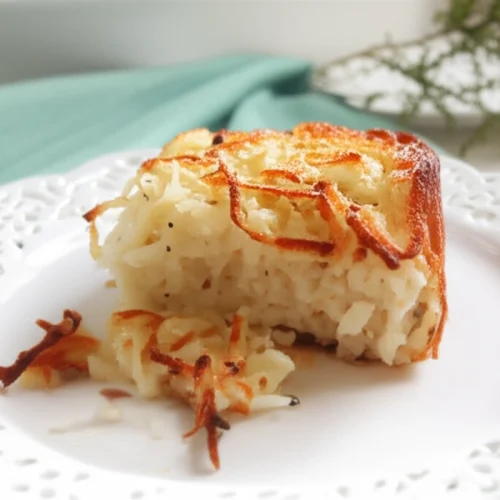
Passover Potato Kugel
Equipment
- 9×13 baking dish or pan
- Oven
- food processor or hand grater
- Large mixing bowl
- colander
- medium mixing bowl
- pastry brush
Ingredients
Main Ingredients
- 5 pounds russet potatoes (about 10 medium-sized potatoes)
- 2 whole large onions
- 6 eggs
- 2 teaspoons salt
- 1/2 teaspoon black pepper
- 6 tablespoons potato starch (if not serving for Passover you may substitute corn starch)
- 1/4 cup butter or extra virgin olive oil (divided (butter gives amazing flavor; use olive oil to keep it vegetarian))
Instructions
Instructions
- Place a 9×13 baking dish or pan in the oven and preheat oven to 400 degrees, letting the dish heat up inside. Peel the potatoes, then use a food processor or hand grater to grate them into large shreds.
- Place the potato shreds in a large mixing bowl and cover with cold water. Let the shreds sit for a few minutes.
- Meanwhile, peel and shred the two large onions in the food processor or with a hand grater. Reserve.
- In a medium mixing bowl, whisk together the eggs, salt and pepper until fluffy.
- Drain the potato shreds in a colander, pushing down firmly on top of the shreds with your hands to push out the excess liquid.
- Place grated potatoes in a large bowl. Add the seasoned eggs, grated onions and potato starch to the bowl. Use your hands to mix all ingredients together until well combined.
- Take the preheated baking dish out of the oven. Quickly pour in 3 tbsp butter or olive oil, then use a pastry brush to carefully spread the fat around the bottom and sides of the hot dish. Careful, don’t burn yourself! The hot dish, while a bit difficult to navigate, will help to form a beautiful brown and crisp crust for the kugel. Preheating the pan is critical for achieving a crispy crust. The initial sizzle when the potato mixture hits the pan contributes to this texture and browning, thanks to the Maillard reaction.
- Carefully and quickly spread the potato mixture into an even layer in the baking dish (it should sizzle!), then drizzle remaining 1 tbsp of melted butter or olive oil across the top.
- Bake uncovered at 400 degrees for 60-70 minutes until the top is nicely browned all across the top. If it seems to be browning too fast (before the center is cooked), cover the kugel to keep it from over-browning. You really want it to have a nice golden crust– at the end of cooking, if it’s not quite brown enough, you can put it 6 inches below the broiler for a minute or two to evenly brown it all across the top. This kugel tastes best served hot directly from the oven. Let it sit for 5-10 minutes before slicing and serving.