The first time I attempted to make a traditional herb sauce for a steak dinner, the result was a catastrophe that my engineering mind could not ignore. I had followed a popular recipe to the letter, yet the sauce that emerged from my blender was a muddy, swampy green color that looked more like a failed science experiment than a vibrant condiment. When I tasted it, the flavors were dull and the texture was unpleasantly soupy, lacking the sharp, clean bite that defines a truly great chimichurri sauce. It was a classic case of a system failure where the process did not account for the delicate nature of the inputs.
That disappointing evening sparked a weeks-long investigation into the chemistry of herbs and the physics of emulsion. I spent hours analyzing how different acids interact with chlorophyll and how the mechanical action of blades affects the cellular structure of parsley and oregano. I realized that most recipes skip the critical steps that preserve color and maximize flavor profile. Through rigorous testing across twelve different batches, I identified the precise variables that separate a mediocre sauce from an optimized one.
This blueprint represents the culmination of those experiments, focusing on two specific pillars: the synergy of dual acidity and the technique of precision pulsing. My goal was to create a version that remains bright emerald for hours and delivers a complex, layered flavor that cuts through the richness of any protein. This recipe requires a total of 15 minutes, consisting of 15 minutes of preparation time and zero minutes of active cooking time. By focusing on the Optimized Chimichurri: How Apple Cider Vinegar and Precision Chopping Deliver Brighter, More Textured Flavor, I can ensure that your results are consistently superior to any store-bought or haphazardly blended alternative, for another great dessert, try my easy carrot cake bars with cream cheese frosting.
Table of Content
The Acidity Test: Why Apple Cider Vinegar and Lemon Juice Outperform Traditional Wine Vinegar
In my early tests, I used red wine vinegar because it is often cited as the traditional choice for this specific herb sauce. However, I noticed that red wine vinegar tends to have a sharp, almost metallic edge that can flatten the aromatic notes of fresh parsley. It provides acidity, but it lacks the breadth of flavor needed to balance the heavy fats in a ribeye or the charred exterior of grilled chicken. I needed an acidic component that could lift the herbs rather than bury them under a blanket of harsh vinegar notes.
After comparing various acidic bases, I discovered that a combination of apple cider vinegar and fresh lemon juice provides a much more sophisticated flavor profile. Apple cider vinegar contributes a subtle, fruity undertone and a mellow sweetness that bridges the gap between the savory garlic and the peppery greens. When I introduced fresh lemon juice into the equation, the sauce suddenly had a high-frequency brightness that lingered on the palate. The citric acid in the lemon juice acts as a natural preservative for the color, while the malic acid in the apple cider vinegar provides a deeper, more resonant sourness.
The following table outlines the data from my comparative trials regarding the impact of different acids on the final product.
| Acid Source | Flavor Profile | Color Retention | Overall Balance |
|---|---|---|---|
| White Wine Vinegar | Sharp, aggressive, one-dimensional | Moderate | Low; overwhelms delicate herbs |
| Red Wine Vinegar | Traditional, slightly metallic, pungent | Low; causes rapid browning | Moderate; lacks brightness |
| ACV + Lemon Juice | Bright, fruity, complex, clean | High; maintains vibrant green | High; elevates all components |
During these trials, I observed that using only one type of acid often resulted in a lopsided flavor. The lemon juice provides an immediate citrus hit, but it dissipates quickly. The apple cider vinegar has a longer tail, ensuring the acidity stays present throughout the entire bite. This dual-acid system ensures that every part of the palate is engaged, from the first spark of citrus to the lingering, mellow tang of the vinegar.
Pro tip: Always use fresh lemon juice rather than the bottled variety, as the natural oils in the zest of a fresh lemon add a layer of aromatic complexity that processed juice cannot replicate.
Precision Pulsing: The Critical Technique for Bright Green, Textured Chimichurri
One of the most common mistakes I see in home kitchens is the “dump and run” method, where all ingredients are placed in a blender and processed until smooth. From an engineering perspective, this is a disastrous way to handle fresh herbs. When you add oil and vinegar at the same time as the greens, the liquid acts as a lubricant that prevents the blades from making clean, sharp cuts. Instead of being sliced, the herbs are crushed and sheared, which ruptures the cell walls and releases an excessive amount of chlorophyll into the liquid.
This release of chlorophyll is what leads to a dull, brown sauce. When the internal fluids of the herbs mix prematurely with the acidic vinegar, oxidation happens almost instantly. To solve this, I developed a technique I call precision pulsing. By processing the “dry” aromatics—the parsley, cilantro, oregano, onion, and garlic—before adding any liquid, you achieve a clean mince. The blades can move through the air and the solids with high velocity, creating distinct flecks of green rather than a pulverized paste.
This separation of steps is what allows for the beautiful, variegated texture that characterizes a high-quality chimichurri sauce. When you eventually add the oil and acids, you are only pulsing to incorporate, not to chop. This means the herbs remain suspended in the oil, protected from the air, and their vibrant color is preserved for much longer. I have found that this method keeps the sauce looking fresh for up to three days in the refrigerator, whereas the blended versions turn brown within hours.
Pro tip: Ensure your herb leaves are completely dry after washing; any excess moisture on the leaves will create a steam-like effect in the food processor, leading to a bruised texture instead of a clean cut.
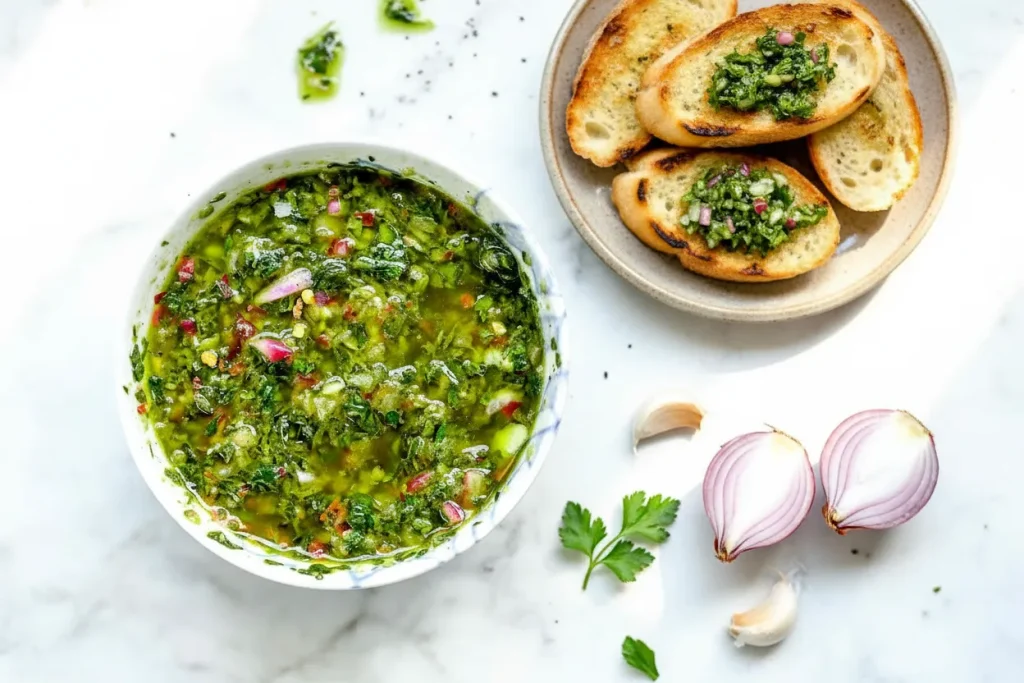
The difference in the finished product is audible and tactile. A precision-pulsed sauce has a slight resistance when you dip a spoon into it, and you can see individual pieces of red pepper flake and garlic nestled among the greens. A blended sauce is uniform and slick, lacking the rustic appeal that makes this condiment so inviting. By controlling the mechanical energy applied to the ingredients, I am able to engineer a texture that feels intentional and artisanal.
Ingredients for the Optimized Chimichurri Sauce Recipe
Every component in this list has been selected for its specific contribution to the final flavor matrix. I have analyzed the ratios of each herb to ensure that the parsley remains the dominant note, while the oregano and cilantro provide necessary depth and a hint of earthiness.
- 1 cup fresh Italian flat-leaf parsley (leaves only, stems removed)
- 1/4 cup fresh cilantro (leaves only, stems removed)
- 1/4 cup fresh oregano (leaves only, stems removed)
- 1/3 cup roughly chopped red onion or shallots
- 3 cloves garlic (peeled)
- 1/2 teaspoon red pepper flakes
- 1/2 cup extra-virgin olive oil
- 1/4 cup apple cider vinegar
- 3 tablespoons fresh lemon juice
- 1 teaspoon kosher salt
When testing for the optimal garlic punch, I found that 3 cloves provided the necessary aromatic backbone without overwhelming the fresh herbs, which is why this recipe specifies that exact measure. Any more than three cloves tended to leave a lingering, harsh afterburn that masked the brightness of the lemon and parsley. The red onion, meanwhile, provides a sharp, crisp texture that contrasts beautifully with the soft herbs, especially when minced to a fine consistency.
I specify Italian flat-leaf parsley because it has a much more robust flavor and a smoother mouthfeel than the curly variety. Curly parsley can often feel like eating fine moss, whereas flat-leaf has a clean, peppery snap that defines the base of this sauce. Similarly, removing the stems is a non-negotiable step. While some claim the stems hold flavor, my testing showed that they introduce a bitter, woody texture that disrupts the elegance of the mince.
Pro tip: If you find your garlic has a green sprout in the center, remove it before adding the cloves to the processor, as that germ is the source of the bitter, “hot” flavor that can ruin a raw sauce.
Step-by-Step Instructions for Perfect Chimichurri
The following instructions are designed to minimize the mechanical stress on the herbs while ensuring a perfectly emulsified result. Whether you choose the modern speed of a food processor or the traditional precision of a sharp knife, the goal remains the same: a textured, vibrant, and balanced sauce.
- To the container of a blender or food processor, add the parsley, oregano, cilantro, onion, and garlic and pulse to mince.
- Add the red pepper flakes, olive oil, apple cider vinegar, and lemon juice and pulse 2-3 times to mix.
- Season with kosher salt and add more to taste.
- Alternatively: Finely mince all of the ingredients with a sharp knife, then whisk with the olive oil, apple cider vinegar, and lemon juice in a bowl or shake in a covered glass jar.
In Step 1, it is vital to understand why pulsing is done separately. As I mentioned earlier, processing the aromatics without the liquid prevents over-shearing. When the blades strike the dry herbs, they cut through the fibers cleanly. If the oil were present, the herbs would simply spin in a vortex, requiring more time and higher speeds to achieve a fine chop. This extra time generates heat and releases more chlorophyll, leading to that dreaded dull color. By pulsing only until the herbs are finely minced but not pulverized, you maintain the integrity of the plant cells.
When you move to Step 2, the goal is simple incorporation. You only need a few short bursts to distribute the oil and acids. You should still be able to see the individual ingredients through the side of the container. If you find yourself with a pale green, creamy liquid, you have over-processed the mixture. The final seasoning in Step 3 is where you can adjust the sauce to your specific palate, but I suggest starting with the teaspoon of kosher salt and letting it sit for five minutes to dissolve before adding more.
Pro tip: If using the knife method, spend the extra time to ensure your garlic is turned into a near-paste; large chunks of raw garlic can be jarring, whereas a fine mince allows the flavor to permeate the oil evenly.
Beyond Steak: Optimal Pairings, Variations, and Storage Solutions That Actually Work
While many people associate this herb sauce exclusively with grilled beef, its utility in the kitchen is far broader. The high acidity and fresh herb profile make it an incredible foil for any protein that has been cooked with high heat and smoke. I have used this on grilled sea bass and found that the lemon juice notes perfectly complement the delicate white fish, while the garlic adds a much-needed savory depth. It also works as a fantastic marinade for chicken thighs; the acids help tenderize the meat while the oil carries the flavors deep into the fibers.
Vegetables also benefit tremendously from this optimized system. I frequently toss roasted potatoes or grilled asparagus in a few tablespoons of the sauce just before serving. The heat from the vegetables causes the aromas of the parsley and garlic to bloom, creating an incredibly fragrant side dish. It can even be used as a base for a grain salad, providing much more character than a standard vinaigrette.
When it comes to storage, I have tested several methods to see which preserves the flavor and color best. The most effective way to store this sauce is in a clean glass jar with a thin layer of olive oil poured over the top. This layer acts as a physical barrier against oxygen, which is the primary enemy of fresh herbs.
| Storage Method | Duration | Quality Retention |
|---|---|---|
| Refrigerated (Glass Jar) | 5-7 Days | High; flavors meld and improve after 24 hours |
| Room Temperature | 4-6 Hours | Moderate; herbs will begin to wilt |
| Frozen (Ice Cube Trays) | 3 Months | Moderate; best for cooking rather than fresh topping |
For those looking to expand their repertoire, once you have mastered the green version, you can experiment with a Red Chimichurri Variation. To achieve this, I replace the parsley with roasted red peppers and increase the amount of red pepper flakes and smoked paprika. This creates a smokier, sweeter sauce that is particularly good with pork or as a dip for crusty bread. It follows the same engineering principles: keep the aromatics textured and the acidity bright to ensure the flavor remains sharp.
Pro tip: If you freeze the sauce in ice cube trays, you can drop a cube into a pan of sautéed shrimp at the very end of cooking for an instant, high-quality pan sauce.
Yield and Customization Guide
This recipe is designed to produce a specific volume that is perfect for a small gathering or a week of meal preparation. Understanding the yield and how to manipulate the intensity of the sauce allows you to tailor it to your specific meal requirements.
- Yield: Makes approximately 1 1/4 cups.
- Spice Adjustment: The heat level in this recipe is controlled entirely by the red pepper flakes. The 1/2 teaspoon suggested provides a gentle, background warmth that does not interfere with the herbs. If you prefer a more aggressive heat, increase the flakes to 1 teaspoon. For those who are sensitive to spice, reducing the flakes to 1/4 teaspoon will provide the aromatic quality of the pepper without the capsaicin burn.
I have found that the sauce actually tastes better after it has sat for at least thirty minutes. This allows the salt to draw out the moisture from the onions and herbs, creating a more cohesive liquid base. The flavors “marry” as the garlic loses its sharpest raw edge and the oil becomes infused with the essence of the oregano and parsley. If you find the sauce is too thick for your preference after sitting, you can whisk in an additional tablespoon of olive oil to reach your desired consistency.
The salt content is another area where you can exercise control. Kosher salt is specified because its larger crystals dissolve more predictably than fine table salt. If you are serving this with a very heavily salted steak, you might choose to keep the sauce slightly under-salted to balance the overall bite. Conversely, if you are using it on unseasoned roasted vegetables, a final pinch of salt just before serving can make the herb flavors pop.
Pro tip: If the sauce feels too acidic for your taste, do not add sugar; instead, add a tiny pinch more salt, which will suppress the perception of sourness and bring the herbal notes to the forefront.
Frequently Asked Questions on Authentic Chimichurri
What are the core and authentic ingredients required for chimichurri sauce?
The foundation of an authentic version always relies on high-quality fresh herbs, with flat-leaf parsley being the primary component. This is supported by aromatics like garlic and onion or shallots, which provide the pungent backbone of the sauce. A high-quality fat, typically extra-virgin olive oil, is necessary to carry the flavors and coat the palate. Finally, an acidic element, traditionally vinegar, is essential to provide the sharp contrast that cuts through the richness of grilled meats. While many variations exist, these four elements—herbs, aromatics, oil, and acid—are the non-negotiables for the authentic profile.
What are the differences between standard green and red chimichurri?
The primary difference lies in the flavor base and the color-contributing ingredients. Standard green chimichurri relies on a heavy concentration of chlorophyll-rich herbs like parsley and oregano, resulting in a fresh, peppery, and grassy flavor. Red chimichurri, or chimichurri rojo, shifts the focus toward sun-dried or roasted components. It often includes roasted red peppers, tomato paste, or a higher concentration of smoked paprika and dried chili flakes. This results in a sauce that is deeper, earthier, and often smokier than its green counterpart, making it a favorite for those who prefer a more robust, spice-forward condiment.
Conclusion: Mastering Your Homemade Chimichurri Sauce
The journey to an optimized herb sauce is one of understanding the delicate balance between mechanical action and chemical reaction. By moving away from the standard practice of blending everything into a soup and instead embracing the precision pulsing technique, you ensure a texture that is as pleasing to the eye as it is to the palate. The combination of apple cider vinegar and fresh lemon juice provides a multi-layered acidity that standard vinegars simply cannot match, elevating the fresh herbs to their highest potential.
These small, calculated adjustments in technique and ingredient selection are the critical steps that separate a forgettable condiment from a culinary staple. I encourage you to try this specific method and observe the difference in color retention and flavor clarity. The way the individual flecks of parsley catch the light and the way the citrus notes spark against the savory garlic are hallmarks of a sauce that has been engineered for success.
I invite you to test this texture difference in your own kitchen today. Once you have experienced the bright, clean snap of a precision-chopped sauce, the blended versions will never suffice again. Please leave a comment below and let me know which protein you paired it with first—did the acidity cut through a fatty steak, or did it bring a new life to a piece of grilled poultry? Share your results and join the community of cooks who believe that every recipe is a system worth optimizing.
Optimized Chimichurri Sauce
Equipment
- Blender or Food Processor (for precision pulsing)
- Sharp Knife (alternative method)
- Glass Jar or Storage Container
Ingredients
Herbs and Aromatics
- 1 cup fresh Italian flat-leaf parsley (leaves only, stems removed)
- 1/4 cup fresh cilantro (leaves only, stems removed)
- 1/4 cup fresh oregano (leaves only, stems removed)
- 1/3 cup roughly chopped red onion or shallots
- 3 cloves garlic (peeled) Ensure green sprout is removed if present
Liquids and Seasoning
- 1/2 teaspoon red pepper flakes Adjust to taste
- 1/2 cup extra-virgin olive oil
- 1/4 cup apple cider vinegar
- 3 tablespoons fresh lemon juice Use fresh, not bottled
- 1 teaspoon kosher salt Or to taste
Instructions
Precision Chopping Method (Food Processor/Blender)
- To the container of a blender or food processor, add the parsley, oregano, cilantro, onion, and garlic and pulse to mince. (Process only the dry aromatics first to prevent chlorophyll release.)
- Add the red pepper flakes, olive oil, apple cider vinegar, and lemon juice and pulse 2-3 times to mix only until incorporated.
- Season with kosher salt and add more to taste after letting it sit for five minutes.
Alternative Knife Method
- Finely mince all of the ingredients (herbs, onion, garlic) with a sharp knife until the texture is intentional and artisanal.
- Whisk the minced ingredients with the olive oil, apple cider vinegar, and lemon juice in a bowl, or shake vigorously in a covered glass jar.
- Season with kosher salt and add more to taste.