The first time I attempted to engineer a better greek yogurt tartar sauce, the result was a catastrophic failure that looked more like a thin, grayish puddle than a premium condiment. I had made the classic mistake of assuming that a food processor could handle every ingredient simultaneously. I threw the yogurt, the aromatics, and the acids into the bowl and pressed the pulse button, expecting a shortcut to perfection. What I got instead was a broken emulsion. The high speed of the blades sheared the delicate protein structures of the dairy, releasing water and turning my dinner accompaniment into a runny mess that slid right off the fish. It was a humbling moment for someone who prides themselves on system optimization, but it provided the critical data point I needed to solve the texture puzzle.
This blueprint is the result of that failure and subsequent rigorous testing. I spent weeks deconstructing the components of a great sauce to understand why traditional versions work and where yogurt based alternatives usually fall short. My goal was to create a version that offered the brightness and nutritional profile of yogurt without sacrificing the luxurious, mouth coating quality of a classic preparation. Through systematic trials, I identified the exact moment the texture fails and the specific ingredient ratios required to maintain a thick, scoopable consistency. This recipe requires only 10 minutes of prep time, 0 minutes of cook time, and a total time of 10 minutes to reach completion. It is a streamlined system designed for repeatable success, provided you follow the sequence I have established.
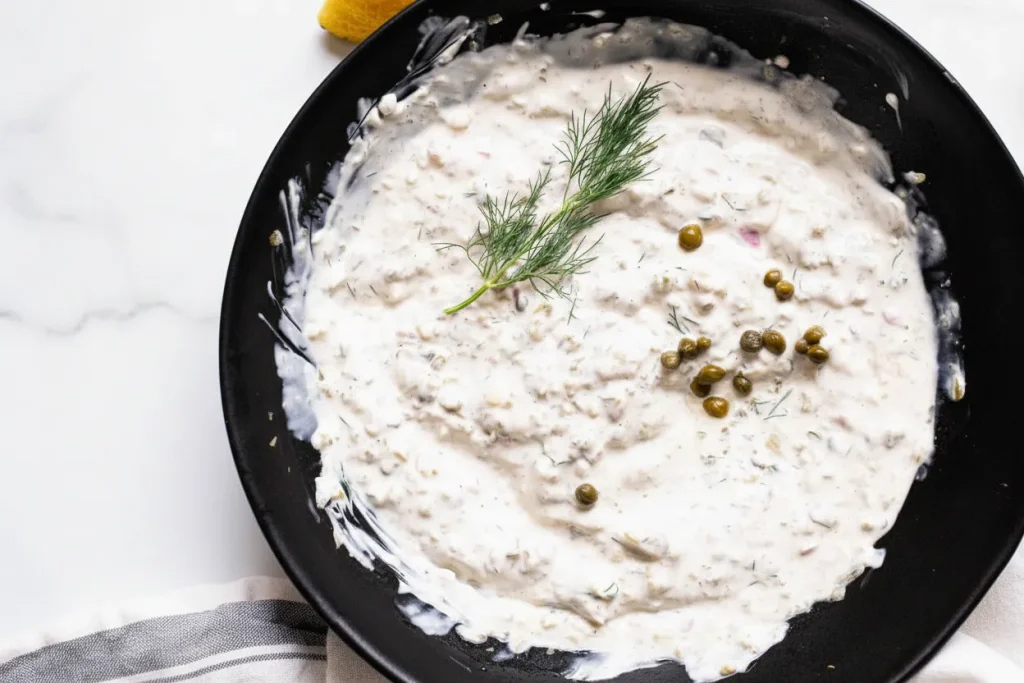
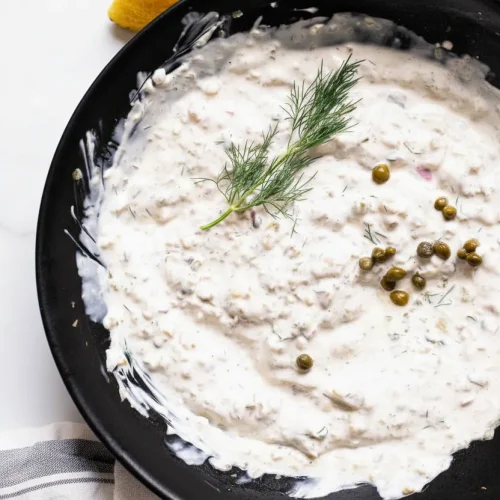
The secret to this greek yogurt tartar sauce lies in the separation of mechanical processing and manual integration. By treating the solid aromatics as one subsystem and the creamy base as another, I have eliminated the risk of protein breakdown. You will achieve a sauce that boasts a vibrant, pale ivory hue flecked with deep forest green herbs and the translucent white of finely minced onion. The aroma is immediately sharp and brining, followed by the cooling scent of fresh dill. When you dip a warm piece of seared whitefish into this sauce, it stays exactly where you put it, offering a shatteringly crisp contrast to the tender meat beneath. This is not just a healthy alternative; it is a superior condiment engineered for maximum flavor and structural integrity.
Table of Content
Our Greek Yogurt Tartar Sauce: The Flavor First, No Mayo Recipe That Guarantees Perfect Texture
When I set out to optimize this condiment, I had to address a common misconception in the healthy cooking world: that you can simply swap one ingredient for another without consequences. Many recipes claim to be a no mayo version but end up tasting like a bowl of plain breakfast yogurt with pickles stirred in. The acidity of 100 percent Greek yogurt is significantly higher than that of mayonnaise, and the fat content is much lower. In my testing, I found that a pure yogurt base lacked the necessary richness to balance the sharp brine of capers and lemon juice. The mouthfeel was too lean, leaving a dry sensation on the palate rather than the smooth, lingering finish required for a proper tartar sauce.
To solve this, I introduced a specific ratio that utilizes a small amount of high quality mayonnaise, typically 2 to 3 tablespoons, to act as a fat bridge. This minimal addition does not compromise the nutritional goals of the dish, but it radically transforms the texture. The fat in the mayo coats the tongue, allowing the bright notes of the dill and capers to resonate more clearly without being overwhelmed by the yogurt’s natural tang. I tested versions with zero mayo, and they consistently felt thin and one dimensional. By introducing this small amount of richness, I created a sauce that mimics the luxury of the original while maintaining a much lighter profile. For another great dessert, try my easy carrot cake bars with cream cheese frosting.
Pro tip: Use a Greek yogurt with at least 2 percent fat content, as fat-free versions contain stabilizers and thickeners that can react unpredictably when mixed with acidic lemon juice.
The success of this sauce also depends on the quality of the yogurt’s strain. During my research phase, I noticed that different brands have varying levels of whey retention. If you see a layer of liquid on top of your yogurt when you open the container, make sure to drain it off completely before measuring. Any excess moisture introduced at the beginning will only be magnified once you add the lemon juice and salt. This attention to detail is what separates a professional grade sauce from a watery imitation. You are looking for a base that has the thick, presque-cheese consistency of a well strained Greek variety, which provides the necessary structural support for the chopped solids.
The Texture Trap: Why Processing Solids First Prevents a Runny Sauce
The most significant discovery I made during my testing phase involved the physics of the food processor blades. When I analyzed why my early batches were turning into soup, I realized that the sheer force of the blades was the culprit. Greek yogurt is a concentrated matrix of milk proteins. When these proteins are subjected to high speed agitation in the presence of acid and salt, they begin to weep moisture. This is known as syneresis. If you add the yogurt to the food processor with the pickles and capers, you are effectively overworking the dairy at a molecular level, leading to an irreversible loss of viscosity.
To prevent this, I developed a strict two stage assembly process. The first stage involves the mechanical chopping of the capers, dill pickles, onion, garlic, and dill. This must be done in isolation. The food processor is an excellent tool for achieving a uniform, fine mince that would take significant time to produce by hand. You want the solids to be small enough to distribute evenly throughout the sauce, ensuring that every bite contains a balanced hit of salt, acid, and crunch. I aim for a texture where the pieces are roughly the size of a grain of couscous. This provides enough surface area to release flavor without turning the ingredients into a mushy paste.
Once the solids are processed, they must be removed from the machine and placed into a separate mixing bowl. This is where the manual phase begins. By folding the yogurt, mayo, and remaining liquids into the chopped solids by hand using a flexible spatula, you maintain total control over the emulsion. You can see the sauce coming together, becoming creamy and thick as the yogurt envelops the bits of pickle and caper. There is no aggressive popping of air bubbles or mechanical heating of the ingredients. The result is a sauce that retains its peaks and valleys, looking exactly like a premium restaurant condiment rather than a factory processed product.
From Tangy to Terrific: Balancing Greek Yogurt with Capers, Sugar, and Fresh Aromatics
Achieving the perfect flavor profile in a yogurt based sauce requires a deep understanding of the acid-base balance. Traditional tartar sauce relies on a heavy mayonnaise base, which is naturally neutral and slightly sweet. Greek yogurt, conversely, starts with a significant acidic punch. If you add lemon juice and caper brine to that without a buffer, the result is unpleasantly sharp. It can actually sting the back of the throat. I realized early on that the missing component in most healthy recipes was a flavor stabilizer.
I found that a single teaspoon of sugar acts as a crucial chemical buffer. It does not make the sauce sweet in a traditional sense; instead, it rounds off the sharp edges of the yogurt and lemon. This allows the savory notes of the garlic and the floral qualities of the fresh dill to shine through. Without the sugar, the palate is so overwhelmed by acid that it cannot register the nuance of the aromatics. I tested several batches side by side, some with sugar and some without, and the version with the sugar was universally preferred for its balanced, sophisticated profile.
| Our Ingredients | Competitor Replacements | Flavor Profile Outcome |
|---|---|---|
| Fresh Capers | Sweet Pickle Relish | Ours: Briny and complex; Competitor: Cloyingly sweet |
| Fresh Onion and Garlic | Onion and Garlic Powder | Ours: Pungent and bright; Competitor: Muted and dusty |
| Sugar (Flavor Buffer) | None or Artificial | Ours: Balanced and smooth; Competitor: Harsh and acidic |
| Fresh Dill Sprig | Dried Dill Weed | Ours: Grassy and aromatic; Competitor: Medicinal and weak |
The choice of fresh aromatics over dried substitutes is another non negotiable element of my system. When you use fresh onion and garlic, you are introducing volatile oils that provide a sharp, clean finish. Powders tend to have a stale, earthy undertone that clashes with the brightness of the yogurt. Furthermore, fresh capers provide a specific type of salinity that pickle relish cannot replicate. Relish is often packed with corn syrup and dyes, which muddy the flavor of the sauce. Capers offer a sophisticated, peppery bite that cuts through the richness of fried or seared seafood.
Pro tip: Rinse your capers under cold water before adding them to the processor to remove excess surface salt, allowing you to control the final seasoning of the sauce more precisely.
Nutritional Gains: How Our Yogurt Base Stacks Up Against Traditional Tartar
From an engineering perspective, replacing a majority of the mayonnaise with Greek yogurt is an exercise in caloric optimization without nutrient loss. Standard mayonnaise is almost entirely composed of fats, providing roughly 90 to 100 calories per tablespoon with very little protein or mineral content. By shifting the base to 2 percent Greek yogurt, we are dramatically increasing the protein density of the condiment. This transforms the sauce from a high calorie topping into a functional part of the meal that contributes to satiety.
The use of Greek yogurt also introduces beneficial probiotics and calcium into the dish, though the primary benefit for the home cook is the reduction in heavy saturated fats. Because we are using fresh garlic and onions, we are also incorporating anti inflammatory compounds that are often lost in highly processed, store bought alternatives. When you make a healthy tartar sauce using this blueprint, you are creating a condiment that aligns with a modern, health conscious lifestyle without requiring any compromise on the sensory experience of the meal.
The key to maintaining this nutritional profile while keeping the flavor high is the salt to acid ratio. Because yogurt is already acidic, you need less salt than you might think to make the flavors pop. I recommend starting with the pinch of ground black pepper suggested in the data and only adding a tiny amount of sea salt after the sauce has rested for a few minutes. This allows the flavors of the capers and pickles to fully hydrate the yogurt base. You will find that the natural salinity of the preserved vegetables is often enough to season the entire cup of sauce.
Practical Application: Yield, Storage, and Flavor Variations
This recipe yields approximately 1 cup of finished sauce, which is the ideal amount for a family dinner of four to six people. I have found that this quantity fits perfectly into a standard half pint glass jar, which is my preferred storage vessel. Because we are using fresh aromatics and dairy, the storage environment is critical for maintaining quality. I always recommend placing the sauce in the coldest part of your refrigerator immediately after mixing if you are not serving it right away.
Storage Instructions: The sauce can be stored in an airtight container for up to 5 days. I have observed that the flavor actually improves after the first 2 or 4 hours as the garlic and onion mellow into the yogurt. However, after the five day mark, the fresh dill starts to lose its vibrant green color and the onion can become overly pungent. If you notice any significant liquid separation after storage, do not panic. Simply give the sauce a gentle stir with a spoon to reincorporate the moisture. The structural integrity will remain intact because we avoided the high speed breakdown of the proteins during the initial assembly.
Flavor Variation: If you want to experiment with the base system, I have tested a spicy version that works exceptionally well with fried shrimp or calamari. To achieve this, simply add a dash of your favorite vinegar based hot sauce, such as a variety featuring aged cayenne peppers, to the final mix before chilling. The vinegar in the hot sauce complements the lemon juice, while the heat provides a lingering finish that contrasts beautifully with the cooling yogurt.
Pro tip: If you are serving this at a party, keep the bowl of sauce nested inside a larger bowl filled with ice to maintain the thickest possible texture throughout the event.
Ingredients
To ensure the best results, gather all ingredients before beginning the assembly process. The temperature of the dairy is not critical, but having the aromatics at room temperature can help them release their oils more effectively during the processing stage.
- 2 tablespoons capers
- 2 small dill pickles
- 1 tablespoon red or white onion
- 1 medium garlic clove
- 1 small dill sprig (optional)
- 1/2 cup Greek yogurt (I used 2%)
- 2-3 tablespoons mayo
- 1 teaspoon any sugar
- 1 teaspoon lemon juice (or any light vinegar)
- Pinch ground black pepper
Instructions
Follow these steps exactly as outlined to ensure the protein structure of the yogurt remains intact and the aromatics are perfectly distributed.
- In a food processor, add capers, pickles, onion, garlic and dill. Process until finely chopped, pausing and scraping the walls once. This ensures that no large chunks of garlic or onion remain, which could create an unbalanced flavor in a single bite.
- Transfer the processed solids to a medium bowl. Add the Greek yogurt, mayo, sugar, lemon juice, and pepper. Use a spoon or spatula to stir until the mixture is uniform and creamy. Alternatively, if you do not have a food processor, you can finely chop all the solid ingredients by hand with a sharp chef’s knife before mixing.
- Enjoy right away with your favorite seafood and vegetable dishes, or transfer to a sealed container and refrigerate for later use.
Frequently Asked Questions
Can Greek Yogurt Successfully Replace Mayonnaise in Tartar Sauce?
Yes, Greek yogurt is an excellent substitute, but it is not a direct one to one swap in terms of behavior. My testing shows that you must account for the higher moisture content and acidity of the yogurt. By using the method of processing solids first and then hand mixing the dairy, you prevent the thinning that usually plagues yogurt based sauces. The addition of a small amount of mayonnaise is the secret to achieving the traditional mouthfeel that people expect from a high quality tartar sauce. Without it, the sauce can feel a bit too lean on the palate.
How Do I Make This Recipe Completely Mayo Free?
While I have optimized this version with a small amount of mayonnaise for the best texture and flavor balance, you can certainly make it 100 percent mayo free if your dietary needs require it. To do this, I recommend replacing the 2 to 3 tablespoons of mayo with an equal amount of a neutral oil, such as avocado oil or a light olive oil. You will need to whisk the oil into the yogurt very slowly to create a stable emulsion. Be aware that this will change the structure slightly; the sauce will be a bit more translucent and won’t have the same opaque, creamy white appearance as the version containing mayo.
What Are the Best Ingredient Ratios for Flavor Balance?
The most critical ratio in this recipe is the relationship between the yogurt, the acid, and the sugar. Because Greek yogurt is naturally tangy, you only need 1 teaspoon of lemon juice to provide that bright, citrus finish. The 1 teaspoon of sugar is the stabilizer that prevents the sauce from tasting overly sour. If you find your yogurt is particularly sharp, you can increase the sugar by a half teaspoon, but do so gradually. The goal is a savory sauce where no single ingredient dominates the others.
Why Is My Sauce Runny Even After Following the Steps?
If your sauce is thin, the most likely culprit is excess moisture in the pickles or the yogurt itself. I always recommend patting your pickles dry with a paper towel before putting them in the food processor. Additionally, if your Greek yogurt has a lot of liquid sitting on top in the container, drain it off completely. Another factor could be the temperature; the sauce will naturally thicken up significantly after 30 minutes in the refrigerator as the fats and proteins stabilize.
Conclusion: Your Blueprint for Superior Sauce
Engineering the perfect greek yogurt tartar sauce taught me that even the simplest condiments deserve a systematic approach. By understanding the vulnerability of dairy proteins and the necessity of a flavor buffer like sugar, I have created a recipe that defies the typical pitfalls of healthy alternatives. This sauce is thick, vibrant, and packed with the punchy, briny flavors that make seafood truly spectacular. You no longer have to choose between a heavy, calorie dense traditional sauce and a watery, unsatisfying healthy version.
The key takeaways from my research are clear: treat your solids and liquids as separate subsystems until the very end, and never underestimate the power of a tiny bit of fat to bridge the gap between tangy and delicious. This blueprint is designed to be a reliable staple in your kitchen, providing consistent results every time you fire up the grill or preheat the air fryer for fish night. I have done the testing so you can cook with total confidence, knowing that the texture will be perfect and the flavor will be balanced.
I encourage you to try this method and see the difference that a controlled assembly process makes. Once you experience the audible crunch of the fresh aromatics against the silky smooth yogurt base, you will never go back to the bottled version. Please share your results and tell me about your favorite seafood pairings in the comments below. Whether it is crispy cod, seared salmon, or even roasted potato wedges, this sauce is the versatile, high performance condiment your kitchen has been missing. Happy cooking, and let us continue to engineer something delicious together.
Greek Yogurt Tartar Sauce
Equipment
- food processor
- medium mixing bowl
- Spoon or Spatula
Ingredients
For Processing (Solids Subsystem)
- 2 tablespoons capers Rinse under cold water before processing.
- 2 small dill pickles
- 1 tablespoon red or white onion
- 1 medium garlic clove
- 1 small dill sprig Optional
For Manual Integration (Creamy Base Subsystem)
- 1/2 cup Greek yogurt (2% fat recommended) Ensure it is well-strained, with no excess liquid.
- 2-3 tablespoons mayonnaise Acts as a fat bridge for texture.
- 1 teaspoon any sugar Acts as a flavor stabilizer/buffer.
- 1 teaspoon lemon juice Or any light vinegar.
- Pinch ground black pepper
Instructions
Assembly Steps
- In a food processor, add capers, pickles, onion, garlic and dill. Process until finely chopped, pausing and scraping the walls once to ensure no large chunks remain.
- Transfer the processed solids to a medium bowl. Add the Greek yogurt, mayo, sugar, lemon juice, and pepper.
- Use a spoon or spatula to stir the mixture until it is uniform and creamy. (Alternatively, finely chop all solid ingredients by hand with a sharp chef’s knife before mixing.)
- Enjoy right away with your favorite seafood and vegetable dishes, or transfer to a sealed container and refrigerate for later use. The flavor improves after 2-4 hours.