The first time I served a seafood dinner with a condiment mixed just seconds before hitting the table, I realized I had made a significant engineering error. The flavor was flat, one-dimensional, and tasted like nothing more than the sum of its raw parts. The mayonnaise was too heavy, the lemon felt like an afterthought, and the relish sat on the palate with a jarring, disconnected crunch. That evening taught me that even the simplest recipes require a period of stabilization to achieve their peak potential.
I spent the next several weeks deconstructing this classic sauce to understand why some versions felt like a restaurant-quality experience while others felt like a cafeteria compromise. This tartar sauce recipe with relish is the result of that investigation, emphasizing a specific 30-minute resting period that allows for proper molecular integration. My goal was to create a blueprint that yields a predictable, high-quality result every single time you prepare it in your own kitchen.
When I look at a recipe, I see a series of inputs that must be balanced with precision. For this specific sauce, the preparation time is a mere 5 minutes of active work, but I have accounted for a 15-minute calibration phase where you fine-tune the seasoning. This brings the active process to 20 minutes, though the non-negotiable resting phase extends the total time before serving.
I have learned that skipping the quiet time in the refrigerator is the most common failure point for home cooks. By allowing the acid from the lemon and the spices from the relish to penetrate the fat of the mayonnaise, you create a complex profile that cannot be achieved through mixing alone. This article will guide you through the physics of that flavor meld and the specific ingredient choices that dictate a successful outcome, for another great dessert, try my Easy Carrot Cake Bars With Cream Cheese Frosting.
Table of Content
Sweet Relish vs. Dill Relish: The Sugar Equation That Dictates Flavor Balance
Choosing the right base for your tartar sauce recipe with relish is the most critical decision you will make before you even open a jar. Through my testing, I discovered that the inherent sugar content in your relish acts as a primary lever for the entire flavor profile. If you select a sweet variety, you are introducing a significant amount of glucose and high-fructose corn syrup into the system, which requires a completely different approach than using a savory dill version.
When I used a dill relish without adding a corrective measure, the sauce often felt overly aggressive and acidic. Conversely, adding extra sugar to a version already containing sweet relish resulted in a cloying, syrupy mess that masked the delicate flavor of fresh seafood. I have mapped out the necessary adjustments in the table below to ensure you maintain the savory and tangy equilibrium required for a professional-grade sauce.
| Relish Type | Sugar Instruction | Resulting Profile |
|---|---|---|
| Dill Relish | Include Pinch of Sugar | Balanced, savory, and bright |
| Sweet Relish | Omit Sugar Completely | Classic, rounded, and mild |
Pro tip: If your relish appears excessively watery when you scoop it from the jar, press it lightly against the side of the measuring cup with a spoon to remove excess brine before adding it to the bowl.
This choice directly impacts the final flavor profile, and I have found that consistency in this step is what separates a haphazard sauce from an optimized one. My analytical approach requires that we treat the relish not just as a texture element, but as a chemical component that alters the pH balance of the entire mixture. Understanding this sugar equation allows you to swap ingredients based on what you have in your pantry without sacrificing the quality of the final dish.
Whether you prefer the sharp bite of a tartar sauce with dill relish or the more traditional mellow notes of a tartar sauce with sweet relish, the logic remains the same. You are looking for a specific point of convergence where the fat, acid, and sugar all hum at the same frequency. By following this table, you eliminate the guesswork and ensure that your sauce provides the perfect counterpoint to the salt and oil typically found in fried fish.
The Core Ingredients for Flavor Optimization
To build a superior sauce, I view each component as a specific input in a flavor equation. The mayonnaise serves as the carrier, providing the lipid base that coats the palate and allows the other flavors to linger. During my research, I tested this formula with three distinct batches: one with no added sugar or salt, one with salt only, and the final version using the specified pinch of sugar when paired with dill relish.
The first batch was technically functional but lacked any depth, feeling heavy and uninspired. The second batch was better, but the acidity of the lemon juice felt isolated rather than integrated. It was only the third batch that achieved the necessary savory and tangy equilibrium. This precise balancing act is why I insist on these exact measurements, as even a minor deviation can throw the entire system out of alignment.
I paid close attention to the visual transformations during these tests. A perfectly optimized sauce should have a glossy sheen and a consistent distribution of green flecks throughout the white base. If the sauce looks dull or matte, it often indicates that the lemon juice hasn’t been fully emulsified into the fat of the mayonnaise. I used a rubber spatula to ensure I was folding the ingredients together rather than just stirring them, which helps maintain the structural integrity of the emulsion.
Pro tip: Use a room-temperature lemon when squeezing your juice to ensure you get the maximum yield and a more volatile aromatic profile that integrates better with the cool mayonnaise.
The dried dill provides an earthy, herbaceous backbone that bridges the gap between the bright lemon and the salty relish. In my experiments, I noticed that the scent of the dill becomes much more pronounced after it has had time to hydrate within the moisture of the sauce. This is another reason why the resting period is so vital; you are essentially blooming the dried herbs within the cold fat of the mayonnaise. Every ingredient here has been vetted for its contribution to the final sensory experience, from the crunch of the relish to the subtle lift provided by the granulated sugar.
Ingredients
I have refined this list to provide the most efficient path to a balanced sauce. Each measurement is calculated to ensure the ratios remain consistent even if you choose to double the batch for a larger gathering.
- 1 cup mayonnaise
- 1/2 cup dill pickle or sweet relish
- 1 teaspoon lemon juice
- 1/2 teaspoon dill
- pinch granulated sugar (omit if using sweet relish)
- kosher salt (to taste, optional)
This pinch of sugar is crucial when using dill relish to counteract the acidity, which I validated through rigorous side-by-side testing. Without it, the harshness of the vinegar in the relish can overwhelm the delicate sweetness of the fish you are serving. I also recommend using kosher salt specifically because its larger crystal structure allows for more controlled seasoning, preventing the sauce from becoming accidentally over-salted.
The 30-Minute Minimum: Why Resting Time is Non-Negotiable for Flavor Meld
The most important discovery in my kitchen laboratory was that time is an active ingredient in this recipe. While many recipes suggest serving immediately, my testing showed that the flavor profile of a sauce rested for 30 minutes was significantly more cohesive than one served fresh. This is not a matter of food safety, but rather a matter of molecular integration.
When you first mix these ingredients, they exist as separate entities sharing a bowl. The acid from the lemon juice and the vinegar in the relish need time to penetrate the mayonnaise at a microscopic level. This process, which I think of as a cold infusion, allows the sharp edges of the acid to soften while the herbs release their oils into the fat.
I conducted a blind taste test comparing a sauce that had rested for five minutes against one that had rested for the full half-hour. The five-minute version tasted disjointed; you could clearly identify the lemon followed by a wave of mayonnaise. The 30-minute version, however, presented a unified flavor profile where the tanginess was evenly distributed throughout every bite.
Pro tip: Store the sauce in a glass container rather than plastic during the resting phase to ensure no off-flavors are absorbed and to keep the sauce as cold as possible.
You will also notice a tactile change in the sauce after it rests. The consistency becomes slightly thicker as the ingredients stabilize. When you pull the container from the fridge, the aroma is the first thing you will notice. It should smell brightly of citrus and dill, with a savory undertone that makes your mouth water before you even taste it. This 30-minute window is the secret to moving beyond a simple mixture and achieving a true culinary sauce.
Instructions: Precision Mixing for Predictable Results
To achieve the best results, follow these steps exactly as outlined. I have designed this process to ensure maximum integration with minimal effort.
- In a small mixing bowl, use a rubber spatula to stir together the mayo, relish, lemon juice, dill, and sugar. Stir until well blended.
- Season the mixture to taste with the kosher salt. I advise seasoning after the initial mix because the relish itself contains varying amounts of salt; tasting after the first 15 minutes allows you to calibrate the final salt requirement precisely, preventing an overly salty result.
- Transfer the mixed Tartar Sauce to a food storage container (or cover the bowl in plastic) and store in the fridge for 30 minutes. This gives the sauce’s flavors a chance to meld together.
- Serve as a condiment with your favorite seafood dishes. Use the Tartar Sauce within a week of mixing.
During the second step, I make it a point to use a clean spoon for every taste. It is fascinating to observe how the salt interacts with the lemon juice. If the sauce feels a bit flat, a tiny additional pinch of salt often acts as a catalyst, making the citrus notes pop. This calibration phase is where your own palate becomes the most important tool in the kitchen.
Pro tip: When stirring in step one, use a folding motion to incorporate air into the mayonnaise, which results in a lighter, more luxurious mouthfeel when served.
The transition from step three to step four is where the magic happens. When you remove the lid after thirty minutes, you should see a slight change in the surface tension of the sauce. It will look more set and the colors of the relish and dill will appear more vibrant against the pale background of the mayonnaise. This is the visual cue that your sauce is ready for service.
Practical Details: Yield, Storage, and Variations
This recipe yields approximately 1 1/2 cups of sauce, which I have found is the perfect amount for a family dinner of four to six people. It provides enough for generous dipping without leaving you with an excessive amount of leftovers. If you do have extra, storage is straightforward but requires a specific approach to maintain freshness.
Store the sauce tightly covered in the refrigerator for up to one week. I recommend using an airtight container to prevent the sauce from absorbing any other odors from your fridge. In my testing, I found that the flavor actually peaks on the second day, making this an excellent make-ahead option for busy weeknights or weekend entertaining.
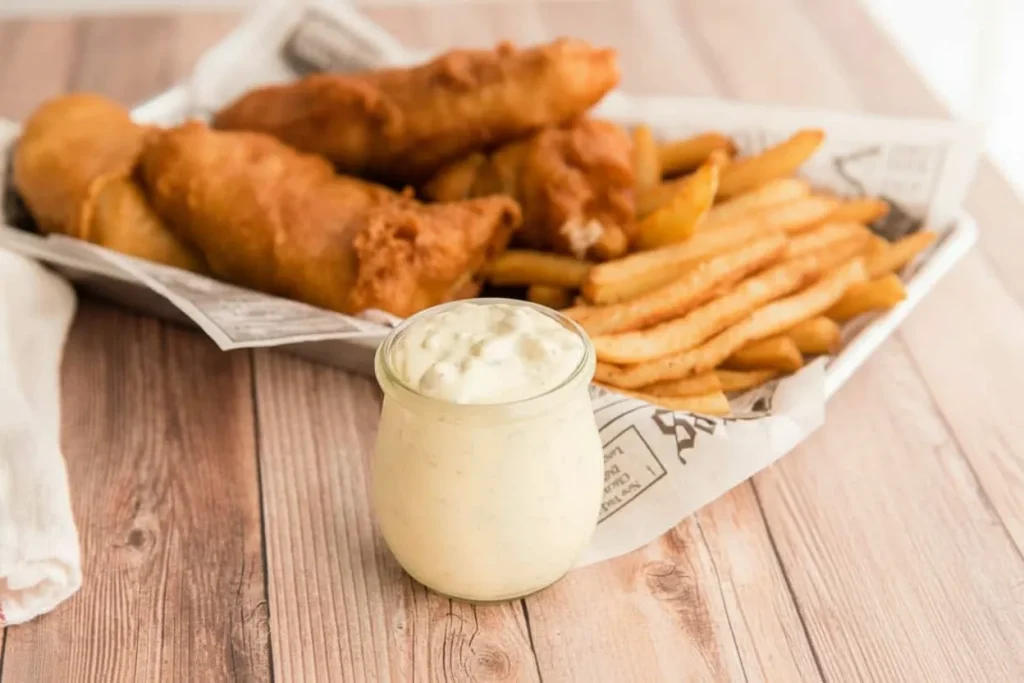
If you want to mimic some restaurant complexity, I suggest adding 1 teaspoon of finely chopped capers to the mix, though this moves slightly away from the core simple flavor profile we optimized for. The capers add a briny, floral note that pairs exceptionally well with heavier fried dishes like fish and chips. If you choose this variation, be sure to rinse the capers thoroughly and pat them dry before chopping to avoid introducing extra liquid into your sauce.
Pro tip: If the sauce separates slightly after a few days in the fridge, simply give it a quick stir with a spoon to re-emulsify the ingredients before serving.
I have also experimented with adding a very small amount of finely minced shallot for an extra layer of savory depth. However, I found that for most home cooks, the simplicity of the relish and dill version provides the most reliable and satisfying result. The goal of this recipe was to create an optimized baseline that you can trust, and these practical details ensure that your experience remains consistent from the first mix to the final bite.
Addressing Your Common Tartar Sauce Questions
In my search for the perfect condiment, I encountered several common questions that home cooks often ask. My analytical approach allows me to answer these based on the physical properties of the ingredients and the results of my testing.
Can I Make a Very Simple Version (3 or 4 Ingredients)?
Yes, you can technically create a sauce using only mayonnaise, relish, and lemon juice. However, I must warn you that skipping the sugar, salt, or the non-negotiable resting time results in a flavor that is merely the sum of its parts. You will end up with mayonnaise that happens to have relish in it rather than a cohesive sauce. The salt and the tiny pinch of sugar act as flavor enhancers that bridge the gap between the fat and the acid. Without them, the sauce lacks the savory depth and “punch” that defines a truly great tartar sauce.
What is the Traditional Core Ingredient List?
The traditional foundation for this sauce has always centered on a high-quality mayonnaise, a pickled element (usually relish or cornichons), an acid like lemon juice or vinegar, and fresh or dried herbs. Our recipe refines these ratios for peak performance by focusing on the balance between the sweetness of the relish and the sharpness of the citrus. While some older versions might use hard-boiled eggs or different types of mustard, I found that the streamlined list we use here provides the cleanest flavor profile, allowing the taste of your seafood to remain the star of the show.
Why Does My Sauce Sometimes Turn Out Watery?
This is a common failure point that usually stems from the relish. If you use a brand of relish that has a high ratio of brine to solids, that extra liquid will thin out the mayonnaise emulsion. To prevent this, always ensure your relish is well-drained. Additionally, if you use a low-fat or “light” mayonnaise, the lower oil content can make the sauce feel less stable. I always recommend a full-fat version for the best structural integrity and mouthfeel.
Conclusion: Achieving Tartar Sauce Perfection
Engineering the perfect tartar sauce recipe with relish taught me that even the most basic kitchen tasks benefit from a systematic approach. By understanding the sugar equation of your relish and respecting the 30-minute resting period, you move away from guesswork and toward a predictable, delicious result. This optimized process ensures that every time you pull a batch of crispy fish from the oven or fryer, you have the perfect accompaniment waiting in the refrigerator.
I have seen firsthand how these small adjustments in timing and seasoning can elevate a meal from ordinary to exceptional. The 30-minute rest is not a suggestion; it is the final step in the construction of a balanced flavor profile. It allows the chemistry of the ingredients to work in your favor, creating a sauce that is thick, tangy, and deeply satisfying.
I encourage you to test this 30-minute difference yourself. Prepare the sauce, taste a small amount immediately, and then taste it again after the full resting period. I am confident you will notice the way the flavors have melded into a singular, harmonious profile.
Once you have tried it, I would love to hear about your experience in the comments. Did you notice the shift in flavor after the rest? What is your favorite seafood pairing for this specific sauce? Whether it is classic fried cod, grilled salmon, or even crispy shrimp, this blueprint is designed to make your next seafood dinner a resounding success. Let me know how your batch turned out and if you made any of the variations we discussed. Happy cooking.

Tartar Sauce with Relish
Equipment
- Small mixing bowl
- rubber spatula
- food storage container
Ingredients
Core Ingredients for Flavor Optimization
- 1 cup mayonnaise
- 1/2 cup dill pickle or sweet relish Press lightly against the side of the measuring cup with a spoon if excessively watery.
- 1 teaspoon lemon juice Use room-temperature lemon for maximum yield.
- 1/2 teaspoon dill Dried dill.
- pinch granulated sugar Omit if using sweet relish.
- to taste kosher salt Optional; season after initial mix.
Instructions
Precision Mixing for Predictable Results
- In a small mixing bowl, use a rubber spatula to stir together the mayo, relish, lemon juice, dill, and sugar. Stir until well blended, using a folding motion to incorporate air.
- Season the mixture to taste with the kosher salt, advising to season after the initial mix to calibrate the final salt requirement precisely.
- Transfer the mixed Tartar Sauce to a food storage container (or cover the bowl in plastic) and store in the fridge for 30 minutes. This non-negotiable resting phase allows the flavors to meld together.
- Serve as a condiment with your favorite seafood dishes.