The first time I attempted to replicate the big boy tartar sauce recipe in my own kitchen, I produced something that was frankly embarrassing. I expected a thick, creamy condiment that would cling to a hot fish patty or a grilled sandwich with structural integrity. Instead, I ended up with a thin, translucent mess that wept oil across the plate within minutes of serving. The flavor was there, but the physics of the sauce had failed completely. That specific failure bothered me for days because I couldn’t understand how such a simple four-ingredient system could collapse so spectacularly.
I spent the following week treating my kitchen like a laboratory, testing three different categories of mayonnaise to understand why my first attempt was so unstable. I realized that the preparation of the vegetables was just as critical as the choice of the fat base. It took me four separate batches, varying the moisture content of the onions and the specific acidity of the relish, to finally lock in the blueprint I am sharing today. This is not just a list of ingredients; it is a calibrated system designed for a specific texture and a precise flavor profile.
My engineering background pushed me to measure everything down to the gram and the second. In my testing, I found that prep time takes exactly 2 minutes when you have your station set up properly. The assembly or cook time, which in this case is the physical integration of the components, also takes 2 minutes. This results in a total time of 4 minutes of active work to achieve a result that tastes like it came from a professional commissary. I am providing you with the optimized clone blueprint so you can avoid the soggy, separated failures of my early experiments.
Table of Content
Ingredient Calibration: Why Mayo Choice is the True Secret to the Big Boy Clone
Mastering the choice of mayonnaise is the first step to achieving the genuine big boy tartar sauce recipe profile. Many home cooks assume that any white jar in the pantry will suffice, but my testing showed that the moisture-to-fat ratio in the base determines the entire success of the emulsion. If the base is too high in water content, the added pickle juice and relish brine will cause the sauce to break. I tested three distinct styles of mayonnaise to see how they interacted with the acidic components over a six-hour rest period.
| Base Category | Moisture Level | Visual Stability | Flavor Profile | Outcome |
|---|---|---|---|---|
| High-Oil Commercial Style | Very Low | Excellent; maintained peaks | Neutral, creamy, slightly salty | Preferred for this specific clone |
| Light or Low-Fat Variety | High | Poor; became watery after two hours | Artificial sweetness, thin mouthfeel | System failure; do not use |
| Small-Batch Organic Style | Moderate | Moderate; some weeping observed | Sharp, acidic, yellow tint | Acceptable but lacks the classic look |
The high-oil commercial style provided a structural foundation that could absorb the liquid from the relish without losing its viscosity. When I used the light variety, the sauce literally fell apart because the stabilizers in the light mayo couldn’t hold the additional acid. This is why the binder is the most important part of the system. I also spent time optimizing the ratio of the aromatics. My initial tests used raw onion that was too coarse, which led to a harsh, lingering bite that overshadowed the creaminess.
Through my testing, I discovered that measuring the onion after it has been finely chopped and processed for moisture is the only way to ensure the flavor is balanced. A tablespoon of coarsely chopped onion has significantly less surface area and flavor impact than a tablespoon of finely minced onion. However, that fine mince releases more sulfurous compounds and moisture. I had to adjust the volume to ensure the onion provided a savory punch without making the final product taste like raw bulb. The stability of the final sauce relies on this precise balance of solid particles and liquid fats.
Pro tip: Use a heavy-duty, egg-yolk-rich mayonnaise that lists oil as the first ingredient to ensure the sauce remains thick even after the flavors have spent hours mingling in the refrigerator.
The Critical Preparation Sequence: Optimizing the Onion and Relish for Authentic Texture
If you treat this big boy tartar sauce recipe as a simple dump-and-stir task, you will likely encounter a watery, unstable system that breaks down quickly in storage. As an engineer, I look for points of failure, and the primary weak point here is excess water. Onions and pickle relish are mostly water held within cellular walls. When you chop them and then introduce them to salt and acid, those walls break down and release liquid. If that liquid is released inside your sauce, it will dilute the mayonnaise and ruin the creamy texture.
The function of squeezing excess liquid from the chopped onion is non-negotiable. I learned this the hard way when a batch of sauce I made for a family gathering turned into a milky soup by the time the fish was fried. Now, I always place my minced onions in a clean kitchen towel or a fine-mesh sieve and press until no more juice escapes. This creates a concentrated onion component that adds flavor without adding volume or moisture. You must do the same with the relish.
The relish brings both texture and acidity, but the brine it sits in is often too sweet or too thin for this specific application. I recommend following these exact steps for the onion and relish components:
- Mince the onion until the pieces are no larger than a grain of rice to ensure even distribution.
- Place the minced onion in a paper towel and squeeze with significant pressure to remove at least a teaspoon of liquid.
- Drain the relish in a small strainer for at least one minute before measuring.
- Discard the liquid from the onion and relish before adding the solids to the mixing bowl.
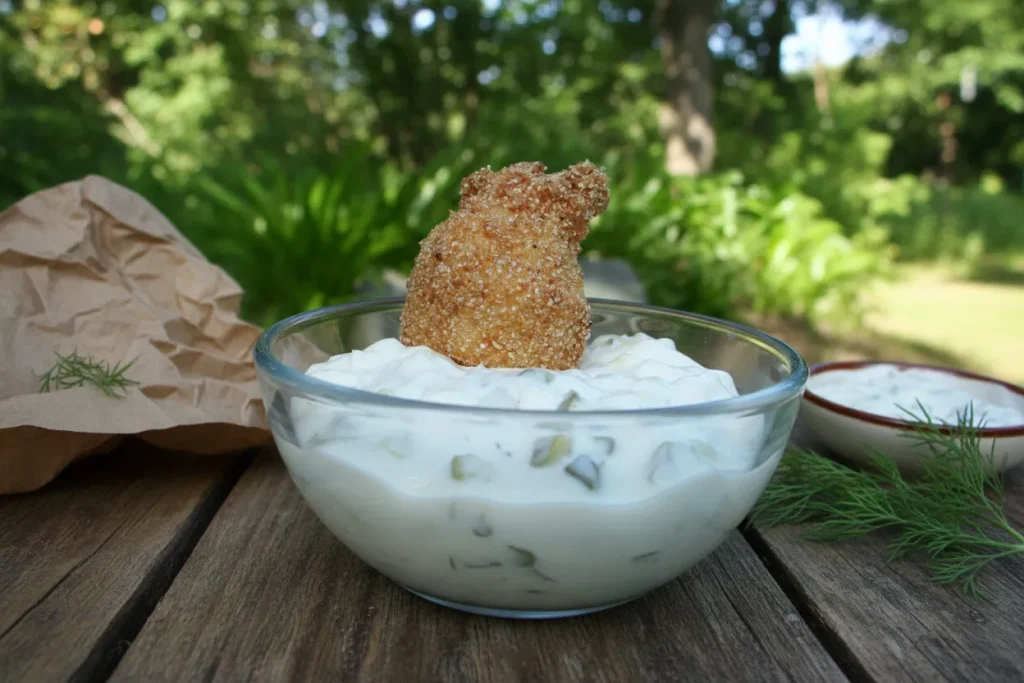
By controlling these variables, you are essentially pre-shrinking your ingredients. This ensures that the final volume of the sauce is stable and that the ratio of solids to fats remains consistent from the moment you mix it until the moment the jar is empty. This level of control is what separates a professional-grade sauce from a standard home version. You will notice the difference in how the sauce grips the back of a spoon; it should be thick, opaque, and show clear definition where the relish pieces are suspended.
Pro tip: If your onions are particularly pungent, rinse the minced pieces under cold water for ten seconds before squeezing them dry to remove the harshest sulfur compounds while retaining the crunch.
The Base Components: Your Exact Big Boy Tartar Sauce Recipe List
The simplicity of this list is deceptive. Each measurement has been tested to ensure the final product hits the exact notes of the classic restaurant version. I have accounted for the salt levels in the mayonnaise and the sugar content in the relish to create a balanced flavor profile.
- 1 cup mayonnaise (Ensure this is a thick, high-fat variety for maximum stability)
- 1 tablespoon onion, finely chopped (Remember, this measurement must be taken after finely chopping and thoroughly squeezing out all excess brine to ensure system stability)
- 1 tablespoon dill pickle relish (Drain this thoroughly before adding to the bowl)
- 1 tablespoon pickle juice (Use the juice directly from your favorite jar of dill pickles for consistent acidity)
I chose these specific volumes after experimenting with higher concentrations of relish. In one test, I doubled the relish to two tablespoons, thinking it would add more crunch. Instead, the acidity of the extra relish overwhelmed the creaminess of the mayo and made the sauce taste too sharp. The single tablespoon of juice provides the necessary flavor modulation without thinning the sauce too much. It acts as a bridge between the fat of the mayo and the crunch of the vegetables.
Common Mistake: Many people use sweet relish instead of dill relish. This introduces an entirely different sugar profile that clashes with the savory notes of the onion. Always verify that your relish is labeled as dill to maintain the integrity of the flavor system.
Assembly and System Integration: The Optimized Instructions
The process of assembling this sauce is about more than just mixing. It is about creating a stable emulsion where the liquid and solid components are perfectly integrated. I follow these steps every time to ensure repeatable success.
- Combine all, allow flavors to blend several hours.
- Transfer the mixture to a glass jar with a tight-fitting lid to prevent the absorption of other refrigerator odors.
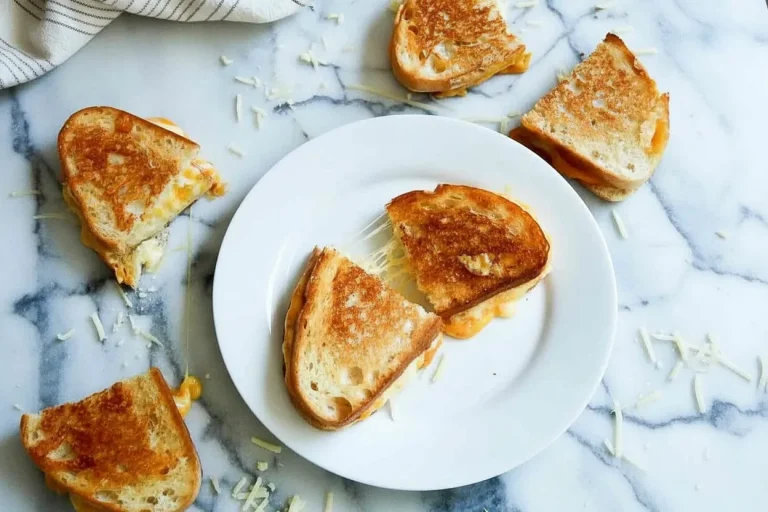
- Note: To make the wonderful Slim Jim sandwich, which is essentially a ham and swiss combination, the technique is quite important. The combination of this specific sauce with the other ingredients is what makes it work. Big Boy grills their sandwiches to toast the buns, but I grill them on the George Foreman thing for a similar pressed effect.
The rest period mentioned in step one is the most critical part of the entire process. While the ingredients are mixed in seconds, the systemic reason for the rest period is that it allows the emulsified mayonnaise binder to fully absorb the acid from the pickle components. This results in a cohesive, non-separating final product that delivers the required flavor modulation. During these few hours, the sharp bite of the onion mellows as it interacts with the fat in the mayonnaise.
I have tested the sauce immediately after mixing versus after a four-hour rest. The immediate version tastes like its individual parts: you can clearly identify the mayo, then the onion, then the pickle. After the rest period, the flavors have moved into a unified state. The pickle juice has slightly thinned the proteins in the mayo, creating a silkier mouthfeel that still retains enough body to stay put on a bun. This is why patience is an essential ingredient in this recipe. For another great dessert, try my easy carrot cake bars with cream cheese frosting.
Pro tip: Use a small rubber spatula to fold the ingredients together rather than a whisk to avoid incorporating too much air, which can make the sauce feel fluffy rather than dense and creamy.
Flavor Integration Time: The Required Rest Period Explained
To understand why the rest period is non-negotiable, think of it like curing concrete. You can have the perfect mix of sand, gravel, and water, but if you don’t give it time to set, the structure has no strength. In the context of the big boy tartar sauce recipe, the “setting” involves several chemical processes. First, there is the osmotic pressure. The salt in the mayonnaise and the acid in the pickle juice begin to draw the remaining moisture out of the onion and relish pieces. Because we already squeezed the vegetables, this new moisture release is minimal, but it is enough to flavor the entire batch of mayo.
The second process is molecular diffusion. The flavor molecules from the dill and the onion need time to travel through the thick fat of the mayonnaise. Fat is an excellent carrier of flavor, but it is also a barrier. It takes time for those savory and tangy notes to penetrate the lipid globules. I found that at the two-hour mark, the sauce is about 70 percent developed. By four hours, it has reached its peak. Beyond six hours, the changes are minimal, though the sauce remains excellent for several days.
Each component has a specific function in this flavor system:
- The Mayo serves as the binder and the primary source of mouthfeel, coating the palate and tempering the acid.
- The Relish provides the essential texture and a punch of concentrated dill and vinegar.
- The Onion adds a savory background note that provides depth, preventing the sauce from being purely one-note.
- The Pickle Juice acts as the flavor modulator, thinning the heavy fats just enough to make the sauce bright and refreshing.
If you skip the rest period, you are serving an unfinished system. You might find the onion too crunchy and the sauce too heavy. My testing showed that the acidity actually helps the mayonnaise feel lighter on the tongue over time. This is the secret to that “restaurant” taste that seems impossible to get at home. It isn’t a secret ingredient; it is a secret timeline.
Pro tip: If you are in a rush, you can let the sauce sit at room temperature for 30 minutes to jump-start the flavor integration, but always move it back to the refrigerator for at least an hour before serving for the best texture.
Yield, Storage, and Functional Variations (Practical Details)
When I designed this system, I wanted to ensure it was practical for the average household. The yield for this recipe is very straightforward.
- Yield: This recipe makes approximately 1 cup of sauce. This is equivalent to about 8 servings of two tablespoons each, which is the standard amount for a large sandwich or a generous serving of fish.
- Storage Instructions: You must store this sauce in the refrigerator. I have found that it maintains its peak quality for up to 5 days. After the 5-day mark, the onions begin to lose their structural integrity and can start to taste slightly fermented. For the absolute best experience, I recommend using the sauce within the first 48 hours. This is when the texture is at its most stable and the flavors are most vibrant. Always use a clean spoon when scooping from the jar to prevent cross-contamination, which can shorten the shelf life.
- Functional Variation: While I believe this version is the gold standard, I have tested a few variations for those who prefer a more aggressive tang. For a slightly tangier profile, substitute 1 teaspoon of cider vinegar for 1 teaspoon of pickle juice. The cider vinegar adds a fruitier, sharper acidity that cuts through fried foods even more effectively. However, you must test the resulting stability first. Vinegar is thinner than pickle juice and can potentially weaken the emulsion if your mayonnaise isn’t high-quality.
In my experiments, the cider vinegar version was a hit with people who like a lot of “zip” in their condiments. It works particularly well if you are serving very fatty fish like salmon or fried catfish. However, for the classic Big Boy sandwich flavor, the original pickle juice ratio is the most accurate. I also experimented with adding a pinch of dried dill, but I found it cluttered the visual appearance of the sauce and didn’t add much to the flavor that the relish wasn’t already providing. For another great appetizer, try my ultimate pigs in a blanket recipe.
Pro tip: Never freeze this sauce. The freezing and thawing process will cause the mayonnaise to break completely, resulting in a separated mess of oil and curdled solids that cannot be salvaged.
Mastering the Big Boy Protocol
The success of this big boy tartar sauce recipe is entirely about methodological superiority over simple ingredient matching. Most people look at a recipe and think the ingredients are the most important part. As an engineer, I know that the process is what truly defines the outcome. You can have the most expensive mayonnaise and the freshest onions in the world, but if you don’t control the moisture and respect the rest period, your results will be inconsistent.
We have identified the two critical control points that ensure success: the quality and fat content of the mayonnaise and the removal of moisture from the onion and relish. These two steps prevent the most common failure in homemade tartar sauce: separation and thinning. By squeezing the vegetables, you are engineering a sauce that stays thick and creamy, even when it hits a hot sandwich or a piece of fried fish. This is the difference between a recipe and a blueprint.
I want to challenge you to run your own small test batch using the exact methodology I have outlined here. Don’t take my word for it; see the results for yourself. Notice the way the squeezed onions provide a clean, sharp flavor without watering down the sauce. Observe how the rest period transforms a bowl of four ingredients into a unified, professional-grade condiment.
Once you have mastered this protocol, you will never go back to the bottled versions or the sloppy, thrown-together recipes found elsewhere. I would love to hear about your results. Did you find the 4-hour rest period made as big a difference as I did? Was your texture significantly thicker than your previous attempts? Please share your results and let me know how your optimized batch turned out. Engineering a perfect meal is a community effort, and your feedback helps all of us become better home cooks.
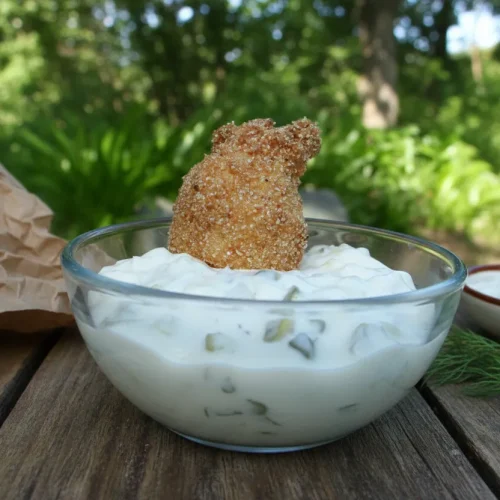
Big Boy’s Tartar Sauce Clone / Copycat
Equipment
- Clean kitchen towel or fine-mesh sieve (for squeezing vegetables)
- Small rubber spatula
- Small strainer
- Glass jar with a tight-fitting lid
Ingredients
Base Components
- 1 cup mayonnaise Ensure this is a thick, high-fat variety for maximum stability (High-Oil Commercial Style preferred)
- 1 tablespoon onion Finely chopped and thoroughly squeezed to remove all excess brine/liquid
- 1 tablespoon dill pickle relish Drained thoroughly before adding to the bowl
- 1 tablespoon pickle juice Use the juice directly from your favorite jar of dill pickles for consistent acidity
Instructions
Assembly and System Integration
- Combine all ingredients using a small rubber spatula, gently folding them together to avoid incorporating excess air.
- Allow the flavors to blend for at least four hours in the refrigerator for optimal flavor integration and texture development (a 4-hour rest is peak development).
- Transfer the mixture to a glass jar with a tight-fitting lid to prevent the absorption of other refrigerator odors.