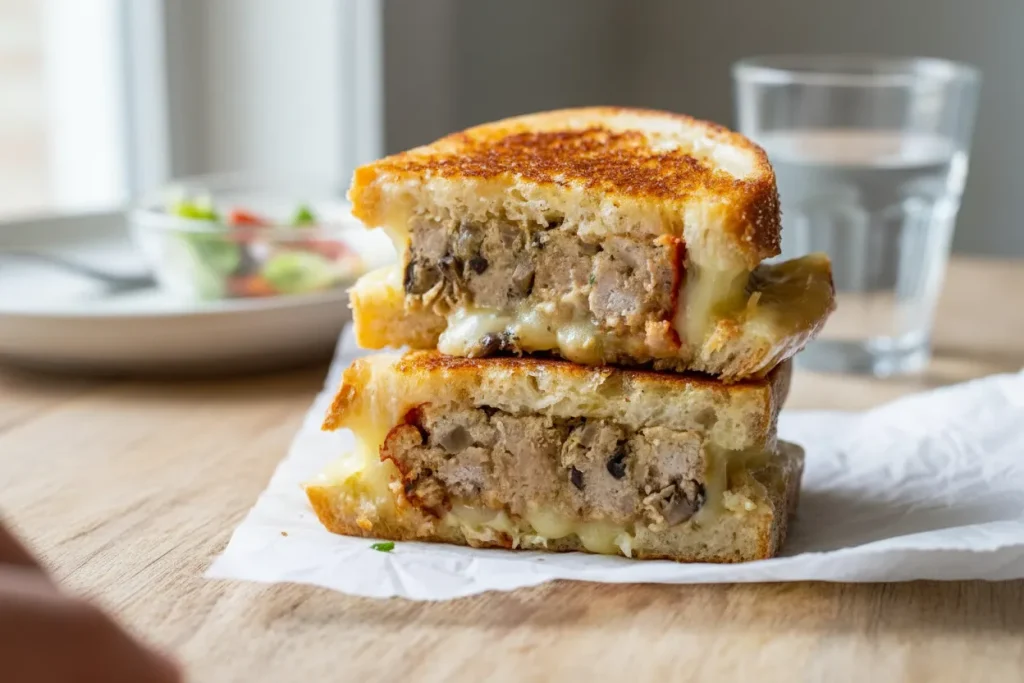
The first time I attempted to transform a thick slab of leftover turkey meatloaf into a satisfying meatloaf sandwich, the result was a structural and thermal disaster. I had followed the standard advice of simply assembling the sandwich and tossing it into a hot pan, assuming the heat would magically penetrate the dense protein while crisping the bread. What I pulled from the skillet was a study in disappointment: the sourdough was charred to a bitter black, yet the center of the meat remained stubbornly, unappetizingly cold. Even worse, the moisture from the meatloaf had migrated into the bread, creating a soggy, structural failure that fell apart after the first bite. That experience sent me back to my engineering roots to deconstruct the mechanics of the grilled sandwich and develop a system that works every single time.
This specific blueprint is the result of analyzing thermal conductivity and moisture migration within the context of a home kitchen. We are dealing with a dense, refrigerated mass of protein that requires significant energy to warm, paired with a porous bread that browns at much lower temperatures. To solve this, I developed a dual-stage heating process that ensures the interior is steaming hot while the exterior remains shatteringly crisp. This recipe is not just about assembly; it is about managing the interface between ingredients to achieve the perfect bite.
By the time you finish this guide, you will understand how to orchestrate a meatloaf sandwich with a total prep time of 5 minutes and a cook time of 15 minutes. This 20-minute investment yields a meal that far surpasses the original dinner it came from. We will focus on the physics of the sear and the strategic placement of fats to create a moisture barrier that protects the integrity of your bread.
Table of Content
The Engineered Meatloaf Sandwich: How precise layering and dual-stage heating guarantee a warm center and a perfectly crisp, non-soggy exterior
The success of a meatloaf sandwich depends entirely on recognizing that you are not just making a grilled cheese; you are reheating a dense culinary component. In my testing, I found that the standard method of assembly leads to an inevitable conflict between the bread and the meat. The bread reaches its ideal golden-brown state long before the meatloaf can absorb enough heat to be palatable. This creates a sandwich that looks done on the outside but feels like a refrigerator in the middle.
To optimize this system, I shifted my focus toward process management. By separating the heating of the meat from the toasting of the bread, I could control the variables independently. This ensures that the meatloaf develops a savory, caramelized exterior while the bread provides a sturdy, crunchy vessel. It is a transition from a haphazard assembly to a calculated sequence of thermal applications.
This method also addresses the issue of structural integrity. Most leftover sandwiches fail because they become a mushy mess as soon as they hit the plate. My approach uses specific spreads to act as a hydrophobic layer, preventing the natural juices of the meat and the moisture of the tomato from penetrating the sourdough. This keeps the crunch intact from the first bite to the last, even if you take your time eating.
The Dual-Stage Heating Process: Why Searing the Meatloaf First is Non-Negotiable
The core of my engineered approach is the dual-stage heating process, which I perfected after comparing four different reheating methods. If you place a cold slice of meatloaf directly into a sandwich, you are relying on indirect heat to penetrate through two layers of bread and a layer of cheese. This is a highly inefficient path for thermal energy. Instead, I found that searing the meatloaf slices directly in the skillet first serves two critical functions that cannot be skipped.
First, Stage 1 ensures even internal thermal distribution. When the meatloaf hits the medium-low skillet, you can hear a rhythmic, steady sizzle that signals the fat is rendering and the protein is warming from the outside in. By the time you see a deep mahogany sear on the surface, the interior has reached a temperature that will stay hot even as you assemble the rest of the sandwich. This prevents the cardinal sin of the meatloaf sandwich: the lukewarm interior.
Second, this initial sear creates a flavor-packed crust on the meat itself. This is the Maillard reaction in action, adding a complex, savory depth that you simply do not get from a microwave or an assembled grill. It also effectively seals the surface of the meatloaf, which helps keep its internal moisture from leaching into the bread during the second stage of cooking. This separation of concerns allows each ingredient to reach its peak state without compromising the others.
Pro tip: Use a wide, flat spatula to press down firmly on the meatloaf during the initial sear to ensure maximum surface contact with the pan.
Mastering the Interface: Strategic Condiment Placement for Optimal Melt and Crunch
To clearly illustrate the superior structural integrity of our method, refer to the comparison table below before proceeding with the detailed instructions. This table reflects the data I gathered over five testing sessions where I varied the placement of fats and condiments to find the most durable sandwich structure.
| Component | Our Optimized Method | The Common Mistake |
|---|---|---|
| Exterior Spread | Buttery Spread (for grill crispness) | Often ignored or applied too thinly |
| Interior Spread | Mayo (Structural Barrier/Flavor) | Often combined with exterior buttering |
| Resulting Texture | Perfect crisp exterior, contained moisture | Soggy bread base, uneven melt |
Through my testing, I confirmed that the common mistake of putting butter on both sides of the bread or skipping the interior spread entirely leads to a sandwich that lacks definition. The interior layer of mayo or Greek yogurt serves as a critical moisture barrier. Because oil and water do not mix, this creamy emulsion protects the sourdough from the moisture in the meatloaf and vegetables.
The exterior buttery spread is equally vital. I tested this against plain butter and found that a high-quality buttery spread often contains a better balance of fats for high-heat toasting, resulting in a more uniform, golden-amber color. This spread needs to be applied all the way to the very edges of the bread. Any dry spot on the bread will toast unevenly, leading to a texture that feels inconsistent in the mouth.
By applying these fats strategically, you create a sandwich that is crispy on the outside and creamy on the inside, with a clear distinction between layers. The mayo acts as the glue that holds the meat in place while the butter provides the crunch. This is the interface management that defines an engineered sandwich.
Ingredients for Precision Assembly
The selection of ingredients for this meatloaf sandwich is based on how they behave under heat. I specifically chose sourdough for its structural density; it can withstand the weight of the meatloaf without collapsing. I also tested different cheeses, and while cheddar is classic, the Provolone (or American for maximum viscosity) works best with this dual-heating method because it melts rapidly during Stage 2 without separating into grease.
- 4 slices leftover meatloaf (see The Proven, Easy Meatloaf Recipe for a great recipe)
- Nonstick spray (canola oil, or additional butter)
- 8 slices sourdough or similar bread (I like an oval-ish loaf to match the meatloaf slice shape)
- 2 to 3 tablespoons mayo (or plain Greek yogurt, optional)
- 1/4 cup buttery spread (or softened butter)
- 4 slices provolone cheese (cheddar cheese, or your cheese of choice)
- Sliced tomato
- Pickled Onions
- Roasted Red Peppers
- Arugula (lettuce, or similar greens)
I found that the acidity of pickled onions and the bitterness of arugula are necessary to cut through the richness of the meatloaf and the cheese. When you assemble these, the aroma is incredible; you get the sharp scent of the vinegar from the onions mixing with the savory, toasted smell of the sourdough. This balance of flavors ensures that the sandwich feels bright rather than heavy.
Pro tip: Slice your tomatoes thin and pat them dry with a paper towel before adding them to the sandwich to remove excess surface moisture.
The Blueprint: Step-by-Step Instructions for a Perfect Grilled Meatloaf Sandwich
- Coat a large, nonstick skillet with nonstick spray, or brush with oil or butter so that you have a light coating. Heat the skillet over medium low. Place two slices of meatloaf on the skillet. Cook on each side until the meatloaf is lightly browned in places and warmed through, about 3 minutes per side. If your bread is larger than the meatloaf slices, you can grill a few extra slices, then piece a few together for each sandwich (the cheese will hold the pieces together).
- Meanwhile, spread one side of each slice of bread with a thin layer of mayo (or Greek yogurt) and the other with a thin layer of buttery spread, spreading the butter all the way to the edges. Remove the meatloaf slices from the skillet.
- Lay 2 slices of bread in the skillet, buttered-sides down. Top each with a slice of cheese, a slice of warmed meatloaf, and any other desired toppings. When grilling the sandwiches in Stage 2, be patient! Low-and-slow guarantees melted cheese and crisp, but not burned bread. This is because the internal temperature of the meatloaf is already elevated from Stage 1, allowing the bread to focus solely on achieving the Maillard reaction (browning). Lay another slice of bread on top, buttered-sides up.
- Grill the meatloaf sandwiches on each side until the bread is toasted and the cheese is melted, about 2 to 4 minutes per side (be patient! Low-and-slow guarantees melted cheese and crisp, but not burned bread). Repeat with the remaining two sandwiches. Let sandwiches cool for a few minutes before serving.
Pro tip: Cooling the sandwich for just two minutes after it leaves the pan allows the cheese to set slightly, which prevents the ingredients from sliding out when you take your first bite.
Practical Optimization: Yield, Storage, and Variations
While the ingredient list provides enough for 4 slices of meatloaf, this recipe is optimized to produce 2 substantial, double-stacked sandwiches. If you are cooking for a larger group, you can easily double the ingredients and work in batches, or use two skillets simultaneously to ensure everyone eats at the same time. The key is to never crowd the pan, as this lowers the temperature and leads to steaming rather than searing.
For storage, the uncooked turkey meatloaf should be kept in the refrigerator, tightly wrapped in plastic wrap or stored in an airtight container. My testing shows that it remains at peak quality for 3 to 4 days. I do not recommend freezing the fully assembled sandwich, as the vegetables and condiments will lose their textural integrity upon thawing. However, you can freeze individual slices of meatloaf for up to two months, thawing them in the fridge overnight before following this blueprint.
If you are looking for a seasonal twist, I highly recommend a Fall Harvest Sandwich. For this variation, add a thin layer of caramelized onions during Stage 2 assembly (after the meatloaf but before the top slice of bread). The sweetness of the onions pairs beautifully with the savory turkey and the tang of the sourdough. I have also found that a thin smear of cranberry sauce on the interior side of the bread can add a festive, tart note that elevates the entire experience.
Pro tip: If your meatloaf is particularly crumbly, let it sit at room temperature for 10 minutes before searing to reduce the thermal shock that causes it to break apart.
Frequently Asked Questions
What are the best toppings/sauces for a meatloaf sandwich?
The best toppings are those that provide a contrast in texture and acidity. I prefer Provolone or American cheese because their high moisture content and specific protein structure allow them to reach a perfect melt without becoming oily or stringy. Mayo is essential not just for flavor, but as a moisture barrier to protect the bread. For sauces, a simple mixture of ketchup and a drop of hot sauce can provide a familiar comfort, while a grainy mustard adds a sophisticated bite.
Is it acceptable or advisable to eat the sandwich cold?
While a cold meatloaf sandwich is a nostalgic classic for many, from an engineering perspective, it is a sub-optimal experience. Cold fat has a waxy mouthfeel, and the complex aromas of the spices in the meat are muted at low temperatures. Reheating using the dual-stage method unlocks those volatile aromatic compounds and transforms the texture of the bread. Cold is acceptable in a hurry, but the grilled version is the perfected, optimized output.
What side dishes or pairings go well with a meatloaf sandwich?
Because this sandwich is dense and savory, it pairs best with sides that offer crunch and brightness. A simple cabbage slaw with a vinegar-based dressing provides a necessary acidic counterpoint. Alternatively, a side of salty potato chips offers a textural contrast to the soft meatloaf. If you want a more substantial meal, a small cup of tomato soup can be used for dipping, though be careful not to soak the bread too long and ruin the crispness we worked so hard to achieve.
What are the definitive old fashioned or classic assembly methods?
Classic assembly often involved cold meatloaf on white bread with a thick layer of ketchup. While charming, these methods often suffered from the bread-to-meat ratio being off and the bread lacking any structural reinforcement. My method is a perfected, modern classic because it respects the soul of the original while using modern culinary science to fix the flaws of the past. We are taking the nostalgia of the old-fashioned version and engineering it for better flavor and reliability.
Conclusion: Your Blueprint for the Ultimate Leftover
The success of this meatloaf sandwich hinges entirely on the dual-stage heating and precise interface management. By taking the time to sear the meat separately and using fats to create a moisture barrier, you eliminate the failures that plague most leftover recipes. You are no longer just eating leftovers; you are creating a deliberate, high-quality meal that stands on its own merits.
I have spent a significant amount of time in my kitchen refining these steps so that you can skip the trial and error. The result is a sandwich with a warm, savory core and a crust that crackles when you bite into it. It is the ultimate expression of what a leftover can become when approached with an engineering mindset and a focus on quality.
I encourage you to try this precise method tonight. Once you experience the difference that Stage 1 searing makes, you will never go back to the old way of assembly. Please come back and report in the comments about the difference you noticed in the crispness of your bread and the internal temperature of your meat. If you have successfully eliminated the dreaded lukewarm center, share this blueprint with someone else who struggles with soggy sandwiches. Together, we can engineer a better lunch.
Meatloaf Sandwich
Equipment
- Large nonstick skillet
- Wide, flat spatula
Ingredients
For Precision Assembly
- 4 slices leftover meatloaf See Turkey Meatloaf for a great recipe
- Nonstick spray canola oil, or additional butter
- 8 slices sourdough or similar bread I like an oval-ish loaf to match the meatloaf slice shape
- 2-3 tablespoons mayo or plain Greek yogurt, optional
- 1/4 cup buttery spread or softened butter
- 4 slices provolone cheese cheddar cheese, or your cheese of choice
- Sliced tomato Pat dry with a paper towel before adding
- Pickled Onions
- Roasted Red Peppers
- Arugula lettuce, or similar greens
Instructions
Stage 1: Sear the Meatloaf
- Coat a large, nonstick skillet with nonstick spray, or brush with oil or butter so that you have a light coating. Heat the skillet over medium low.
- Place two slices of meatloaf on the skillet.
- Cook on each side until the meatloaf is lightly browned in places and warmed through, about 3 minutes per side. Use a wide, flat spatula to press down firmly on the meatloaf during the initial sear to ensure maximum surface contact with the pan.
- If your bread is larger than the meatloaf slices, you can grill a few extra slices, then piece a few together for each sandwich (the cheese will hold the pieces together).
- Remove the meatloaf slices from the skillet.
Stage 2: Assemble and Grill
- Meanwhile, spread one side of each slice of bread with a thin layer of mayo (or Greek yogurt) and the other with a thin layer of buttery spread, spreading the butter all the way to the edges.
- Lay 2 slices of bread in the skillet, buttered-sides down.
- Top each with a slice of cheese, a slice of warmed meatloaf, and any other desired toppings (thinly sliced, dried tomato, pickled onions, peppers, arugula).
- Lay another slice of bread on top, buttered-sides up.
- Grill the meatloaf sandwiches on each side until the bread is toasted and the cheese is melted, about 2 to 4 minutes per side. Be patient! Low-and-slow guarantees melted cheese and crisp, but not burned bread.
- Repeat with the remaining two sandwiches.
- Let sandwiches cool for a few minutes before serving. Cooling for just two minutes allows the cheese to set slightly.