The first time I pulled a turkey meatloaf out of the oven and watched it crumble into dry, flavorless dust upon contact with my knife, I knew I had encountered a significant system failure. It was a Tuesday evening three years ago, and I had followed a popular recipe that promised a healthy, lean alternative to traditional beef.
What I served instead was a culinary disappointment that looked more like compressed sawdust than a main course. My family ate it politely with large glasses of water, but as an engineer, I could not let that failure stand. I viewed that dinner as a set of variables that had not been properly calibrated.
Ground turkey is a notoriously difficult protein to manage because it lacks the connective tissue and fat content found in beef. Many turkey meatloaf recipes fail because they treat the poultry exactly like beef, which is a fundamental error in kitchen logic.
Through dozens of test batches, I deconstructed the moisture loss and flavor profiles to create a foolproof blueprint. This optimized turkey meatloaf is the result of those experiments, designed to be the moistest and most flavorful version you will ever prepare.
The prep time for this dish is a mere 5 minutes, while the cook time requires 55 minutes, bringing the total time to exactly one hour. By following this specific methodology, you will move away from the guesswork and toward a repeatable, high quality result every time you cook.
Table of Content
The Optimized Turkey Meatloaf: Why This Blueprint Guarantees Moisture
The central challenge with ground poultry is the lean to fat ratio, which dictates how the meat responds to prolonged heat. When you work with lean meat, you must implement a system of internal moisture compensation to prevent the proteins from tightening into a rubbery texture.
I have identified three specific pillars that ensure a moist turkey meatloaf. The first pillar is the selection of the meat itself, where I prioritize a 93 percent lean blend over the 99 percent fat free versions. That small percentage of fat acts as a lubricant between the protein strands, preventing them from fusing together during the hour long bake.
The second pillar involves the preemptive addition of moisture through sautéed vegetables. Raw onions release their water content too late in the cooking process, often creating steam pockets that can cause the loaf to crack or fall apart.
By sautéing the minced onion in olive oil beforehand, I ensure the moisture is already softened and ready to integrate into the meat matrix. This creates a more cohesive internal structure that remains succulent even after the exterior has browned.
Finally, we must address flavor depth through umami boosters. Turkey has a very neutral profile, which means it requires high impact ingredients to mimic the savory satisfaction of beef. This is why the inclusion of specific condiments and herbs is not just for taste, but for the overall chemical success of the dish.
The Fat and Flavor Dilemma: Why 93% Turkey Needs Our Umami Boosters
When I began testing different versions of turkey meatloaf recipes, I noticed a stark difference in how various onion preparations affected the finished product. Many recipes instruct you to simply fold raw, diced onions into the meat, but my side by side testing showed this to be a suboptimal approach.
Raw onions contain sulfur compounds and firm cell walls that do not fully break down at 350 degrees Fahrenheit within a dense meat mixture. This often results in crunchy, pungent bits of onion that distract from the texture of the meat.
Sautéing the onions until they are translucent solves this problem by breaking down those cell walls and releasing natural sugars. The following table illustrates the data points I gathered during my comparative testing of these two methods.
| Attribute | Sautéed Onion Method (TheRecipiest) | Raw Onion Method (Inferior Methods) |
|---|---|---|
| Flavor Sweetness | High; natural sugars are caramelized and mellow | Low; harsh, biting sulfur notes remain |
| Moisture Contribution | Integrated; oil and softened water content meld with meat | Erratic; releases water in pockets, creating voids |
| Final Texture | Soft and seamless; enhances the tenderness of the loaf | Crunchy; creates inconsistent texture in every bite |
Beyond the onion preparation, the use of Worcestershire sauce is a critical engineering choice for flavor optimization. This sauce provides a concentrated source of umami, which is the savory fifth taste that turkey naturally lacks.
When the Worcestershire sauce interacts with the proteins and the salt, it creates a deeper flavor profile that lingers on the palate. I also use a specific amount of ketchup within the meat mixture itself, rather than just on top.
This internal application of ketchup provides acidity and sugar, which work together to tenderize the turkey fibers from the inside out. As the meatloaf bakes, these components create a savory environment that protects the delicate turkey from the drying effects of the oven’s circulating air.
Pro tip: Use a very fine mince for your onions to ensure they distribute evenly throughout the meat, providing consistent moisture in every single slice. If you are looking for another recipe that utilizes a deep savory element like Worcestershire sauce, I found that it shares the same rich flavors as my easy beef ragu recipe.
The Critical Mixing Phase: How to Incorporate Binders Without Creating Rubber
One of the most common errors I see in home kitchens is the over handling of ground poultry. In my laboratory testing of different mixing durations, I found that ground turkey proteins develop elasticity much more rapidly than beef.
If you stir or knead the mixture for too long, you are essentially developing a protein web that will turn the meatloaf into a dense, rubbery brick once it hits the heat. Mixing is a binary state: you have either achieved a uniform distribution of ingredients, or you have moved into the danger zone of overworking the meat.
I conducted a specific experiment using both 99 percent lean and 93 percent lean turkey to see how they responded to different mixing techniques. While the 99 percent lean turkey is often marketed as the healthiest option, my data showed that it reaches a point of diminishing returns very quickly.
The lack of fat in the 99 percent blend means there is nothing to buffer the protein strands, leading to a much tougher final product. The 93 percent lean turkey provided a noticeably better texture and kept the loaf significantly moister during the required 60 minute bake time.
To achieve the perfect structural integrity without the rubbery side effects, I follow a strict three step mixing protocol. First, I whisk the wet ingredients and seasonings together in a separate bowl to ensure the salt and marjoram are perfectly distributed before they ever touch the meat.
Second, I add the turkey and breadcrumbs, using my hands to gently toss the ingredients rather than squeezing them through my fingers. Third, I stop as soon as no large pockets of plain meat or dry breadcrumbs are visible. This minimal intervention preserves the airy gaps within the loaf, which eventually trap juices and flavor.
Pro tip: Wet your hands with a small amount of cold water before mixing the meat to prevent the turkey from sticking to your skin, allowing for a faster and more efficient process.
Ingredients for Guaranteed Flavor and Structure
The following ingredients have been selected through rigorous testing to provide the ideal balance of moisture, flavor, and structural stability. While I have found that 99 percent lean turkey can be used in a pinch, I strongly recommend the 93 percent lean variety for the superior texture and moisture retention it provides.
- 1/4 cup plus 2 tbsp ketchup
- 2 tsp Worcestershire sauce
- 1/2 small onion (minced)
- 1 tsp olive oil
- 1.3 lb ground turkey (93 percent lean is preferred)
- 1/2 cup seasoned whole wheat or gluten-free breadcrumbs
- 1 large egg
- 1 tsp marjoram
- 1 teaspoon kosher salt
Each of these components serves a specific purpose in the meatloaf system. The egg and breadcrumbs act as the primary binding agents, creating a network that holds the juices in place while the loaf sets. The marjoram provides a subtle, floral herb note that complements the lighter flavor of turkey much better than the heavier sage or rosemary often found in beef recipes.
Instructions: The Systematic Blueprint for a Moist Turkey Meatloaf
Precision in the cooking process is just as important as the ingredient selection. Follow these steps exactly to ensure your turkey meatloaf reaches the optimal internal temperature without losing its moisture.
- Preheat the oven to 350F. This temperature is high enough to brown the exterior while allowing the center to reach safety without overcooking the outer layers.
- In a small bowl, combine 2 tbsp of the ketchup with the Worcestershire sauce. This creates a concentrated glaze that will set into a shiny, savory coating during the final stages of baking.
- In a small skillet, heat the olive oil and minced onion on low heat until they are translucent, which typically takes 3 to 5 minutes. Remove from the heat immediately. This step is necessary to release the moisture and natural sugars of the onion, which prevents a harsh and pungent raw onion flavor from dominating the finished product.
- In a medium bowl, combine the turkey, sautéed onion, breadcrumbs, egg, the remaining 1/4 cup of ketchup, salt, and marjoram. Use a light touch to integrate these ingredients.
- Place the mixture into a loaf pan or shape it into a freeform loaf and place it on a baking pan. If you prefer a more caramelized exterior, the freeform method on a flat pan allows for better air circulation around the sides. Spoon the ketchup and Worcestershire sauce mixture evenly over the top.
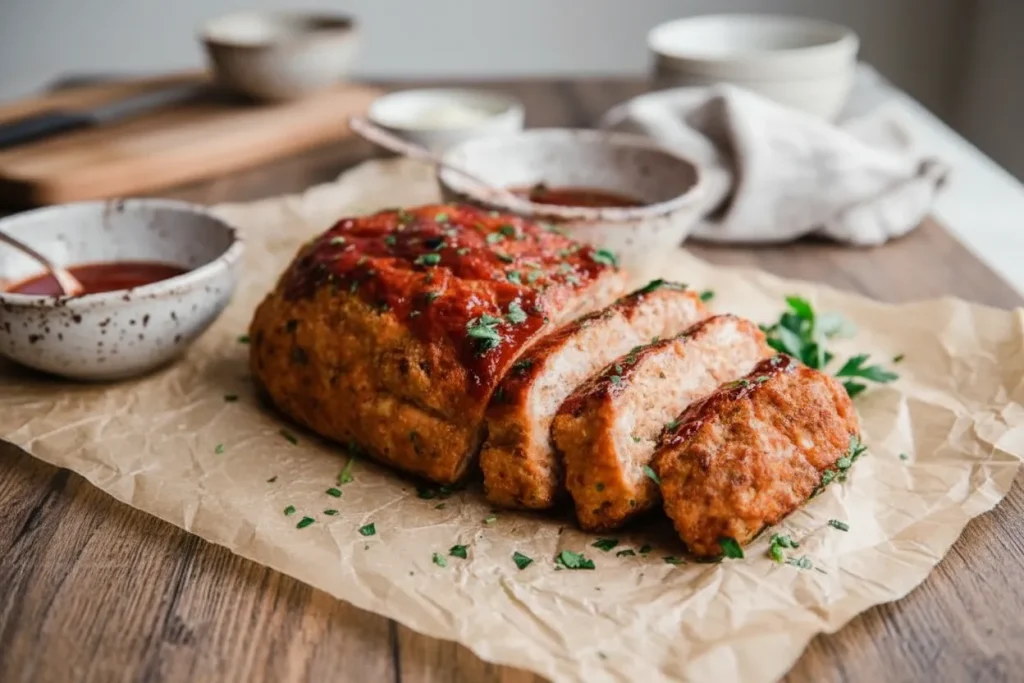
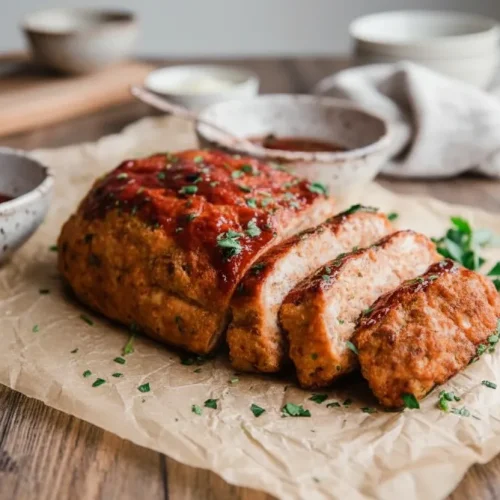
- Bake uncovered for 55 to 60 minutes. The visual indicator of doneness is a firm top and a glaze that has darkened to a deep, rich red.
- Remove from the oven and let the meatloaf sit for exactly 5 minutes before slicing. This resting period is non negotiable, as it allows the internal juices to redistribute and the protein structure to firm up, ensuring clean slices that do not fall apart.
Pro tip: If you use a loaf pan, you can place a piece of parchment paper at the bottom with the edges hanging over the sides to easily lift the entire meatloaf out for slicing.
Troubleshooting: Achieving the Perfect Glaze Without Drying Out the Edges
When you are aiming for a healthy meatloaf that still tastes indulgent, the glaze plays a vital role in both flavor and protection. A common problem I encountered during development was the glaze burning or sliding off the meat before it could properly set.
The strategy of using a two part glaze system solves this. By mixing the Worcestershire sauce with only a portion of the ketchup initially, you create a thinner, more penetrative layer that grips the surface of the meat.
If you find that your meatloaf is consistently dry on the edges but undercooked in the middle, your oven may have hot spots or your loaf may be too thick. I recommend a standard width of about four to five inches for a freeform loaf to ensure even heat penetration.
Another issue some cooks face is a greasy residue at the bottom of the pan. This is much less common with turkey than with beef, but if it occurs, it usually means the bind was not quite strong enough.
Ensure your egg is large and your breadcrumbs are not overly dry or stale. The breadcrumbs need to be able to absorb the fat and moisture released by the turkey to keep it within the loaf rather than letting it pool on the tray.
Common Mistake: Many people skip the sautéing step for the onions because they think it is an unnecessary extra dish to wash. However, skipping this step is the fastest way to end up with a watery, loosely textured meatloaf that tastes of raw sulfur. The five minutes spent at the stove are the most important minutes for the final texture of the dish.
Pro tip: If you want an even more professional finish, use a pastry brush to apply the glaze in a thin, even layer rather than just spooning it on, which prevents thick globs that might not cook through.
Practical Considerations: Yield, Storage, and Seasonal Swaps
This recipe is designed to yield approximately 6 to 8 servings, making it an efficient option for meal planning or a family dinner. Because turkey is such a lean protein, the leftovers hold their structure remarkably well and can be used in a variety of ways the next day.
For storage, I have found that placing the cooled meatloaf in an airtight container in the refrigerator for up to 4 days is the optimal window for freshness. If you want to store it longer, you can freeze individual cooked portions for up to 3 months.
When you are ready to eat a frozen portion, I recommend thawing it overnight in the refrigerator. To reheat without drying it out, place the slice in a covered pan with a teaspoon of water over low heat, which creates a gentle steaming effect that revives the moisture.
You can also adapt this blueprint for different seasons or flavor profiles. For a richer, more autumnal flavor profile, you can swap the standard ketchup glaze for a smoky BBQ glaze.
I tested this by mixing 1/4 cup of a high quality BBQ sauce with 1 tsp of apple cider vinegar and applying it during the final 15 minutes of the bake. The vinegar cuts through the sweetness of the sauce and mirrors the acidity that the ketchup usually provides. For a decidedly different comfort food experience, consider trying my Surprisingly Delicious Sauerkraut Cake Recipe next time you need a moist bake.
In the summer months, you might consider replacing the marjoram with fresh basil or oregano for a brighter, more herbal profile. Just remember to double the quantity if using fresh herbs, as they are less concentrated than the dried versions.
Pro tip: Cold turkey meatloaf makes an exceptional sandwich filling. The structure becomes even firmer after a night in the fridge, allowing you to cut very thin, consistent slices.
Conclusion: Your Foolproof Guide to Turkey Meatloaf Success
Mastering the turkey meatloaf is not about luck or secret ingredients; it is about understanding the physics of moisture and the chemistry of flavor. By switching from 99 percent to 93 percent lean meat, sautéing your onions to break down their cellular structure, and handling the meat with professional restraint, you have eliminated the most common points of failure.
My engineering approach to this recipe was born out of a desire to never eat a dry piece of poultry again. The results of these tests have proven that you can have a healthy, lean meal that is also genuinely succulent and satisfying.
The aroma of the marjoram and the savory scent of the Worcestershire sauce will fill your kitchen as the loaf bakes, providing a sensory cue that your system is working perfectly. When you finally slice into the finished product after that critical five minute rest, you will see the glistening interior that is the hallmark of a properly managed recipe.
What part of the engineering process made the biggest difference in your results? Did the sautéing of the onions or the gentle mixing technique change how you view ground turkey?
I invite you to share your experience below and help us refine this blueprint even further for the community. If this recipe finally solved the dry meatloaf problem in your household, please share it with others who are still struggling with the sawdust of the past. Success in the kitchen is always better when it is shared.
Turkey Meatloaf
Equipment
- Small bowl
- Small skillet
- medium bowl
- Loaf pan or baking pan
Ingredients
Primary Structural and Moisture Components
- 1/4 cup ketchup Plus 2 tbsp for glaze
- 2 tbsp ketchup Used for the concentrated glaze
- 2 tsp Worcestershire sauce
- 1/2 small onion Minced (sautéed)
- 1 tsp olive oil
- 1.3 lb ground turkey 93 percent lean is preferred
- 1/2 cup seasoned whole wheat or gluten-free breadcrumbs
- 1 large egg
- 1 tsp marjoram
- 1 teaspoon kosher salt
Instructions
Preparation and Glaze Assembly
- Preheat the oven to 350F.
- In a small bowl, combine 2 tbsp of the ketchup with the Worcestershire sauce to create a concentrated glaze.
- In a small skillet, heat the olive oil and minced onion on low heat until they are translucent (3 to 5 minutes). Remove from the heat immediately.
Mixing and Forming
- In a medium bowl, combine the turkey, sautéed onion, breadcrumbs, the remaining 1/4 cup of ketchup, salt, and marjoram. Use a light touch to gently toss and integrate the ingredients (do not overwork the mixture).
- Place the mixture into a loaf pan or shape it into a freeform loaf and place it on a baking pan.
- Spoon the ketchup and Worcestershire sauce mixture evenly over the top.
Baking and Resting
- Bake uncovered for 55 to 60 minutes. The visual indicator of doneness is a firm top and a glaze that has darkened to a deep, rich red.
- Remove from the oven and let the meatloaf sit for exactly 5 minutes before slicing to allow the internal juices to redistribute.