The first time I attempted to bake a meatloaf pie, the result was a structural catastrophe that would have made any engineer cringe. I had envisioned a stately, golden parcel of perfectly seasoned beef, but what emerged from the oven was a weeping, collapsed mess. The bottom pastry was a translucent, gummy layer of dough that had succumbed to the moisture of the meat, while the sides had blown out, leaking savory juices across the entire baking sheet.
That failure bothered me for weeks. I realized that most recipes treat the relationship between the meat and the pastry as a mere suggestion rather than a high-stakes structural system. To fix it, I spent months deconstructing the physics of the bake, analyzing how moisture migrates from the protein into the starch. My goal was to develop an engineered meatloaf pie that remained crisp on the outside while staying incredibly succulent on the inside.
This recipe is the culmination of those tests, representing a complete optimization of prep and cook times. With a prep time of just 10 minutes and a cook time of 40 minutes, you can have a structurally sound, five-star meal on the table in 50 minutes flat. The breakthrough came when I established the 1.5-inch border rule, a precise measurement that ensures the pastry sheets have enough surface area to form a permanent, leak-proof bond.
By treating the assembly as a sealed envelope rather than a simple covering, I eliminated the common issues of edge-drying and center-collapsing. I am excited to share this blueprint with you because it removes the guesswork from savory baking. You are not just making dinner; you are executing a meticulously tested system designed for repeatable success.
Table of Content
The Science of the Seal: Eliminating the Soggy Bottom and Leaky Sides
The most common complaint with any pastry-wrapped meat dish is the dreaded soggy bottom. Through my testing, I identified that this occurs when the meat releases its juices too rapidly, overwhelming the pastry before it has a chance to set its structure. Many versions of this dish use a potato topping or a casserole-style base, but those methods fail to provide the satisfying crunch and containment of a full puff pastry envelope.
To solve the moisture problem, I focused on the binder. I found that soaking the dry breadcrumbs and the soup mix in milk for exactly five minutes creates what I call a moisture absorption matrix. This matrix acts as a cellular sponge within the meat mixture. Instead of the juices leaking out and ruining the bottom crust, they are trapped within the hydrated crumbs, keeping the meat moist while protecting the integrity of the pastry.
When you assemble this dish, the 1.5-inch (4cm) border is your primary safety mechanism. This space allows the top and bottom sheets of pastry to meet and fuse without the interference of fats or moisture from the filling. If the filling touches the edge during the crimping process, the seal will fail under the pressure of the steam generated during baking.
I have organized the most frequent assembly failures I encountered during my research into the table below. Understanding these variables is the first step toward achieving a perfect result every time you step into the kitchen.
| Problem | Root Cause | Engineering Fix |
|---|---|---|
| Pastry Blowout | Filling placed too close to the edges | Maintain a strict 4cm border to ensure a dry seal |
| Gummy Base | Meat juices saturated the bottom dough | Hydrate breadcrumbs first to create an internal sponge |
| Steam Venting Failure | Top sheet not properly docked or sealed | Use a fork to crimp edges, creating a mechanical lock |
| Pale, Soft Crust | Oven temperature too low for fat expansion | Bake at exactly 200C (392F) for rapid puffing |
Pro tip: Use a chilled baking sheet to start. Placing your pastry on a room-temperature or slightly warm tray can begin melting the butter layers in the dough prematurely, which compromises the final flake.
Ingredient Optimization: Why French Onion Soup Mix Beats Plain Beef Broth Every Time
During the development phase, I tested several different ways to season the beef. I tried fresh onions, beef broth reductions, and various spice blends, but nothing matched the complexity and chemical advantages of a high-quality French onion soup mix. This mix contains dehydrated onions and concentrated umami agents that provide a deep, savory profile without adding excess water to the system.
Adding liquid broth to a meatloaf pie is a recipe for structural failure. The goal is to maximize flavor while minimizing free-flowing moisture. The soup mix provides that concentrated onion punch, which, when combined with the subtle sweetness of barbecue sauce and a hint of nutmeg, creates a flavor profile that is both nostalgic and sophisticated. The nutmeg is a small but critical addition; it provides an earthy bridge between the rich beef and the buttery pastry.
I also conducted extensive testing on the fat content of the beef. I specifically tested this recipe using 90/10 lean beef versus 80/20. The 80/20 version resulted in a noticeably juicier product, but the 90/10 required careful attention to the initial 15 minutes of baking to prevent drying out the edges. This is why I specify lean ground beef, but the binding agent is robust enough to handle the difference if you monitor the oven closely.
The lean beef provides the structural density needed for the pie to hold its shape when cut into squares. If the meat is too fatty, the filling shrinks significantly during the bake, leaving a large air gap between the meat and the top crust. By using lean beef and a well-hydrated binder, the meat expands slightly into the pastry, creating a unified, solid cross-section that looks beautiful on the plate. For a deeper dive into maximizing beef flavor in a contained bake, you might find my guide on the proven easy meatloaf recipe enlightening.
Pro tip: If you choose to use the tomato sauce and Worcestershire sauce alternative for the barbecue sauce, ensure you whisk them together thoroughly before adding them to the milk mixture to ensure even distribution.
The Puff Pastry Advantage: Why Two Sheets of Dough Create a Superior Finish
The decision to use two full sheets of puff pastry, rather than a single crust or a mashed potato topping, was based on the desire for total containment. A single crust allows moisture to escape from the top, which can lead to the meat drying out. An enclosed envelope, however, creates a pressurized steam chamber. This allows the meat to cook in its own vapors, resulting in a texture that is far more tender than a standard meatloaf.
There is a tactile satisfaction in working with puff pastry that has been properly defrosted but remains cold. When the dough hits the 200C (392F) environment of the oven, the moisture between the thin layers of butter turns to steam instantly. This is what creates those hundreds of flaky, amber layers. If you were to use a mashed potato topping, you would lose that textural contrast between the shatteringly crisp exterior and the soft, savory interior.
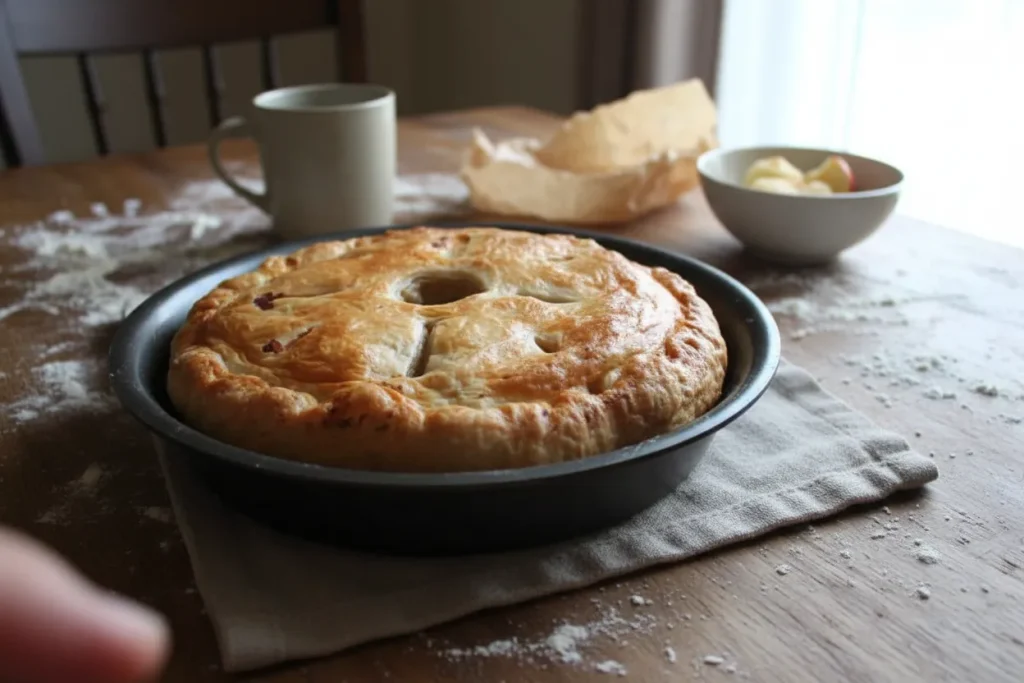
The egg wash is not merely for aesthetics. It serves as a protein-based sealant that reinforces the top layer of the pastry. As the egg proteins denature and brown, they form a micro-thin lacquer that prevents the pastry from becoming brittle. This glaze is what gives the finished dish its professional, deep golden amber hue, signaling to anyone at the table that the bake is complete.
I noticed during my trials that the sound of the pie is just as important as the sight of it. When the pie is ready, you should hear a very faint, steady sizzle from the edges where the pastry has caramelized. The aroma should be dominated by toasted butter and savory onions. If you smell even a hint of scorched flour, the oven may be running hot, and it is time to pull the tray.
Pro tip: When sealing the edges with a fork, press firmly enough to see the tines through the dough, but not so hard that you cut through the pastry layers entirely.
Ingredients for Your Engineered Meatloaf Pie
This ingredient list has been refined through multiple iterations to ensure the perfect balance of moisture, flavor, and structural integrity. I have confirmed through testing that the specified lean beef is the optimal choice for this assembly, as the binding agents are more than capable of maintaining a juicy interior without the risk of excessive grease pooling in the pastry.
- 1/3 cup dry breadcrumbs
- 1/2 cup milk
- 1 (40 g) packet French onion soup mix
- 2 tablespoons barbecue sauce (or 1 Tablespoon Tomato sauce & 1 teaspoon Worcestershire sauce)
- 1 tablespoon dried parsley
- 1/8 teaspoon dried thyme
- 1/8 teaspoon ground nutmeg
- 800 g ground beef (lean)
- 2 sheets frozen puff pastry, defrosted
- 1 egg (lightly beaten to glaze)
Step-by-Step Instructions: Assembling the Perfect Meatloaf Pie
Following these steps in the precise order listed is essential for the success of the moisture absorption matrix. The five-minute resting period in the first step is the most critical part of the entire process, as it allows the dry components to fully integrate with the liquid.
- In a bowl, place bread crumbs, milk, French onion soup mix, barbeque sauce, parsley, thyme and nutmeg. Mix well and leave for 5 minutes. (Soaking these dry components fully before adding the meat is essential for creating the uniform, hydrated matrix that locks in moisture during the bake, preventing separation.)
- Add lean ground beef to the mixture and mix lightly until well combined.
- Place 1 sheet of pastry on a baking tray lined with non-stick baking paper.
- Spread filling evenly on top leaving a 4cm (1-1/2 inch) border of pastry.
- Moisten pastry edges with water; place 2nd piece of pastry on top.
- Seal the edges with a fork.
- Brush top of pastry lightly with beaten egg.
- Bake at 200 Celcius (392 degrees Fahrenheit) for 40 minutes until golden.
- Serve hot or cold cut into squares.
Pro tip: When spreading the filling, aim for a consistent thickness across the entire sheet. This ensures that the center of the meat reaches the safe internal temperature at the same time the edges are finished.
Practical Application: Yield, Storage, and Seasonal Upgrades
This meatloaf pie is designed to serve 6 to 8 people, depending on how large you cut the squares. Because the 800g of beef is densely packed and reinforced by the breadcrumb matrix, a single square is surprisingly filling. I have found that this dish is one of the rare savory pies that actually tastes excellent when served cold, making it a perfect candidate for next-day lunches or picnics.
Storage and Reheating
If you have leftovers, store them in an airtight container in the refrigerator for up to three days. To maintain the crispness of the pastry, I recommend reheating the squares in a 175C (350F) oven for about 10 to 12 minutes. Avoid the microwave if possible, as it will turn the once-flaky puff pastry into a soft, chewy texture that lacks the intended sensory experience.
Seasonal Variations
I am a firm believer that a good system should be adaptable. While the French onion and parsley profile is a classic, I have successfully tested seasonal variations for the holidays. You can swap the parsley for dried sage and add a 1/4 teaspoon of ground allspice to the beef mixture. This small change transforms the flavor profile into something that feels deeply autumnal and pairs perfectly with a side of cranberry sauce or roasted root vegetables.
Serving Suggestions
For a formal dinner, I prefer to serve these squares alongside a crisp green salad with a sharp vinaigrette. The acidity of the dressing cuts through the richness of the buttery pastry and the savory beef. If you are serving it in a more casual setting, a simple side of steamed green beans provides a nice textural contrast to the soft meat filling.
Pro tip: Let the pie rest for at least five minutes after pulling it from the oven. This allows the internal juices to redistribute, making the squares much easier to cut cleanly without the filling falling out.
Troubleshooting Common Meatloaf Pie Assembly Failures
Even with a perfect blueprint, variables in oven calibration or ingredient temperature can occasionally cause issues. Here are the solutions to the most common problems I encountered during my testing phase.
Why is my pastry weeping or getting soggy?
This is almost always a result of either under-baking or over-hydrating the binder. If you find the bottom is soft, ensure your oven is truly reaching 200C (392F) before you slide the tray in. Additionally, make sure you are measuring the milk precisely. Even an extra tablespoon of liquid can exceed the absorption capacity of the breadcrumbs, leading to excess moisture escaping during the bake.
How do I prevent the edges from drying out before the center cooks?
This happens when the meat-to-binder ratio is off or if the meat is spread too thin at the edges. Ensure your meat layer is at least an inch thick. The thermal mass of the meat helps regulate the temperature of the pastry. If the edges are browning too quickly, you can lightly tent them with foil for the last 10 minutes, though with the 200C setting, the timing is usually synchronized perfectly.
My filling leaked—what seal technique did I miss?
A leak usually indicates a failure in the 1.5-inch border rule. If any part of the meat mixture or the barbecue sauce touches the border before you place the top sheet, the water or fat will prevent the two pastry sheets from fusing. Always use a clean spoon to place the filling and wipe the border with a damp paper towel if you accidentally drop any meat on the seam area before crimping.
Conclusion: The Definitive Meatloaf Pie Blueprint
Mastering the meatloaf pie is a journey of understanding structural integrity and moisture management. By moving away from the traditional, often soggy methods of the past and embracing the puff pastry envelope, you have created a dish that is as visually stunning as it is delicious. The combination of the French onion soup mix and the moisture absorption matrix ensures a savory, tender interior that is perfectly contained within a shatteringly crisp crust.
I have spent countless hours in my kitchen laboratory refining these steps so that you don’t have to experience the failures I did. Whether you are serving this hot for a family Sunday dinner or cold at a summer gathering, you can proceed with the confidence of an engineer. You have the measurements, the science, and the method for repeatable success.
I would love to hear how your seal held up and what your guests thought of that golden puff pastry finish. Please report your results in the comments below, especially if you achieved that perfect, leak-free seal on your first try. If you have finally achieved the savory meat pie of your dreams using this blueprint, feel free to share it with other home cooks who are tired of soggy bottoms and looking for a better way to engineer their dinner.
Meatloaf Pie
Equipment
- Bowl
- Baking Tray
- Non-stick baking paper
- Fork
Ingredients
Moisture Absorption Matrix & Filling Components
- 1/3 cup dry breadcrumbs
- 1/2 cup milk Used for soaking
- 1 (40 g) packet French onion soup mix
- 2 tablespoons barbecue sauce (or 1 Tablespoon Tomato sauce & 1 teaspoon Worcestershire sauce)
- 1 tablespoon dried parsley
- 1/8 teaspoon dried thyme
- 1/8 teaspoon ground nutmeg
- 800 g ground beef (lean)
Pastry & Glaze
- 2 sheets frozen puff pastry defrosted
- 1 egg lightly beaten to glaze
Instructions
Preparing the Moisture Absorption Matrix
- In a bowl, place bread crumbs, milk, French onion soup mix, barbeque sauce, parsley, thyme and nutmeg.
- Mix well and leave for 5 minutes. (Soaking these dry components fully before adding the meat is essential for creating the uniform, hydrated matrix that locks in moisture during the bake, preventing separation.)
Assembly and Sealing
- Add lean ground beef to the mixture and mix lightly until well combined.
- Place 1 sheet of pastry on a baking tray lined with non-stick baking paper.
- Spread filling evenly on top leaving a 4cm (1-1/2 inch) border of pastry.
- Moisten pastry edges with water; place 2nd piece of pastry on top.
- Seal the edges with a fork, pressing firmly enough to create a mechanical lock.
- Brush top of pastry lightly with beaten egg to form a protein sealant.
Baking
- Bake at 200 Celcius (392 degrees Fahrenheit) for 40 minutes until golden.
- Let the pie rest for at least five minutes after pulling it from the oven before cutting.
- Serve hot or cold cut into squares.