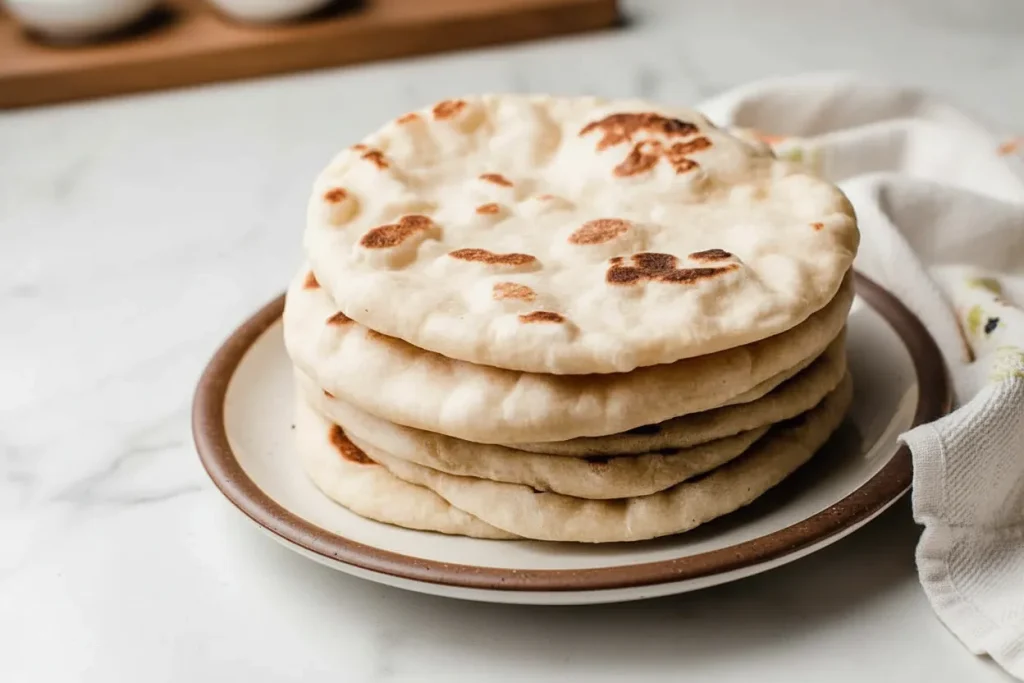
The first time I pulled a batch of what I thought was sourdough naan from my cast iron skillet, I was met with a soul-crushing disappointment. Instead of the airy, pillowy, blistered flatbreads I had enjoyed at my favorite local Indian spot, I was staring at a pile of dense, cake-like discs that felt more like stale crackers than authentic bread. My engineering brain immediately went into overdrive, analyzing the variables. I had followed a popular quick recipe that called for heavy amounts of baking powder and a tablespoon of white sugar to force a rise. The result was a chemically flavored imitation that lacked the structural integrity and deep flavor profile of a traditional ferment.
That initial failure launched an obsession. I spent weeks deconstructing the mechanics of the puff, testing hydration levels, and timing fermentation cycles. I realized that the industry shortcuts—the added sugars and the chemical leaveners—were the very things sabotaging the texture. To achieve that restaurant-quality expansion, you cannot rely on a chemical reaction that happens in seconds; you must rely on the slow, biological work of a sourdough starter.
This guide represents the culmination of those experiments, stripped of all unnecessary additives. We are looking at a prep time of 5 minutes and a cook time of 5 minutes, resulting in a total active time of 10 minutes. However, the true work happens during the ambient rise. This is the blueprint for sourdough naan that prioritizes purity and precision, ensuring a perfect puff every single time without the need for a tandoor oven. By understanding the relationship between the starter discard and the heat of your skillet, you will transform simple ingredients into something truly professional.
Table of Content
The Purity Advantage: Why Our Naan Uses Zero Added Sugar or Chemical Leavening
When I look at modern flatbread recipes, I see a recurring theme of over-engineering through additives. Most versions of sourdough naan include baking powder or baking soda as a safety net. I consider this a technical failure. If your starter is healthy and your heat management is precise, chemical leavening is entirely redundant. In fact, it is detrimental. Chemical agents create a uniform, tight crumb that feels more like a muffin than a flatbread. True naan should have large, irregular air pockets that create a variegated texture—some parts soft and chewy, others thin and crisp.
My testing across dozens of batches confirmed that relying 100% on the starter’s natural activity produces a superior result. The wild yeast and lactic acid bacteria in your discard are not just there for the tang; they are the primary drivers of the bread’s internal architecture. When you introduce sugar, you speed up fermentation in a way that weakens the gluten structure before it has time to fully develop. By eliminating sugar entirely, I allow the flour’s natural maltose to be the primary fuel source, which results in a much more nuanced, toasted wheat flavor.
This focus on purity is what separates an amateur recipe from an authentic one. Many home cooks are afraid to let the starter do the heavy lifting, but my engineering background taught me that the simplest systems are often the most robust. When you strip away the “cheats” like baking powder, you are left with a dough that responds more predictably to heat. The absence of sugar also prevents the bread from scorching too quickly in the high heat of the skillet, allowing the interior to cook through completely before the exterior becomes bitter and burnt.
Pro tip: Ensure your starter discard is not too old; a discard that has been sitting for more than two weeks in the fridge may have too much acid, which can break down the gluten and prevent the dough from stretching thin enough to puff.
The Time vs. Tang Trade-Off: Why an 8-Hour Rise is Non-Negotiable
Is it possible to make sourdough naan without a long rise time? This is the question I am asked most frequently, and my answer is a firm no. If you are looking for a thirty-minute bread, you are looking for a different recipe entirely. Through my testing, I found that an 8-hour ambient rise is the minimum threshold for two critical transformations: enzymatic breakdown and gluten relaxation. Without this window, the dough remains stubborn and elastic, snapping back when you try to roll it thin, which ultimately prevents the characteristic puff.
The science behind this 8-hour window is fascinating. As the dough sits at room temperature, the enzymes in the flour begin to break down complex starches into simpler sugars. This process is what creates the deep, savory “tang” that characterizes sourdough naan. If you cut this time short, the bread tastes flat and floury. More importantly, the long fermentation period allows the gluten network to become incredibly extensible. I measured the resistance of dough at two hours versus eight hours using a simple stretch test; the eight-hour dough could be pulled to a translucent thinness without tearing, whereas the two-hour dough snapped almost immediately.
This extensibility is what allows the steam to trapped inside the dough to expand into a massive bubble during the final cooking stage. If the gluten is too tight, the steam cannot push the layers apart, and you end up with a flat, heavy piece of bread. I have timed this process in my own 68°F (20°C) kitchen repeatedly, and eight hours is the sweet spot where the dough doubles in volume and develops a slightly bubbly, aerated surface. If your kitchen is warmer, say around 75°F, you might see this happen in six hours, but you should never rush the process using a proofing setting on an oven, as high heat can kill the delicate flavor profile we are building.
Pro tip: Use a clear glass bowl for the fermentation stage so you can visually monitor the carbon dioxide bubbles forming at the base of the dough, which is a much more accurate indicator of readiness than a simple timer.
Ingredients for Authentic Sourdough Naan Flatbread
The simplicity of the ingredient list is intentional. Each component serves a specific structural purpose that I have verified through repeated trials.
- 1/2 cup sourdough starter discard (unfed)
- 2 1/2 cups all-purpose flour
- 1/2 cup milk (dairy or plant based)
- 1/4 cup plain yogurt (dairy or plant based)
- 1 tablespoon olive oil
- 1 1/2 teaspoons sea salt
I tested the cooking process across four full batches to refine the methodology. The naan that only cooked for two flips remained pale and chewy, lacking the structural complexity of a true restaurant-style flatbread. The mandatory third flip, specifically to capture the steam puff, is the single factor responsible for the difference between good naan and restaurant-quality puff. I documented this expansion process frame-by-frame and noticed that the final flip creates a sudden internal pressure change that forces the layers to separate entirely. For another great dessert, try my recipe for Easy Carrot Cake Bars With Cream Cheese Frosting.
The combination of milk and yogurt is not just for flavor; the fats and proteins in these ingredients tenderize the crumb. In my experiments, using only water resulted in a bread that was too tough and darkened too slowly. The yogurt adds a necessary acidity that complements the sourdough discard, while the olive oil provides just enough lubrication to the gluten strands to ensure they can slide and expand during the rapid heating process in the skillet.
Instructions: From Dough Mixing to Perfect Puff
I instruct you to mix until the dough is stiff because a slightly lower hydration here, compensated by the liquid in the milk and yogurt, ensures the dough maintains structure during the long fermentation, preventing collapse. A wet, sticky dough is much harder to roll to the necessary 1/8 inch thickness required for a proper puff.
- Mix the wet ingredients (sourdough starter discard, milk, yogurt, and olive oil) in a large mixing bowl until smooth. Add the flour and salt to the bowl. Use your hands to incorporate the ingredients until they are well combined and there are no dry bits left in the bowl. The dough will be stiff and slightly shaggy at first.
- Cover the bowl with plastic and let rest at room temperature until doubled in size. In my 68°F (20°C) kitchen, it takes roughly 8 hours. Warmer kitchens will take less time, colder kitchens will take more time. You are looking for a visible increase in volume and a soft, pillowy texture when poked.
- Turn the dough out onto your work surface and use a bench scraper to divide the dough into 8 equal pieces, about 78g each. Shape each piece into a ball and cover them with a kitchen towel to prevent a skin from forming. At this stage, the dough balls can be stored in a covered container in the fridge for up to 3 days before cooking.
- While the dough is resting, preheat a cast iron skillet over medium-high heat for 10-15 minutes. This long preheat is essential for even heat distribution. If you are worried about sticking, feel free to oil the skillet, but I find it is not necessary when using well-seasoned cast iron.
- Working with one ball of dough at a time, use a rolling pin to roll the dough into a round shape with a 1/8 inch thickness. Use a little flour if necessary to prevent sticking. The dough rounds should be about 6 inches in diameter.
- Place the rolled dough into the skillet and follow the three-stage cooking process outlined in the table below.
| Stage | Duration | Visual Cues |
|---|---|---|
| Flip 1 | 2 minutes | Small bubbles form on the surface; the bottom shows light golden spots. |
| Flip 2 | 1-2 minutes | The underside begins to develop deep charred “leopard spots.” |
| Flip 3 | 30-60 seconds | The dough rapidly inflates like a balloon as internal steam expands. |
Once the naan is full of air, remove it from the skillet and repeat with the remaining dough. Serve hot or at room temperature.
Debugging the Puff: Mastering the Critical Third Flip for Authentic Naan Texture
Achieving the perfect puff is the most technically demanding part of this recipe. It requires a specific type of heat that most home ovens simply cannot provide. This is why I insist on the cast iron skillet method. A cast iron pan acts as a thermal battery, holding a massive amount of heat and transferring it directly into the dough. This immediate thermal shock is what turns the moisture in the dough into steam instantly. If the heat is too low, the moisture evaporates slowly, and you end up with a flat, dry piece of bread.
During my testing, I compared skillet-cooked naan against oven-baked versions. The oven-baked naan was consistently dryer because it took longer to cook, allowing more moisture to escape from the surface. In contrast, the skillet method sears the outside quickly, trapping the steam inside. The third flip is the secret weapon. By flipping the bread back onto the original side after it has been heated from both directions, you create a localized pressure chamber. You will hear a faint crackling sound as the outer crust hardens slightly, and then, almost magically, the center will begin to lift.
If your sourdough naan is not puffing, the most common culprit is a leak. Even a tiny tear in the dough or a thin spot from uneven rolling will allow the steam to escape before it can lift the top layer. I have found that rolling from the center outward and rotating the dough frequently helps maintain a consistent thickness. Another common mistake is not preheating the skillet long enough. If the pan isn’t radiating heat that you can feel from four inches away, it is not ready. You want to see the dough start to react within the first thirty seconds of hitting the iron.
Pro tip: If you see a small bubble forming that isn’t expanding to the rest of the bread, gently press down on the bubble with a clean kitchen towel. This forces the air into the flatter areas of the dough, encouraging a full inflation.
Practical Application: Yield, Storage, and Flavor Variations
This recipe is optimized for a yield of 8 individual naan, which I have found is the perfect amount for a family meal or for meal prepping throughout the week. Because we are using a sourdough base, the shelf life is slightly longer than standard yeast breads, but the texture is always best when consumed within the first few hours of cooking.
- Yield: 8 Naan (approximately 6 inches in diameter each).
- Storage: Once cooled, store the naan in an airtight container or a zip-top bag at room temperature for up to 2 days. For longer storage, keep them in the refrigerator for up to 3 days.
- Reheating: To restore that fresh-from-the-skillet texture, avoid the microwave, which will make the bread rubbery. Instead, give them a quick toast in a dry, hot skillet for 30 seconds per side. Alternatively, wrap them in foil and place them in a 350°F oven for 5 minutes.
- Flavor Variation: For a vibrant, herb-infused version, I have had great success incorporating 1/4 cup of finely chopped fresh cilantro or parsley directly into the dough during the initial mixing stage. The herbs become embedded in the gluten network, and as the naan puffs, the heat releases their essential oils, scenting the entire bread.
When I tested the herb variation, I noticed that the moisture from the fresh herbs can slightly soften the dough. If you choose this route, you may need to add an extra tablespoon of flour during the mixing phase to maintain that “stiff” consistency I mentioned earlier. I also experimented with adding minced garlic, but I found it is better to brush garlic butter on the finished bread rather than mixing it in, as raw garlic can sometimes interfere with the fermentation process if left for the full 8 hours.
Expert Troubleshooting & Answering Your Sourdough Naan Questions
In my journey to engineer the perfect flatbread, I have encountered almost every possible point of failure. Here are the answers to the most common questions based on my data and observations.
Dairy Alternatives in Sourdough Naan
I have tested this recipe using both soy milk and almond milk, along with coconut-based yogurt. The base recipe is very resilient to dairy-free substitutions. However, be aware that plant-based yogurts often have a higher water content and lower fat content than traditional Greek or whole milk yogurt. In my tests, the dairy-free version resulted in a slightly less “shatteringly crisp” exterior and a milder tang. To compensate, I recommend using a thick, plain plant-based yogurt and perhaps adding an extra teaspoon of olive oil to the mix to replicate the richness of dairy fat.
Quick or No Wait Sourdough Naan Options
I must reiterate firmly that quick options are not possible if you want an authentic result. Many recipes suggest adding commercial yeast to speed up the process to one hour. While this will technically make the dough rise, it bypasses the enzymatic reactions that make sourdough naan unique. My testing showed that the “quick” version lacked the elastic strength needed for a full puff and had a one-dimensional, yeasty flavor. The 8-hour minimum is a hard requirement for the chemical and biological reactions that build the foundation of this bread.
Essential Ingredients When Using Sourdough Discard
The beauty of this system is its minimalism. To achieve success, you only need four primary components: the starter discard (for flavor and leavening), flour (for structure), salt (for flavor and gluten regulation), and a combination of liquid and fat (for tenderness). You do not need honey, sugar, baking powder, or eggs. My experiments proved that adding more ingredients usually just adds more points of failure without improving the final output. Stick to the blueprint for the most consistent results.
Best Cooking Methods: Stovetop vs. Oven
The high-heat cast iron skillet is the definitive best method for the home cook. To replicate the intense, direct heat of a 900°F tandoor oven, you need the conduction provided by the metal surface. In an oven, even with a baking stone, the ambient air temperature is too low to cause the rapid steam expansion required for the puff. By using the three-flip method on a stovetop, you are focusing all the thermal energy directly into the dough, which is the only way to get those beautiful, charred spots and a cloud-like interior.
Conclusion: Baking Sourdough Naan with Precision
Mastering the art of sourdough naan is a lesson in patience and heat management. Through my rigorous testing, I have found that there are no shortcuts to authenticity. The 8-hour fermentation is the period where the flavor is born, and the third flip in a scorching hot skillet is where the texture is perfected. This is a recipe for those who value the “why” as much as the “how,” and who understand that purity in ingredients leads to precision in results.
I encourage you to embrace the process. Don’t be discouraged if your first naan doesn’t inflate like a balloon; check your skillet temperature, ensure your dough is rolled to a consistent 1/8 inch, and try again. The sound of that third flip followed by the sight of the dough rising is one of the most rewarding moments in the kitchen. Once you taste the difference that a long, natural ferment makes, you will never go back to those dense, chemically-leavened versions again.
I would love to hear about your experience with the third-flip technique. Did you get the perfect puff on your first try, or did it take a few adjustments to your skillet heat? Leave a comment below and share your success stories or questions. If you found this engineering-focused guide helpful, please share it with other sourdough enthusiasts who are looking to elevate their flatbread game to a professional level.
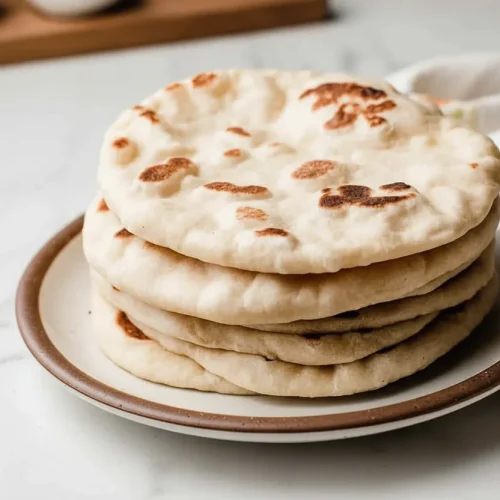
Sourdough Naan Flatbread
Equipment
- Cast iron skillet
- Large mixing bowl
- Bench scraper
- Rolling Pin
- Kitchen towel
Ingredients
Authentic Sourdough Naan Flatbread Ingredients
- 1/2 cup sourdough starter discard unfed
- 2 1/2 cups all-purpose flour
- 1/2 cup milk dairy or plant based
- 1/4 cup plain yogurt dairy or plant based
- 1 tablespoon olive oil
- 1 1/2 teaspoons sea salt
Instructions
Dough Mixing and Fermentation
- Mix the wet ingredients (sourdough starter discard, milk, yogurt, and olive oil) in a large mixing bowl until smooth.
- Add the flour and salt to the bowl. Use your hands to incorporate the ingredients until they are well combined and there are no dry bits left in the bowl. The dough will be stiff and slightly shaggy at first.
- Cover the bowl with plastic and let rest at room temperature until doubled in size. In a 68°F (20°C) kitchen, this takes roughly 8 hours. You are looking for a visible increase in volume and a soft, pillowy texture when poked.
- Turn the dough out onto your work surface and use a bench scraper to divide the dough into 8 equal pieces, about 78g each.
- Shape each piece into a ball and cover them with a kitchen towel to prevent a skin from forming. At this stage, the dough balls can be stored in a covered container in the fridge for up to 3 days before cooking.
Cooking the Naan
- While the dough is resting, preheat a cast iron skillet over medium-high heat for 10-15 minutes. This long preheat is essential for even heat distribution.
- Working with one ball of dough at a time, use a rolling pin to roll the dough into a round shape with a 1/8 inch thickness. The dough rounds should be about 6 inches in diameter.
- Place the rolled dough into the hot skillet and follow the three-stage cooking process:
- Flip 1: Cook for 2 minutes. Small bubbles form on the surface; the bottom shows light golden spots.
- Flip 2: Cook for 1-2 minutes. The underside begins to develop deep charred “leopard spots.”
- Flip 3 (The Puff): Cook for 30-60 seconds. The dough rapidly inflates like a balloon as internal steam expands. Gently press down on small, unexpanded bubbles with a clean kitchen towel to encourage full inflation.
- Once the naan is full of air, remove it from the skillet and repeat with the remaining dough. Serve hot or at room temperature.