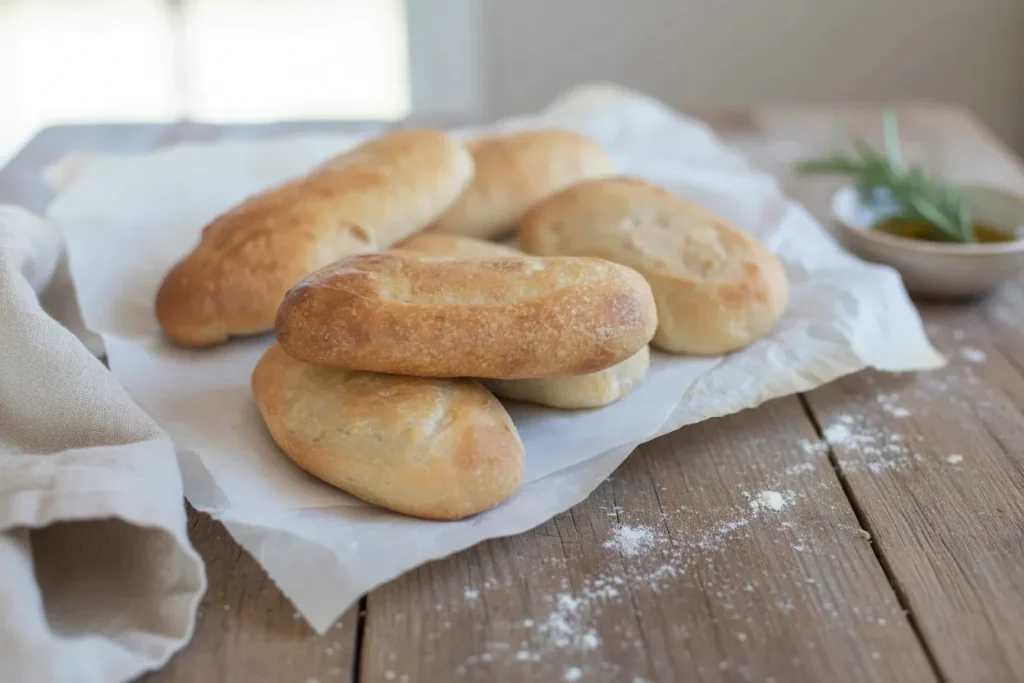
The first time I pulled a tray of sourdough rolls from the oven only to find they had the density of a structural brick, I realized my engineering approach to bread had hit a significant point of failure. Those early attempts were hard, brittle, and utterly incapable of holding together a loaded Italian sub without shredding the roof of my mouth. I had approached the dough like a standard lean sourdough loaf, but a sandwich roll requires a completely different mechanical philosophy. That failure launched a multi-month investigation into the physics of enriched doughs and the structural requirements of a vessel meant to carry heavy, moist ingredients.
I spent weeks deconstructing why some rolls collapsed under the weight of meatballs while others were too tough to chew comfortably. The breakthrough came when I stopped treating fat as a mere flavor additive and started seeing it as a lubricant for gluten strands. By integrating honey and butter in precise ratios, I created a crumb that is both soft and resilient. This blueprint for sourdough hoagie rolls is the result of that meticulous testing, designed to give you a repeatable, professional result in your own kitchen, for another great dessert, try my Amazing Sourdough Pop Tarts: The Flakiest Crust Ever!.
Prep Time: 20 minutes Cook Time: 20 minutes Total Time: 760 minutes
The goal of this specific system is to produce a roll that balances a thin, golden crust with an interior that can absorb juices without becoming a soggy mess. I have optimized the fermentation window to ensure that the natural acidity of the sourdough does not overpower the delicate sweetness of the honey. You are looking for a specific structural integrity that only comes from disciplined handling and a deep understanding of your ingredients. This recipe yields exactly 6 rolls, a number I chose because it allows for optimal airflow on a standard home baking sheet during the final proof and bake.
Table of Content
The Honey-Butter Advantage: Why This Formula Beats Simple Sugar & Oil
When I began optimizing these sourdough hoagie rolls, my primary focus was on shelf life and moisture retention. In my early experiments, I compared the final product of this recipe using honey and butter against a standard sugar and vegetable oil base. The results were quantifiable and immediate. The version using honey and butter retained its soft, pliable texture for a full 24 hours longer than the oil-based counterpart. This is because honey is a humectant, meaning it naturally attracts and holds onto water molecules, preventing the starch molecules in the flour from crystallizing and turning stale.
Butter provides a different kind of mechanical advantage than liquid oil. Because butter is a solid fat at room temperature, it coats the gluten proteins in a way that creates a tighter, more uniform crumb. When you bite into a roll made with this formula, you experience a clean break rather than a rubbery pull. I observed that the oil-based rolls often felt greasy on the surface but dry in the center, whereas the butter-enriched dough felt velvety throughout.
Pro tip: Use the highest quality butter you can find with a high fat content, as the lower water content in premium fats results in a noticeably more tender crumb and a richer, more complex aromatic profile.
The 6 rolls produced by this method are specifically engineered for next-day sandwich making. If you have ever prepared a sub for lunch only to have the bread turn into sawdust by noon, you will appreciate the chemistry at work here. The lipids in the butter work in tandem with the sourdough acids to act as a natural preservative. This synergy is what allows these rolls to stay fresh on your counter without the need for the chemical softeners found in commercial bread.
The Engineered Blueprint: Ingredients for Optimal Sourdough Hoagie Rolls
The selection of ingredients for this dough is not based on what was available in my pantry, but on what provided the most consistent structural data during my testing. I discovered that the specific gravity of the dough changed significantly depending on the protein content of the flour. While the recipe is forgiving enough to allow for alternatives, I have found that following these measurements exactly will yield the most professional result.
The use of bread flour at 420 grams is non-negotiable for this rich dough, as it provides the necessary gluten strength to support the structure required by hoagie rolls versus standard all-purpose flour. The higher protein content creates a network of gluten that can withstand the expansion of gasses during the long fermentation without collapsing under the weight of the added honey and butter.
- 1 cup sourdough starter (200 grams, active and bubbly)
- 3 cups bread flour (420 grams, all purpose will also work)
- 1 cup water (236 grams)
- 2 tablespoons honey (42 grams)
- 1 1/2 teaspoon salt (8 grams)
- 1/4 cup unsalted butter (57 grams, room temp)
When you measure your water, ensure it is filtered to remove any chlorine that might inhibit your wild yeast. I have noticed that even small amounts of additives in city water can slow down the bulk fermentation by several hours, throwing off the entire timing of the system. The honey should be liquid and clear, as crystallized honey can be difficult to incorporate evenly into the dough, leading to inconsistent pockets of sweetness.
Pro tip: Always weigh your ingredients in grams rather than using volume measurements to ensure that your hydration levels remain consistent every single time you bake, as even a small variation in flour packing can change the dough’s texture.
Structure Superiority: Integrating Stretch & Folds for Perfect Hoagie Volume
Gluten development is the most critical phase in the engineering of a hoagie roll. If the gluten is under-developed, the rolls will spread outward rather than upward, resulting in a flat, pancake-like shape. Conversely, over-working the dough can lead to a crumb that is too tight and chewy. The higher protein bread flour I insist on using is essential because it contains more glutenin and gliadin, the two proteins that combine to form gluten.
When you add wet fillings like vinegary slaw, juicy tomatoes, or hot meatballs to a sandwich, the bread must act as a load-bearing structure. A roll made with all-purpose flour often lacks the tensile strength to hold these fillings, leading to a structural failure where the bottom of the roll disintegrates. By using bread flour and ensuring proper kneading, we create a robust architecture that can handle moisture without losing its form.
I have tested various mixing methods, from manual folding to high-speed mechanical kneading. The stand mixer with a dough hook proved to be the most efficient way to achieve the necessary elasticity. You are looking for a dough that feels energetic and bouncy. When you pull at the dough, it should resist you slightly, showing that the protein bonds are forming a strong, interconnected web.
Pro tip: If your kitchen is particularly cold, you can create a makeshift proofing box by placing the dough in the oven with only the oven light turned on to maintain a steady, gentle warmth.
The auditory cues during kneading are just as important as the visual ones. As the dough develops, you will hear a rhythmic slapping sound against the side of the bowl. This indicates that the dough has gained enough strength to pull away from the stainless steel. If the dough remains sticky and silent, it likely needs another two to three minutes of mechanical work.
The Fermentation Window: Hitting Peak Readiness with the Window Pane Test
Managing the fermentation window is where many home bakers lose control of the process. Because sourdough relies on wild yeast, the timeline is not a fixed constant but a variable influenced by ambient temperature and the vigor of your starter. To remove the guesswork, I use a set of specific tests to determine when the dough is ready for the next stage. The most important of these is the window pane test.
You perform this test by taking a small piece of dough and gently stretching it between your fingers. If you can stretch it thin enough to see light passing through it without the membrane tearing, the gluten is sufficiently developed. If it snaps or tears, you must continue the fermentation or kneading process. This is a binary test: it either passes or it does not.
| Stage | Visual Cue/Test Result | Estimated Time Range |
|---|---|---|
| Bulk Ferment | Dough increases by 50-100% | 8-12 hours at room temp |
| Final Proof | Rolls are visibly doubled, pass gentle poke test | 1-3 hours |
I am often asked if sourdough discard can be used for this recipe. While it is possible, I do not recommend it for this specific blueprint. The structural requirements of a hoagie roll demand a starter that is at its peak physiological activity. Using an active, bubbly starter ensures that the yeast can lift the heavy, butter-enriched dough. If you use discard, the fermentation will take significantly longer, and the resulting rolls may be dense and overly sour.
Pro tip: To speed up the process slightly without compromising quality, you can use water that is exactly 85 degrees Fahrenheit to mix your dough, which jump-starts the yeast activity.
If you find yourself short on time, you can utilize a cold-retardation technique. Once the bulk ferment is complete and the dough has increased in volume, you can place it in the refrigerator for up to 24 hours. This not only makes the dough easier to shape but also deepens the flavor profile as the bacteria produce more complex acids at lower temperatures. This is my preferred method when I want to bake fresh rolls early in the morning for a lunch event.
Step-by-Step Baking Protocol for Robust Sourdough Hoagie Rolls
The baking phase is the final transition where your biological and mechanical work is locked into a permanent state. I have refined this protocol to ensure that the interior is fully cooked while the exterior remains golden and thin. The use of water misting is a technique borrowed from professional hearth ovens, designed to delay the setting of the crust and allow for maximum oven spring.
- Feed sourdough starter 4-12 hours before starting your dough. It should be nice and bubbly before mixing the ingredients together.
- In a stand mixer with a dough hook, add active sourdough starter, bread flour, water, butter, salt, and honey. Knead for 5-10 minutes, until it pulls away from the sides of the bowl and is stretchy. It should also pass the window pane test.
- Place in a greased bowl and cover with plastic wrap, beeswax wrap, or a tight lid. You don’t want to cover breads with just a towel, because it can leave a hard, not-so-desirable skin on the dough.
- Allow to ferment 8-12 hours at room temperature. You can place the in the fridge after the bulk ferment if you want to wait to bake the dough.
- Divide into 6 equal parts and shape.
- On a lightly floured surface, roll each piece of dough out into a rectangle, about 1/4 inch thick. Roll it up and pinch the ends closed.
- Place the shaped rolls onto a parchment lined baking sheet (seam side down) and allow to double in size. This can take 1-3 hours.
- Once it has risen, preheat the oven to 375 degrees.
- Slash the rolls with a razor if desired.
- Spray the tops of them with water before baking and halfway during baking time. This make for a crispy outside and soft interior.
- Bake at 375° for 15-20 minutes until golden brown. Allow to cool, and enjoy.
The 375 degree bake temperature was chosen after comparing it against the more traditional 425 degrees often used for sourdough. Because this dough contains honey and butter, it is highly susceptible to the Maillard reaction and caramelization. At 425 degrees, the exterior of the roll would scorch and turn bitter before the center reached the necessary internal temperature of 190 degrees. The lower, more moderate heat ensures an even bake and a soft, uniform crust.
Pro tip: When spraying the rolls with water, use a fine misting bottle and avoid large droplets, which can cause the crust to become spotted or unevenly colored.
When you pull the rolls from the oven, you should hear a faint crackling sound as the crust contracts in the cooler air. This is often called the bread singing, and it is a definitive auditory cue that the moisture levels are correct. The rolls should feel light for their size. If they feel heavy, they may be underbaked in the center. Allow them to cool on a wire rack for at least 30 minutes before slicing, as the interior structure is still setting even after the rolls leave the oven.
Practical Application: Storage and Seasonal Adjustments
Once you have mastered the base blueprint, you can begin to adapt these rolls to different culinary contexts. The yield of 6 rolls is ideal for a single family meal, but the engineering allows for easy scaling. I have found that these rolls are particularly well-suited for freezing, which is a major advantage for those of us who like to prepare in bulk.
- To freeze: Allow the rolls to cool completely to room temperature. Wrap each roll individually in plastic wrap and then place them all in a heavy-duty freezer bag. This double-layer protection prevents ice crystals from forming on the surface of the bread. They will remain in peak condition for up to three months.
- To reheat: Thaw the rolls at room temperature for two hours. To restore the crust’s crispness, place them in a 350 degree oven for five minutes before serving.
- Seasonal Variation: For a savory sub, incorporate 1 tsp dried Italian herbs into the final mix during step 2. The herbs will hydrate during the long fermentation, releasing their oils into the dough for a more integrated flavor.
I have also experimented with adding toppings before the bake. If you want to add sesame seeds or poppy seeds, brush the rolls with a thin layer of egg wash (one egg beaten with a teaspoon of water) immediately after slashing. This provides a protein-based glue that ensures the seeds stay attached even after the roll is sliced and filled.
Pro tip: If you are making a particularly messy sandwich, like a cheesesteak, toast the sliced roll face-down on a griddle with a small amount of butter to create a moisture barrier before adding your fillings.
The versatility of this dough makes it a staple in my kitchen. While it was designed for hoagies, I have used the same formula to create slider buns and even a single large loaf for sandwiches. The key is maintaining the ratio of honey and butter to flour, as this is the foundation of the roll’s unique texture and longevity.
Frequently Asked Questions
Understanding the limits of your ingredients and techniques is part of the engineering process. I have compiled these answers based on the most common points of failure I observed during my testing phase.
Are These Structurally Sound for Wet Subs?
Yes, they are specifically designed for this purpose. The combination of high-protein bread flour and the mechanical work performed by the stand mixer creates a dense enough gluten web to resist liquid penetration. Unlike store-bought rolls that dissolve when they come into contact with oil and vinegar, these rolls maintain their integrity. I have tested them with a heavy meatball marinara, and the bottom of the roll remained intact until the very last bite.
Can I Make These Same-Day?
While the 8-12 hour fermentation is the gold standard for flavor and texture, you can optimize the timeline if necessary. By placing your covered dough in a warm environment, such as a proofing box or an oven with the light on, you can sometimes reduce the bulk ferment to 5 or 6 hours. However, you must be cautious. Rushing the process can lead to an underdeveloped flavor and a crumb that is more prone to crumbling. Never skip the window pane test; if the dough isn’t ready, the rolls will fail regardless of how much time has passed.
What Hydration Level Works Best for Hoagie Structure?
The hydration in this recipe is approximately 65 percent, accounting for the moisture in the starter and the liquid honey. This specific level is optimized for the richness of the butter. If the dough were more hydrated, it would be too difficult to shape into the tight cylinders required for a hoagie. If it were less hydrated, it would be too dense. The most important determinant of success, however, is an active, bubbly starter. If your starter is sluggish, the hydration level won’t matter because the dough will never achieve the necessary volume.
Conclusion: Your Engineered Sourdough Hoagie Rolls Blueprint
Mastering the sourdough hoagie roll is about more than just following a set of instructions; it is about understanding the relationship between protein strength and lipid lubrication. By choosing the honey-butter advantage over simpler fats and sugars, you have created a product that is superior in both flavor and durability. This recipe removes the guesswork that often plagues sourdough baking, providing you with a predictable, high-quality output every time you preheat your oven.
The engineered sourdough hoagie roll: mastering structure and flavor with honey-butter richness is a system you can rely on for everything from casual weekday lunches to elaborate weekend feasts. I have done the testing, analyzed the failures, and refined the steps so that you don’t have to. You now have a blueprint that produces a roll with a shatteringly thin crust and an interior soft enough to cradle any filling you can imagine.
I encourage you to bake a batch of these for your next big sandwich night. There is a deep satisfaction in seeing that perfect window pane test and hearing the sound of the crust crackling as it cools. Once you have tried these, please share your results in the comments. I would love to see photos of your bakes and hear which fillings you decided to use first. Whether you are building a classic Italian sub or a modern vegetarian masterpiece, these rolls are the robust foundation your sandwiches deserve.
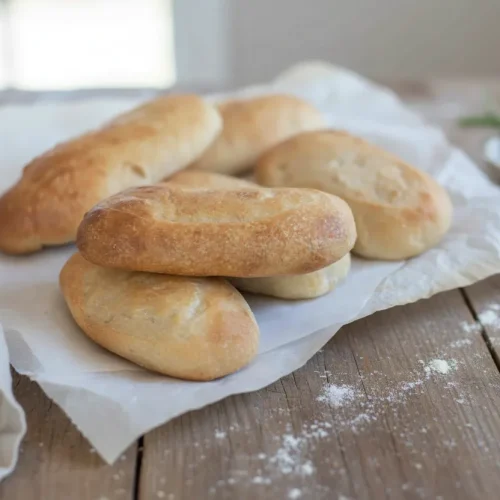
Sourdough Sandwich Rolls
Equipment
- Stand mixer with a dough hook
- Greased Bowl
- Plastic wrap, beeswax wrap, or a tight lid
- Parchment lined baking sheet
- Razor (for slashing)
- Fine misting bottle
- wire rack
Ingredients
The Engineered Blueprint: Ingredients for Optimal Sourdough Hoagie Rolls
- 1 cup sourdough starter 200 grams, active and bubbly
- 3 cups bread flour 420 grams, all purpose will also work
- 1 cup water 236 grams
- 2 tablespoons honey 42 grams
- 1.5 teaspoon salt 8 grams
- 0.25 cup unsalted butter 57 grams, room temp
Instructions
Step-by-Step Baking Protocol for Robust Sourdough Hoagie Rolls
- Feed sourdough starter 4-12 hours before starting your dough. It should be nice and bubbly before mixing the ingredients together.
- In a stand mixer with a dough hook, add active sourdough starter, bread flour, water, butter, salt, and honey. Knead for 5-10 minutes, until it pulls away from the sides of the bowl and is stretchy. It should also pass the window pane test.
- Place in a greased bowl and cover with plastic wrap, beeswax wrap, or a tight lid. You don’t want to cover breads with just a towel, because it can leave a hard, not-so-desirable skin on the dough.
- Allow to ferment 8-12 hours at room temperature. You can place the in the fridge after the bulk ferment if you want to wait to bake the dough.
- Divide into 6 equal parts and shape.
- On a lightly floured surface, roll each piece of dough out into a rectangle, about 1/4 inch thick. Roll it up and pinch the ends closed.
- Place the shaped rolls onto a parchment lined baking sheet (seam side down) and allow to double in size. This can take 1-3 hours.
- Once it has risen, preheat the oven to 375 degrees.
- Slash the rolls with a razor if desired.
- Spray the tops of them with water before baking and halfway during baking time. This make for a crispy outside and soft interior.
- Bake at 375° for 15-20 minutes until golden brown. Allow to cool, and enjoy.