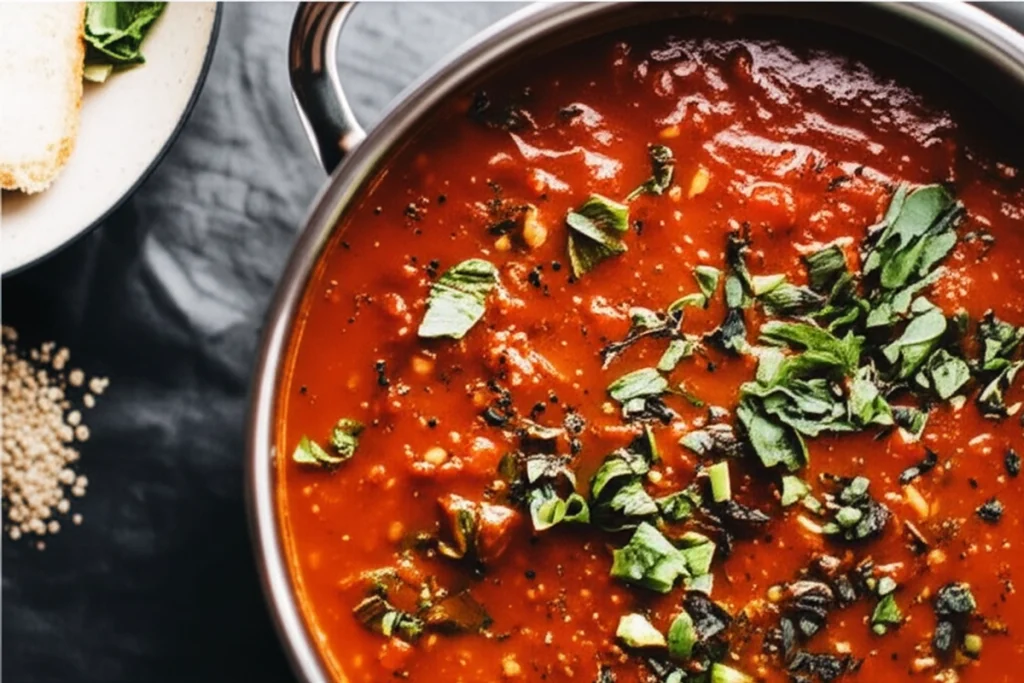
The quest for the perfect, authentic Italian red sauce can feel like a lifelong pursuit. I’ve spent years experimenting, tweaking, and testing every variable to unlock the secrets of a truly exceptional sauce. This recipe is the culmination of that journey: a foolproof, meticulously engineered method guaranteed to deliver consistently delicious results every single time.
This isn’t just another recipe; it’s a system. Prep time is about 5 minutes, cook time is around 240 minutes, for a total time of 245 minutes. I’ve optimized every step to eliminate guesswork and ensure success, starting with the crucial selection of San Marzano tomatoes, the careful sautéing of garlic to avoid bitterness, and a long, slow simmer that melds the flavors into a rich, complex sauce that tastes like it came straight from Nonna’s kitchen.
Table of Content
Ingredient Deep Dive: Why San Marzano Tomatoes Matter for Authentic Italian Red Sauce (and how to choose them)
That rich, complex flavor I just mentioned? It all starts with the right tomatoes, and for me, that means San Marzano. These aren’t just any tomatoes; they’re the gold standard for authentic Italian red sauce, and here’s why.
San Marzano tomatoes, grown in the volcanic soil of the Agro Sarnese-Nocerino region of Italy, possess a unique balance of acidity, sweetness, and texture. Their lower acidity means a naturally sweeter sauce, and their thicker flesh gives the sauce a luxurious, velvety texture, even after hours of simmering. I’ve found that the taste is noticeably different compared to other varieties.
But here’s a lesson I learned the hard way: not all “San Marzano” tomatoes are created equal. I once grabbed a cheaper can labeled “San Marzano-style” thinking I could save a few dollars. The result? A watery, acidic sauce that tasted nothing like the real deal. It was a disaster. The lower acidity and thicker flesh of the real San Marzanos are what create that signature sweetness and texture.
To ensure you’re getting the authentic product, look for the “D.O.P.” (Denominazione di Origine Protetta) seal on the can, which certifies that the tomatoes were grown and processed in the San Marzano region of Italy according to strict standards. I always double-check for this seal; it’s a guarantee of quality and authenticity. Tomatoes are also a good source of several vitamins and minerals, such as vitamin C, potassium, vitamin K, and folate.
Ingredients for the Best Italian Red Sauce Pasta
Now that I’ve emphasized the importance of using authentic San Marzano tomatoes, let’s gather the rest of our ingredients. Here’s everything I use to craft my perfect Italian red sauce:
- 8 garlic cloves, (minced)
- 3-4 Tablespoons extra-virgin olive oil
- 4-5 28oz cans San Marzano Peeled Tomatoes ((with juices))
- 2-3 Tablespoon amore sun-dried tomato paste ((or use regular tomato paste))
- 1/2 teaspoons (each) salt & black pepper
- 3 Tablespoons fresh basil ((for dried basil – 1 Tbsp))
- 2 teaspoons fresh oregano (*optional)
One ingredient I want to call out specifically is the sun-dried tomato paste. I like to use sun-dried tomato paste for its intensely rich, concentrated tomato flavor. I find that the Amore brand offers a consistency and intensity of flavor that others don’t.
With our ingredients prepped and ready, I can move on to the cooking process, where I’ll walk you through each step.
Instructions for Making Authentic Italian Red Sauce Pasta
With my ingredients selected and prepped, I can now walk you through the cooking process for crafting a truly exceptional Italian red sauce. The steps are simple, but the technique matters.
- Cook garlic: In a large stainless steel pot on LOW-MEDIUM heat sauté garlic in olive oil for 30-60 seconds. As the garlic hits the hot olive oil, you should hear a gentle sizzle and be immediately greeted by an intense, savory aroma. Watch closely; you’re looking for a light golden color, burned garlic ruins the whole sauce. Careful sautéing is crucial because burned garlic will impart a bitter taste to the entire sauce. I ruined an entire batch once by not paying attention; now I never leave the stove during this step.
- Add tomatoes and simmer: Pour canned tomatoes with juices in with the garlic. Add tomato paste, salt, and black pepper. Mix ingredients together, partially cover with lid, but not completely, and simmer on LOW heat for 3+ hours. Stir every so often to avoid burning. Note: if using a parmesan rind, add it in this step and let it simmer with sauce until finished. Remove and discard rind when ready to serve. I always set a timer to remind myself to stir; it’s easy to forget when you’re multitasking.
- For smooth sauce: When sauce is finished cooking, use a hand immersion-blender to puree. Note: If you prefer a chunkier/thicker sauce (like I do), you can skip this step as the San Marzanos naturally break down while cooking. After experimenting with both methods, I strongly prefer a chunkier sauce; the texture adds another layer of complexity.
- Add herbs: When sauce is finished, mix in chopped fresh herbs. Season with additional salt & black pepper if needed and serve! I always taste the sauce at this stage and adjust the seasoning to my liking. Fresh herbs really brighten up the sauce and add a final layer of flavor.
Troubleshooting Common Italian Red Sauce Pasta Problems: Acidity, Bitterness, and Thinness
Even with the best ingredients and careful technique, I know that things can sometimes go awry. I’ve been there myself. Here are the most common problems I’ve encountered when making Italian red sauce, along with my go-to solutions:
- Too Acidic: Sometimes, even San Marzano tomatoes can be a bit too acidic for my palate. The quick fix? I add just a pinch of sugar, about 1/4 teaspoon at a time, until the acidity mellows out. The sugar balances the tartness without making the sauce taste sweet. It’s a delicate balance, so I always taste as I go.
- Bitter Taste: Bitterness is almost always caused by burned garlic. As I mentioned before, I’ve learned this lesson the hard way. If you accidentally burn the garlic, there’s unfortunately no way to remove the bitterness completely. I’d recommend starting over. This is why I emphasize close attention during the garlic-sautéing stage.
- Sauce is Too Thin: A thin sauce usually means there’s too much water content. My solution is simple: I just continue to simmer the sauce, uncovered, for a longer period. This allows the excess water to evaporate, concentrating the flavors and thickening the sauce naturally. I’ve found that even 30 minutes of additional simmering can make a significant difference. The lower the heat, the slower it will cook off. I usually do this uncovered at a very low temperature to avoid burning it or having it reduce too quickly.
These simple adjustments have saved many of my sauces. I encourage you to experiment and adjust to your own taste preferences. This recipe would pair perfectly with some easy meat sauce spaghetti.
Frequently Asked Questions About Italian Red Sauce Pasta
Now that I’ve shared my perfected recipe and troubleshooting tips, I want to address some of the most common questions I get asked about making authentic Italian red sauce. I’ve spent countless hours researching and testing, and I’m happy to share my insights.
What are the essential ingredients for an authentic Italian red sauce?
In my experience, an authentic Italian red sauce hinges on a few key ingredients: high-quality San Marzano tomatoes (with the D.O.P. seal, as I mentioned), fresh garlic, extra-virgin olive oil, and a touch of basil. While I sometimes add oregano, I consider it optional. I’ve found that starting with these essentials and focusing on technique yields the best results. The quality of these ingredients will make or break the dish.
What is the traditional method for making Italian red sauce from scratch?
The traditional method, as I understand it, involves gently sautéing garlic in olive oil, adding tomatoes and seasonings, and then simmering the sauce for several hours. I’ve found that the long simmering time is crucial for developing the sauce’s rich, complex flavor. My grandmother always made her sauce this way, and I’ve carried on the tradition.
What is the difference between Italian red sauce, marinara sauce, and other tomato-based sauces?
From what I’ve gathered, the main difference lies in the ingredients and cooking time. Marinara is typically a simpler sauce, using fewer ingredients and a shorter cooking time. Other tomato-based sauces may incorporate additional vegetables or spices. I’ve found that my Italian red sauce prioritizes depth of flavor through long simmering and high-quality ingredients. This gives it a richer, more complex profile than a typical marinara. You can also make some delicious, simple pasta with meatballs with this recipe.
What are common mistakes to avoid when making red sauce?
Based on my experience, the biggest mistakes are burning the garlic, using low-quality tomatoes, and not simmering the sauce long enough. I’ve emphasized the importance of careful garlic sautéing and using authentic San Marzano tomatoes. I’ve also learned that patience is key. Rushing the simmering process will result in a less flavorful sauce. I’ve made all of these mistakes myself and learned from them. They are also high in fiber and low in calories, contain no fat, and offer several nutritious vitamins and healthy antioxidants.
Conclusion
After years of meticulous testing and refinement, I can confidently say that this recipe delivers the authentic Italian red sauce you’ve been searching for. I’ve engineered this method for foolproof success, ensuring a consistently delicious flavor that will transport you straight to Italy with every bite.
Now I want to hear from you! Have you tried making your own red sauce before? What tips and tricks have you learned along the way? Share your experiences in the comments below; I’m always eager to learn from fellow home cooks.
If you enjoyed this recipe and found it helpful, I would greatly appreciate it if you could take a moment to rate it. Your feedback helps me fine-tune my recipes and continue delivering the best possible results. Let’s engineer something delicious, together.
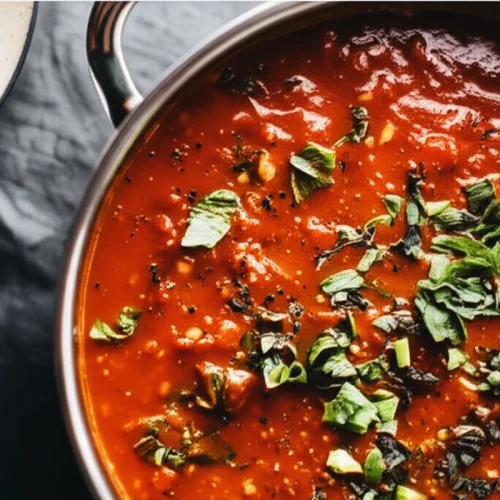
San Marzano Tomato Sauce
Equipment
- Large stainless steel pot
- Hand immersion-blender
Ingredients
Ingredients
- 8 cloves garlic cloves minced
- 3-4 Tablespoons extra-virgin olive oil
- 4-5 cans San Marzano Peeled Tomatoes (with juices)
- 2-3 Tablespoon amore sun-dried tomato paste (or use regular tomato paste)
- 1/2 teaspoons salt & black pepper (each)
- 3 Tablespoons fresh basil ((for dried basil – 1 Tbsp))
- 2 teaspoons fresh oregano (*optional)
Instructions
Instructions
- In a large stainless steel pot on LOW-MEDIUM heat sauté garlic in olive oil for 30-60 seconds. As the garlic hits the hot olive oil, you should hear a gentle sizzle and be immediately greeted by an intense, savory aroma. Watch closely; you’re looking for a light golden color, burned garlic ruins the whole sauce. Careful sautéing is crucial because burned garlic will impart a bitter taste to the entire sauce. I ruined an entire batch once by not paying attention; now I never leave the stove during this step.
- Pour canned tomatoes with juices in with the garlic. Add tomato paste, salt, and black pepper. Mix ingredients together, partially cover with lid, but not completely, and simmer on LOW heat for 3+ hours. Stir every so often to avoid burning. Note: if using a parmesan rind, add it in this step and let it simmer with sauce until finished. Remove and discard rind when ready to serve. I always set a timer to remind myself to stir; it’s easy to forget when you’re multitasking.
- When sauce is finished cooking, use a hand immersion-blender to puree. Note: If you prefer a chunkier/thicker sauce (like I do), you can skip this step as the San Marzanos naturally break down while cooking. After experimenting with both methods, I strongly prefer a chunkier sauce; the texture adds another layer of complexity.
- When sauce is finished, mix in chopped fresh herbs. Season with additional salt & black pepper if needed and serve! I always taste the sauce at this stage and adjust the seasoning to my liking. Fresh herbs really brighten up the sauce and add a final layer of flavor.
Notes
Bitter Taste: Bitterness is almost always caused by burned garlic. If you accidentally burn the garlic, there’s unfortunately no way to remove the bitterness completely.
Sauce is Too Thin: Continue to simmer the sauce, uncovered, for a longer period. This allows the excess water to evaporate, concentrating the flavors and thickening the sauce naturally.