My first attempts at Cacio e Pepe were, to put it mildly, a disaster. I ended up with either a clumpy, dry mess or a watery, separated sauce, far from the creamy, luscious dish I craved. Then came the “aha!” moment: understanding the science of the emulsion.
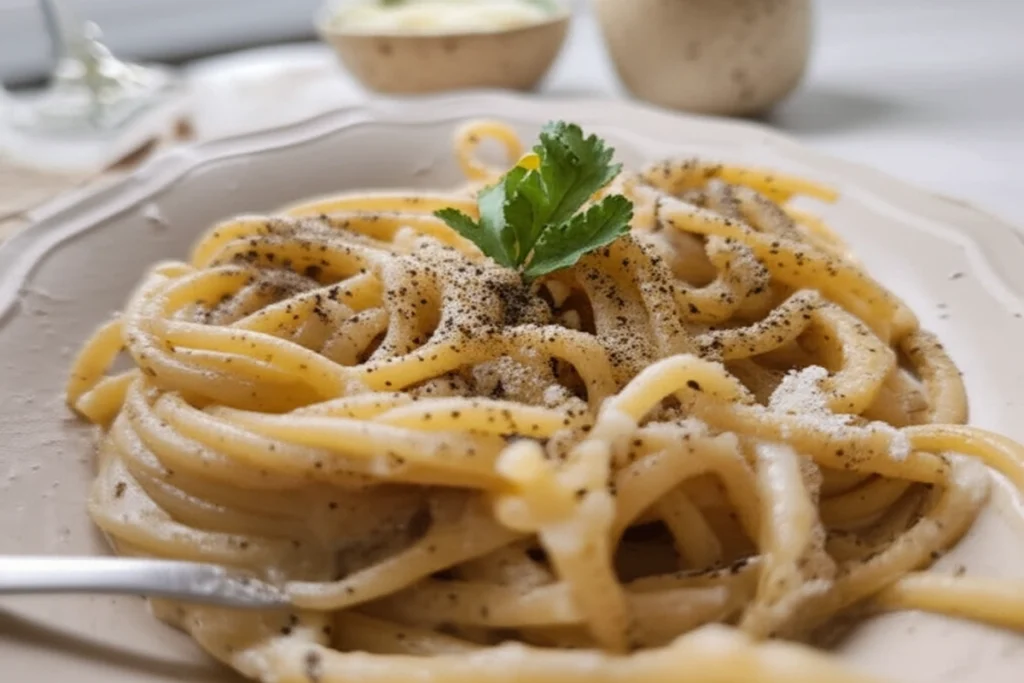
This authentic Italian pasta recipe isn’t just about following steps; it’s about mastering the technique that transforms humble ingredients into culinary excellence. I call this recipe: The Science of Silky Smooth Cacio e Pepe: Mastering the Emulsion. This recipe makes a creamy sauce every time.
Prep Time: 10 minutes. Cook Time: 10 minutes. Total Time: 20 minutes.
Table of Content
The Alchemy of Cacio e Pepe: How Starch, Water, and Cheese Create Magic
The secret to that perfect, silky Cacio e Pepe lies in the interplay of starch, water, and cheese, an almost magical transformation when you know what to look for. The key is understanding the emulsion, a stable combination of two liquids that don’t typically mix (in this case, water and melted cheese).
The starch in the pasta water is absolutely critical. I found it acts as a binder, creating a bridge between the water and the cheese’s fats, preventing them from separating. Think of it as the glue that holds everything together, resulting in that coveted creamy texture.
The grated cheese’s surface area also plays a vital role. The finer the grate, the faster and more evenly the cheese melts, integrating seamlessly into the starchy water. Temperature is also crucial; too high, and the emulsion breaks, resulting in a greasy sauce. Too low, and the cheese won’t melt properly. Maintaining a Goldilocks temperature is key to a stable, luscious emulsion.
Ingredients
Here’s what you’ll need to create this amazing dish:
- 8 ounces bucatini pasta (or spaghetti)
- 1 tablespoon butter
- 2 tablespoons extra virgin olive oil
- 2 teaspoons freshly-cracked black pepper
- 1 cup freshly grated Pecorino cheese (or Parmesan)
- 2 sprigs fresh parsley (for garnish)
I tested this recipe with both pre-grated and freshly grated cheese. The pre-grated cheese contains cellulose and doesn’t melt as smoothly, resulting in a slightly grainy sauce. That’s why I strongly recommend grating your own cheese for the best possible texture.
Instructions
Fill a large stockpot about 2/3 with generously-salted water. Bring to the boil, and add your pasta, cooking until only just al dente. (You can grate your cheese while you wait for the water to boil!).
Right before your pasta finishes boiling, carefully scoop out about 2 cups worth of starchy water and reserve.
Drain the pasta using a colander. Transfer the pasta back to the stockpot (take off the heat).
Add the butter, olive oil, and 1 cup of the starchy water, and quickly toss to combine. Next, add the grated cheese, black pepper, and toss again. Keep adding the remainder of the starchy water until all of the cheese has melted and a silky sauce starts to form. Both Pecorino and Parmesan are hard, salty cheeses, but there is a key difference. I’ve found that Pecorino is derived from sheep milk, lending it a sharper, tangier, and more pungent flavor than Parmesan, which comes from cow’s milk.
Serve immediately, garnished with fresh parsley.
Troubleshooting Your Sauce: How to Rescue a Broken Emulsion (and Avoid It in the First Place)
Even with careful attention, the Cacio e Pepe emulsion can sometimes break, resulting in a sauce that looks oily or separated. The first time it happened to me, I was devastated; however, I learned how to spot the signs and recover the dish.
A broken emulsion is usually easy to identify. Instead of a smooth, creamy sauce clinging to the pasta, you’ll see pools of oil separating from the cheese and water.
If you notice this happening, don’t panic! I’ve found a few techniques that can often bring it back together. Start by adding a tablespoon or two of the reserved pasta water to the pot. Then, whisk vigorously and continuously. The added water can help re-emulsify the sauce.
If that doesn’t work, try adding a bit more grated cheese while continuing to whisk. The cheese can help bind the sauce back together; however, the best approach is to prevent the emulsion from breaking in the first place.
One critical preventative measure is maintaining the correct temperature. Cooking over too high of heat can cause the cheese to melt too quickly and separate. I recommend keeping the heat on low and stirring constantly. Also, grating the cheese finely ensures it melts evenly and integrates smoothly into the sauce.
Frequently Asked Questions
What defines “authentic” Italian pasta?
In my experience, “authentic” Italian pasta goes beyond just the ingredients. It’s about honoring techniques passed down through generations. Simple, high-quality ingredients are key. The focus isn’t on a laundry list of items, but rather on amplifying the flavor of each element. I’ve learned that the pasta should be cooked al dente, retaining a slight bite, and the sauce should complement, not overwhelm, the pasta itself.
What are the most important/classic Italian pasta types?
Throughout my culinary explorations, I’ve come to appreciate the diversity of Italian pasta. While there are countless shapes, some stand out as classics. Spaghetti, with its round, thin strands, is incredibly versatile. Penne, with its cylindrical shape and angled ends, is excellent for capturing chunky sauces. Then there’s bucatini; similar to spaghetti but with a hole running through the center, it offers a unique texture. I’ve found each shape serves a distinct purpose, enhancing the overall eating experience with specific sauces.
What are common mistakes to avoid when making authentic Italian pasta?
I’ve made my fair share of pasta mistakes, and they’ve taught me valuable lessons. Overcooking the pasta is a frequent pitfall, resulting in a mushy, unpleasant texture. Another common mistake is not using enough salt in the pasta water; I now add it generously. Neglecting to reserve starchy pasta water is a missed opportunity; it’s essential for creating a luscious sauce. Also, pre-shredded cheese often contains additives that hinder melting.
What sauces pair best with specific types of authentic pasta?
Pairing the right sauce with the right pasta can elevate a dish from good to exceptional. Thicker, heartier sauces, I’ve found, work well with broader pastas like pappardelle. Lighter, oil-based sauces, such as pesto, are delicious with delicate strands like spaghetti or linguine. Tubular pastas, such as penne or rigatoni, are perfect for capturing chunky vegetable sauces. The key is to consider the texture and shape of the pasta and how well it will hold and complement the sauce.
Variations and Serving Suggestions
This recipe yields 2 servings, perfect for a cozy dinner. I don’t recommend leftovers, as the sauce doesn’t hold its silky texture well once cooled. It’s truly best served immediately.
For a spicier twist on this classic, try Spicy Cacio e Pepe: simply add a pinch of red pepper flakes along with the black pepper.
Conclusion
Ultimately, mastering the emulsion is the secret to achieving perfect Cacio e Pepe every time. I have found that understanding the science behind this iconic dish is the surest path to success.
I encourage you to try this recipe and leave a comment sharing your results! Don’t forget to share this recipe with your fellow pasta lovers!
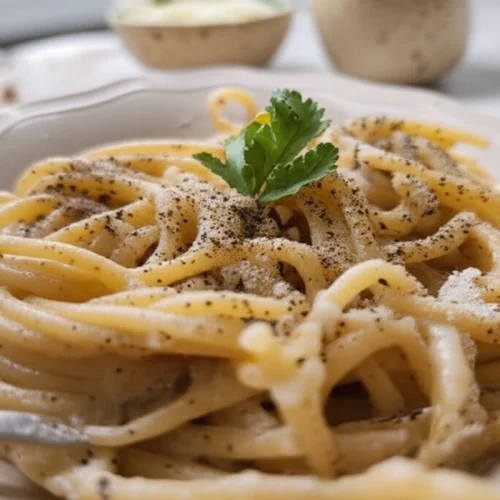
Authentic Italian Cacio e Pepe Pasta Recipe
Equipment
- large stockpot
- colander
Ingredients
Ingredients
- 8 ounces bucatini pasta (or spaghetti)
- 1 tablespoon butter
- 2 tablespoons extra virgin olive oil
- 2 teaspoons freshly-cracked black pepper
- 1 cup freshly grated Pecorino cheese (or Parmesan)
- 2 sprigs fresh parsley for garnish
Instructions
Instructions
- Fill a large stockpot about 2/3 with generously-salted water. Bring to the boil, and add your pasta, cooking until only just al dente. (You can grate your cheese while you wait for the water to boil!).
- Right before your pasta finishes boiling, carefully scoop out about 2 cups worth of starchy water and reserve.
- Drain the pasta using a colander. Transfer the pasta back to the stockpot (take off the heat).
- Add the butter, olive oil, and 1 cup of the starchy water, and quickly toss to combine. Next, add the grated cheese, black pepper, and toss again. Keep adding the remainder of the starchy water until all of the cheese has melted and a silky sauce starts to form. Both Pecorino and Parmesan are hard, salty cheeses, but there is a key difference. I’ve found that Pecorino is derived from sheep milk, lending it a sharper, tangier, and more pungent flavor than Parmesan, which comes from cow’s milk.
- Serve immediately, garnished with fresh parsley.