The words “chocolate” and “sauerkraut” rarely appear together unless someone is trying to trick you. When I first encountered Grandma Jo’s chocolate sauerkraut cake recipe, I was certain it was a prank. I envisioned a soggy, tangy mess. My first attempt confirmed my fears, largely because I didn’t drain the sauerkraut nearly enough. The result wasn’t pretty.
But something about the old fashioned dessert intrigued me. The idea of this odd pairing lingered in my mind. I decided to approach this sauerkraut cake as an engineering challenge, and I’m glad I did. This recipe delivers a surprisingly rich and moist chocolate cake with no hint of sauerkraut flavor; it’s all science, not magic.
Consider this TheRecipiest’s engineer-approved guide to sauerkraut cake, designed to eliminate all points of failure. With a prep time of just 15 minutes, a cook time of 40 minutes, and a total time of 55 minutes, you’re just under an hour away from experiencing this unique, old fashioned dessert.
Table of Content
Why Sauerkraut? The Science Behind This Surprisingly Delicious Cake
The question everyone asks is, “Why sauerkraut in a cake?” It seems counterintuitive, but sauerkraut is the secret ingredient for an exceptionally moist and tender chocolate cake. Understanding the science behind this seemingly bizarre addition unlocks the potential of this German sauerkraut cake recipe.
The key lies in the chemical reaction between the sauerkraut and baking soda. Sauerkraut’s lactic acid reacts with the baking soda, creating carbon dioxide. This leavening action, in conjunction with the baking powder, results in a lighter, airier crumb than you might expect.
But what about the taste? Properly drained and incorporated, the sauerkraut adds no discernible flavor. Instead, it contributes moisture and a subtle tang that enhances the chocolate’s richness. This balance prevents the cake from being overly sweet or heavy. In fact, I experimented with and without sauerkraut, and those who sampled could tell the difference.
Historically, German sauerkraut cake emerged as a thrifty way to use leftover sauerkraut brine. It also added vital nutrients. In times of scarcity, resourceful cooks found ways to transform simple ingredients into comforting desserts. It is a testament to the ingenuity of home bakers.
Pro tip: Don’t skip the draining step! Excess moisture will lead to a gummy texture. I recommend pressing the sauerkraut between paper towels to remove as much liquid as possible.
Mixing Matters: Achieve the Perfect Crumb Every Time
Achieving the perfect crumb in this sauerkraut cake relies on precise mixing techniques. I’ve found that even slight deviations can impact the final texture. To help you avoid common pitfalls, I’ve outlined some key considerations in the table below.
| Problem | Solution |
|---|---|
| Dense or gummy texture | Ensure all ingredients, especially the butter and eggs, are at room temperature. Room temperature ingredients emulsify more easily, creating a stable batter that traps air. This results in a lighter texture. |
| Dry or crumbly cake | Avoid overmixing the batter once the flour is added. Overmixing develops the gluten in the flour, leading to a tough cake. Mix only until just combined. |
| Unevenly mixed ingredients | Use the proper bowl size for your mixer. An undersized bowl will lead to ingredients that are not incorporated completely. Also, scrape down the sides of the bowl periodically to ensure even mixing. |
The type of mixer also matters. I prefer a stand mixer for its consistency, but a hand mixer works well too. The key is to start on low speed to prevent flour from flying everywhere, then gradually increase to medium.
Pro tip: Don’t be afraid to stop the mixer and check the batter’s consistency. Lumps are okay, but streaks of dry flour are not. I aim for a smooth, uniform batter that slowly ribbons off the spatula. This method ensures the sauerkraut cake has the perfect balance of tenderness and structure.
Ingredients
- ¼ cup (½ stick / 57 g) unsalted butter, (room temperature)
- 1½ cups (300 g) granulated sugar
- 3 large eggs, (room temperature)
- 1 teaspoon vanilla extract
- 2 cups (250 g) all-purpose flour
- 1 teaspoon baking powder
- 1 teaspoon baking soda
- ¼ teaspoon kosher salt
- ½ cup (59 g) Dutch-processed cocoa powder
- 1 cup (250 g) water
- 18 ounces sauerkraut, (drained and chopped (about 1½ cups))
- 3 cups (375 g) confectioners' sugar
- 6 tablespoons (44g) Dutch-processed cocoa powder
- 6 tablespoons salted butter, (room temperature)
- 3-5 tablespoons heavy whipping cream
- 1 teaspoon vanilla extract
I tested this recipe with both store-bought and homemade sauerkraut. The results were surprisingly similar. However, store-bought sauerkraut can vary greatly in acidity, so I recommend tasting it first. If it’s exceptionally sour, rinse it lightly before chopping and adding it to the batter. This ensures the chocolate sauerkraut cake isn’t overly tangy.
Instructions
- Preheat oven to 350°F and spray a 9×13-inch baking dish with nonstick cooking spray.
- In a medium mixing bowl, cream butter and sugar with a hand mixer, starting on low and increasing to medium speed until light and fluffy. Add in eggs, one at a time, and vanilla. Again, mix on low, increasing to medium speed until incorporated.
- In a separate bowl, combine flour, baking powder baking soda, salt, and cocoa powder.
- Alternating between the flour mixture and water three times, add each to the creamed butter and sugar, mixing until incorporated.
- Fold in the drained and chopped sauerkraut.
- Pour the batter into the prepared baking dish and bake 35-40 minutes, or until an inserted toothpick comes out clean. Let the cake cool before adding the frosting.
- In a medium bowl, sift together the confectioners’ sugar and cocoa. Set aside.
- In a large bowl, cream butter until smooth. Then, alternating between the sugar mixture and heavy whipping cream three times, add each to the creamed butter. (I ended up using all 5 tablespoons of the heavy cream.)
- Blend in vanilla. Beat until light and fluffy. If necessary, adjust consistency with more whipping cream or sugar.
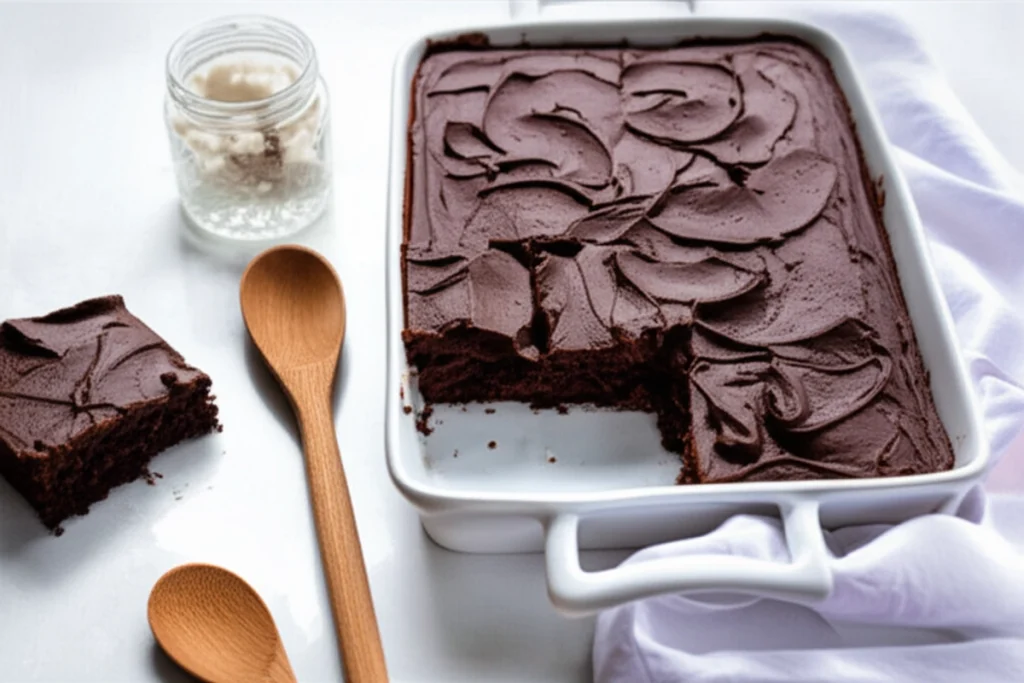
- Spread the chocolate frosting over the cooled cake.
This recipe calls for Dutch-processed cocoa powder, and there’s a specific reason. Dutch-processed cocoa powder has a neutral pH. It is less acidic than natural cocoa powder. This difference in acidity impacts both the flavor and texture of the final chocolate sauerkraut cake.
The Dutch-processed cocoa powder results in a milder, smoother chocolate flavor. It also helps to create a more tender crumb. Natural cocoa powder, on the other hand, has a more intense, slightly bitter flavor and can sometimes lead to a drier cake. I recommend sticking with Dutch-processed for this recipe.
Cakes achieve a moist, tender crumb through the Maillard reaction.
Frequently Asked Questions
What is the historical origin and cultural significance of sauerkraut cake?
Sauerkraut cake, often referred to as German sauerkraut cake, emerged as a resourceful way to utilize leftover sauerkraut and its brine. It became popular during times of scarcity, as cooks sought ways to create nourishing desserts from readily available ingredients. This old fashioned dessert showcases the resourcefulness of home bakers.
What does sauerkraut cake taste like, and how does the sauerkraut affect the flavor and texture?
When properly prepared, sauerkraut cake doesn’t taste like sauerkraut at all. The well-drained sauerkraut contributes moisture and a subtle tang. This, in turn, enhances the chocolate’s richness without adding any sourness. I discovered that its primary role is to create an incredibly moist and tender crumb, thanks to the reaction between its lactic acid and the baking soda.
What are the key ingredients and steps involved in making a traditional sauerkraut cake?
The key ingredients include sauerkraut (drained and chopped), flour, sugar, butter, eggs, cocoa powder, and baking soda. The most important steps involve creaming the butter and sugar, alternating the dry and wet ingredients, and folding in the sauerkraut. It is crucial to ensure the sauerkraut is well-drained to prevent a soggy cake, which I learned the hard way during my first attempt.
Can I make this with chocolate?
Absolutely; this recipe is for chocolate sauerkraut cake! The addition of Dutch-processed cocoa powder complements the subtle tang of the sauerkraut. It creates a moist, rich chocolate flavor that is surprisingly delicious. In my experience, the chocolate balances the cake perfectly, resulting in a unique and satisfying dessert.
Recipe Variations and Serving Suggestions
This chocolate sauerkraut cake makes one 9×13 inch cake, perfect for sharing. After letting the chocolate frosting set, I typically slice it into 12-15 squares. Leftovers can be stored in an airtight container at room temperature for up to three days. I do find the cake retains its moisture best when stored in the refrigerator.
While I love the rich chocolate frosting in the recipe, several variations work well. A simple vanilla buttercream frosting would be a delightful alternative, allowing the cake’s subtle flavor to shine. I’ve also experimented with a tangy cream cheese frosting, which provides a pleasant contrast to the sweetness of the cake. For another great dessert, try adding chopped walnuts or pecans to the batter or sprinkling them on top of the frosting.
Pro tip: I often add a tablespoon of espresso powder to the chocolate frosting. This intensifies the chocolate flavor and adds a subtle mocha note. It is a simple addition that elevates the cake to another level.
Conclusion
Consider this Grandma Jo’s Chocolate Sauerkraut Cake deconstructed. This recipe is an engineer’s guide to transforming an unusual ingredient into a surprisingly delicious old fashioned dessert. The key takeaway? Sauerkraut adds moisture and tenderness without any discernible flavor.
Now it’s your turn to put this recipe to the test! I encourage you to try this chocolate sauerkraut cake and share your results. Your feedback helps me refine my recipes and ensures everyone can experience success in the kitchen.
I’m especially curious: did you try it with store-bought or homemade sauerkraut? Leave a comment below. Let’s engineer something delicious together!
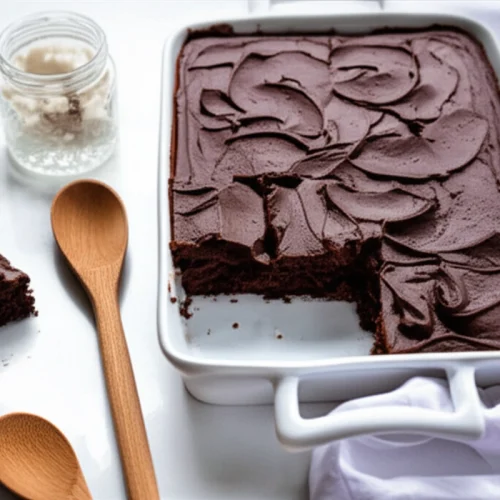
Grandma Jo’s Chocolate Sauerkraut Cake
Ingredients
Cake
- ¼ cup unsalted butter room temperature
- 1½ cups granulated sugar
- 3 large eggs room temperature
- 1 teaspoon vanilla extract
- 2 cups all-purpose flour
- 1 teaspoon baking powder
- 1 teaspoon baking soda
- ¼ teaspoon kosher salt
- ½ cup Dutch-processed cocoa powder
- 1 cup water
- 18 ounces sauerkraut drained and chopped (about 1½ cups)
Frosting
- 3 cups confectioners’ sugar
- 6 tablespoons Dutch-processed cocoa powder
- 6 tablespoons salted butter room temperature
- 3-5 tablespoons heavy whipping cream
- 1 teaspoon vanilla extract
Instructions
Instructions
- Preheat oven to 350°F and spray a 9×13-inch baking dish with nonstick cooking spray.
- In a medium mixing bowl, cream butter and sugar with a hand mixer, starting on low and increasing to medium speed until light and fluffy. Add in eggs, one at a time, and vanilla. Again, mix on low, increasing to medium speed until incorporated.
- In a separate bowl, combine flour, baking powder baking soda, salt, and cocoa powder.
- Alternating between the flour mixture and water three times, add each to the creamed butter and sugar, mixing until incorporated.
- Fold in the drained and chopped sauerkraut.
- Pour the batter into the prepared baking dish and bake 35-40 minutes, or until an inserted toothpick comes out clean. Let the cake cool before adding the frosting.
- In a medium bowl, sift together the confectioners’ sugar and cocoa. Set aside.
- In a large bowl, cream butter until smooth. Then, alternating between the sugar mixture and heavy whipping cream three times, add each to the creamed butter. (I ended up using all 5 tablespoons of the heavy cream.)
- Blend in vanilla. Beat until light and fluffy. If necessary, adjust consistency with more whipping cream or sugar.
- Spread the chocolate frosting over the cooled cake.