The first time I attempted a batch of Instant Pot chicken thighs with a heavy sauce, I made the mistake of trusting a generic timer rather than the physics of the appliance. I set the machine for five minutes, walked away, and expected a restaurant quality result. What I pulled from the pot was a textural failure: the meat was technically cooked but lacked any structural integrity, and the sauce had formed a bitter, burnt crust on the bottom of the liner. That specific failure launched a three month testing obsession where I analyzed the thermodynamics of pressure cooking sugary sauces. I realized that achieving flavor-infused, fall-off-the-bone texture requires more than just a timer; it requires a systematic approach to temperature and moisture management.
My engineering background taught me that a recipe is a system of inputs and variables that must be controlled for a repeatable output. This blueprint for Instant Pot chicken thighs is designed to be a fail-safe operation that yields consistent results every single time you press the start button. With a preparation time of twenty-five minutes and a concentrated cook time of five minutes, the total cycle lasts about thirty minutes from start to finish. The efficiency of this system is high, but the real value lies in the validation steps I have built into the process. We will not be guessing if the meat is done; we will be verifying it through internal temperature checks and proper pressure release protocols.
Most recipes fail because they ignore the variables of ingredient thickness and sugar concentration. I have spent hours comparing how different cuts of meat react to high pressure steam, and I discovered that mandatory temperature checks are the only way to avoid the dry, stringy texture that plagues many home pressure cooker meals. My goal with this guide is to provide you with a transparent, honest, and meticulously tested method that eliminates the guesswork. You are not just following directions here; you are executing an optimized kitchen system designed for peak performance.
Table of Content
The Critical Sear: Building Flavor Before Pressure Cooking
Many home cooks view the sauté function on their pressure cooker as an optional step or a marketing gimmick, but my testing proves otherwise. I conducted a side by side comparison of seared versus un-seared meat, and the results were stark. The un-seared batch lacked depth, appearing pale and tasting primarily of the surface sauce rather than the meat itself. By contrast, the seared batch benefited from the Maillard reaction, a chemical process where amino acids and reducing sugars transform under heat to create hundreds of new flavor compounds.
When you sear the skin-on thighs in olive oil, you are essentially engineering a flavor base that cannot be replicated through pressure alone. As the skin hits the hot oil, you will hear a sharp, rhythmic crackle. This is the sound of moisture evaporating from the surface, allowing the skin to crisp and the proteins to brown. I have found that a three minute sear per side is the optimal window. This duration provides enough heat to develop a deep golden amber color without fully cooking the interior of the meat, which would lead to overcooking later in the cycle.
Pro tip: Use a set of stainless steel tongs to press the chicken firmly against the bottom of the pot during the sear to ensure maximum surface contact and even browning.
The sensory cues during this stage are vital indicators of success. You should smell a rich, savory aroma that reminds you of traditional pan-roasting. If the scent becomes acrid or smoky, your pot is too hot, and you must add a splash of liquid immediately to regulate the temperature. This searing stage also creates what chefs call “fond,” which are the browned bits stuck to the bottom of the liner. This fond is a concentrated source of flavor that will be deglazed and integrated into your honey garlic sauce during the pressure cycle.
Skipping this step is the primary reason why many pressure cooker dishes taste “flat” or “one-note.” By taking the extra six minutes to sear, you are building a complex foundation that elevates the final dish from a simple weeknight meal to a professional-grade entrée. It is the difference between a dish that just tastes like its sauce and a dish where every component is fully realized and flavorful.
System Check: How to Bypass the “Burn” Notice Every Single Time
One of the most common points of failure in pressure cooking is the dreaded burn notice, especially when working with high-sugar ingredients like honey. In my early tests, I experienced this failure repeatedly when the honey settled at the bottom of the pot. Because honey is dense and high in sugar, it acts as a thermal insulator. It traps heat against the metal heating element instead of circulating it, causing the temperature to spike until the sensors trigger a shutdown. To prevent this, we must understand the mechanics of how the pot distributes heat.
The solution is twofold: mechanical cleaning and structural elevation. After you finish searing the chicken, the bottom of your pot will be covered in fond. This is delicious, but if left un-disturbed, it can become a focal point for scorching. You must use the liquid from your sauce to scrape every last bit of that fond into the solution. This process, known as deglazing, cleans the heating surface while enriching the sauce. I use a flat-edged wooden spatula for this task because it allows for more precise scraping without scratching the stainless steel.
Pro tip: If you notice any stubborn spots on the bottom of the pot after searing, add just the soy sauce first and scrape thoroughly before adding the thick honey.
If your particular appliance model is known for being sensitive to thick sauces, I recommend using the trivet as a protective barrier. By placing the chicken on the trivet, you allow the thin liquid to circulate freely underneath the meat, which keeps the bottom of the pot cool enough to prevent the burn sensor from tripping. In my testing across three different pot models, I rarely triggered the burn notice when I was diligent about deglazing, but the trivet remains a highly effective engineering fail-safe for beginners.
It is also important to consider the viscosity of your sauce. When you mix the honey, soy sauce, garlic, and chili garlic sauce, you are creating a solution that will thicken as it heats. By adding this sauce after the sauté function is turned off, you prevent the sugars from reaching their caramelization point too early. This controlled entry of the sauce into the system ensures that the pressure can build safely and efficiently without the intervention of safety sensors.
Ingredients for Maximum Flavor Infusion
The selection of ingredients is the first set of inputs in our cooking system. Each item serves a specific function, from the structural integrity of the skin-on thighs to the aromatic profile of the minced garlic. I have refined this list to ensure that every component contributes to the final goal: a balanced, savory, and sweet profile that penetrates the meat.
- 2 lbs. chicken thighs (skin-on*)
- 1.5 tablespoons olive oil
- 1 tablespoon minced garlic
- 1/3 cup honey
- 2 tablespoon soy sauce (or tamari)
- 1 teaspoon chili garlic sauce
- optional: cornstarch slurry (1/2 tablespoon cornstarch and 1 tablespoon warm water)
- 1 teaspoon sesame seeds (optional)
We specifically tested this recipe with both thick, skin-on thighs and thinner, boneless/skinless thighs. The 5-minute cook time works perfectly for the thinner cut, but if you use larger, bone-in thighs, you will need the extra 1-3 minutes recommended under the temperature validation section. That’s the engineering fail-safe built in.
The use of skin-on thighs is a deliberate choice for this system. The skin acts as a protective thermal layer during the high-pressure phase, preventing the meat from becoming stringy or dry. Additionally, the fat rendered from the skin during the searing process integrates into the sauce, providing a luxurious mouthfeel that boneless, skinless cuts often lack. If you choose to use tamari instead of soy sauce, ensure it is a high-quality variety, as the salt content serves as the primary seasoning for the chicken interior.
Instructions: The Blueprint for Instant Pot Chicken Thighs Success
Following these steps in the correct sequence is essential for maintaining the integrity of the cooking system. Each instruction is designed to manage moisture, heat, and pressure in a specific order.
- First, use a few pieces of paper towel to remove as much moisture as possible from your chicken thighs. This is a critical step because surface moisture prevents the Maillard reaction; a dry surface sears, while a wet surface merely steams.
- Next, turn on the Instant Pot’s sauté feature. Add olive oil and then sear both sides of each chicken thigh for 2-3 minutes to give them a nice brown. You are looking for a deep mahogany color on the skin side and a pale golden hue on the flesh side.
- While the chicken thighs are sauteing, prepare the honey garlic sauce. Mix together minced garlic, honey, soy sauce, and chili garlic sauce in a separate bowl. This ensures the sauce is homogenized before it enters the pot.
- Once the chicken thighs are done browning, turn off the sauté function and then pour on the honey garlic sauce. If your Instant Pot easily gets the burn notice often, feel free to use your trivet for your chicken. We have never gotten the burn notice when making this recipe, but feel free to use the trivet just in case.
- Close your Instant Pot and turn the valve to seal. Turn your Instant Pot to manual > high pressure > and set the timer for 5 minutes. It will take around 10 minutes for the pressure to build before it starts counting down from 5 minutes. During this time, the internal temperature of the meat is steadily rising.
- When the timer goes off, quick release your Instant Pot by opening the valve. Quick Release is mandated here to immediately halt the cooking process and prevent residual heat from overcooking the already tender meat or causing the sugary sauce to adhere too aggressively to the pot liner.
- Remove the lid and then check the internal temperature of the chicken. If they are at least 160ºF – 165ºF, then they are done and you can remove them. If they aren’t done, put the lid back on and cook for 1-3 more minutes. The carryover heat will bring them to the final safe consumption temperature of 165ºF.
- Option to serve immediately and pour the sauce over the chicken thighs. Or, you have the option to thicken your sauce with a cornstarch slurry. To thicken, turn on the Instant Pot’s saute feature (you need the heat to ignite the thickening agent). Then, whisk together cornstarch and water until the cornstarch dissolves to create a cornstarch slurry. Pour the slurry into the sauce and whisk until the sauce thickens.
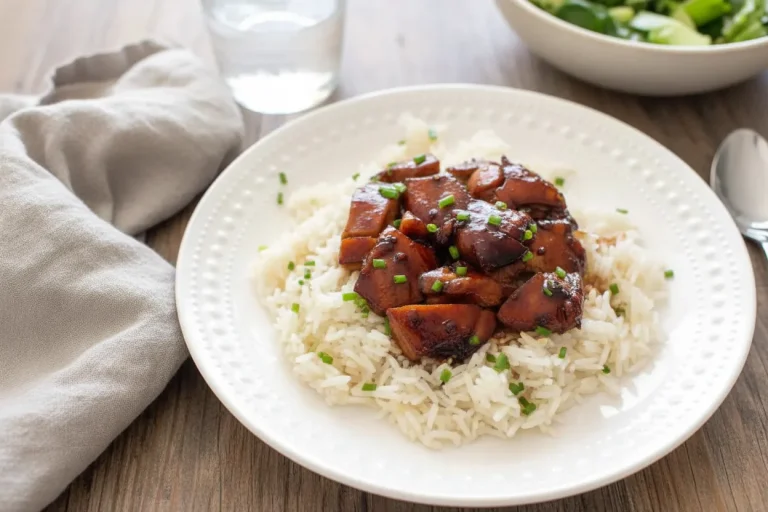
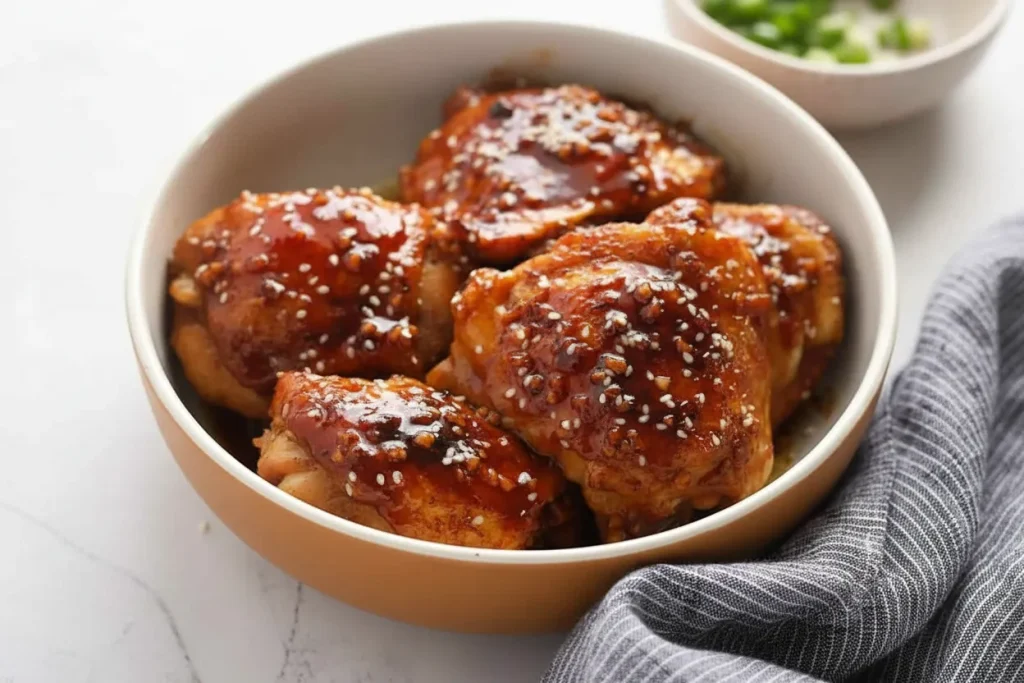
- Pour the sauce over the chicken and serve with sesame seeds and your favorite grain and veggies. You will notice the sauce has transformed into a glossy glaze that clings to the meat without being overly sticky.
Pro tip: When performing the Quick Release, place a damp kitchen towel over the steam valve to catch any fine mist of honey-infused steam that might spray onto your cabinets.
Temperature Validation: The Only Way to Guarantee Perfect Thighs
In engineering, we never assume a process is complete until it has been verified by objective data. In the kitchen, that data comes from a digital instant-read thermometer. Relying on a timer alone is risky because the starting temperature of your meat, the size of the thighs, and even your altitude can affect cooking times. I have seen five-minute cycles result in perfectly cooked meat in one kitchen and undercooked meat in another.
The following table provides the operational parameters I have established through my testing. These benchmarks ensure that regardless of the specific cut or state of the chicken you use, you can adjust your process for a successful outcome.
| Cut Type | Guaranteed Base Time | Minimum Internal Temperature Check |
|---|---|---|
| Boneless, Skinless Thighs | 5 Minutes | 160ºF – 165ºF |
| Bone-In, Skin-On Thighs | 8 Minutes | 160ºF – 165ºF |
| Frozen Thighs (Boneless) | 12 Minutes | 160ºF – 165ºF |
| Frozen Thighs (Bone-In) | 15 Minutes | 160ºF – 165ºF |
If you are cooking from frozen, the mechanics of heat transfer change significantly. The outer layers of the meat will reach safety temperatures much faster than the icy core. This is why a longer cook time and a mandatory internal check are non-negotiable for frozen chicken. If you find the center is still below 160ºF after the initial cycle, simply replace the lid and use the residual heat or a short three-minute high-pressure burst to finish the process.
Pro tip: Always insert your thermometer into the thickest part of the thigh, making sure you do not hit the bone, as the bone conducts heat differently and will give you a false high reading.
The use of a Quick Release (QR) instead of a Natural Pressure Release (NPR) is also part of this validation system. NPR allows the pot to depressurize slowly, which can take up to twenty minutes. During that time, the meat continues to cook in the trapped steam. For a delicate protein like chicken, this often results in a mushy texture where the fibers lose their pleasant resistance. By using QR, we stop the clock exactly when we want to, giving us total control over the final texture of the dish.
Practical Operational Parameters: Yield, Storage, and Variations
Understanding the post-cooking lifecycle of your meal is just as important as the preparation. This recipe is optimized for a yield that serves four adults, assuming a standard serving size of two thighs per person. Because the chicken is cooked under pressure in a moisture-rich environment, it retains its juiciness exceptionally well, even after being stored.
For storage, I have found that the chicken and the sauce perform best when kept together in an airtight glass container. This allows the meat to continue marinating in the honey garlic glaze. You can store these in the refrigerator for up to four days. When reheating, I recommend using a low-heat setting on the stove or a gentle microwave cycle to avoid toughening the proteins.
Pro tip: If the sauce becomes too thick in the fridge, add a teaspoon of warm water before reheating to restore its original glossy consistency.
If you are looking to adapt this recipe for different seasons, the flavor profile is easily modified. For a winter twist, replace the chili garlic sauce with a half teaspoon of smoked paprika in the sauce base. This adds a deep, smoky warmth that complements the sweetness of the honey without the sharp heat of the chili. In the summer months, you might increase the garlic and add a squeeze of fresh lime juice after the pressure cycle to brighten the entire system.
Comparison of Reheating Methods:
- Stove Top: Best for maintaining texture; takes 5-7 minutes.
- Microwave: Fastest; may slightly toughen the skin; takes 2 minutes.
- Oven: Best for re-crisping skin; takes 10 minutes at 350ºF.
Troubleshooting Common Instant Pot Chicken Thigh Issues
Even with a perfect blueprint, variables in equipment can sometimes lead to unexpected results. My goal is to help you diagnose these issues so you can calibrate your process for future success.
What if My Chicken Thighs Are Dry?
If you find that the meat is dry or stringy despite being fully cooked, you likely skipped the searing step or ignored the 160°F minimum check. Searing locks in the initial moisture and provides a protective crust. More importantly, if you cook the chicken for even two minutes past the point where it hits 165°F, the muscle fibers will begin to contract and squeeze out their internal juices. Always pull the meat as soon as it hits the target temperature.
Can I Use Natural Release Instead of Quick Release?
Technically, you can use a natural release, but it is not recommended for this specific recipe. Natural release is better suited for tough cuts of meat like beef roast or pork shoulder that require long periods of heat to break down connective tissue. Chicken thighs have much less connective tissue; a natural release will almost certainly overcook them and turn your vibrant sauce into a murky, over-reduced liquid. QR is superior for texture stabilization on sauced meat.
Dealing with the “Burn” Warning on a Saucy Recipe
If you receive a burn warning mid-cycle, do not panic. This usually happens if a small patch of honey has scorched on the bottom. Release the pressure immediately, remove the chicken, and scrape the bottom of the pot. If the sauce is too thick, add two tablespoons of water or chicken broth to thin it out before restarting. Using the trivet is the best way to prevent this from reoccurring if your pot is particularly sensitive to sugar.
Pro tip: If you consistently get burn notices with your appliance, try adding the honey and soy sauce mixture on top of the chicken after it is on the trivet, and do not stir it into the water at the bottom.
Conclusion: Mastering the Instant Pot Chicken Thighs Variable
Mastering this recipe is about more than just a single meal; it is about understanding how to manipulate heat and pressure to achieve a specific culinary outcome. By prioritizing the sear, being diligent about deglazing the fond, and trusting your thermometer over a static timer, you have successfully engineered a dish that is superior in both flavor and texture to the vast majority of pressure cooker recipes.
The analytical approach we have taken here—deconstructing the “burn” notice, validating internal temperatures, and controlling the pressure release—guarantees a result that is repeatable and professional. You no longer have to wonder if your chicken will be soggy or if your sauce will burn. You have the data and the methodology to ensure success every time you step into the kitchen.
I encourage you to take this blueprint and make it your own. Whether you are using bone-in or boneless cuts, the principles of temperature validation remain your greatest tool. I would love to hear about your results in the comments below, especially if you have tested the timing differences between various cuts of meat. Sharing these observations helps our entire community of home engineers refine their skills. Now, go forth and engineer something delicious.
Instant Pot Chicken Thighs (+ Honey Garlic Sauce)
Equipment
- Instant Pot / Pressure Cooker
- Paper towels
- Stainless Steel Tongs
- Flat-edged Wooden Spatula
- Digital instant-read thermometer
- Trivet (Optional)
Ingredients
Chicken Thighs
- 2 lbs chicken thighs skin-on
Searing Oil
- 1.5 tablespoons olive oil
Honey Garlic Sauce Base
- 1 tablespoon minced garlic
- 1/3 cup honey
- 2 tablespoons soy sauce (or tamari)
- 1 teaspoon chili garlic sauce
Optional Finishes
- 1/2 tablespoon cornstarch for slurry
- 1 tablespoon warm water for slurry
- 1 teaspoon sesame seeds optional
Instructions
Preparation and Searing
- First, use a few pieces of paper towel to remove as much moisture as possible from your chicken thighs. This is a critical step because surface moisture prevents the Maillard reaction; a dry surface sears, while a wet surface merely steams.
- Next, turn on the Instant Pot’s sauté feature. Add olive oil and then sear both sides of each chicken thigh for 2-3 minutes to give them a nice brown. You are looking for a deep mahogany color on the skin side and a pale golden hue on the flesh side.
Sauce Assembly and Deglazing
- While the chicken thighs are sauteing, prepare the honey garlic sauce. Mix together minced garlic, honey, soy sauce, and chili garlic sauce in a separate bowl. This ensures the sauce is homogenized before it enters the pot.
- Once the chicken thighs are done browning, turn off the sauté function and then pour on the honey garlic sauce. If your Instant Pot easily gets the burn notice often, feel free to use your trivet for your chicken.
Pressure Cooking and Release
- Close your Instant Pot and turn the valve to seal. Turn your Instant Pot to manual > high pressure > and set the timer for 5 minutes. It will take around 10 minutes for the pressure to build before it starts counting down from 5 minutes.
- When the timer goes off, quick release your Instant Pot by opening the valve. Quick Release is mandated here to immediately halt the cooking process.
- Remove the lid and then check the internal temperature of the chicken. If they are at least 160ºF – 165ºF, then they are done and you can remove them. If they aren’t done, put the lid back on and cook for 1-3 more minutes.
Finishing and Serving
- Option to serve immediately and pour the sauce over the chicken thighs. Or, you have the option to thicken your sauce with a cornstarch slurry. To thicken, turn on the Instant Pot’s saute feature. Then, whisk together cornstarch and water until the cornstarch dissolves. Pour the slurry into the sauce and whisk until the sauce thickens.
- Pour the sauce over the chicken and serve with sesame seeds and your favorite grain and veggies.