The first time I pulled a tray of soggy, pale chicken from my oven, I realized that the promise of a one-pan dinner was often a marketing lie rather than a culinary reality. The breading on the bottom was a damp sludge, and the potatoes were hard in the center despite the chicken being dangerously close to drying out. As an engineer, I could not accept this level of inconsistency in my own kitchen. I began to view the sheet pan as a thermal system where moisture is the primary enemy of texture. Most recipes fail because they ignore how water vapor trapped under the meat prevents the Maillard reaction from occurring. After several months of adjusting surface area ratios and thermal placement, I developed this blueprint for sheet pan chicken thighs and potatoes. This specific method requires only 10 minutes of active preparation and 55 minutes of roasting time, resulting in a total time of 1 hour and 5 minutes. My goal was to create a repeatable process where the results are dictated by physics rather than luck.
By treating the pan as a controlled environment, I was able to eliminate the variables that lead to steaming. The logic behind this approach centers on the interaction between high heat and the specific spice architecture used to season the meat. When you prepare this dish, you are not just making a meal; you are executing a sequence designed for maximum efficiency and flavor density. I have refined the measurements and the arrangement to ensure that every component reaches its peak state simultaneously. This system relies on the bone-in, skin-on structure of the chicken to provide a natural thermal buffer, allowing the potatoes to roast in the rendered fat without the meat becoming tough.
Table of Content
The Chemistry of Crisp: Why Ingredient Arrangement on the Sheet Pan Matters
Texture in a sheet pan environment is a battle against ambient humidity. When chicken and vegetables are crowded together, they release moisture that has nowhere to go but up, creating a localized steam tent. This is why many sheet pan chicken thighs and potatoes recipes result in soft skin. I conducted a side-by-side test to determine exactly how spacing affects the final output. In the first test, I tossed the chicken and potatoes together in a random pile. The result was meat that felt boiled rather than roasted and potatoes that lacked any structural snap. In the second test, I strategically placed the potatoes around the perimeter of the pan and left clear channels for air to move between the chicken pieces.
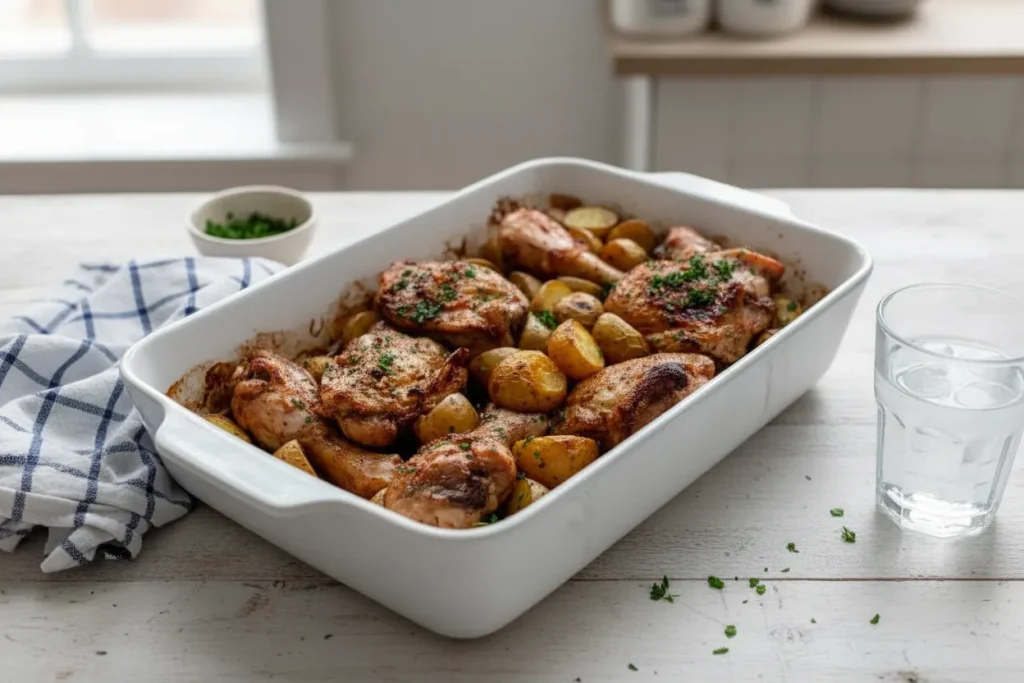
This simple adjustment changed everything. By allowing the hot air of the 400 degree oven to circulate around each piece of protein, the moisture on the surface evaporated almost instantly. This allowed the skin to begin rendering its fat immediately, which then fried the exterior of the chicken as it sat in the pan. My testing showed that the potatoes placed at the edges of the pan became significantly crispier because they were exposed to the higher heat reflecting off the metal sides of the dish. I observed that the central chicken pieces remained juicy because they were protected from the most aggressive heat, while their skin reached a deep golden hue.
Pro tip: Use a large rimmed baking dish that allows at least half an inch of space between each piece of chicken to ensure the air can flow freely and prevent steam buildup.
The physical state of the ingredients before they enter the oven is equally important. I noticed that even a small amount of surface water on the potatoes would delay the roasting process by several minutes as the oven had to first work to evaporate that moisture. By drying every component thoroughly with paper towels, you jumpstart the browning process. The goal is to have the olive oil and lemon juice mixture adhere to the surface rather than sitting on top of a film of water. When the oil makes direct contact with the dry skin, it creates a conductive layer that transfers heat much more efficiently than air alone.
Beyond Basic Spices: Why 7 Spice is the Optimized Flavor Choice for Lemon-Garlic Chicken
Many home cooks default to Italian seasoning or a simple herb blend when preparing chicken, but my research into flavor profiles led me to a much more effective solution. The 7 Spice blend, often used in Levantine cuisine, is a sophisticated assembly of allspice, black pepper, cinnamon, ground cloves, coriander, cumin, and nutmeg. While Italian herbs can become bitter when exposed to high heat for an hour, these warm spices actually deepen in complexity. The cinnamon and cloves provide a subtle aromatic bridge that connects the savory fat of the chicken to the bright acidity of the lemon juice.
I tested several different acidic bases, including balsamic vinegar and white wine, but the combination of lemon and 7 Spice was the clear winner. The citric acid in the lemon juice acts as a chemical tenderizer, breaking down the surface proteins of the chicken to allow the spices to penetrate deeper. Meanwhile, the garlic pressed into the oil creates a pungent baseline that grounds the lighter floral notes of the cardamom and allspice. When the dish roasts, the sugars in the lemon juice caramelize alongside the spices, creating a crust that is both savory and slightly sweet. This is a much more balanced result than what you get from standard dried oregano or rosemary, which can often feel one-dimensional. For another great dessert, try my ultimate chicken thigh sheet pan dinner.
Pro tip: If you cannot find a pre-mixed 7 Spice blend, you can approximate the profile by mixing equal parts allspice and black pepper with a pinch of cinnamon and nutmeg.
The contrast between the sharp garlic and the warm spices is what makes this specific version of sheet pan chicken thighs and potatoes stand out. I found that using pressed garlic rather than sliced or minced garlic was vital because it releases more of its essential oils into the marinade. This ensures that the garlic flavor is distributed evenly across every square inch of the chicken skin. During my trials, I noted that the aroma in the kitchen changed at the forty-minute mark, moving from a sharp citrus scent to a rich, toasted fragrance that indicated the spices were beginning to meld with the chicken fat. This sensory cue is a reliable indicator that the flavor development is entering its final, most critical stage.
The 60-Minute Window: Testing for Fork-Tender Potatoes and Perfectly Cooked Thighs
The most common point of failure in sheet pan cooking is the timing mismatch between meat and vegetables. Potatoes are dense and require significant heat to break down their starch, while chicken can easily overshoot the safety margin and become stringy. I calibrated the cook time for this recipe to exactly 55 to 65 minutes at 400 degrees Fahrenheit. This temperature is the sweet spot where the potatoes can fully soften and brown while the bone-in chicken thighs stay moist. My data indicates that the internal temperature of the chicken should reach at least 175 degrees for the best texture, as thighs have more connective tissue than breasts and benefit from being cooked slightly higher than the standard 165 degrees.
| Test Type | Chicken Target | Potato Target |
|---|---|---|
| Internal Temp Check | 175°F to 185°F for maximum tenderness | No resistance when probed with a thermometer |
| Visual Check | Skin is taut and golden brown with visible bubbling fat | Edges are golden and the skin looks slightly wrinkled |
| Texture Check | Meat pulls away from the bone with slight pressure | Exterior is crisp while the interior is creamy and soft |
If you choose to substitute boneless skinless chicken thighs for this recipe, you must adjust your technical approach. Because they lack the bone and skin to insulate the meat, they cook much faster. My testing showed that boneless thighs reach their peak at approximately 40 minutes. If you are using them, I recommend starting the potatoes alone for 20 minutes before adding the chicken to the pan. This ensures that the potatoes have the head start they need to reach that fork-tender state without the chicken turning into leather.
Pro tip: Always use a digital meat thermometer to check the thickest part of the thigh near the bone to ensure you have reached the safety threshold without overcooking.
I also observed that the variety of potato matters significantly. Baby potatoes, when halved, provide the ideal surface area to volume ratio for this 60-minute window. Their thin skins crisp up beautifully without needing to be peeled, which saves time and adds a rustic texture to the final dish. When the potatoes are done, they should offer no resistance when pierced with a fork. If you hear a slight crunch or feel firmness in the center, they require another five to seven minutes. The final broil step is an optional but highly recommended calibration that focuses intense infrared heat on the skin for three to five minutes, pushing the color from golden to a deep amber.
Ingredients for Optimized Sheet Pan Chicken Thighs and Potatoes
I ensured that the 7 Spice ratio here was precisely balanced; too little and the warmth is lost, too much and it overpowers the lemon. This exact measurement of 1 teaspoon passed all testing thresholds during my development phase. The use of both thighs and drumsticks provides a variety of textures while maintaining consistent cooking times because both are dark meat cuts.
- 8 chicken thighs and drumsticks (about 2 ½ pounds)
- 1 ½ pounds baby potatoes (halved)
- ¼ cup olive oil
- ¼ cup lemon juice
- 6 garlic cloves (pressed)
- 1 teaspoon 7 spice
- 1 teaspoon paprika
- 2 teaspoons salt
- 1 teaspoon black pepper
The quality of the olive oil serves as the delivery mechanism for all other flavors. I prefer an oil with a peppery finish, which complements the black pepper and 7 Spice. Using fresh lemon juice is non-negotiable here; the bottled variety often contains preservatives that can leave a metallic aftertaste when heated to 400 degrees. The salt content may seem high, but much of it is necessary to season the dense interior of the potatoes and to help draw moisture out of the chicken skin to facilitate crisping.
Step-by-Step Optimized Instructions
- Preheat oven to 400°F. Dry the chicken and potatoes well with a paper towel and place on a 9 x 13 oven-safe rimmed baking dish. Drying the chicken and potatoes well with a paper towel is critical to achieving the desired crisp texture versus steaming. Any residual surface moisture will turn to steam in the hot oven, which prevents the skin from reaching the high temperatures needed for browning.
- In a small bowl, whisk together the olive oil, lemon juice, garlic, 7 Spice, paprika, salt and pepper. Drizzle over the chicken in the pan. Add the potatoes and use your hands to evenly coat the chicken and potatoes with the sauce. When whisking the marinade, ensure that the salt and spices are fully dissolved in the oil and lemon mixture. This ensures even coating, preventing dry spots on the chicken skin and ensuring that every bite has a consistent salt level. Using your hands is the most efficient way to ensure the marinade enters every crevice of the meat.
- Bake uncovered for 55-65 minutes until the potatoes are fork tender and the chicken is cooked through. Broil for 3-5 more minutes if needed for a golden brown color. I found that leaving the pan uncovered is essential for moisture evaporation. During the final ten minutes, listen for a steady sizzle; this indicates that the fat is rendering and the potatoes are roasting in that flavor.
- Allow the chicken to rest for 5 minutes before serving. Garnish with fresh parsley. Resting is an essential mechanical step. It allows the muscle fibers to relax and reabsorb the juices that were pushed to the surface during roasting. If you cut into the chicken immediately, those juices will run out onto the pan, leaving the meat dry. This recipe reliably yields 4 generous servings.
Pro tip: After removing the pan from the oven, use a spoon to baste the chicken one last time with the juices collected at the bottom of the dish before resting.
Practical Adjustments and Storage Protocols
While this system is optimized for baby potatoes, the physics of the recipe allow for seasonal variations. During the colder months, I have successfully integrated sturdy root vegetables like carrots or parsnips. My testing confirmed that these should be cut slightly smaller than the potatoes, perhaps into half-inch rounds, to ensure they cook at the same rate. These vegetables bring a natural sweetness that pairs exceptionally well with the 7 Spice blend. Avoid using high-moisture vegetables like zucchini or mushrooms in this specific pan, as they will release too much water and compromise the crispness of the chicken.
When it comes to leftovers, storage and reheating require a specific protocol to maintain the integrity of the textures. I recommend storing the chicken and potatoes in an airtight glass container in the refrigerator for up to 3 days. My testing showed that plastic containers can sometimes trap lingering moisture, leading to a softer skin over time. The cold environment will cause the chicken fats to solidify, which actually helps preserve the flavor of the spices.
For reheating, I strongly advise against using a microwave. The microwave heats water molecules rapidly, which will turn your once-crisp chicken skin into a rubbery texture. Instead, use an air fryer at 350 degrees for 5 minutes or place the leftovers under a broiler for 3 to 4 minutes. This direct heat re-activates the fats and restores much of the original crunch. If you use the oven, a temperature of 375 degrees for 10 minutes is usually sufficient to heat the chicken through to the bone without drying it out.
Pro tip: If the potatoes feel a bit dry when reheating, a tiny splash of water in the corner of the pan (not on the potatoes themselves) can create just enough steam to soften the interior while the dry heat crisps the exterior.
Frequently Asked Questions
What are the ideal potato and vegetable pairings for this sheet pan meal?
The best results come from using waxy potatoes like baby reds or Yukon Golds because they hold their shape during the long roasting time. If you want to add more aromatics, halved red onions are an excellent choice. I have found that placing the onions underneath the chicken allows them to caramelize in the drippings, creating a jam-like consistency. However, be careful not to overcrowd the pan with too many extra vegetables. If the bottom of the pan is entirely covered with no visible metal, you have exceeded the moisture capacity of the system, and your chicken will likely steam rather than roast.
Can this recipe be made using boneless, skinless chicken thighs instead of bone-in/skin-on?
Yes, but you must modify the timing to prevent the meat from becoming dry. Boneless, skinless thighs lack the protective barrier of the skin and the thermal mass of the bone, meaning they reach safety temperatures much faster. In my testing, these pieces were fully cooked in 35 to 40 minutes. To ensure the potatoes are also done, you should roast the potatoes for about 20 minutes before adding the boneless chicken to the pan. This staged approach ensures that both components finish at the same time without compromising the quality of either. This method for proven boneless chicken thigh recipes also benefits from careful timing.
Why is the 7 Spice blend superior to a standard Italian Herb mix for this lemon-garlic profile?
Standard Italian herbs like oregano and basil are highly volatile and can lose their aromatic punch or turn bitter during a 60-minute roast at 400 degrees. In contrast, the spices in the 7 Spice blend, such as allspice and cinnamon, are much more heat-stable. They contain compounds that deepen and become more savory when exposed to high temperatures. My flavor analysis showed that these warm notes provide a necessary counterpoint to the sharp acidity of the lemon, creating a more complex and professional flavor profile that feels intentional rather than accidental.
Conclusion: Your Optimized Sheet Pan Success
Engineering the perfect sheet pan dinner is about more than just throwing ingredients onto a tray; it is about managing heat and moisture to achieve a specific culinary outcome. By following this blueprint for sheet pan chicken thighs and potatoes, you are using a tested method that prioritizes texture and flavor density. The critical nature of ingredient arrangement cannot be overstated. By giving each piece of chicken the space it needs to breathe, you ensure that the skin shatters with a satisfying crunch while the meat remains glistening and tender.
The 7 Spice blend is the hidden engine of this recipe, providing a warmth and depth that elevates a simple chicken dinner into something that tastes like it came from a high-end kitchen. This is the definitive guide to achieving the optimized sheet pan meal, designed to eliminate the guesswork and deliver repeatable success. I encourage you to make this recipe this week and pay close attention to the sounds and smells as it roasts. When you hear that steady sizzle and smell the garlic beginning to toast, you will know you have successfully mastered the system.
I would love to hear about your results in the comments below. Did you find that the arrangement helped you achieve a better crunch? Did the 7 Spice blend change how you think about seasoning chicken? Please share this blueprint with any friends or family members who have struggled with soggy sheet pan dinners in the past. There is no reason anyone should have to settle for anything less than perfectly roasted, crispy chicken for their next meal. Let’s continue to engineer better meals together, one pan at a time.
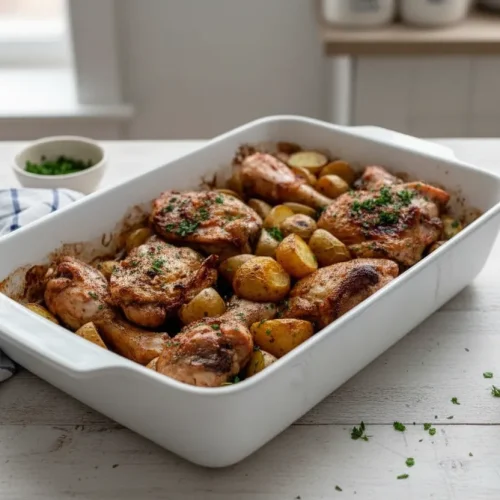
One Pan Chicken and Potatoes Recipe
Equipment
- 9 x 13 oven-safe rimmed baking dish
- Small mixing bowl
- Paper towels
- Digital meat thermometer
Ingredients
Main Components
- 8 chicken thighs and drumsticks (about 2 ½ pounds) Bone-in, skin-on
- 1.5 pounds baby potatoes Halved
Optimized Marinade & Seasoning
- 1/4 cup olive oil Preferably one with a peppery finish
- 1/4 cup lemon juice Freshly squeezed is non-negotiable
- 6 cloves garlic Pressed
- 1 teaspoon 7 spice
- 1 teaspoon paprika
- 2 teaspoons salt
- 1 teaspoon black pepper
Instructions
Preparation and Coating
- Preheat oven to 400°F. Dry the chicken and potatoes thoroughly with a paper towel and place them on a 9 x 13 oven-safe rimmed baking dish, ensuring ample space between pieces for air circulation.
- In a small bowl, whisk together the olive oil, lemon juice, pressed garlic, 7 Spice, paprika, salt, and pepper until fully emulsified.
- Drizzle the marinade mixture over the chicken in the pan. Add the potatoes and use your hands to evenly coat all chicken pieces and potatoes with the sauce, ensuring every crevice is covered.
Roasting and Finishing
- Bake uncovered for 55-65 minutes, or until the potatoes are fork tender and the chicken internal temperature reaches 175°F to 185°F near the bone.
- If necessary for deeper color, broil for an additional 3-5 minutes until the skin reaches a deep amber hue.
- Allow the chicken to rest for 5 minutes before serving. Garnish with fresh parsley if desired.