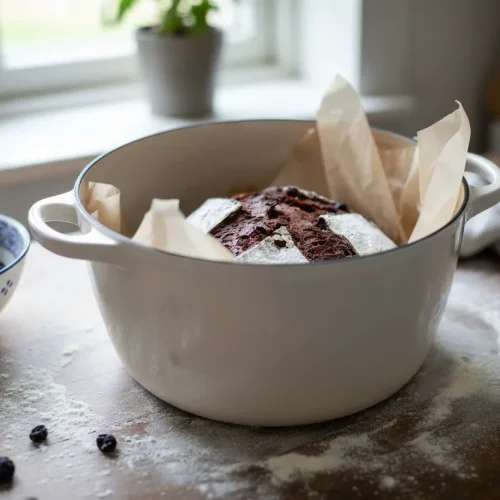
Chocolate Sourdough Bread
This recipe is the result of extensive testing designed to solve the structural collapse issues common in sourdough chocolate bread, ensuring maximum oven spring and an open crumb.
Equipment
- Large Bowl
- Damp towel or plastic wrap
- Dutch oven
- Razor (for scoring)
- Banneton or bowl lined with a tea towel
Ingredients
Building the Optimal Chocolate Sourdough Matrix
- 250 grams unbleached all purpose flour
- 100 grams freshly ground whole wheat
- 125 grams bread flour (can omit and just add more to the unbleached all purpose)
- 10 grams salt
- 50 grams brown sugar
- 50 grams cocoa powder
- 100 grams mature starter active and bubbly
- 335 grams water
- 125 grams chocolate chips
Instructions
Executing the Blueprint for Perfect Rise
- Feed a sourdough starter 4-12 hours before with sufficient flour and water. The starter should be super active and bubbly before starting the dough.
- In a large bowl, weigh out dry ingredients (except salt). Mix well.
- Add warm water and sourdough starter. Combine and allow to rest for 30 minutes.
- Sprinkle salt over top.
- With your hands, mix the dough for about 5 minutes until the dough comes together.
- Cover with damp towel or plastic wrap.
- Let rest for 30 minutes.
- Add in chocolate chips and start the stretch and fold.
- Take the dough in the bowl and grab the edge firmly. Pull up, stretching it upwards. Then push the dough into the center. Turn the bowl about a quarter turn and do this stretch and fold again, repeating two more times. The initial stretch and folds are vital because the cocoa powder has already begun inhibiting the gluten network; these aggressive movements are necessary to force alignment and create the tensile strength required to trap the gases produced during bulk fermentation.
- Every 15 minutes, do this stretch and fold technique. You're looking for a total of three times.
- Every 30 minutes, do another stretch and fold – 3 times.
- Cover and allow the dough to bulk-ferment until doubled. The timing will vary depending on a lot of factors; temperature of your home, how active and mature your starter is, etc. I usually make this dough in the morning and allow it to rise all day.
- Shape. Spin dough and pull it toward you multiple times until a ball forms.
- Leave the dough out for 15-20 minutes uncovered so a skin can develop on the surface of the dough.
- Turn the dough onto a clean surface and shape by folding the two sides over to the middle, repeating on the other two sides.
- Place the dough into a floured banneton or bowl lined with a tea towel, seam side up.
- Second rise for one hour at room temperature, or cover with plastic and proof 12-15 hours in refrigerator.
- Preheat dutch oven to 425 degrees for 1 hour.
- After the dutch oven has preheated, remove dough from the fridge.
- Dust dough with flour on top. Optional.
- Score design with a razor.
- Bake for 20 minutes with the lid on.
- Remove the lid and bake for another 30 minutes.
- Allow to cool completely before slicing.
Notes
The success of this loaf relies on the six-fold schedule, which provides necessary structural development to counteract gluten inhibition from the cocoa powder. If the dough feels too stiff during folding, extend the rest period between sets by an additional fifteen minutes instead of adding more water. Always use a mature, active sourdough starter; using discard will lead to catastrophic structure loss. When storing, avoid plastic bags to prevent the crust from softening; beeswax wrap or a bread box is ideal.
Nutrition
Calories: 227kcalCarbohydrates: 44gProtein: 6gFat: 4g
Tried this recipe?Let us know how it was!