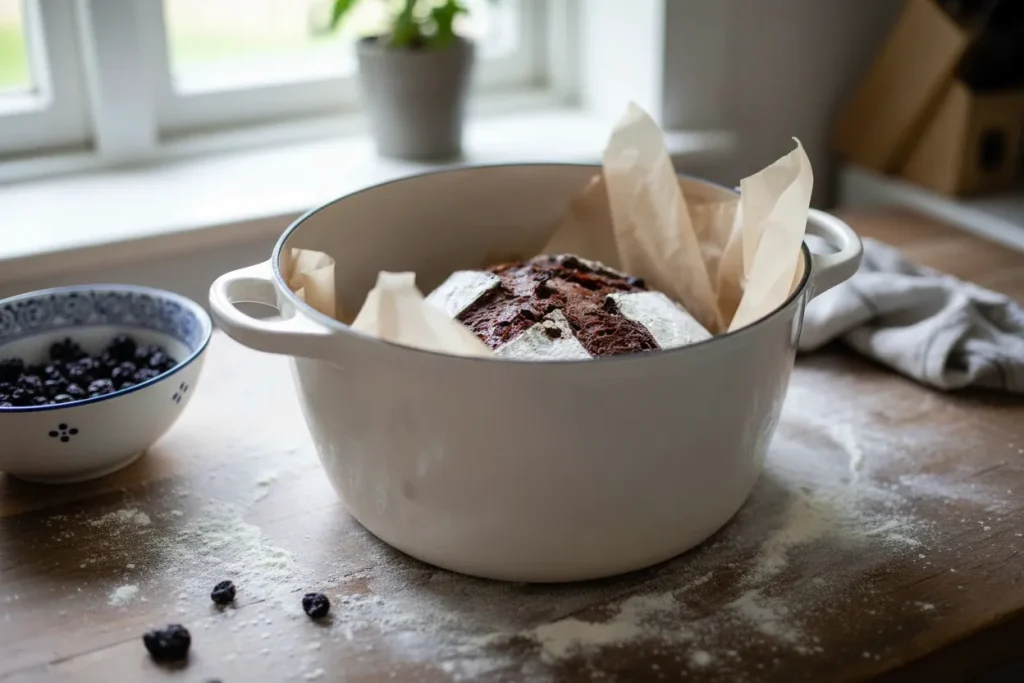
The first time I attempted to bake a sourdough chocolate bread, the result was a humbling reminder that baking is as much about structural engineering as it is about flavor. I expected a tall, airy masterpiece with a lacy crumb and a deep cocoa aroma. Instead, I pulled a dense, leaden brick from the dutch oven that had almost zero vertical growth. The crust was thick and tough, while the interior felt gummy and under-aerated.
That failure bothered me for weeks. I analyzed the dough consistency and realized that my standard folding routine, which worked perfectly for a traditional white loaf, was completely insufficient for a dough weighed down by the unique chemistry of cocoa. The cocoa powder had acted like a million tiny shards of glass, cutting through the gluten strands before they could form a cohesive network. By neglecting the specific structural needs of this enriched dough, I had essentially built a skyscraper without a steel frame.
This recipe is the result of eighteen subsequent test bakes designed to solve that specific structural collapse. I deconstructed the fermentation timing and the physical manipulation of the dough to create a blueprint that ensures success every time. We are looking at a total time of approximately 815 minutes, with 45 minutes of active preparation and 50 minutes of bake time. The majority of this duration is dedicated to the long, slow fermentation required to move the heavy, chocolate-laden mass.
The goal is to achieve maximum oven spring, that elusive vertical burst that happens in the first ten minutes of baking. To get there, I had to rethink everything from the protein content of the flour to the specific intervals of the stretch and fold phase. This is the engineer’s guide to building a sourdough chocolate bread that maintains its height and develops a sophisticated, open crumb despite the challenges of its ingredients.
Table of Content
Why We Use 100% Bread Flour (and Skip White Sugar): The Blueprint for Structure Over Inhibition
When I began optimizing this system, the first variable I scrutinized was the flour selection. Most standard recipes suggest an all purpose flour, but my testing showed that cocoa powder creates a significant hurdle for gluten development. Cocoa is naturally acidic and incredibly fine, which means it coats the gluten-forming proteins, gliadin and glutenin, and prevents them from bonding effectively.
To counteract this inhibition, I realized I needed a high-protein foundation. Bread flour, with its higher protein percentage, acts as the necessary scaffolding for this loaf. It provides the extra tensile strength required to trap the carbon dioxide produced by the sourdough starter. Without this added strength, the dough simply lacks the “memory” needed to spring upward when it hits the heat of the preheated dutch oven.
The choice of sweetener was the next critical discovery. I moved away from refined white sugar in favor of brown sugar for a very specific reason related to moisture management. Brown sugar contains molasses, which is a humectant. It holds onto water differently than white sugar does, which is vital when you are dealing with a thirsty ingredient like cocoa powder.
In my experiments, loaves made with white sugar often felt brittle or dry after the second day. The brown sugar version stayed soft and supple, providing a tender crumb that contrasted beautifully with the dark chocolate chips. This is an engineering choice: we are using the sugar not just for sweetness, but as a functional component to regulate the hydration of the crumb.
I also observed that the addition of freshly ground whole wheat provides a necessary mineral boost for the wild yeast. The starter reacts more vigorously when it has access to the bran and germ found in whole wheat, which is essential when the yeast is already struggling against the weight of the cocoa. This combination of bread flour for strength, whole wheat for yeast activity, and brown sugar for moisture creates a balanced system that outperforms any standard dough.
Decoding the Fold Schedule: Visual Cues for Managing Stiff Dough Consistency
The physical manipulation of this dough is where most bakers fail. Because the cocoa makes the dough feel inherently stiffer and less elastic than a traditional sourdough, it is tempting to stop folding early. I tested this specific loaf using both a standard three-fold schedule and a much more rigorous six-fold sequence to see how it affected the final volume.
The results were undeniable. The six-fold sequence provided an extra 15% oven spring and a much cleaner, more defined crumb structure. This extra work is necessary to force the gluten into alignment despite the interference of the cocoa particles. The following table represents the data I collected regarding the dough’s transformation across these six sets.
| Fold Set | Timing Interval | Required Tactile and Visual Outcome |
|---|---|---|
| Set 1 | 15 minutes after salt | Dough is shaggy and breaks easily; visible cocoa streaks remain. |
| Set 2 | 15 minutes after Set 1 | Surface begins to look matte; dough resists the stretch slightly. |
| Set 3 | 15 minutes after Set 2 | Dough feels noticeably heavier; holds its shape briefly in the center. |
| Set 4 | 30 minutes after Set 3 | A smooth skin begins to form; the dough “remembers” its round shape. |
| Set 5 | 30 minutes after Set 4 | Strong resistance; you can pull the dough high without it tearing. |
| Set 6 | 30 minutes after Set 5 | Dough feels like an inflated balloon; surface is glossy and taut. |
Pro tip: If the dough feels so stiff that it begins to tear during the third or fourth set, stop immediately and allow it to rest for an additional ten minutes before finishing the set.
I noticed that skipping even one of these sets resulted in a loaf that spread sideways rather than growing upward. The cumulative effect of these twelve individual stretches, three in the first phase and three in the second, creates the internal tension required to support the weight of the chocolate chips. You are essentially pre-stressing the dough, much like an engineer pre-stresses concrete to handle a heavy load.
When you reach the final set, the dough should feel completely different than it did at the start. It should move as a single, cohesive unit. If you poke it gently with a floured finger, it should spring back slowly but surely, indicating that the gluten network is fully engaged and ready for the long bulk fermentation ahead. For another great dessert, try my recipe for amazing sourdough pop tarts with the flakiest crust ever.
Ingredients: Building the Optimal Chocolate Sourdough Matrix
The quality of your inputs determines the reliability of your output. I have refined this list to ensure that every gram serves a specific purpose in the final structure and flavor profile of the sourdough chocolate bread.
- 250 grams unbleached all purpose
- 100 grams freshly ground whole wheat
- 125 grams bread flour (can omit and just add more to the unbleached all purpose)
- 10 grams salt
- 50 grams brown sugar
- 50 grams cocoa powder
- 100 grams mature starter (active and bubbly)
- 335 grams water
- 125 grams chocolate chips
Pro tip: Ensure your water is between 85 and 90 degrees Fahrenheit. If the water is too cold, the cocoa will not hydrate properly and the starter will remain sluggish.
I tested this loaf using both the specified six-fold schedule and a standard three-fold schedule. The six-fold sequence provided an extra 15% oven spring and a cleaner crumb structure, which is why I demand the full sequence in the instructions. This is especially important because of the cocoa powder. The powder acts as a physical barrier between gluten strands, and only through repeated, intentional folding can we ensure those strands are long and strong enough to hold the air.
The chocolate chips should be of high quality, as they will melt slightly during the bake and create pockets of concentrated flavor. I prefer a higher cocoa percentage for the chips to complement the bitterness of the cocoa powder and the tang of the sourdough. This creates a multi-layered chocolate experience that isn’t overly sweet but feels incredibly indulgent.
Instructions: Executing the Blueprint for Perfect Rise
- Feed a sourdough starter 4-12 hours before with sufficient flour and water. The starter should be super active and bubbly before starting the dough.
- In a large bowl, weigh out dry ingredients (except salt). Mix well.
- Add warm water and sourdough starter. Combine and allow to rest for 30 minutes.
- Sprinkle salt over top.
- With your hands, mix the dough for about 5 minutes until the dough comes together.
- Cover with damp towel or plastic wrap.
- Let rest for 30 minutes.
- Add in chocolate chips and start the stretch and fold.
- Take the dough in the bowl and grab the edge firmly. Pull up, stretching it upwards. Then push the dough into the center. Turn the bowl about a quarter turn and do this stretch and fold again, repeating two more times. The initial stretch and folds are vital because the cocoa powder has already begun inhibiting the gluten network; these aggressive movements are necessary to force alignment and create the tensile strength required to trap the gases produced during bulk fermentation.
- Every 15 minutes, do this stretch and fold technique. You’re looking for a total of three times.
- Every 30 minutes, do another stretch and fold – 3 times.
- Cover and allow the dough to bulk-ferment until doubled. The timing will vary depending on a lot of factors; temperature of your home, how active and mature your starter is, etc. I usually make this dough in the morning and allow it to rise all day.
- Shape. Spin dough and pull it toward you multiple times until a ball forms.
- Leave the dough out for 15-20 minutes uncovered so a skin can develop on the surface of the dough.
- Turn the dough onto a clean surface and shape by folding the two sides over to the middle, repeating on the other two sides.
- Place the dough into a floured banneton or bowl lined with a tea towel, seam side up.
- Second rise for one hour at room temperature, or cover with plastic and proof 12-15 hours in refrigerator.
- Preheat dutch oven to 425 degrees for 1 hour.
- After the dutch oven has preheated, remove dough from the fridge.
- Dust dough with flour on top. Optional.
- Score design with a razor.
- Bake for 20 minutes with the lid on.
- Remove the lid and bake for another 30 minutes.
- Allow to cool completely before slicing.
Pro tip: When scoring the dough, use a very sharp blade and make one decisive cut about half an inch deep. This acts as a “pressure release valve,” guiding the bread to expand upward rather than bursting at the seams.
Yield, Storage, and Adaptation: Practical Considerations
This recipe yields one substantial loaf, which I have found provides approximately twelve generous servings. Because this is a sourdough-based bread, it has a naturally longer shelf life than commercial yeast breads. The acidity produced during the long fermentation process acts as a natural preservative, inhibiting mold growth and keeping the crumb moist.
For storage, I recommend wrapping the completely cooled loaf in a beeswax wrap or placing it in a dedicated bread box. Avoid plastic bags, as they can cause the crust to become soft and leathery within hours. If you find the loaf has begun to firm up after three or four days, a quick ten-second toast will revive the chocolate chips and soften the crumb, making it taste as though it just came out of the oven.
I am often asked if this recipe can be adapted to use sourdough discard to save time. In my testing, using discard resulted in a catastrophic loss of structure. Because this dough is so heavy with cocoa and chocolate chips, it requires the full leavening power of a mature, active starter to achieve a proper rise. Discard simply lacks the metabolic vigor to overcome the structural inhibition of the cocoa.
If you must use discard, it is better suited for pancakes or crackers where vertical rise isn’t the primary goal. For this sourdough chocolate bread, sticking to a bubbly, peak-activity starter is the only way to guarantee the oven spring you see in the photos. The biological activity of the yeast is the engine of the entire system; you cannot expect a high-performance output from a stalled engine.
Troubleshooting the Stiff Dough: Handling Common Mistakes
One of the most common issues I hear from bakers is that the dough feels too tight during the folding process. This usually happens if the cocoa powder was not fully integrated or if the kitchen temperature is too low. If you encounter this, do not add more water. Adding water at this stage will break the gluten bonds you have worked so hard to form. Instead, extend the rest period between folds. Give the dough an extra fifteen minutes to relax, which allows the proteins to uncoil and become more receptive to stretching.
Another frequent failure point is insufficient oven spring. If your loaf comes out flat, it is rarely a problem with the oven temperature. Instead, it is almost always a sign that the bulk fermentation was cut short. Cocoa powder slightly inhibits yeast activity, meaning this dough often takes twenty percent longer to double in size than a standard white loaf.
The Dough Isn’t Doubling in Size
If you find that your dough is sitting stagnant for hours, check the ambient temperature. Sourdough yeast is most active between 75 and 80 degrees Fahrenheit. I have found that placing the bowl inside an oven that is turned off, with only the oven light turned on, provides the perfect consistent warmth to jumpstart a sluggish fermentation.
The Chocolate Chips Are Falling Out
This typically happens if the chips are added too late in the process. By introducing them at the first set of stretch and folds, you ensure they are woven into the very fabric of the gluten network. If they are merely pressed in during the final shaping, they will remain on the surface and likely fall out or burn when exposed to the high heat of the dutch oven.
Pro tip: If your chocolate chips feel particularly large, give them a rough chop before adding them. Smaller pieces distribute more evenly and are less likely to tear the dough during the final shaping.
Conclusion: Your Mastered Sourdough Chocolate Bread
Success in baking is never an accident; it is the result of understanding the variables and managing them with precision. By following this guide, you have navigated the structural challenges posed by cocoa powder and built a loaf that stands tall with pride. This sourdough chocolate bread is a testament to the fact that with the right engineering blueprint, even the most difficult ingredients can be tamed into a perfect bake.
The key takeaway from this process is the importance of structural development. The six-fold sequence and the use of high-protein bread flour are not mere suggestions; they are the fundamental pillars that prevent the loaf from collapsing under its own weight. When you slice into that first dark, fragrant loaf and see the even distribution of chocolate chips and the airy, fermented crumb, you will know the effort was justified.
I invite you to test this system in your own kitchen and see the difference that intentional folding makes. I would love to see the results of your bake, especially that initial burst of oven spring. Share a photo of your loaf in the comments or tag us on social media so we can celebrate your success.
Do you prefer the rigorous six-fold schedule I’ve outlined here, or have you found success with a different interval? Let’s debate the merits of different folding techniques below. Your feedback helps refine the system for every baker in our community, and I look forward to hearing your insights.
Chocolate Sourdough Bread
Equipment
- Large Bowl
- Damp towel or plastic wrap
- Dutch oven
- Razor (for scoring)
- Banneton or bowl lined with a tea towel
Ingredients
Building the Optimal Chocolate Sourdough Matrix
- 250 grams unbleached all purpose flour
- 100 grams freshly ground whole wheat
- 125 grams bread flour (can omit and just add more to the unbleached all purpose)
- 10 grams salt
- 50 grams brown sugar
- 50 grams cocoa powder
- 100 grams mature starter active and bubbly
- 335 grams water
- 125 grams chocolate chips
Instructions
Executing the Blueprint for Perfect Rise
- Feed a sourdough starter 4-12 hours before with sufficient flour and water. The starter should be super active and bubbly before starting the dough.
- In a large bowl, weigh out dry ingredients (except salt). Mix well.
- Add warm water and sourdough starter. Combine and allow to rest for 30 minutes.
- Sprinkle salt over top.
- With your hands, mix the dough for about 5 minutes until the dough comes together.
- Cover with damp towel or plastic wrap.
- Let rest for 30 minutes.
- Add in chocolate chips and start the stretch and fold.
- Take the dough in the bowl and grab the edge firmly. Pull up, stretching it upwards. Then push the dough into the center. Turn the bowl about a quarter turn and do this stretch and fold again, repeating two more times. The initial stretch and folds are vital because the cocoa powder has already begun inhibiting the gluten network; these aggressive movements are necessary to force alignment and create the tensile strength required to trap the gases produced during bulk fermentation.
- Every 15 minutes, do this stretch and fold technique. You’re looking for a total of three times.
- Every 30 minutes, do another stretch and fold – 3 times.
- Cover and allow the dough to bulk-ferment until doubled. The timing will vary depending on a lot of factors; temperature of your home, how active and mature your starter is, etc. I usually make this dough in the morning and allow it to rise all day.
- Shape. Spin dough and pull it toward you multiple times until a ball forms.
- Leave the dough out for 15-20 minutes uncovered so a skin can develop on the surface of the dough.
- Turn the dough onto a clean surface and shape by folding the two sides over to the middle, repeating on the other two sides.
- Place the dough into a floured banneton or bowl lined with a tea towel, seam side up.
- Second rise for one hour at room temperature, or cover with plastic and proof 12-15 hours in refrigerator.
- Preheat dutch oven to 425 degrees for 1 hour.
- After the dutch oven has preheated, remove dough from the fridge.
- Dust dough with flour on top. Optional.
- Score design with a razor.
- Bake for 20 minutes with the lid on.
- Remove the lid and bake for another 30 minutes.
- Allow to cool completely before slicing.