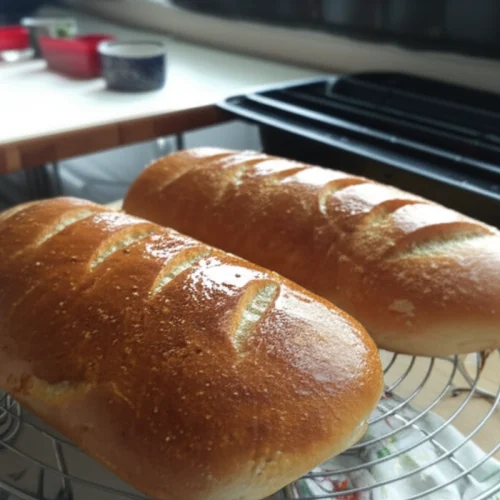
Polish Sauerkraut Bread
Unlock effortless sauerkraut bread with this step-by-step guide to food processor perfection. This recipe streamlines the process, making a traditionally complex bread surprisingly accessible.
Equipment
- food processor
- Large Bowl
- baking sheet
- Parchment paper
- wire rack
Ingredients
Ingredients
- 5 1/2 cups flour you may not use it all
- 1 cup rye flour
- 1 tablespoon salt
- 1 tablespoon sugar
- 1 packet dried yeast
- 3/4 cup sauerkraut drained
- 2 cups warm water (105 -110 F)
- 1 tablespoon cornmeal
- 1 egg egg
- 1 tablespoon milk
- 2 teaspoons caraway seeds optional
Instructions
Instructions
- To a food processor, add 4 1/2 cups flour, rye flour, salt, sugar, yeast, and sauerkraut. Process until everything is well combined. We knead the dough to strengthen the gluten, which creates air pockets, allowing the loaf to rise. Gluten development is essential for the bread's structure and chewiness.
- Through the feed tube, slowly add the water, processing until the mass comes together in a ball.
- The original recipe has you adding additional flour 1 tablespoon at a time until the dough no longer sticks to the side of the food processor bowl. I loved how quickly this came together in my food processor, but I worried about damaging the motor, so I dumped my sticky dough on the counter with 1/4 cup of flour and kneaded it for about 5 minutes. It may be that I used less flour than the full 5 1/2 cups because my kraut was well squeezed.
- Generously grease a large bowl, add the dough to the bowl and turn it upside down, so you have greased the top of the dough. Cover and leave in a warm spot until doubled in size, which should take about an hour.
- This can be baked as one large loaf or two smaller loaves. I cut the dough in half, and using my hands shaped each half into a rectangle, probably 9 x 12 inches, start at the smaller end and tightly roll into a spiral. Tuck the ends underneath and place on a baking sheet which you have greased or lined with parchment paper and sprinkled with cornmeal. Cover and let rise for about an hour, until doubled in size.
- Preheat the oven to 400 F. Whisk together the egg and milk, brush the top and sides of the loaves. Sprinkle with caraway seeds if you’re using them. Make 5 diagonal slashes across the loaves with a sharp knife.
- Bake for 20 minutes. Reduce the heat to 350 and bake for another 10 – 15 minutes. The bread should sound hollow when you tap the bottom, and the internal temperature should be between 195 and 200. Cool before slicing.
Notes
The key is to ensure the sauerkraut is well-drained; some varieties are packed with more liquid than others, which significantly impacts the dough's consistency. A wire rack is essential for cooling the bread. This allows air to circulate, preventing the bottom crust from becoming soggy.
Tried this recipe?Let us know how it was!