The first time I attempted to bake sourdough kolaches, the result was a scientific failure that would have made any engineer cringe. I expected the wild yeast to behave like its commercial counterparts, but the high sugar and fat content in the enriched dough acted like a brake on the system. My first batch didn’t rise for twelve hours, and when it finally did, the acidity was so overwhelming that it clashed violently with the sweet apricot jam.
That disaster forced me to step back and analyze the variables. Traditional sourdough methods, designed for lean crusty loaves, simply do not work for the delicate, pillow-soft structure required for an authentic Texas-style kolache. To solve this, I had to develop a blueprint centered on a stiff sweet levain, a specialized starter build that eliminates the aggressive tang and provides the powerful lift necessary to move heavy, butter-laden dough.
This recipe is the result of months of optimization, designed to yield exactly twenty-four perfect units with a repeatable, reliable process. While the total time of 2455 minutes might look intimidating on a spreadsheet, the vast majority of that is passive fermentation where the biology does the heavy lifting for you. Your active prep time is only about forty minutes.
By treating the dough as a structural system and the temperature as a critical constant, you can achieve a crumb that is light, airy, and buttery without a single grain of commercial yeast. We are going to engineer a pastry that balances the complex depth of sourdough with the tender, melt-in-your-mouth quality of a classic brioche.
Table of Content
The Levain Blueprint: Why We Build a Stiff Starter
In my early testing, I used a standard liquid starter at 100 percent hydration. The results were consistently too slack, and the dough lacked the structural integrity to hold the heavy cream cheese and jam fillings. I realized that by reducing the water content and adding sugar directly to the levain build, I could create a more stable, vigorous yeast colony specifically adapted to an enriched environment.
The stiff levain serves two primary functions in this system. First, the lower hydration slows down the production of acetic acid, ensuring the final sourdough kolaches have a mild, creamy flavor profile rather than a sharp sourness. Second, the added sugar in the levain trains the yeast to thrive in a high-sugar dough, preventing the fermentation stalls that plague many sourdough bakers when they attempt sweet breads.
| Ingredient Component | Stiff Sweet Levain Build | Main Dough Integration |
|---|---|---|
| Sourdough Starter | 20g (Ripe and Active) | 180g (Entire Stiff Levain) |
| Flour Type | All Purpose Flour | Bread Flour (12.5% Protein) |
| Hydration Level | 50% (Lower moisture) | 43% (Milk and Fat based) |
| Sugar Content | 20g (To prime the yeast) | 115g (For flavor and texture) |
| Target Outcome | Doubled volume, rounded top | Smooth, shiny, windowpane-ready |
When you mix this levain, it will feel like a tight, cohesive ball of dough rather than a batter. As it ferments over ten to twelve hours, you will see it transform into a puffy, aerated mass. I prefer using a glass measuring cup for this stage because it allows for precise visual monitoring of the volume increase. When the top becomes rounded and the surface feels like a soft marshmallow, the system is primed for the main dough mix. For another great dessert, try my recipe for Amazing Sourdough Pop Tarts: The Flakiest Crust Ever!.
Pro tip: Use your hands to thoroughly incorporate the starter into the warm milk before adding the flour to ensure the yeast is evenly distributed throughout the entire batch.
System Optimization: Hitting the 78°F Sweet Spot During Bulk Fermentation
One of the most common points of failure in sourdough baking is inconsistent ambient temperature. During my testing phases, I monitored how the dough reacted at 70 degrees versus 80 degrees. At lower temperatures, the fats in the butter and egg yolks remained too firm, which inhibited the yeast’s ability to expand the gluten network.
Maintaining a consistent dough temperature of 78 degrees Fahrenheit is the optimal parameter for this recipe. At this specific point, the yeast activity is maximized while the dough remains stable enough to prevent the butter from leaking out of the structure. I found that even a two-degree drop can extend the bulk fermentation by nearly ninety minutes, which is why a digital probe thermometer is your most valuable tool in this process.
If your kitchen is cool, you cannot simply leave the dough on the counter and expect success. I recommend using a proofing box or the interior of an oven with the light turned on to create a micro-climate. However, you must monitor the temperature closely; if the environment exceeds 85 degrees, you risk over-proofing the dough and losing the structural tension we worked so hard to build.
The goal of the first four to five hours of bulk fermentation is to develop a dough that feels elastic and resilient. When you press the surface, it should feel like it is filled with thousands of tiny, microscopic bubbles. This aeration is what creates the signature lightness of the kolache. If the dough feels heavy or dense after four hours, it simply needs more time in the 78-degree environment.
Pro tip: Always take the internal temperature of the dough itself, not just the air in the room, as the thermal mass of the dough will change more slowly than the surrounding atmosphere.
Ingredients for Your Sourdough Kolache Batch (Makes exactly 24 kolaches)
I meticulously tested the shaping steps by pressing the jar too deep into the dough twice during one of my trial runs. In both instances, the dough resisted tearing, and the subsequent bake resulted in the sides rising beautifully. This proved that the tension created by the cupping and rolling step is reliable enough to handle even aggressive filling methods. This dough is a robust platform designed for the following components.
The Stiff Sweet Levain:
- 20 grams ripe and active sourdough starter (about 4 teaspoons)
- 20 grams granulated sugar (about 1.5 Tablespoons)
- 100 grams all purpose flour (about 3/4 cup)
- 50 grams water (about 3 Tablespoons)
The Main Dough:
- 180 grams stiff sweet levain (the entire amount from above)
- 430 grams whole milk, warmed (can sub 2% milk, about 1 3/4 cup)
- 115 grams granulated sugar (about 1/2 cup plus 1 Tablespoon)
- 6 large egg yolks (about 130 grams)
- 226 grams unsalted butter (melted, 1 cup)
- 16 grams salt (about 2.5 teaspoons)
- 1000 grams bread flour (12.5% protein content, about 7 1/4 cups)
The Cream Cheese Filling:
- 226 grams cream cheese (about 1 cup)
- 60 grams powdered sugar (about 1/2 cup)
- 1 egg yolk (about 20 grams)
- 10 grams all purpose flour (about 1 teaspoon)
- 2 grams vanilla extract (about 1/2 teaspoon)
The Fruit Layer:
- 200 grams favorite jam (about 1/2-3/4 cup)
Final Coating:
- 1 egg (for egg wash)
- 1 teaspoon water
When selecting your jam, I have found that thicker preserves work better than thin jellies. During my tests, thinner jellies tended to boil over the edges, creating a sticky mess on the baking sheet, whereas high-quality fruit preserves stayed perfectly nestled within the cream cheese ring.
Instructions: A Step-by-Step Guide to Building Perfect Sourdough Kolaches
- Mix together ripe sourdough starter, all purpose flour, granulated sugar and water. Knead the levain until it forms a cohesive ball. Set in a liquid measuring cup and cover for 10-12 hours until the levain has doubled in size and the top is rounded.
- Warm the milk in the microwave (about 1 1/2 minutes full power) or on the stove. It should be around 90-100ºF, no warmer. To the bowl of a stand mixer with a dough hook, add the ripe levain, warmed milk, granulated sugar, melted butter, egg yolks, salt and bread flour.
- Turn on the dough hook and knead for 10-15 minutes. The dough will be sticky but smooth and shiny. It should pass the windowpane test.
- Bulk Fermentation: Put the dough in a container and cover. Set the dough in a warm, 76-80 degree F place for 4-5 hours. Take the temperature of the dough as needed to maintain temperature right around 78 degrees F. This temperature is optimal for fermentation because it balances the metabolic rate of the yeast with the softening point of the butter. If the temperature drops, the fermentation will stall; if it rises too high, the dough can become over-acidified and lose its ability to hold its shape during the bake. At the end of about 4 hours, the dough should be puffed up and feel very elastic. If it doesn’t feel this way, let it bulk ferment for another half hour and check again.
- Cold Bulk Fermentation: Place the covered dough in the refrigerator overnight or up to 48 hours. This gives more flavor to the dough and makes the dough easier to handle when shaping.
- Shape and Proof: Dump the dough out onto a clean countertop. Cut the dough into 24 equal pieces, about 85 grams each. Take each piece of dough and pull/pinch up the sides until it forms a ball. Roll the ball on the counter using your hand in a cupping shape to seal the balls and create tension for the roll to rise.
- Line a large baking sheet with parchment paper and place dough balls on the baking sheet, 12 to a pan. Cover the dough and let the buns rise for 3-4 hours. I like to set my covered dough in my oven with the light turned on. This keeps the buns in a warm (78-80 degree F) environment to rise.
- You will know the kolache dough has risen when the dough balls are puffed up and feel light and airy. The dough will not be hard or stiff. When you push in on the dough, it will leave a small indentation while springing back just a little bit. If the dough springs back completely and the dough feels hard or compact, let it rise another half hour and check on it again. You may need to warm up the dough if it doesn’t seem to be rising much.
- Mix Up Cream Cheese Filling: Using a hand mixer, whip together the cream cheese, powdered sugar, egg yolk, flour and vanilla extract. Whip until completely incorporated and thick and creamy, about 3 minutes. Stick a piping bag into a glass and fold the edges over the glass. Transfer the cream cheese mixture to the piping bag.
- Prepare Jam: Prepare your favorite jams for the fillings. Put them in piping bags or spoon them into the center of the dough.
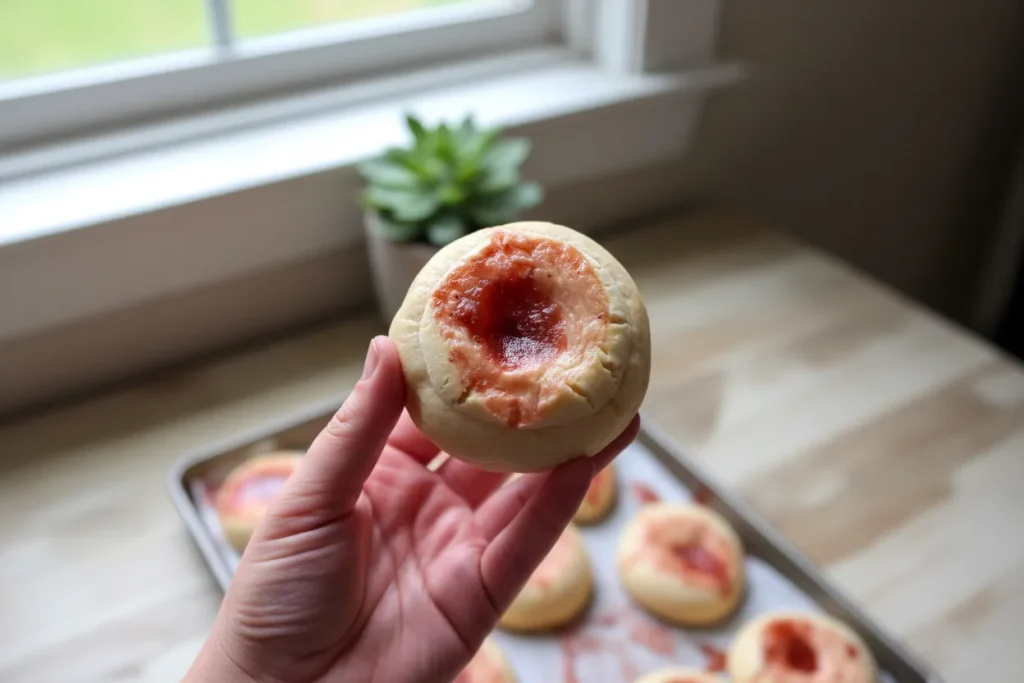
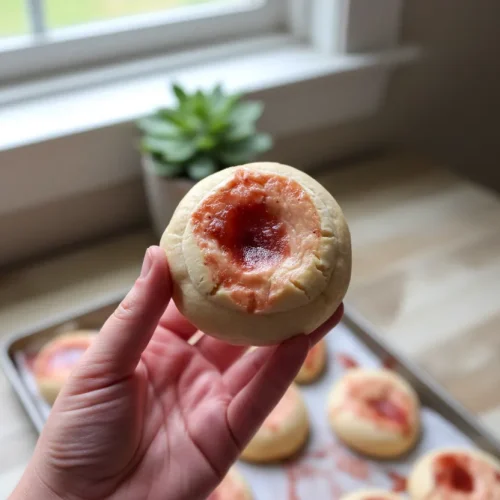
- Shape and Fill: Once the dough is puffy, risen and aerated, use the bottom of a 16 oz canning jar or a 1/4 cup measuring cup and press down firmly on top of each ball of risen dough, forming a large circle indentation with higher sides. Using your piping bag, fill each kolache with a ring of cream cheese around the edges. Place a teaspoon or two of jam in the center of the cream cheese mixture. Repeat with all 24 kolache.
- Bake: Preheat oven to 375 degrees F. Lightly whisk an egg with a teaspoon of water and brush the egg wash on the sides of each kolache. Bake for about 18 minutes until lightly browned and bubbly. Enjoy warm!
Precision Proofing: How to Tell When the Dough is Perfectly Ready to Shape
The transition from a cold refrigerator to a warm proofing environment is where the most critical biological work happens. I have noticed that bakers often rush this stage, leading to dense, chewy rolls. Cold bulk fermentation is the key to simplifying this. By chilling the dough for at least twelve hours, you are essentially hitting a pause button on the yeast, allowing the gluten to relax completely. This makes the shaping process effortless and the final proof much more predictable.
When you shape the balls and set them for their final rise, they should feel cold and firm to the touch. As they warm up and proof, they will expand significantly. The visual cues are important, but the tactile feedback is the gold standard for determining doneness. A perfectly proofed sourdough kolache will feel like a soft balloon filled with air.
| Proofing State | Visual Cues | Touch Response |
|---|---|---|
| Under-Proofed | Small, dense appearance; skin looks tight and shiny. | Firm; springs back instantly when pressed; feels heavy. |
| Perfectly Proofed | Doubled in size; looks puffed and delicate; visible air bubbles. | Leaves a small indentation; springs back slowly; feels light. |
| Over-Proofed | Spreading sideways; surface looks bubbly or fragile. | Indentation stays or dough collapses; feels like it has no structure. |
If you find that your dough is under-proofed after four hours, do not panic. Simply increase the temperature of the proofing area slightly or extend the time. I have had batches take up to five hours in a cold kitchen. The wait is worth the results: a light, honeycomb-like interior that shatters slightly on the outside and remains soft for days.
Pro tip: If the dough balls seem to be drying out during the long final proof, lightly mist the underside of your cover with water to maintain a humid environment.
Kolache Filling Options: Mastering the Sweet Filling Combination
The filling for sourdough kolaches is not just about flavor; it is about moisture management. In my experiments, using plain cream cheese resulted in a filling that cracked and became grainy in the high heat of the oven. By whipping the cream cheese with an egg yolk and a small amount of flour, I created a stabilized emulsion that remains creamy and thick, even after eighteen minutes at 375 degrees.
The addition of the egg yolk provides a rich, custardy texture that complements the slight tang of the sourdough. I recommend whipping the mixture for at least three full minutes. You want to see it transform from a dense block of cheese into a light, airy mousse. This aeration ensures that the filling expands slightly with the dough rather than sitting on top of it like a heavy weight.
While this batch is optimized for the classic cream cheese and jam combination, I have tested this dough with savory fillings like jalapeño and cheddar. The dough is robust enough to support heavier additions, but the sweetness of the sourdough kolaches is truly highlighted when paired with high-quality fruit preserves. The contrast between the savory, buttery dough and the bright, sweet fruit is the hallmark of a successful bake.
When piping your fillings, start with a wide ring of cream cheese around the perimeter of the indentation. This creates a structural wall that holds the jam in place. If you put the jam in first, it can often leak under the cream cheese, causing the entire filling to slide off the top of the roll.
Pro tip: Use a damp finger to smooth down any peaks in the cream cheese after piping to prevent them from scorching in the oven.
Yield, Storage, and System Maintenance
This recipe is engineered to produce exactly 24 kolaches. Through my testing, I found that this quantity perfectly utilizes the 1000 grams of bread flour while fitting efficiently onto two standard large baking sheets. Each dough ball should weigh approximately 85 grams. Consistency in weight is vital; if your units are unevenly sized, they will bake at different rates, leading to some being dry while others are underdone.
Storage is a matter of shelf-life parameter control. Because these rolls contain an enriched dairy filling, they require more care than a standard loaf of bread. On the first day, they are best enjoyed warm, directly from the oven. The texture is at its peak within the first four hours of baking.
- Short-term storage: If you have leftovers, they can stay at room temperature in an airtight container for up to 24 hours.
- Long-term storage: After the first day, they must be moved to the refrigerator to ensure the safety of the cream cheese filling. They will last for up to four days when chilled.
- Reheating: To restore the soft, pillowy texture, I recommend heating them in a 300-degree oven for five to seven minutes. Avoid the microwave if possible, as it can cause the bread to become tough and rubbery once it cools back down.
You can also freeze these sourdough kolaches after they have completely cooled. Wrap each one individually in parchment paper and place them in a freezer bag. They maintain their quality for up to two months. To serve from frozen, let them thaw in the refrigerator overnight and then reheat in the oven as described above.
Frequently Asked Questions
Is it necessary to use a stiff levain instead of sourdough discard?
Yes, for this specific recipe, the stiff levain is non-negotiable. Sourdough discard is typically very acidic and lacks the leavening power needed for a heavy, enriched dough. By building a fresh, stiff levain, we are ensuring the yeast is at its peak activity level and that the acidity is kept low. This results in a better rise and a much more pleasant flavor that doesn’t compete with the sweet fillings.
What is the primary difference between this sweet kolache optimization and savory versions?
The main difference lies in the sugar content and the shaping method. While this dough is versatile enough for savory applications, it is specifically balanced to complement sweet fillings. Savory kolaches often involve wrapping the dough entirely around a filling like a sausage. This dough has the elasticity to handle that, but the hydration and sugar levels were specifically calibrated for the open-faced, jam-filled style.
Does the cold fermentation really make the shaping process easier?
Absolutely. Cold dough is significantly less sticky and much more cooperative when you are trying to create surface tension. When the dough is warm, it can be floppy and difficult to roll into tight, smooth balls. By working with chilled dough, you can achieve a much higher level of precision in your shaping, which directly leads to a more professional-looking final product with better height and structure.
Conclusion: Final Thoughts on Engineering Your Sourdough Success
The success of these sourdough kolaches hinges on two critical variables: controlling the acidity of your levain and maintaining that 78-degree sweet spot during fermentation. When you follow this structured approach, you move away from the guesswork of traditional baking and into a realm of repeatable, high-quality results. The stiff sweet levain is the engine that drives this entire system, providing the lift and mild flavor that makes these rolls so addictive.
I have found that the most rewarding part of this process is the tactile experience of the final proof. Seeing those 24 dough balls transform from firm, cold rounds into light, airy cushions is proof that your system is working. When you finally pull them from the oven, the aroma of browned butter and toasted sugar will fill your kitchen, a sensory reward for your technical precision.
I encourage you to execute this build precisely and pay close attention to the feel of the dough during the cupping and rolling phase. That tension is what allows the kolache to hold its shape under the weight of the filling. If you have any questions about the fermentation timing or the temperature control, please reach out in the comments. I would love to hear how your shaping tension test performed and see the results of your successful 24-count batch. Happy engineering!
Sourdough Kolache
Equipment
- Glass measuring cup
- Digital probe thermometer
- Stand mixer with a dough hook
- Proofing box or oven with light on
- Hand mixer
- Piping bag
- 16 oz canning jar or 1/4 cup measuring cup
- Large baking sheet
Ingredients
The Stiff Sweet Levain
- 20 grams ripe and active sourdough starter about 4 teaspoons
- 20 grams granulated sugar about 1.5 Tablespoons
- 100 grams all purpose flour about 3/4 cup
- 50 grams water about 3 Tablespoons
The Main Dough
- 180 grams stiff sweet levain the entire amount from above
- 430 grams whole milk, warmed can sub 2% milk, about 1 3/4 cup
- 115 grams granulated sugar about 1/2 cup plus 1 Tablespoon
- 6 large egg yolks about 130 grams
- 226 grams unsalted butter melted, 1 cup
- 16 grams salt about 2.5 teaspoons
- 1000 grams bread flour 12.5% protein content, about 7 1/4 cups
The Cream Cheese Filling
- 226 grams cream cheese about 1 cup
- 60 grams powdered sugar about 1/2 cup
- 1 yolk egg about 20 grams
- 10 grams all purpose flour about 1 teaspoon
- 2 grams vanilla extract about 1/2 teaspoon
The Fruit Layer
- 200 grams favorite jam about 1/2-3/4 cup
Final Coating
- 1 egg for egg wash
- 1 teaspoon water
Instructions
Levain Build and Bulk Fermentation
- Mix together ripe sourdough starter, all purpose flour, granulated sugar and water. Knead the levain until it forms a cohesive ball. Set in a liquid measuring cup and cover for 10-12 hours until the levain has doubled in size and the top is rounded.
- Warm the milk in the microwave (about 1 1/2 minutes full power) or on the stove. It should be around 90-100ºF, no warmer. To the bowl of a stand mixer with a dough hook, add the ripe levain, warmed milk, granulated sugar, melted butter, egg yolks, salt and bread flour.
- Turn on the dough hook and knead for 10-15 minutes. The dough will be sticky but smooth and shiny. It should pass the windowpane test.
- Bulk Fermentation: Put the dough in a container and cover. Set the dough in a warm, 76-80 degree F place for 4-5 hours. Take the temperature of the dough as needed to maintain temperature right around 78 degrees F. This temperature is optimal for fermentation because it balances the metabolic rate of the yeast with the softening point of the butter. If the temperature drops, the fermentation will stall; if it rises too high, the dough can become over-acidified and lose its ability to hold its shape during the bake. At the end of about 4 hours, the dough should be puffed up and feel very elastic. If it doesn’t feel this way, let it bulk ferment for another half hour and check again.
- Cold Bulk Fermentation: Place the covered dough in the refrigerator overnight or up to 48 hours. This gives more flavor to the dough and makes the dough easier to handle when shaping.
Shaping and Proofing
- Shape and Proof: Dump the dough out onto a clean countertop. Cut the dough into 24 equal pieces, about 85 grams each. Take each piece of dough and pull/pinch up the sides until it forms a ball. Roll the ball on the counter using your hand in a cupping shape to seal the balls and create tension for the roll to rise.
- Line a large baking sheet with parchment paper and place dough balls on the baking sheet, 12 to a pan. Cover the dough and let the buns rise for 3-4 hours. I like to set my covered dough in my oven with the light turned on. This keeps the buns in a warm (78-80 degree F) environment to rise.
- You will know the kolache dough has risen when the dough balls are puffed up and feel light and airy. The dough will not be hard or stiff. When you push in on the dough, it will leave a small indentation while springing back just a little bit. If the dough springs back completely and the dough feels hard or compact, let it rise another half hour and check on it again. You may need to warm up the dough if it doesn’t seem to be rising much.
Filling and Baking
- Mix Up Cream Cheese Filling: Using a hand mixer, whip together the cream cheese, powdered sugar, egg yolk, flour and vanilla extract. Whip until completely incorporated and thick and creamy, about 3 minutes. Stick a piping bag into a glass and fold the edges over the glass. Transfer the cream cheese mixture to the piping bag.
- Prepare Jam: Prepare your favorite jams for the fillings. Put them in piping bags or spoon them into the center of the dough.
- Shape and Fill: Once the dough is puffy, risen and aerated, use the bottom of a 16 oz canning jar or a 1/4 cup measuring cup and press down firmly on top of each ball of risen dough, forming a large circle indentation with higher sides. Using your piping bag, fill each kolache with a ring of cream cheese around the edges. Place a teaspoon or two of jam in the center of the cream cheese mixture. Repeat with all 24 kolache.
- Bake: Preheat oven to 375 degrees F. Lightly whisk an egg with a teaspoon of water and brush the egg wash on the sides of each kolache. Bake for about 18 minutes until lightly browned and bubbly. Enjoy warm!