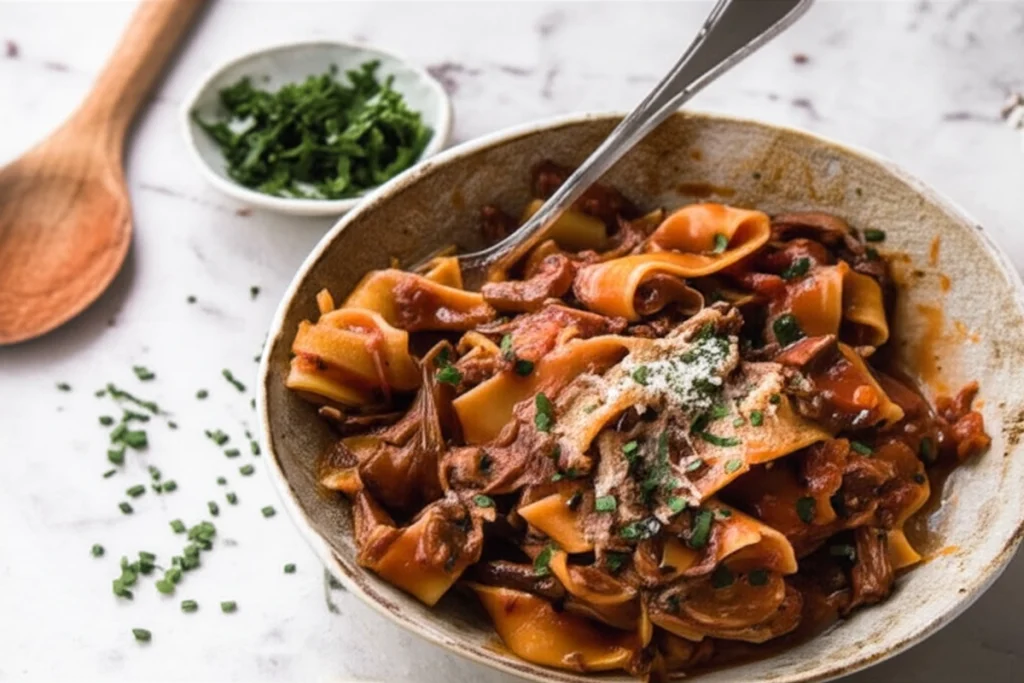
For years, I struggled to make a beef ragu that tasted the same each time. Sometimes it was bland, sometimes too acidic, and sometimes the beef was tough. I was chasing consistency, and it felt impossible.
Then, I realized I could apply my engineering background to the problem. I started deconstructing recipes, testing variables, and meticulously optimizing each step. This beef ragu recipe is the result: a foolproof process designed for repeatable success in your kitchen.
This recipe takes about 20 minutes of prep time, 150 minutes of cook time, for a total time of 170 minutes.
One of the keys is selecting the right cut of beef; I found that chuck beef offers the perfect balance of flavor and texture when slow-cooked. And, of course, there’s the searing technique. I’ll show you how to aggressively sear the beef to unlock a depth of flavor you won’t believe. Get ready to make the best beef ragu you’ve ever tasted.
Table of Content
Beef Cut Optimization for the Best Beef Ragu
As I mentioned, selecting the right beef cut is critical for ragu success. I’ve tested countless variations, and I’ve learned that the cut dramatically impacts the final texture and flavor. Let’s break down the best options.
For this recipe, I call for chuck beef, and there’s a reason. Chuck roast has a rich flavor, and, when slow-cooked, it becomes incredibly tender. However, it’s essential to cook it long enough to break down the tough connective tissues.
But chuck isn’t your only option.
Here’s a breakdown of some other cuts I’ve experimented with:
| Beef Cut | Pros | Cons | Ideal Cooking Time |
|---|---|---|---|
| Chuck Roast | Rich flavor, tender when slow-cooked | Can be tough if not cooked long enough | 2+ hours |
| Short Ribs | Extremely rich and flavorful due to high fat content, naturally tender | Can be quite expensive, may result in a greasier sauce if not trimmed | 2.5+ hours |
| Beef Shin (shank) | Deep, beefy flavor, contains marrow for added richness, becomes very tender when slow-cooked | Requires long cooking time, can be sinewy if not cooked properly, may need trimming | 3+ hours |
| Oxtail | Intensely rich flavor due to high collagen content, creates a silky smooth sauce, naturally very tender when cooked properly | Requires very long cooking time, can be difficult to find, relatively low yield of actual meat | 3.5+ hours |
I’ve found that short ribs are great if you want an extremely rich flavor. The higher fat content creates a luxurious mouthfeel. However, I always make sure to trim them to avoid an overly greasy sauce.
Beef shin, also known as shank, offers a deep, beefy flavor. The marrow adds an extra layer of richness to the ragu. I would advise that you plan for a longer cooking time with this cut, and be prepared to trim away any sinew.
If you’re feeling adventurous, oxtail will give you an intensely rich flavor and a silky-smooth sauce. Its high collagen content is the key. The downside? It needs a very long cooking time, and it can be hard to find at your local store.
Achieving Rich Flavor: The Science Behind the Perfect Beef Ragu Sear
Now that we’ve selected the right beef cut, the next crucial step in building flavor is searing. I can’t stress enough how important this is. Don’t skip it.
The purpose of searing isn’t just to brown the outside of the meat, it’s to kickstart a chemical reaction called the Maillard reaction. This is where the magic happens.
The Maillard reaction, as Harold McGee explains in “On Food and Cooking,” is a complex browning reaction between amino acids and reducing sugars that occurs at high temperatures. This reaction is responsible for creating hundreds of different flavor compounds that contribute to the rich, savory depth of the ragu.
I’ve found that aggressively searing the beef on all sides until deeply browned, before adding it to the sauce, creates the “fond” in the pot. This fond is the foundation upon which the entire flavor profile of the ragu is built, lending layers of complexity that you just can’t achieve otherwise. It’s the secret weapon for a truly unforgettable beef ragu.
Regional Ragu Variations: Exploring Italy’s Beef Ragu Heritage
We’ve built a solid foundation for our beef ragu with optimized beef cuts and the Maillard reaction from searing, but it’s important to remember that this dish has deep roots and many variations across Italy. I think it’s fascinating to explore how regional preferences shape the final flavor profile.
One of the most significant differences I’ve observed is the use of wine. In some regions, it’s common to deglaze the pot with a generous splash, adding acidity and complexity. Other areas might skip the wine altogether, focusing on the pure, concentrated flavors of beef and tomatoes.
Herbs also play a starring role, but their selection varies widely. While I use thyme and bay leaves in my recipe, I’ve seen versions that incorporate rosemary, oregano, or even a pinch of mint. Each herb lends a unique aroma and flavor that reflects the local landscape.
The vegetables used in the soffritto, the aromatic base of the ragu, also contribute to regional differences. While carrots, celery, and onion are standard, I’ve seen recipes that include bell peppers or even fennel, adding sweetness and depth. You can find a multitude of delicious sauce-based dishes on our recipe page.
These variations aren’t arbitrary. They cater to local tastes and utilize ingredients that are readily available in each region. For example, in areas where tomatoes are particularly sweet, less sugar might be added to balance the acidity. Along the coast, you may find seafood added to the ragu to enhance the depth of flavor. I’ve learned that understanding these nuances can help you appreciate the versatility and history of this iconic dish.
Ingredients
Now, let’s get into the specifics. Here’s exactly what I use to make my optimized beef ragu:
- 1.2kg / 2.5 lb chuck beef (or other slow cooking beef cut, cut into equal 4 pieces (Note 1))
- 1 tbsp salt
- Black pepper
- 3 tbsp olive oil (, separated)
- 3 cloves garlic (, minced)
- 1 onion (, diced)
- 1 cup carrots (, diced (Note 2))
- 1 cup celery (, diced (Note 2))
- 800g / 28oz crushed canned tomatoes
- 3 tbsp tomato paste
- 2 beef bouillon cubes (, crumbled (Note 3))
- 1 cup / 250ml beef broth (, full bodied, or sub with beef broth/stock)
- 1 tbsp apple cider vinegar
- 1 1/2 cups / 375 ml water ((Note 3))
- 3/4 tsp dried thyme ( or 3 sprigs fresh thyme)
- 3 dried bay leaves
- 1 lb /500g dried pappardelle (, or other pasta of choice (Note 4))
- Freshly grated parmesan cheese or parmigiano reggiano
- Fresh parsley (, finely chopped (optional))
You might notice the bouillon cubes and think they aren’t “traditional.” And you’d be right. I include them as an optimization for consistent results. I’ve found that bouillon cubes provide a reliable umami boost, especially since not every home cook has access to high-quality, deeply flavored beef broth. They ensure a rich, savory base every single time.
It’s worth noting that when consumed in moderation, beef can be a part of a balanced diet.
Instructions
Now that we’ve gathered our ingredients, it’s time to get cooking. I’ve refined these steps through countless iterations to ensure the most flavorful and consistent results. Follow them closely, and you’ll be rewarded with a truly exceptional beef ragu.
- Pat beef dry and sprinkle with salt and pepper.
- Sear Beef: Heat 1 tbsp olive oil over high heat in a heavy based pot. Add beef and sear each piece aggressively on all sides until very browned (3 – 5 minutes in total), then remove onto a plate. The aggressively brown part of the searing creates the fond in the pan, a crucial component to building up the overall depth of flavor.
- Turn stove down to medium low and add remaining 2 tbsp of olive oil.
- Soffritto: Add garlic and onion and sauté for 2 minutes. Then add the carrots and celery and sauté slowly for 5 minutes.
- Add remaining Ragu ingredients and return the beef to the pot (including pooled juices). Turn the stove up and bring it to a simmer, then turn it down to low so it’s bubbling very very gently. (Note 7)
- Slow cook: Cover the pot and let it cook for 2 hours or until beef is tender enough to shred. (Note 5 for slow cooker and pressure cooker). This long cooking time is necessary to break down the tough connective tissues in the chuck roast, resulting in a tender, melt-in-your-mouth texture.
- Shred: Remove beef then coarsely shred with 2 forks. Return beef to the pot. Simmer for 30 minutes until sauce is reduced and thickened – beef will soften slightly more during this step.
- Final season: Do a taste test and adjust the seasoning to your taste with salt and pepper. ALSO, add 1/2 tsp sugar if sauce is a bit sour for your taste (Note 6). Place the lid on and set aside until ready to serve (it’s even better the next day and freezes well for months!).
- To Serve (Note 4): Bring a very large pot of water with 1 tbsp of salt to the boil.
- Add pasta and cook for 1 minute less than the recommended cooking time as per the packet instructions.
- Meanwhile, place 5 cups of the Ragu in a very large fry pan, dutch oven or use 2 normal size fry pans. Heat over high heat while the pasta is cooking.
- When the pasta is ready, transfer it directly from the pot into the fry pan using tongs.
- Add 3/4 cup of pasta water into the fry pan.
- Gently toss the pasta (I use 2 wooden spoons) for 1 to 2 minutes, until the sauce water evaporates and leaves you with a thick Ragu sauce that coats the pasta.
- Yell for your family to sit down at the dinner table because you need to serve it immediately!
- Serve with plenty of freshly grated parmesan, or even better, with parmigiano reggiano.
Mastering Beef Ragu: Your Questions Answered
Now that you have the recipe, let’s dive into some common questions I get about making the perfect beef ragu. I’ve learned a lot through trial and error, so I’m happy to share my insights.
What are the Key Ingredients That Define a Beef Ragu?
In my experience, four elements are non-negotiable. First, you need a good cut of slow-cooking beef like chuck. Second, crushed canned tomatoes form the base of the sauce. Third, a soffritto of garlic, onion, carrots, and celery adds depth and sweetness. Finally, herbs like thyme and bay leaves infuse the ragu with aromatic complexity.
Beef Ragu vs. Bolognese: What’s the Difference?
I often hear people use these terms interchangeably, but there are key differences. Beef ragu generally features larger chunks of slow-cooked beef, while Bolognese uses ground beef. I’ve also found that Bolognese often incorporates milk or cream for a richer sauce, which I don’t use in my ragu. My ragu focuses on a heartier, more rustic flavor profile compared to the smoother, more delicate Bolognese.
Serving Suggestions: What to Pair with Beef Ragu?
I prefer serving my beef ragu with pappardelle. The wide, flat noodles are perfect for capturing the rich sauce and tender beef. A generous grating of freshly grated parmesan cheese or parmigiano reggiano is essential, in my opinion. And if you want to add a touch of freshness, a sprinkle of finely chopped fresh parsley works wonders. If you’re looking for other pasta dishes, check out our pasta section!
Quick Beef Ragu or Slow Cooker Beef Ragu: What’s Best?
I’ve tried both methods extensively. A quick ragu can be convenient, but I find that the slow cooker delivers superior flavor and tenderness. The long cooking time allows the beef to break down completely and the flavors to meld together beautifully. While my recipe is designed for the stovetop, you can easily adapt it for a slow cooker as mentioned in the recipe notes. I would say the slow cooker provides a more hands-off approach, but both produce excellent results.
Conclusion
After countless iterations, I’m confident that this beef ragu recipe delivers repeatable results, a foolproof process, and, most importantly, a truly delicious flavor. I’ve poured my engineering mindset into optimizing every step, so you can enjoy a restaurant-quality dish in your own home, every single time.
I would love to hear about your experience making this ragu. Did you try a different cut of beef? Did you discover any tips or tricks along the way? Share your thoughts and experiences in the comments below. Let’s build a community of ragu enthusiasts.
And if you know someone who’s been searching for that perfect beef ragu recipe, share this one with them. I guarantee it’ll be a crowd-pleaser.
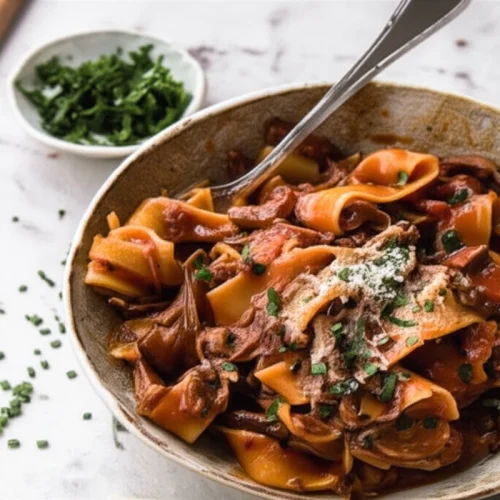
Slow Cooked Shredded Beef Ragu Pasta
Ingredients
Ragu
- 1.2 kg chuck beef or other slow cooking beef cut, cut into equal 4 pieces (Note 1)
- 2.5 lb chuck beef or other slow cooking beef cut, cut into equal 4 pieces (Note 1)
- 1 tbsp salt
- Black pepper
- 3 tbsp olive oil separated
- 3 cloves garlic minced
- 1 onion diced
- 1 cup carrots diced (Note 2)
- 1 cup celery diced (Note 2)
- 800 g crushed canned tomatoes
- 28 oz crushed canned tomatoes
- 3 tbsp tomato paste
- 2 beef bouillon cubes crumbled (Note 3)
- 1 cup beef broth full bodied, or sub with beef broth/stock
- 250 ml beef broth full bodied, or sub with beef broth/stock
- 1 tbsp apple cider vinegar
- 1 1/2 cups water (Note 3)
- 375 ml water (Note 3)
- 3/4 tsp dried thyme or 3 sprigs fresh thyme
- 3 dried bay leaves
To Serve
- 1 lb dried pappardelle or other pasta of choice (Note 4)
- 500 g dried pappardelle or other pasta of choice (Note 4)
- Freshly grated parmesan cheese or parmigiano reggiano
- Fresh parsley finely chopped (optional)
Instructions
Instructions
- Pat beef dry and sprinkle with salt and pepper.
- Sear Beef: Heat 1 tbsp olive oil over high heat in a heavy based pot. Add beef and sear each piece aggressively on all sides until very browned (3 – 5 minutes in total), then remove onto a plate. The aggressively brown part of the searing creates the fond in the pan, a crucial component to building up the overall depth of flavor.
- Turn stove down to medium low and add remaining 2 tbsp of olive oil.
- Soffrito: Add garlic and onion and sauté for 2 minutes. Then add the carrots and celery and sauté slowly for 5 minutes.
- Add remaining Ragu ingredients and return the beef to the pot (including pooled juices). Turn the stove up and bring it to a simmer, then turn it down to low so it’s bubbling very very gently. (Note 7)
- Slow cook: Cover the pot and let it cook for 2 hours or until beef is tender enough to shred. (Note 5 for slow cooker and pressure cooker). This long cooking time is necessary to break down the tough connective tissues in the chuck roast, resulting in a tender, melt-in-your-mouth texture.
- Shred: Remove beef then coarsely shred with 2 forks. Return beef to the pot. Simmer for 30 minutes until sauce is reduced and thickened – beef will soften slightly more during this step.
- Final season: Do a taste test and adjust the seasoning to your taste with salt and pepper. ALSO, add 1/2 tsp sugar if sauce is a bit sour for your taste (Note 6). Place the lid on and set aside until ready to serve (it’s even better the next day and freezes well for months!).
To Serve (Note 4):
- Bring a very large pot of water with 1 tbsp of salt to the boil.
- Add pasta and cook for 1 minute less than the recommended cooking time as per the packet instructions.
- Meanwhile, place 5 cups of the Ragu in a very large fry pan, dutch oven or use 2 normal size fry pans. Heat over high heat while the pasta is cooking.
- When the pasta is ready, transfer it directly from the pot into the fry pan using tongs.
- Add 3/4 cup of pasta water into the fry pan.
- Gently toss the pasta (I use 2 wooden spoons) for 1 to 2 minutes, until the sauce water evaporates and leaves you with a thick Ragu sauce that coats the pasta.
- Yell for your family to sit down at the dinner table because you need to serve it immediately!
- Serve with plenty of freshly grated parmesan, or even better, with parmigiano reggiano.