My early attempts at homemade pizza often ended in disappointment: a soggy, pale crust that resembled cardboard more than the crispy, golden base I craved. I tried every trick I could find, but nothing seemed to work consistently. The turning point came when I started thinking like an engineer, focusing on the variables that truly mattered. I realized the magic wasn’t just in the dough or the toppings; it was about optimizing the heat. That’s when I discovered the key to a perfect sheet pan pizza lies in oven rack placement and generous application of olive oil.
This recipe details my meticulously engineered approach to achieving a crispy, restaurant-quality crust every time. By positioning the rack in the upper third of the oven and understanding how fat conducts heat, even a novice home cook can create a sheet pan pizza that rivals the best pizzerias. Get ready to experience pizza perfection. The prep time for this recipe is approximately 10 minutes, with a cook time of 15 minutes, making for a total time of just 25 minutes.
Table of Content
The Engineering Behind the Crispy Crust: Upper Rack Placement Explained
Positioning the oven rack correctly is paramount when baking sheet pan pizza, and it’s a step I never skip. I place the rack in the upper third of the oven to ensure the crust is close enough to the direct heat source. This proximity unleashes a cascade of culinary physics, transforming the dough into a golden, crispy base.
The key is the Maillard reaction, a chemical process between amino acids and reducing sugars that occurs at high temperatures. By placing the pizza closer to the heating element, I encourage this reaction, which is responsible for the desirable browning and complex flavor development in the crust and toppings. Without this intense heat, the crust steams instead of crisps, and the toppings can become soggy.
Pro tip: To compensate for ovens that may not distribute heat evenly, I rotate the sheet pan halfway through baking. This simple adjustment guarantees consistent browning and crispiness across the entire pizza.
Olive Oil’s Secret Weapon: How Fat Creates Flavor and Crispiness
Building on the importance of heat, olive oil is the next crucial element in achieving a crispy and flavorful sheet pan pizza crust. Beyond preventing the dough from sticking, olive oil acts as a heat conductor, facilitating the Maillard reaction across the entire surface of the crust.
The fat molecules in olive oil transfer heat more efficiently than the air in the oven, promoting even browning and crisping. As the oil heats, it undergoes a series of complex chemical reactions, including oxidation and polymerization, which contribute to the development of nutty, savory flavors that complement the other toppings. Through testing, I also discovered the olive oil prevents the dough from drying out too quickly, creating a more tender interior crumb structure.
It’s not just about flavor, though; the oil creates a physical barrier. This barrier prevents moisture from the sauce and toppings from seeping into the dough, which is essential to achieving that coveted crispy texture underneath. The proper application of olive oil is critical to achieving the perfect sheet pan pizza.
Ingredients
Here’s what you’ll need to make the perfect sheet pan pizza:
- ½ pound pizza dough
- 3 tablespoon olive oil (divided)
- ½ cup pizza sauce
- 1 cup mozzarella cheese
- 4-5 cherry tomatoes (sliced)
- ½ cup fresh basil (chopped, plus more for serving)
I tested this recipe with various brands of store-bought pizza dough, ranging from thin and crispy to thicker, more doughy varieties. The cooking time remains consistent, but adjust to your preference. I found that doughs with added sugar tend to brown faster, so keep a close eye on them to prevent burning.
Instructions
Now it’s time to assemble and bake your sheet pan pizza. These steps are designed to deliver that crispy crust you’ve been dreaming of, all thanks to precise execution.
- Allow the dough to sit for 20 minutes covered at room temperature. Then roll out the dough to approximately 9 x 13 inches, the size of a quarter sheet pan.
- Preheat the oven to 500°F and position the oven rack in the upper 1/3 position. Positioning the rack in the upper third ensures the crust is close enough to the heating element to achieve optimal browning and crispiness. The high heat also ensures the toppings cook quickly without making the crust soggy.
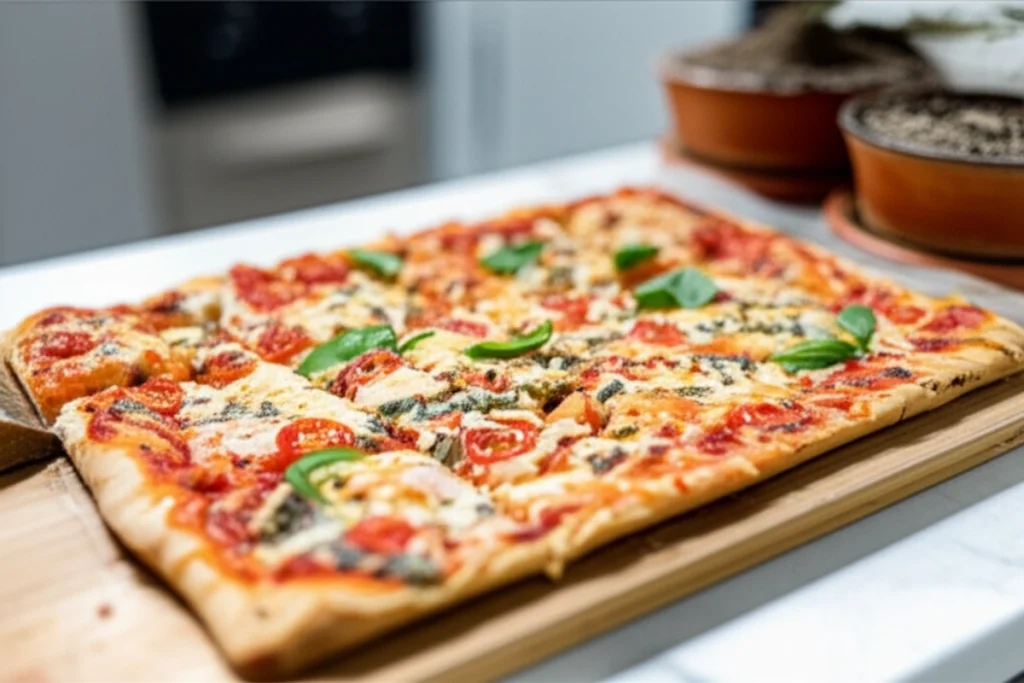
- Add 2 tablespoons olive oil to the sheet plan, and gently press the dough into the oiled pan. Drizzle the remaining olive oil over the dough. Spread the sauce on top, then add the mozzarella cheese, cherry tomatoes and basil.
- Bake the pizza into the preheated oven for 10-12 minutes, until the crust is golden and the cheese has melted. Top the pizza with fresh basil and crushed red pepper flakes, if desired.
Troubleshooting Your Crispy Crust: Common Mistakes and How to Fix Them
Even with careful execution, achieving the perfect crispy crust on sheet pan pizza can sometimes be tricky. Here’s a quick guide to troubleshooting common issues, based on problems I’ve encountered in my own kitchen. Addressing these potential pitfalls will have you baking perfect pizzas in no time.
| Problem | Solution |
|---|---|
| Soggy Crust | Ensure the oven is preheated to the correct temperature (500°F). Use a pizza stone or baking steel for added heat retention. Avoid overloading the pizza with too many toppings. |
| Burnt Edges | Reduce the oven temperature slightly (e.g., 475°F). Trim any excess dough hanging over the edge of the sheet pan. Monitor the pizza closely during the last few minutes of baking. |
| Uneven Cooking | Rotate the sheet pan halfway through baking to ensure even heat distribution. Ensure the oven rack is level. |
| Dough Sticks to Pan | Use enough olive oil (2 tablespoons) to coat the sheet pan thoroughly. Consider using parchment paper or a silicone baking mat for easy release. |
Pro tip: If you consistently struggle with a soggy crust, even with a hot oven, consider partially baking the crust before adding toppings. I’ve found that a 5-minute pre-bake can make a significant difference. This allows the dough to set slightly before the moisture from the toppings can penetrate it.
Frequently Asked Questions
What is the optimal cooking time and temperature for sheet pan pizza?
Through numerous tests, I’ve found the sweet spot for baking sheet pan pizza is between 10-12 minutes at 500°F. This high temperature ensures the crust crisps up beautifully while the toppings cook evenly. It’s important to keep a close watch during the last few minutes, as oven variations can impact the final result.
How can I achieve a crispy bottom crust on my sheet pan pizza?
Achieving a crispy bottom crust is all about heat distribution and moisture control. Beyond preheating the oven thoroughly, I always ensure the sheet pan is well-oiled, as this creates a conducive environment for crisping. I also position the oven rack in the upper third of the oven, which directs more heat to the bottom of the pizza.
What are the advantages of making pizza on a sheet pan versus traditional methods?
I’ve discovered that making pizza on a sheet pan offers several advantages over traditional methods, especially for home cooks. First, it’s incredibly convenient, as it requires no special equipment like a pizza stone or peel. A sheet pan provides even heat distribution, resulting in a consistent bake, edge-to-edge. Plus, it is an easy way to deliver the perfect sheet pan pizza.
Conclusion
The science of sheet pan pizza: engineering the perfect crispy crust isn’t just about following a recipe; it’s about understanding the “why” behind each step. From the strategic placement of the oven rack to the crucial role of olive oil, every detail contributes to achieving that coveted golden, crispy crust. I encourage you to try this recipe and experience the satisfaction of creating pizzeria-quality pizza in your own kitchen.
Customize with your favorite toppings! Don’t hesitate to experiment with different cheeses, vegetables, and herbs to create your signature sheet pan pizza. After you’ve made this recipe, please share your results and leave a comment below, letting me know what variations you tried and how they turned out. This recipe serves 2-3 people and leftovers can be stored in the fridge for up to 3 days.
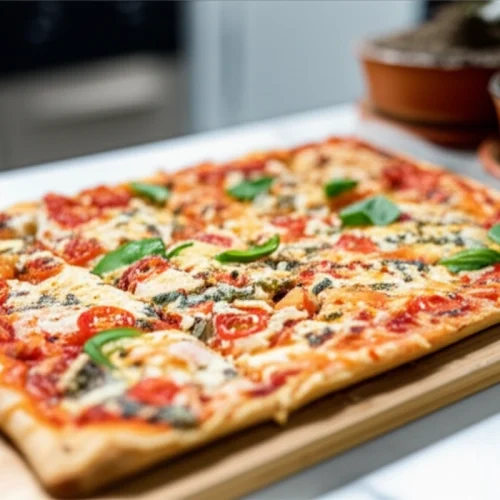
Sheet Pan Pizza
Equipment
- Sheet pan
Ingredients
Ingredients
- ½ pound pizza dough
- 3 tablespoon olive oil divided
- ½ cup pizza sauce
- 1 cup mozzarella cheese
- 4-5 cherry tomatoes sliced
- ½ cup fresh basil chopped, plus more for serving
Instructions
Instructions
- Allow the dough to sit for 20 minutes covered at room temperature. Then roll out the dough to approximately 9 x 13 inches, the size of a quarter sheet pan.
- Preheat the oven to 500°F and position the oven rack in the upper 1/3 position. Positioning the rack in the upper third ensures the crust is close enough to the heating element to achieve optimal browning and crispiness. The high heat also ensures the toppings cook quickly without making the crust soggy.
- Add 2 tablespoons olive oil to the sheet plan, and gently press the dough into the oiled pan. Drizzle the remaining olive oil over the dough. Spread the sauce on top, then add the mozzarella cheese, cherry tomatoes and basil.
- Bake the pizza into the preheated oven for 10-12 minutes, until the crust is golden and the cheese has melted. Top the pizza with fresh basil and crushed red pepper flakes, if desired.