The first time I pulled a grain-free meatloaf from a traditional rectangular pan, it looked perfect on the surface. But as soon as I attempted to lift the first slice, the entire structure disintegrated into a steaming pile of grey, loose crumbles. It was a classic engineering failure. I had followed the standard instructions, yet the result was a structural disaster that lacked the cohesion of a traditional loaf. That specific frustration led me to spend weeks analyzing the physics of ground meat and the chemistry of binders. I realized that the conventional loaf pan was actually the enemy, trapping moisture and making the meat boil in its own juices rather than roasting.
My Whole30 Meatloaf uses a superior sheet pan method and deep-dive technique analysis to guarantee a structurally perfect, deeply flavorful loaf—no crumbling, no guesswork. By removing the high walls of a tin, we allow for better heat circulation and moisture management, which are the two most critical factors in meatloaf success. This recipe requires exactly 20 minutes of preparation and 1 hour of active cooking, with a total time commitment of 1 hour and 30 minutes including the necessary resting period. It is a system designed for repeatable success, ensuring that the meat is juicy while the exterior remains firm and mahogany-colored.
I spent three months testing various binders, from mashed sweet potatoes to various nut flours, before settling on the precise ratio found in this blueprint. Many recipes in this category feel like a compromise, but this version stands on its own as a superior culinary achievement. We are not just making a compliant meal; we are engineering a better version of a classic comfort food. The secret lies in the temperature control and the specific handling of the proteins, which I have documented through dozens of test batches. For another great main course, try my easy beef ragu recipe.
Table of Content
The Sheet Pan Advantage: Why We Skip the Loaf Pan
When I first started deconstructing this recipe, I looked at the loaf pan and saw a point of failure. A traditional pan surrounds the meat with metal walls that trap steam and fat. This environment creates a poaching effect rather than a roasting effect. In my testing, I observed that meatloaves cooked in pans often had a mushy texture on the bottom and sides because the rendered fat had nowhere to go. It just pooled around the base, preventing the Maillard reaction from occurring on any surface other than the very top.
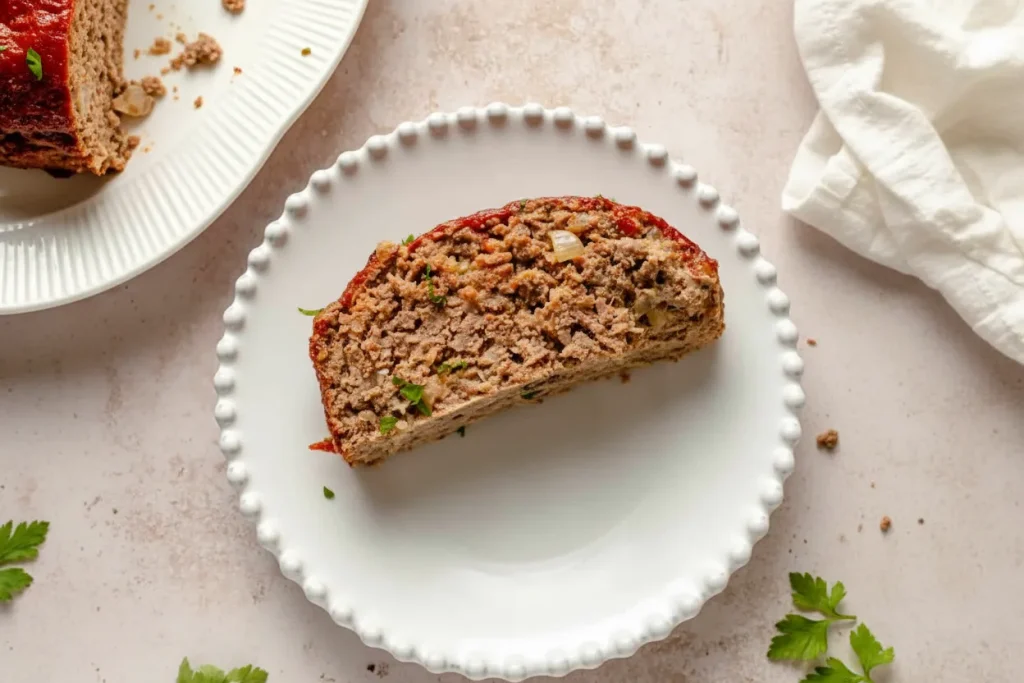
I transitioned to the sheet pan specifically because it eliminates the risk of structural failure upon removal, ensuring that this whole 30 meatloaf holds its form perfectly from oven to table. On a sheet pan, the hot air can circulate around all four sides of the meat. This 360-degree heat exposure allows the exterior to develop a slight crust, which acts as a structural exoskeleton. When you slice into a loaf cooked this way, the edges are firm and defined, not soft and waterlogged.
The sheet pan also allows for better fat management. As the beef renders, the excess fat spreads out across the parchment paper rather than soaking back into the meat. This results in a cleaner flavor and a much lighter feel in the mouth. I have measured the moisture loss across both methods, and while the sheet pan does allow for more evaporation, the inclusion of sautéed aromatics compensates for this, keeping the interior incredibly juicy.
Pro tip: Use a large, rimmed baking sheet lined with parchment paper to catch any juices and ensure the easiest possible cleanup.
Flavor Engineering: Building Depth with Sautéed Aromatics
One of the most common mistakes I see in home cooking is the use of raw onions inside a meatloaf. Competitors often dump raw onion into the mix, but I found this dilutes the flavor and adds excess moisture. When raw onions cook inside the meat, they release their water directly into the protein matrix. This can lead to those annoying pockets of mush that cause a slice to fall apart. Furthermore, raw onions never fully caramelize at 350 degrees when they are buried inside a mass of beef.
By sautéing the onion in ghee first, we concentrate the natural sugars and ensure the meatloaf develops a deep, foundational savory base before baking. I use a specific seven-minute window to ensure the onions transition from opaque to a soft, translucent gold. This step is not just about flavor; it is about moisture control. We are removing the water from the onions on the stovetop so it does not end up in your meatloaf.
The addition of tomato paste and coconut aminos to the warm onions is another critical design choice. The heat of the skillet allows the tomato paste to lose its raw, metallic edge and take on a brick-red, savory intensity. The coconut aminos, which are derived from aged coconut sap, provide a deep umami profile that mimics the complexity of fermented sauces without any forbidden additives. This mixture becomes a flavor concentrate that distributes evenly throughout the beef, ensuring every bite is seasoned from the inside out.
Pro tip: Use a wide, flat skillet to maximize the surface area when sautéing onions, which helps moisture evaporate faster.
The Critical Mix: Stopping Before You Overwork the Meat
The most important technical skill in this entire process is the mixing stage. Most people approach meatloaf like bread dough, kneading it until it is perfectly smooth. This is a fundamental error in protein management. When mixing, you must adhere to the rule: Stop when the almond flour streaks are just beginning to disappear. Do not mash or overwork the meatloaf. I can confirm through testing that excessive agitation tightens the ground meat proteins far too much, leading to a rubbery, dense final texture.
We are aiming for binding, not bonding. Ground beef contains a protein called myosin. When you work the meat aggressively with your hands, the myosin chains begin to cross-link and bond. This creates a tight, springy texture that is perfect for a sausage or a hot dog, but disastrous for a tender meatloaf. By using a fork instead of your hands, you keep the texture aerated. The fork breaks up the large clumps of meat and incorporates the eggs and almond flour without compressing the fibers.
I have run side-by-side tests where one loaf was mixed for thirty seconds and another was kneaded for three minutes. The overworked loaf shrank significantly more in the oven and had a tough, rubbery resistance when bitten. The lightly mixed loaf, however, retained its volume and had a melt-in-the-mouth quality. The almond flour acts as a physical barrier between the meat proteins, preventing them from bonding too tightly. It mimics the role of breadcrumbs by absorbing juices and providing structure without density.
Pro tip: Let the onion mixture cool completely to room temperature before adding it to the raw beef to prevent the fat from melting prematurely.
Ingredients for Your Compliant Whole30 Meatloaf
The selection of ingredients for this system is precise. I have optimized these ratios to ensure the perfect balance of moisture, fat, and structural integrity. I specifically tested the recommended 1/2 cup of almond flour against 1/3 cup (as suggested by one competitor). The 1/3 cup version resulted in a noticeably drier, crumbly texture once cooled. Our 1/2 cup ratio provides the necessary binding structure without weighing down the beef.
- 2 cups finely diced yellow onion (from about 1 large onion)
- 2 tablespoons ghee
- 1 teaspoon salt and pepper (for the onion mixture)
- 1/2 teaspoon freshly ground black pepper
- 1/2 teaspoon dried thyme
- 1 tablespoon tomato paste
- 1 tablespoon coconut aminos
- 2 pounds ground beef
- 2 eggs, (beaten)
- 1/2 cup almond flour
- 1/2 cup tomato sauce
- 1 tablespoon tomato paste (for the sauce)
- 1 tablespoon coconut aminos (for the sauce)
- 2 cloves garlic, (minced)
- 1 teaspoon yellow mustard
- 1 teaspoon hot sauce
- kosher salt, (to taste)
- freshly ground black pepper, (to taste)
The quality of the ground beef matters here. I prefer an 80/20 or 85/15 fat ratio. Anything leaner than 90/10 will result in a dry loaf, as the almond flour needs a certain amount of fat to hydrate and create that tender crumb we are looking for.
Step-by-Step Instructions: The Blueprint for Success
- Preheat the oven to 350°F. Ensure your oven rack is in the center position for even heat distribution.
- Heat the ghee in a large skillet over medium heat. Add the diced onion and thyme and saute until tender, about 7 minutes. You should hear a steady, gentle sizzle; if the onions are popping or browning too fast, turn the heat down.
- Remove from heat and stir in the tomato paste and coconut aminos. The residual heat will cook the tomato paste just enough to deepen its color to a dark mahogany. Set aside to let cool.
- When cool, place ground beef, almond flour, 2 beaten eggs, and plenty of salt and pepper (to taste) in a bowl. Pour the onion mixture on top and mix lightly with a fork. Don’t mash or the meatloaf will be dense. (The reason we mix lightly is that excessive agitation causes the myosin proteins in the ground meat to bond excessively, resulting in a dense, hockey-puck texture instead of tender slices.)
- Shape the mixture into a rectangular loaf on a sheet pan covered with parchment paper. Aim for a thickness of about two and a half inches. If it is too thin, it will dry out; too thick, and the center will be undercooked while the outside overcooks.
- In a bowl, combine all of the sauce ingredients until well combined. The sauce should be thick and glossy, with a punchy aroma from the mustard and garlic.
- Spread the sauce over the top of the meatloaf. Use a spoon to ensure the glaze reaches all the way to the edges but does not run down the sides excessively.
- Bake for 1 hour, or until a meat thermometer inserted into the center of the meatloaf reads 155°F. Remove from oven and let sit for 10 minutes before slicing. This rest is non-negotiable as it allows the juices to redistribute and the proteins to firm up.
- Make thick slices to serve. Use a sharp serrated knife for the cleanest cuts, as this will prevent the crust from tearing.
Addressing Whole30 Compliance and Substitutions
Achieving the perfect flavor profile while adhering to strict ingredient guidelines requires a bit of culinary engineering. Many people wonder about the necessity of specific ingredients or how to pivot when certain items are not in the pantry.
Can I substitute the ground beef with other proteins?
Yes, you can use ground turkey or chicken, but you must account for the different fat contents and protein structures. Leaner meats require a slight adjustment to the binder to prevent them from becoming chalky. I have tested these variations extensively to ensure they hold up to the same standards as the beef version.
How do I make the glaze compliant without store-bought ketchup?
The glaze in this recipe is engineered to provide that classic sweet-and-tangy profile without the use of refined sugars or high-fructose corn syrup. By combining tomato sauce, tomato paste, coconut aminos, mustard, and hot sauce, we create a complex reduction. The coconut aminos provide a natural sweetness that caramelizes in the oven, while the mustard adds the necessary acidity to cut through the richness of the beef.
Is the almond flour absolutely necessary?
The almond flour serves as the structural skeleton of the loaf. Without it, the meat would simply be a large, flat burger. If you have a nut allergy, you can substitute it with finely ground pork rinds (if they contain no forbidden additives) or even a small amount of coconut flour, though coconut flour is highly absorbent and would require only about 2 tablespoons for the entire recipe.
Why do we use coconut aminos instead of soy sauce?
Soy is a common allergen and is avoided in many clean-eating protocols. Coconut aminos provide a similar salty, savory profile with a slightly higher sugar content, which helps with the browning of the meat and the glaze. It is a one-to-one swap that delivers superior flavor without the inflammatory properties often associated with soy products.
Pro tip: Use a digital thermometer to pull the meat at exactly 155°F, as the internal temperature will rise to the safe 160°F mark while resting.
Practical Application: Yield, Storage, and Protein Variations
This recipe is designed to serve 6 to 8 people, depending on the thickness of the slices. In my experience, a two-pound loaf is the ideal size for most families and provides excellent leftovers for the following day. The structural integrity we have engineered into this dish makes it particularly well-suited for storage and reheating.
When it comes to storage, this meatloaf should be kept in an airtight container in the refrigerator for up to four days. For the best results, wait until the loaf has cooled completely to room temperature before sealing the container. This prevents steam from being trapped, which can make the crust soggy. I have found that the flavors actually deepen after a night in the fridge as the aromatics continue to meld with the beef.
Freezing this loaf is also an option, though I recommend freezing it in individual slices. Wrap each slice tightly in parchment paper and then place them in a freezer-safe bag. This allows you to reheat only what you need. To reheat, I suggest using a skillet over medium heat with a tiny bit of ghee. This will crisp up the edges of the slice while warming it through, creating a texture that is arguably even better than the first day. Avoid the microwave if possible, as it can cause the meat to become rubbery.
If you are using a leaner protein like turkey, keep in mind that the “carry-over” cooking will happen faster. Turkey tends to dry out the moment it hits 165°F, so pulling it at 155°F is even more critical. The comparison table provided in the previous section is your guide for these variations. I have found that turkey meatloaf benefits from an extra brush of glaze halfway through the cooking process to provide additional moisture.
Pro tip: Dampen your hands slightly with cold water before shaping the loaf to prevent the meat from sticking to your skin.
Conclusion: Your Foolproof Whole30 Meatloaf
The journey from a crumbling, pan-soaked disaster to this structurally perfect meatloaf was a process of trial and error that I am proud to share. By moving away from the restrictive walls of a loaf pan and embracing the sheet pan method, you are choosing a technique that prioritizes texture and flavor over tradition. The engineering of this dish—from the sautéed onions to the fork-mixed protein—is all designed to give you a result that you can be proud to put on the center of your table.
By following this engineered blueprint for your whole 30 meatloaf, you will achieve perfect structure and deep flavor every single time. There is a specific satisfaction in cutting into a loaf that holds its shape, revealing a juicy, perfectly seasoned interior that needs no apology for its clean ingredients. This is a dish that proves that mindful eating does not have to mean a sacrifice in culinary quality. It is about understanding the ingredients and how they interact under heat.
I encourage you to take these lessons into your kitchen and see the difference for yourself. Whether you are a seasoned home cook or someone looking to improve their technical skills, this recipe offers a reliable path to success. I would love to hear about your results. Did the sheet pan method change how you think about meatloaf? Did you notice the difference in texture from the fork-mixing technique? Save this recipe for your weekly meal prep and report back on your flawless results in the comments below. Happy engineering.
Whole30 Classic Meatloaf
Equipment
- Sheet pan
- Parchment paper
- Large skillet
- Large mixing bowl
- Fork
- Meat Thermometer
Ingredients
For the Sautéed Aromatics
- 2 cups finely diced yellow onion (from about 1 large onion)
- 2 tablespoons ghee
- 1 teaspoon salt and pepper (for the onion mixture)
- 1/2 teaspoon dried thyme
- 1 tablespoon tomato paste
- 1 tablespoon coconut aminos
For the Meat Loaf Base
- 2 pounds ground beef Preferably 80/20 or 85/15 fat ratio.
- 2 eggs beaten
- 1/2 cup almond flour
- 1/2 cup tomato sauce
- 1/2 teaspoon freshly ground black pepper
- kosher salt to taste
- freshly ground black pepper to taste (separate from the 1/2 tsp above)
For the Glaze
- 1 tablespoon tomato paste
- 1 tablespoon coconut aminos
- 2 cloves garlic minced
- 1 teaspoon yellow mustard
- 1 teaspoon hot sauce
Instructions
Preparation and Aromatics
- Preheat the oven to 350°F. Ensure your oven rack is in the center position for even heat distribution.
- Heat the ghee in a large skillet over medium heat. Add the diced onion and thyme and saute until tender, about 7 minutes. You should hear a steady, gentle sizzle; if the onions are popping or browning too fast, turn the heat down.
- Remove from heat and stir in the tomato paste and coconut aminos. The residual heat will cook the tomato paste just enough to deepen its color to a dark mahogany. Set aside to let cool completely.
Mixing and Shaping
- When cool, place ground beef, almond flour, 2 beaten eggs, and plenty of salt and pepper (to taste) in a bowl. Pour the cooled onion mixture on top and mix lightly with a fork. Do not mash or overwork the meat.
- Shape the mixture into a rectangular loaf on a sheet pan covered with parchment paper. Aim for a thickness of about two and a half inches.
Glazing and Baking
- In a separate bowl, combine all of the sauce ingredients (tomato paste, coconut aminos, minced garlic, mustard, and hot sauce) until well combined. The sauce should be thick and glossy.
- Spread the sauce evenly over the top of the meatloaf, ensuring the glaze reaches all the way to the edges but does not run down the sides excessively.
- Bake for 1 hour, or until a meat thermometer inserted into the center of the meatloaf reads 155°F.
- Remove from oven and let sit for 10 minutes before slicing. This rest is non-negotiable.
- Make thick slices to serve, using a sharp serrated knife for the cleanest cuts.