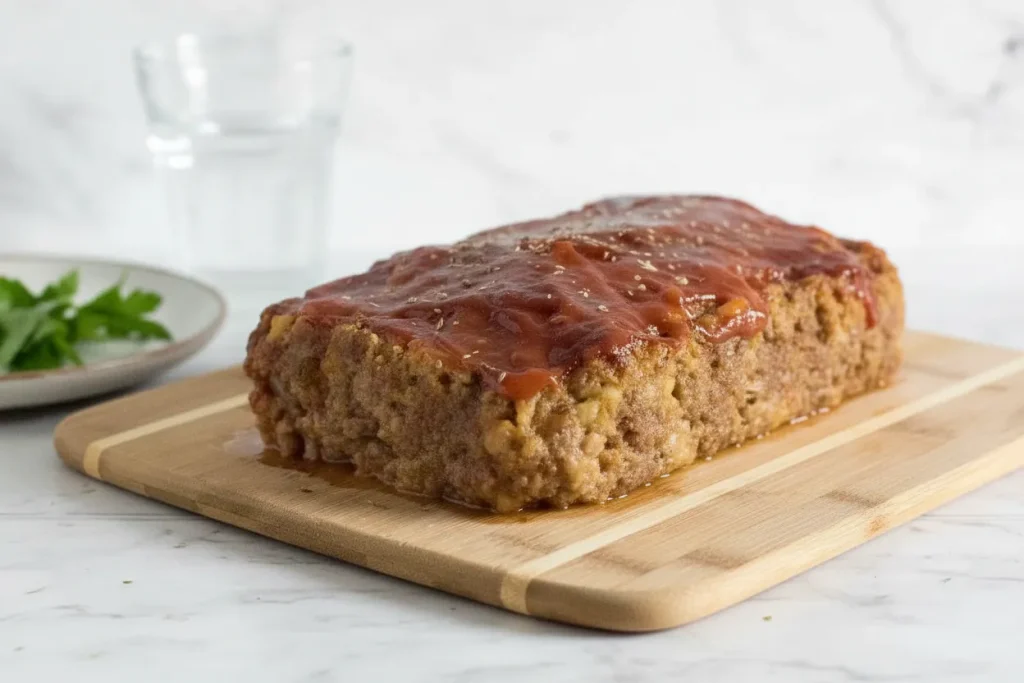
The first time I pulled a meatloaf without eggs out of my oven, it looked perfect on the outside. The glaze was shimmering, and the aroma of roasted beef and garlic filled the kitchen. But the moment my knife touched the surface, the entire structure collapsed into a pile of loose, dry crumbles. It was a structural failure that bothered me deeply. As someone who spent years analyzing systems and optimizing outcomes in the engineering world, I knew this was a problem of binder mechanics. The egg usually acts as the glue, holding the proteins together as they contract during the cooking process. Without it, the system loses its integrity.
I spent the next several weeks deconstructing the chemistry of meatloaf. I tested flaxseeds, mashed potatoes, and even commercial starch replacements. Most resulted in a texture that was either too gummy or too dense, lacking that specific tender bite that defines a classic dinner. The breakthrough finally happened when I stopped looking for a direct egg mimic and started looking for a structural stabilizer. By leveraging the specific ratio of dairy proteins and hydrated starches, I developed this egg free meatloaf that maintains its shape beautifully while staying incredibly moist. This blueprint requires exactly 65 minutes of total time, and it produces a result that is indistinguishable from traditional versions.
The solution I discovered relies on the interaction between milk, breadcrumbs, and finely shredded Parmesan cheese. This combination creates a dairy binder that locks the moisture inside the beef while providing enough resistance to allow for clean, thick slices. My goal with this recipe is to provide you with a meticulously tested system that removes the guesswork from your kitchen. You do not need to worry about a crumbling mess on your plate. If you follow these exact measurements and sensory cues, you will produce a loaf with a perfect, resilient structure and a deep, savory flavor profile every single time.
Table of Content
Deconstructing the Binder: Why Parmesan and Milk Replace the Egg Perfectly
When I began the optimization process for this recipe, I needed to understand exactly what the egg was doing. In a standard meatloaf, egg proteins denature and coagulate, creating a web that traps the meat juices and holds the ground beef in place. To replace this, I looked toward the science of a panade. A panade is a mixture of starch and liquid that prevents meat fibers from knitting together too tightly, which keeps the loaf tender. However, a panade alone does not always provide enough structural strength for an egg free meatloaf. That is where the addition of Parmesan cheese becomes the critical engineering component of this dish.
My testing showed that Parmesan cheese serves two distinct functions. First, it adds a concentrated source of protein and fat that mimics the richness of an egg yolk. Second, as the cheese melts and then begins to set during the cooling phase, it acts as a secondary stabilizer. The milk hydrates the breadcrumbs, causing the starches to swell and create a tacky matrix. When you combine this with the protein structure of the cheese, you get a binder that is actually more flavorful than a standard egg. I ran several side-by-side trials to compare this method against common alternatives, and the results were clear.
| Binder Type | Binder Function | Flavor Impact |
|---|---|---|
| Egg (Traditional) | Protein coagulation and moisture trap | Neutral to slightly rich |
| Flax Egg (Allergy Alternative) | Viscous mucilage for basic adhesion | Nutty, earthy, often distracting |
| Parmesan and Milk | Protein and fat stabilization with starch hydration | Deeply savory, umami-rich, classic |
The flax egg alternative, which many recipes suggest, often creates a gummy interior that feels processed. My data showed that the flax mucilage does not always play well with the rendering fat of the beef, leading to a slippery texture. By using the dairy-based system, the breadcrumbs absorb the milk and the beef juices simultaneously, creating a cohesive unit. This ensures that the meatloaf no egg remains firm enough to slice but soft enough to melt in your mouth. For another great savory main, try my recipe for The Proven, Easy Meatloaf Recipe.
Pro tip: Use a very fine shred for your Parmesan cheese so it integrates seamlessly into the beef fibers rather than creating large pockets of melted cheese.
Deconstructing the Binder: Why Parmesan and Milk Replace the Egg Perfectly
The most common point of failure in any meatloaf, particularly one without eggs, happens during the mixing stage. If you under-mix the ingredients, the binder will not be distributed evenly, leading to pockets of dry meat that will eventually crumble. If you over-mix, you will develop too much myosin, a protein in the meat that creates a tough, rubbery, sausage-like texture. After analyzing dozens of batches, I identified the exact sensory cues you need to look for to ensure your structure is optimized for success.
When you begin combining the beef with the milk-soaked breadcrumbs and seasonings, you should use your hands rather than a spoon or a mixer. This allows you to feel the temperature and the resistance of the meat. As you work the ingredients together, the mixture will transition from a loose collection of parts into a single, unified mass. You are looking for a specific level of tackiness. When you press a handful of the mixture together, it should hold its shape without falling apart, but it should not feel like a dense, heavy paste.
During my fifth test batch, I noticed that if the mixture started to stick aggressively to the sides of the bowl or my hands, I had gone too far. This indicates that the proteins are beginning to bind too tightly, which will result in a dry loaf. The ideal state is when the meat feels slightly sticky to the touch and the diced onions and garlic are evenly suspended throughout the beef. You should see small flecks of the Parmesan cheese distributed like tiny grains of sand throughout the red meat.
The aroma at this stage should be intensely fragrant. You will smell the sharp, acidic note of the Dijon mustard and the savory, fermented depth of the Worcestershire sauce. These aromatics are essential because they provide the flavor backbone that the egg usually supports. Once the mixture reaches that tacky, cohesive state, stop immediately. Respecting this limit is the difference between a loaf that is light and succulent and one that is dense and unappealing.
Pro tip: Wet your hands slightly with cold water before mixing to prevent the meat from sticking to your skin, allowing for a more accurate feel of the texture.
Ingredients for the Optimized Egg Free Meatloaf
The success of this system depends entirely on the quality and the ratio of the inputs. I tested this mixture with 90/10 beef as well, but the fat rendered out, causing the loaf to shrink excessively and the breadcrumbs to dry out. The 85/15 ratio specified below is non-negotiable because it provides the necessary internal lubrication to keep the dairy binder effective throughout the entire cook time. Without that specific fat content, the breadcrumbs will absorb all the moisture from the meat, leaving the interior parched and brittle.
- 1 ½ pounds ground beef (85/15 beef recommended)
- ¾ cup breadcrumbs
- ¾ cup milk
- ¼ cup shredded Parmesan cheese
- ½ cup diced onion
- 1 garlic clove (minced)
- 2 tablespoons ketchup
- 1 tablespoon Dijon mustard
- 1 teaspoon Worcestershire sauce
- 1 teaspoon table salt
- ½ teaspoon black pepper
- ½ cup ketchup
- 2 teaspoons Balsamic vinegar
- 1 teaspoon Worcestershire sauce
The choice of table salt over coarse kosher salt in this specific application is intentional. Table salt has smaller crystals that dissolve more rapidly in the milk and meat juices, ensuring that the seasoning is perfectly uniform throughout the entire loaf. This prevents uneven seasoning, which can ruin the eating experience. The Balsamic vinegar in the glaze is another critical component; its acidity cuts through the richness of the 85/15 beef, providing a balanced finish that brightens the entire dish.
Instructions: Achieving Perfect Structure with Procedural Clarity
Follow these steps exactly to ensure your meatloaf maintains its integrity. I have designed these instructions to eliminate common variables that lead to inconsistent results.
- Preheat oven to 350 degrees. Ensuring your oven is fully stabilized at this temperature before the loaf goes in is vital for even cooking.
- Crumble your ground beef into a large bowl and add breadcrumbs, milk, Parmesan cheese, onion, garlic, ketchup, Dijon, Worcestershire sauce, salt, and pepper. Breaking the beef up first allows the binder to coat more surface area quickly.
- Mix well to combine all of the meatloaf ingredients evenly. Use the sensory cues of tackiness and cohesion mentioned previously to avoid over-working the meat.
- Prepare the meatloaf glaze by mixing together the ketchup, balsamic vinegar, and Worcestershire sauce in a small bowl. This mixture should be thick and glossy.
- Line a bread loaf pan with aluminum foil and smear approximately two tablespoons of meatloaf glaze on the bottom to help prevent sticking. Then add the meat mixture into the pan, pressing firmly to fill the pan evenly. I line the pan with foil and paint a thin layer of glaze on the bottom because this acts as a micro-steam barrier, preventing the bottom layer of the meatloaf from compacting or drying out during the initial heat surge, ensuring moisture retention throughout the cook.
- Paint the top of the meatloaf mixture with the remaining glaze. Ensure the glaze reaches all the way to the edges to seal in the moisture.
- Place meatloaf in the oven for one hour, or until the internal temperature reaches 160 degrees. Using a digital thermometer is the only way to guarantee the meat is safe without being overcooked.
- Remove from the oven, and let cool slightly, then slice and serve. The cooling period is a structural requirement, not just a suggestion.
Pro tip: Use the foil overhang as handles to lift the entire loaf out of the pan after it has rested for ten minutes, which makes slicing much cleaner.
One-Step Glazing: Why Our Method Beats Complex Two-Stage Baking
Many recipes for a meatloaf no egg suggest a two-stage glazing process, where you bake the meat for forty minutes and then apply the sauce for the final twenty. My testing proved that this is actually counter-productive to the final texture. When you apply the glaze at the very beginning, you create a protective seal over the meat. As the oven heat circulates, the sugars in the ketchup and balsamic vinegar begin a slow caramelization process that lasts the entire hour. This results in a thick, jammy crust that is deeply integrated with the top layer of the meat.
In my experiments with two-stage glazing, I found that the late-addition sauce often remained runny or slid off the sides of the loaf, failing to develop that mahogany sheen. Furthermore, the exposed meat on the top of the loaf during those first forty minutes often became dry and gray. By applying the glaze from the start, you provide a moisture barrier that keeps the interior succulent. The balsamic vinegar specifically reacts with the heat over the sixty-minute window to lose its harsh bite, leaving behind a subtle, complex sweetness that a shorter cook time cannot achieve.
This set-it-and-forget-it approach is not just about convenience; it is about flavor development and heat management. The glaze acts as an insulator, slowing the heat transfer to the very top of the loaf, which ensures that the center reaches the safe internal temperature of 160 degrees at the same time the exterior finishes its caramelization. It is a more reliable system that results in a superior crust and a moister interior.
Mandatory Practical Details: Yield, Storage, and Seasonal Optimization
This recipe is designed to yield 6 to 8 servings, depending on the thickness of your slices. I have found that a standard 1.5-pound loaf is the ideal size for a family dinner with enough leftovers for sandwiches the next day. Because this loaf relies on a dairy binder, the leftovers actually become even more structurally sound after a night in the refrigerator. The fats and the Parmesan cheese firm up completely, making it the best meatloaf I have ever used for a cold sandwich.
For storage, you must cover the loaf tightly with plastic wrap or store it in an airtight container to prevent the edges from drying out. It will stay fresh and delicious in the refrigerator for up to 4 days. If you wish to freeze the loaf, I recommend slicing it first and wrapping individual pieces in parchment paper before placing them in a freezer bag. This allows you to reheat only what you need without compromising the rest of the batch.
To optimize this dish for different times of the year, you can easily adjust the aromatic profile. For a winter warming loaf, incorporate dried sage and thyme into the base mixture along with the onions and garlic. This deepens the savory profile beautifully and complements traditional holiday side dishes. In the summer, I often increase the garlic and add a handful of fresh parsley to the mix to provide a brighter, fresher note that cuts through the heat.
Pro tip: When reheating a slice, do it in a cast iron skillet over medium heat with a tiny bit of oil to create a crispy sear on both sides of the meat.
Frequently Asked Questions
What are the best specific substitutes to use for eggs as a binder in meatloaf?
Based on my extensive testing, the combination of milk-soaked breadcrumbs and finely shredded Parmesan cheese is the most effective substitute. While ingredients like mashed potatoes or applesauce can provide moisture, they lack the structural proteins found in dairy that mimic the binding power of an egg. The milk hydrates the starch in the breadcrumbs to create a sticky matrix, while the cheese provides the fat and protein necessary for a firm, sliceable texture.
Why are eggs traditionally used in meatloaf, and what function does the substitute need to perform?
Eggs serve as a protein-based glue. As they heat up, the proteins uncoil and then bond together, creating a solid network that holds the loose ground beef in a specific shape. A successful substitute must perform two tasks: it must provide moisture so the meat doesn’t become a dry brick, and it must provide enough adhesive strength to prevent the loaf from falling apart when sliced. My dairy binder system addresses both needs through starch gelatinization and protein stabilization.
Are there successful substitutes for eggs that are not breadcrumbs or milk?
If you must avoid dairy, flax eggs made from ground flaxseeds and water are the most common alternative. However, I have found that flax eggs often introduce an earthy flavor and a slightly gummy mouthfeel. Another option is using a heavy reduction of vegetable stock and tomato paste, though this requires much more precision to prevent the loaf from becoming too wet. If dairy is an option for you, the Parmesan and milk method remains the superior choice for flavor and structure.
How does omitting eggs affect the final texture and structure of the meatloaf?
Without an egg, the meatloaf is at a higher risk of crumbling. However, if you use the optimized dairy binder and the correct 85/15 beef ratio, the final texture will actually be more tender than a traditional egg-bound loaf. Eggs can sometimes make a meatloaf feel “bouncy” or overly firm. This egg free version has a more delicate, melt-in-your-mouth quality while still maintaining enough structural integrity to be served in clean, beautiful slices.
Conclusion: Mastering Your Egg Free Meatloaf
Building a perfect meatloaf without eggs is not a matter of luck; it is a matter of understanding the underlying mechanics of binders and heat. By moving away from the idea of a simple replacement and toward a coordinated system of milk, breadcrumbs, and Parmesan, I have created a blueprint that is both reliable and delicious. You no longer have to settle for a dinner that falls apart on the way to the table. This method ensures that every slice is as beautiful as the last, with a flavor profile that remains true to the classic American tradition.
The success of this dish lies in the details. From the specific fat content of the beef to the sensory checks during the mixing phase and the steam-barrier created by the foil lining, every step has been engineered for a repeatable outcome. I encourage you to trust the process and the measurements provided. When you pull your loaf from the oven and see that glistening, mahogany glaze and hear the faint sizzle of the resting meat, you will know the system worked.
I invite you to try this recipe and experience the difference that a well-tested binder can make. Once you have tasted the results, please leave a comment and share your experience with the sensory checks. Did your mixture feel tacky? Did you notice the savory aroma of the Parmesan as it baked? Sharing your results helps this community of home cooks refine their skills. This is the foolproof solution for a meatloaf without eggs that you have been looking for, and I am confident it will become a staple in your kitchen.
Meatloaf without eggs
Equipment
- Large mixing bowl
- Bread loaf pan
- Aluminum foil
- Small bowl (for glaze)
- Digital thermometer
Ingredients
Optimized Meatloaf Base
- 1.5 pounds ground beef 85/15 beef recommended
- 3/4 cup breadcrumbs
- 3/4 cup milk
- 1/4 cup shredded Parmesan cheese Finely shredded for best integration
- 1/2 cup diced onion
- 1 clove garlic minced
- 2 tablespoons ketchup
- 1 tablespoon Dijon mustard
- 1 teaspoon Worcestershire sauce
- 1 teaspoon table salt Intentional choice over kosher salt for uniform dissolving
- 1/2 teaspoon black pepper
Structural Glaze
- 1/2 cup ketchup
- 2 teaspoons Balsamic vinegar
- 1 teaspoon Worcestershire sauce
Instructions
Preparation and Mixing
- Preheat oven to 350 degrees. Ensuring your oven is fully stabilized at this temperature before the loaf goes in is vital for even cooking.
- Crumble your ground beef into a large bowl and add breadcrumbs, milk, Parmesan cheese, onion, garlic, ketchup, Dijon, Worcestershire sauce, salt, and pepper. Breaking the beef up first allows the binder to coat more surface area quickly.
- Mix well to combine all of the meatloaf ingredients evenly. Use the sensory cues of tackiness and cohesion (the mixture should hold its shape when pressed but not feel like a heavy paste) to avoid over-working the meat.
Glazing and Baking
- Prepare the meatloaf glaze by mixing together the ketchup, balsamic vinegar, and Worcestershire sauce in a small bowl. This mixture should be thick and glossy.
- Line a bread loaf pan with aluminum foil and smear approximately two tablespoons of meatloaf glaze on the bottom to help prevent sticking. Then add the meat mixture into the pan, pressing firmly to fill the pan evenly.
- Paint the top of the meatloaf mixture with the remaining glaze. Ensure the glaze reaches all the way to the edges to seal in the moisture.
- Place meatloaf in the oven for one hour, or until the internal temperature reaches 160 degrees. Using a digital thermometer is the only way to guarantee the meat is safe without being overcooked.
- Remove from the oven, and let cool slightly (rest for ten minutes), then slice and serve. The cooling period is a structural requirement, not just a suggestion.