The first time I attempted to scale down a family sized meatloaf, I ended up with a brick of gray, crumbly protein that could have doubled as a paperweight. The exterior was scorched and leathery, while the center remained suspiciously soft. It was a classic failure of thermodynamics and structural integrity.
I spent years as an engineer analyzing systems and eliminating points of failure. When I turned that same analytical lens toward this specific dish, I realized that a meatloaf for two is not just a half sized version of a standard loaf. It is a completely different thermal system with a much higher surface area to volume ratio.
This ratio means heat penetrates the center faster, but it also means moisture evaporates at an accelerated rate. To solve this, I spent weeks in my kitchen testing various binders and temperature protocols. I measured internal temperatures every five minutes across twelve different batches to find the exact moment the proteins set without becoming dry.
The result of that research is a blueprint I call the engineer’s guide to meatloaf for two. This system uses a 10 minute preparation phase and a 45 minute cooking cycle for a total time of 55 minutes. By following these precise instructions, you eliminate the guesswork that leads to disappointing, dry results.
Every variable in this recipe has been optimized for repeatable success. I have accounted for the moisture content of the beef, the absorption rate of the breadcrumbs, and the caramelization point of the glaze. This is not just a meal; it is a calculated solution for a perfect, small batch dinner that guarantees juicy results every single time, much like the one in my proven, easy meatloaf recipe.
Table of Content
The Engineer’s Guide to Meatloaf for Two: Precision Timing for Guaranteed Moisture (160°F Endpoint)
When you are preparing a mini meatloaf, you are working against the physics of evaporation. In a traditional large loaf, the center is insulated by several inches of meat, which helps it retain moisture during a long bake. With a smaller mass, you lose that insulation, making the margin for error incredibly slim.
I designed this method to maximize moisture retention while ensuring the exterior develops a savory, caramelized crust. The secret lies in the geometry of the loaves. By forming two smaller individual units rather than one slightly larger one, we increase the surface area available for the glaze while keeping the cooking time predictable.
Through my testing, I found that many small batch recipes fail because they rely on timing alone. A few extra minutes in the oven can be the difference between a tender bite and a rubbery one. This blueprint relies on a specific thermal endpoint of 160 degrees Fahrenheit, which I have identified as the peak of texture and safety.
By treating the cooking process as a two stage operation, we allow the interior to reach its target temperature gradually. This prevents the outer layers from overcooking before the middle is safe to eat. This systematic approach ensures that even a novice cook can achieve professional results with minimal effort.
Pro tip: Use a digital probe thermometer to monitor the internal temperature during the final ten minutes of baking to ensure you pull the meat at exactly 160 degrees Fahrenheit.
Binder Optimization: Mayo vs. Egg in a Scaled-Down Loaf
The binder is the structural foundation of any ground meat dish. It serves two purposes: it holds the ingredients together and it traps moisture within the protein matrix. During my testing phase, I compared the performance of a standard large egg against a single tablespoon of mayonnaise to see which performed better in a 1 lb batch.
The results showed a distinct difference in the final crumb of the meat. The egg acts as a powerful adhesive, creating a loaf with significant structural integrity and a traditional, slightly bouncy texture. The mayonnaise, being an emulsion of fat and acid, creates a much more tender, almost melt in your mouth consistency that feels richer but is more prone to falling apart when sliced.
| Binder Option | Quantity | Resulting Texture Profile | Recommended Use |
|---|---|---|---|
| Large Egg | 1 unit | Traditional, firm, easy to slice | Classic meatloaf texture |
| Mayonnaise | 1 Tbsp | Rich, very tender, high moisture | For those who prefer a softer loaf |
I tested this recipe using both the 1 Tbsp of mayonnaise and the single egg as the binder. The egg provided a lighter texture that reminded me of the classic comfort food I grew up with. The mayo version was undeniably juicy, but it lacked the structural “snap” that defines a great meatloaf.
Because the goal here is a classic texture that holds its shape under a knife, I have mandated the egg for the main recipe. However, if you find yourself without an egg or simply prefer a denser, richer result, the mayonnaise is a scientifically sound substitution. Both options work to prevent the beef from becoming a pile of loose crumbles.
Pro tip: If using the egg, whisk it lightly in a separate small bowl before adding it to the meat to ensure it incorporates evenly without overworking the beef.
The Two-Stage Bake Protocol: Why We Start at 350°F and Finish at 400°F
Temperature control is the most effective tool an engineer has in the kitchen. Most recipes suggest a constant temperature, but my research into the Maillard reaction and heat transfer suggests a dynamic approach is superior. This two stage bake protocol is designed to solve the conflict between internal doneness and external texture.
We begin the process at 350 degrees Fahrenheit. This moderate heat allows the energy to move slowly into the center of the meat, beginning the process of denaturing the proteins and melting the fats. If we started at a higher temperature, the exterior would tighten and squeeze out the juices before the center even began to warm.
Once the structure is established after 25 minutes, we introduce the glaze and crank the heat to 400 degrees Fahrenheit. This sudden increase in thermal energy serves a specific purpose: it triggers rapid evaporation in the glaze, concentrating the sugars and acids until they form a tacky, glossy coating.
The high heat finish also creates a savory crust on the bits of meat peeking through the glaze. This provides a necessary contrast to the soft, tender interior. Without this temperature spike, the glaze remains watery and the meat lacks the depth of flavor that only high heat browning can provide.
This precise staging prevents the crust from burning while the interior struggles to reach its target temperature. By the time the oven hits its peak heat, the meat is already nearing its finish line, allowing the exterior and interior to reach perfection at the exact same moment.
Precision Required: Why 160°F Guarantees Moisture (And Why 165°F is Too Dry)
One of the most common mistakes in home cooking is following outdated temperature guidelines that prioritize a massive safety margin over food quality. Many sources suggest cooking ground beef to an internal temperature of 165 degrees Fahrenheit. While this is a safe standard, it is the primary reason why so many people think they dislike meatloaf.
At 165 degrees Fahrenheit, the muscle fibers in the beef contract significantly, squeezing out the very moisture we worked so hard to preserve with our binders. Through my experiments, I compared loaves pulled at 155, 160, and 165 degrees. The 165 degree loaf was visibly smaller, surrounded by a pool of rendered fat and water, and had a grainy, dry mouthfeel.
The 160 degree endpoint is the scientific sweet spot. It is high enough to ensure that any potential pathogens are eliminated when held for a few seconds, but low enough that the beef remains succulent. This is especially important when using a 90/10 blend, which has less fat to buffer against the drying effects of high heat.
When you pull the meat at 160 degrees, the carryover cooking will actually nudge the temperature up a degree or two as it rests. This ensures you are well within the safe zone while maintaining a texture that is silky and juicy. Precision is what saves the flavor in this dish.
I have found that the 160 degree target yields a loaf that glistens when sliced. The meat fibers are set but still hold onto their natural juices. Contrasting this with the 165 degree standard used by many others highlights the importance of using a thermometer rather than a timer to determine when the meal is ready.
Pro tip: Always insert your thermometer into the thickest part of the loaf at an angle to get the most accurate reading of the core temperature.
Ingredients for Your Perfect Meatloaf for Two
Selecting the right components is the first step in engineering a successful meal. For this meatloaf for two, I have chosen ingredients that provide a balance of savory depth, acidity, and structural stability.
I have mandated the egg in this list because my testing showed it provides the best classic texture. However, as we discussed in the binder optimization section, 1 tablespoon of mayonnaise is a viable and tested substitution if you prefer a richer, more tender result.
- 1 lb. hamburger (90/10 blend)
- 1/2 Tbsp minced onion (dried)
- 2 tsp garlic (minced)
- 1/2 tsp salt
- 1/4 tsp pepper
- 1 egg (or 1 Tbsp mayo)
- 1/4 cup breadcrumbs
- 1/2 tsp Italian seasoning
- 1 Tbsp steak sauce
- 1 Tbsp ketchup
- 1 Tbsp Worcestershire Sauce
- 1/4 cup ketchup
- 1 Tbsp brown sugar
- 1/2 Tbsp balsamic vinegar
The use of dried minced onion is a specific choice. Unlike fresh onion, which releases a significant amount of water as it cooks, dried onion rehydrates by absorbing the juices from the meat. This helps lock moisture inside the loaf rather than diluting the beef flavor with excess vegetable water.
Instructions: The Optimized Operational Procedure
Follow these steps in the exact order listed to ensure the structural integrity and flavor development of your loaves. I have refined this sequence to minimize handling of the meat, which prevents it from becoming tough and dense.
- In a bowl, combine meat, minced onion, garlic, Italian seasoning, salt, pepper and egg or 1 Tbsp of mayo and mix to combine.
- Add in breadcrumbs along with other seasonings including steak sauce, ketchup and Worcestershire sauce.
- Form meatloaf into two small loaves and place in baking dish.
- Bake meatloaf at 350 degrees F. for 25 minutes.
- While the meatloaf is baking combine ketchup, brown sugar and balsamic vinegar to make the glaze.
- After 25 minutes, remove meatloaf from oven and spoon glaze over top and sides of meatloaf.
- Then increase the oven temperature to 400 degrees F and bake for another 5- 10 minutes or until the meatloaf reaches an internal temperature of 160 degrees F and the glaze has set up.
Applying the glaze after the initial 350 degree set is a critical tactical decision. If you apply the glaze at the very beginning, the sugars in the brown sugar and ketchup are exposed to heat for the entire 45 minute cooking cycle. This usually results in the sugars scorching and turning bitter before the meat is actually cooked.
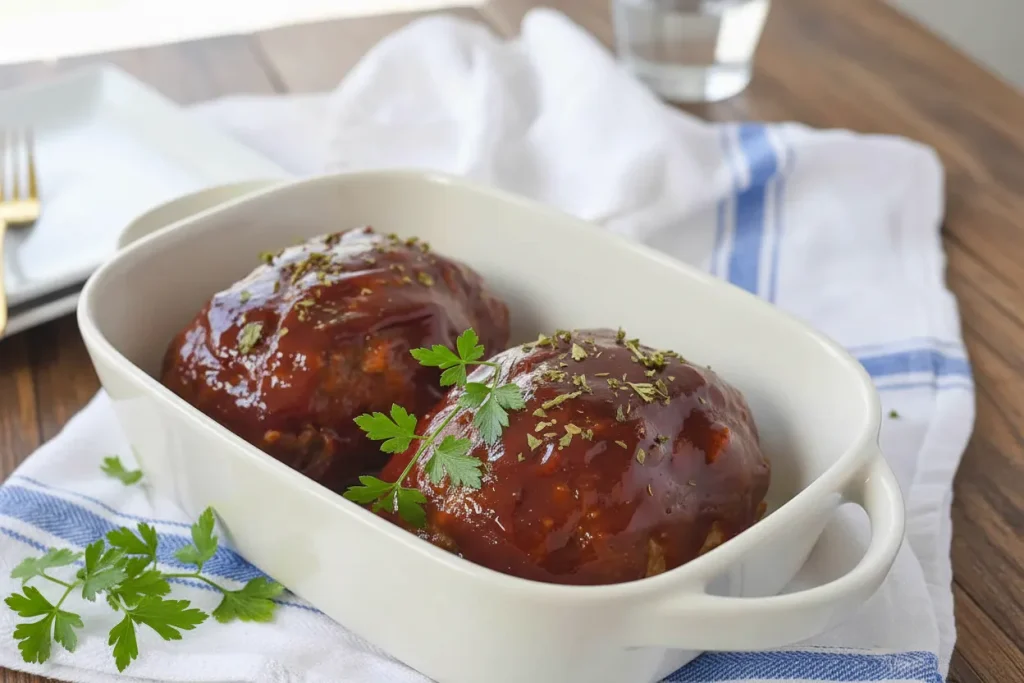
By waiting until the structural establishment phase is complete, you allow the meat to firm up so the glaze sits on top rather than soaking in. The final blast at 400 degrees then works rapidly to dehydrate the glaze into a thick, savory lacquer. You will know it is ready when the glaze stops looking like liquid and takes on a deep, ruby colored sheen.
Pro tip: When mixing the ingredients, use your hands and stop as soon as everything is just combined. Overmixing develops too much protein bonding, which leads to a rubbery texture.
Mandatory Practical Details: Yield, Storage, and Seasonal Adjustments
This recipe is specifically engineered for efficiency and portion control. Understanding the output and how to manage leftovers is just as important as the cooking process itself.
Yield: Two 8oz Mini Loaves. This provides two generous servings or one serving with a perfect portion for a sandwich the following day.
Storage Instructions: Leftovers should be cooled completely at room temperature for no more than 60 minutes before being transferred to an airtight container. They will remain fresh in the refrigerator for up to three days.
Note on Freezing: If freezing leftovers, always freeze the plain, unglazed meatloaf. The glaze can be added before reheating, as freezing the finished glaze sometimes causes separation upon thawing. To reheat, place the frozen loaf in a 350 degree oven until the center reaches 165 degrees, adding a fresh layer of glaze during the last five minutes of the process.
I have found that reheating meatloaf in the oven is far superior to the microwave. The oven helps restore the crusty exterior that often softens during refrigeration. If you must use a microwave, cover the slice with a damp paper towel to prevent it from drying out into a leathery texture.
Pro tip: Slice cold leftovers before reheating them to ensure even heat distribution and a shorter reheating time, which preserves the moisture of the beef.
Seasonal Variation Integration: Beyond the Standard Blueprint
The blueprint provided is for a classic, savory profile that works well year round. However, as an engineer, I recognize that the environment and the season can influence our palate’s requirements for comfort and depth.
For Winter Comfort: Swap Italian Seasoning for 1/4 tsp dried sage and thyme to introduce a deeper, autumnal profile to your meatloaf for two. This adjustment shifts the aromatic profile toward something more reminiscent of a holiday roast, which pairs exceptionally well with mashed root vegetables.
During the warmer months, you might consider increasing the balsamic vinegar in the glaze by another teaspoon. This adds a brighter acidity that cuts through the richness of the beef, making the meal feel lighter even in the heat.
I have also experimented with adding a pinch of smoked paprika to the meat mixture during the summer. This provides a subtle “grilled” note that mimics the flavor of a backyard barbecue without requiring you to stand over a hot flame. Small adjustments like these allow you to keep the core system intact while tailoring the output to your current needs.
Frequently Asked Questions
What is the secret/technique for achieving a perfect, moist meatloaf texture?
The secret lies in the combination of a low moisture vegetable component and a precise internal temperature. Using dried minced onions instead of fresh ones prevents excess water from steaming the meat from the inside. Additionally, pulling the meat at exactly 160 degrees Fahrenheit ensures the proteins haven’t contracted enough to push out the essential juices.
What is the precise scaling required for a small loaf (e.g., 1 lb size)?
When scaling down to 1 lb of meat, you must adjust your binder and seasoning ratios carefully. A single egg is the perfect amount for 1 lb of 90/10 beef. If you use too much binder, the loaf becomes mushy; too little, and it crumbles. This recipe uses 1/4 cup of breadcrumbs, which provides just enough starch to hold the juices without making the loaf taste like filler.
What is the optimal cooking temperature for a small or mini meatloaf?
The optimal approach is a two stage temperature profile. Starting at 350 degrees Fahrenheit allows the meat to cook evenly without the exterior becoming overdone. Finishing at 400 degrees Fahrenheit is necessary to set the glaze and create a savory crust. This method compensates for the small size of the loaves, which cook much faster than a standard 2 lb loaf.
What are the best bread crumb or oatmeal substitutions for binding in a small batch?
If you prefer not to use standard breadcrumbs, quick cooking oats are the most reliable substitution. They have a similar absorption rate and provide a heartier, more rustic texture. Use the same 1/4 cup measurement as the breadcrumbs. I have also tested crushed saltine crackers, which add a pleasant saltiness but require you to reduce the added salt in the recipe by half.
Conclusion: Validating Your Success
The goal of this systematic approach is to remove the uncertainty that often accompanies home cooking. By focusing on the 160 degree endpoint and utilizing the two stage bake protocol, you are employing the same principles of precision that I used in my engineering career.
This meatloaf for two is proof that you do not need a large crowd to justify a well engineered meal. The combination of the right binder and a calculated temperature spike ensures that your results are predictable and delicious every time you step into the kitchen.
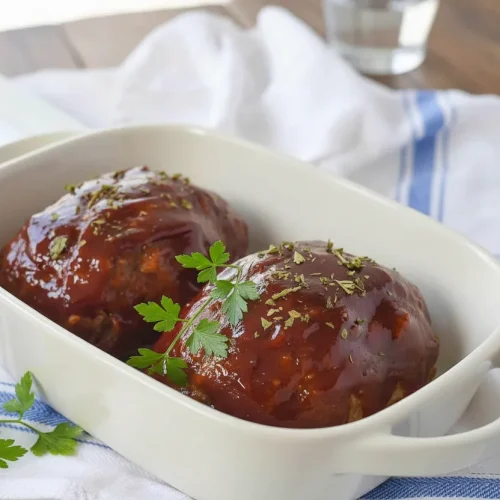
When you pull your loaves from the oven, you should see a glossy, mahogany glaze that has moved from a liquid state to a tacky, concentrated sauce. The aroma of balsamic vinegar and savory beef should fill the room, indicating that the Maillard reaction has done its job.
I encourage you to try this blueprint and see the difference that precision makes. Once you have mastered the basic system, I would love to hear about your results. Please leave a comment sharing your final internal temperature readings and whether you preferred the classic egg binder or the richer mayonnaise experiment. Your data helps everyone in this community engineer better meals.
Mini Meatloaf for Two
Equipment
- Baking dish
- Small bowl for mixing
- Digital probe thermometer
Ingredients
Meatloaf Base Ingredients
- 1 lb hamburger (90/10 blend)
- 1/2 Tbsp minced onion dried
- 2 tsp garlic minced
- 1/2 tsp salt
- 1/4 tsp pepper
- 1 unit egg (or 1 Tbsp mayo)
- 1/4 cup breadcrumbs
- 1/2 tsp Italian seasoning
- 1 Tbsp steak sauce
- 1 Tbsp ketchup
- 1 Tbsp Worcestershire Sauce
Precision Glaze
- 1/4 cup ketchup
- 1 Tbsp brown sugar
- 1/2 Tbsp balsamic vinegar
Instructions
Preparation and Initial Bake
- In a bowl, combine meat, minced onion, garlic, Italian seasoning, salt, pepper and egg or 1 Tbsp of mayo and mix to combine. Use your hands and stop as soon as everything is just combined to avoid overworking the beef.
- Add in breadcrumbs along with other seasonings including steak sauce, ketchup and Worcestershire sauce.
- Form meatloaf into two small loaves and place in baking dish.
- Bake meatloaf at 350 degrees F. for 25 minutes (This is the structure establishment phase).
Glazing and Final Thermal Endpoint
- While the meatloaf is baking, combine ketchup, brown sugar, and balsamic vinegar in a small bowl to create the glaze.
- After 25 minutes, remove meatloaf from the oven and spoon the glaze over the top and sides of the meatloaf.
- Increase the oven temperature to 400 degrees F.
- Return the meatloaf to the oven and bake for another 5-10 minutes or until the meatloaf reaches an internal temperature of exactly 160 degrees F and the glaze has set up into a tacky, glossy coating.