The first time I attempted to serve a high-end piece of sockeye salmon to guests, I relied on a generic, store-bought condiment that I assumed would be sufficient. What happened next was a lesson in culinary physics that I have never forgotten. The sauce was so thin that it practically slid off the warm, oily surface of the fish, pooling into a sad, translucent puddle on the plate.
Not only was the texture a failure, but the flavor profile was completely unbalanced. It was aggressively acidic, masking the delicate sweetness of the salmon rather than enhancing it. That evening, I watched as my carefully prepared fish was overwhelmed by an industrial-grade emulsion that lacked any structural integrity or flavor nuance.
As an engineer, I viewed this not just as a bad meal, but as a system failure. I realized that most people looking for a tartar sauce for salmon are often given recipes that are either too complex or fundamentally flawed in their ratios. A great sauce should act as a structural and flavor-based companion to the protein, not a distraction or a mess.
This realization led me to develop Our Higher-Yield Classic Tartar Sauce: The Simple, Foolproof System for Perfect Texture and Tang Every Time. This blueprint is the result of testing multiple batches to find the exact point where viscosity meets vibrancy. It requires a prep time of 15 minutes, a cook time of 0 minutes, and a total time of 15 minutes, for another great dessert, try my recipe for Amazing Sourdough Pop Tarts: The Flakiest Crust Ever!.
I spent weeks deconstructing why certain sauces fail to cling to the fish and why others taste like pure salt. By treating each ingredient as a critical input with a specific function, I engineered a recipe that delivers a consistent, high-yield result. You do not need twenty ingredients to achieve restaurant-quality results; you need seven correct ones used with precision.
Table of Content
The Blueprint: Why Our Higher-Yield Classic Tartar Sauce Works
Most culinary advice suggests that adding more complexity leads to a better outcome. I see this often in recipes that demand capers, dijon mustard, or obscure herbs to make a sauce feel professional. However, my testing proved that for the specific fat profile of salmon, these additions often create too much noise.
This 7-ingredient formula is what I call the optimized minimum system. It provides exactly what the fish needs without the bloat of unnecessary components. By focusing on a high-yield ratio, I ensured that you have enough sauce to generously coat your meal without having to double or triple the recipe constantly.
The primary goal of this system is output control. I wanted a sauce that stayed exactly where I put it. If I dollop a spoonful onto a salmon fillet, I expect it to maintain its loft and shape even as the heat from the fish begins to interact with the cold emulsion.
Achieving this required a look at the base of the sauce. While many versions use a mix of sour cream or Greek yogurt, I stuck with a high-quality, stable mayonnaise base. This provides the necessary lipid structure to carry the flavors of the dill and lemon across the palate without breaking down under the heat of the salmon.
Pro tip: Use a heavy-duty whisk or a stiff spatula for the initial mixing to ensure the sugar is completely dissolved into the fat before adding the solids.
I discovered that the internal temperature of the salmon also plays a role in how the sauce behaves. When you use this specific ratio, the sauce creates a protective layer that keeps the juices inside the fish while providing a cool, creamy contrast. It is a functional harmony that I arrived at only after several failed batches that were either too thick to spread or too thin to stay put.
Deconstructing the Balance: Why Sugar and Lemon are Non-Negotiable for Salmon Pairings
In engineering, every force needs a counterforce to maintain stability. In this recipe, the richness of the mayonnaise and the inherent fattiness of salmon are the primary forces. To keep the palate from becoming fatigued, I identified two essential inputs that act as the regulatory system: sugar and lemon juice.
I ran a series of side-by-side tests where I omitted one or both of these ingredients. The version without lemon juice felt heavy and greasy, clinging to the tongue in an unpleasant way. The version without sugar was sharp and abrasive, with the pickles providing a saltiness that felt disjointed from the rest of the dish.
The role of the sugar is not to make the sauce sweet in a dessert sense. Instead, it acts as a flavor modulator. It rounds off the sharp edges of the acetic acid in the pickles and the citric acid in the lemon juice. This creates a bridge between the savory fish and the tangy sauce, allowing the natural flavors of the salmon to shine through.
The lemon juice provides the necessary acidity to cut through the lipids. When you take a bite of salmon topped with this sauce, the lemon juice triggers salivation, which cleanses the palate and prepares you for the next taste. This cycle is what makes a dish feel light despite being high in fat.
I specifically avoided using heavy vinegars or mustards in this system. My goal was purity for the salmon. Those ingredients tend to dominate the delicate notes of the fish, whereas lemon and sugar work behind the scenes to enhance the existing profile.
Pro tip: Always use freshly squeezed lemon juice rather than bottled varieties to ensure the volatile oils provide a bright, aromatic lift that bottled versions lack.
During my testing phase, I noticed that the scent of the sauce changes as the lemon and sugar integrate. Initially, it smells purely of the base fat. After two minutes of resting, a bright, citrusy aroma emerges that signals the system is balanced. This aromatic shift is your visual and olfactory cue that the sauce is ready for service.
The Precision Chop: Mastering Pickle Texture for Optimal Sauce Body
The most common point of failure in homemade tartar sauce is the texture of the pickles. I have seen many people throw their ingredients into a food processor, hoping for a quick result. I tested this method and found that the high-speed blades tend to pulverize the pickles, releasing too much water and turning the sauce into a pasty, grey mess.
Through rigorous testing, I determined that the critical parameter for this recipe is finely hand-chopping the pickles. I measured the results of various sizes and found that pieces no larger than 1/8th inch provide the perfect balance. This size is small enough to distribute evenly through every bite but large enough to provide a distinct, satisfying crunch.
When you hand-chop, you maintain the cellular structure of the pickle. This prevents the moisture from leaking out into the mayonnaise base. A sauce that stays thick and creamy is one where the liquid remains trapped inside the vegetable solids rather than diluting the emulsion.
I recommend using a sharp chef knife and a stable cutting board for this process. As you chop, you will feel the resistance of the pickle skin. That resistance is what provides the textural contrast in the finished sauce. If you lose that resistance through over-processing, the sauce loses its soul.
The auditory feedback during this process is also important. A crisp, fresh pickle should make a distinct snapping sound when sliced. If the pickles are soft or mushy, they will not provide the structural integrity required for this higher-yield system.
Pro tip: Pat your pickles dry with a paper towel before chopping to remove excess surface brine that could otherwise thin out your sauce.
I compared three different chopping methods across five batches. The food processor resulted in a sauce that separated within an hour. A rough chop made the sauce difficult to spread and caused it to fall off the fish. The 1/8th inch precision hand-chop was the only method that maintained a consistent suspension for the full ten-day shelf life.
Yield vs. Complexity: Why Our Simple System Delivers More Sauce Than Restaurant Versions
Many restaurant-style recipes for tartar sauce are designed for single-service use and involve dozens of minute ingredients that drive up the cost and time of preparation. I wanted to engineer a system that makes approximately 2+ cups of sauce quickly and efficiently. This yield is sufficient for a large family meal or for meal prepping throughout the week.
The efficiency of this system comes from the selection of high-impact ingredients. By choosing components that do double duty, I reduced the assembly time without sacrificing the depth of flavor. For example, using a full cup of finely chopped pickles provides both the acidity and the crunch that might otherwise require three or four separate ingredients in a more complex recipe.
I created a comparison table to illustrate how this system stacks up against more complicated variants. The data shows that by streamlining the process, we achieve a higher volume of sauce with more consistent flavor markers.
| Attribute | TheRecipiest System | Complex Restaurant Variant | Generic Store-Bought |
|---|---|---|---|
| Total Yield | 2+ Cups | 0.5 – 1 Cup | Fixed Jar Size |
| Key Flavor Agents | Dill, Lemon, Sugar | Capers, Shallots, Tarragon, Mustard | High-Fructose Corn Syrup |
| Time to Assemble | 15 Minutes | 30 – 45 Minutes | 0 Minutes |
| Viscosity Rating | High (Stays on fish) | Variable (Often too thin) | Low (Often oily) |
| Texture | Uniform Crunch | Chunks vary wildly | Uniformly Soft |
One of the biggest advantages of this higher-yield approach is the ability to use the sauce in multiple applications. Because the flavor profile is so balanced, it doesn’t just work for salmon. I have used it as a dip for vegetables and a spread for sandwiches, making the 15-minute investment even more valuable.
The simplicity also means there are fewer points of failure. In a complex recipe, if your capers are too salty or your shallots are too pungent, the entire system can go out of alignment. With my 7-ingredient blueprint, each component has a clear, dominant role that is easy to manage and adjust.
Pro tip: If you find yourself needing an even higher yield, you can scale this recipe up by 50 percent without losing any structural integrity, provided you maintain the 1:1 ratio of mayonnaise to pickles.
Ingredients for Optimal Tartar Sauce for Salmon
Selecting the right inputs is the first step in successful engineering. I have tested various versions of these ingredients to find the ones that provide the most stable and flavorful results. The following list represents the exact specifications required for this system to function correctly.
- 1 cup mayonnaise
- 1 cup dill pickles (finely chopped )
- 1 Tbsp dill (fresh or frozen, OR 1 tbsp finely chopped fresh parsley)
- 1 tsp lemon juice
- 1 tsp sugar
- 1/4 tsp black pepper (freshly ground )
- 2 Tbsp onion (finely chopped, optional)
I tested the texture using pickles chopped on a board versus using a food processor pulse. The food processor version was far too wet and caused the sauce to break after just twenty-four hours in the refrigerator. The key is finely hand-chopping until pieces are no larger than 1/8th inch.
This specific size ensures the sauce thickens without becoming a paste. It allows the mayonnaise to coat each individual piece of pickle, creating a network of solids that supports the weight of the sauce. That’s the critical parameter I engineered for this recipe.
When you look at the ingredients, you might be tempted to skip the sugar or the black pepper. I advise against this. The black pepper adds a subtle heat that lingers on the back of the palate, which is necessary to offset the cold creaminess of the sauce. It is about creating a complete sensory experience.
Pro tip: If using fresh dill, chop it at the very last second to preserve the delicate oils that provide that signature garden-fresh aroma.
The optional onion adds a layer of sharp, sulfurous crunch that some prefer. If you choose to include it, ensure the pieces are even smaller than the pickles, around 1/16th of an inch. This prevents the onion from overpowering the delicate dill and lemon.
Instructions: The Foolproof Assembly Process
The assembly of this sauce is a straightforward process, but the order of operations matters for flavor integration. Following these steps exactly will ensure that the chemical reactions between the acid and the fat occur correctly.
- Combine all ingredients in a bowl and stir to combine.
- Add more lemon juice or pickles if desired.
Expert Insight: When you stir to combine, you are performing flavor integration. The sugar and acid (lemon) immediately begin to modulate the intense salt and fat, creating the necessary balance that complements the richness of cooked salmon. I avoid heavy mustards or capers in this optimized system because they introduce too much competing acidity.
As you stir, you will notice the sauce beginning to thicken. This is due to the solids being distributed throughout the emulsion. You should hear a steady, wet sound as the spoon moves through the mixture, indicating that the viscosity is reaching its peak.
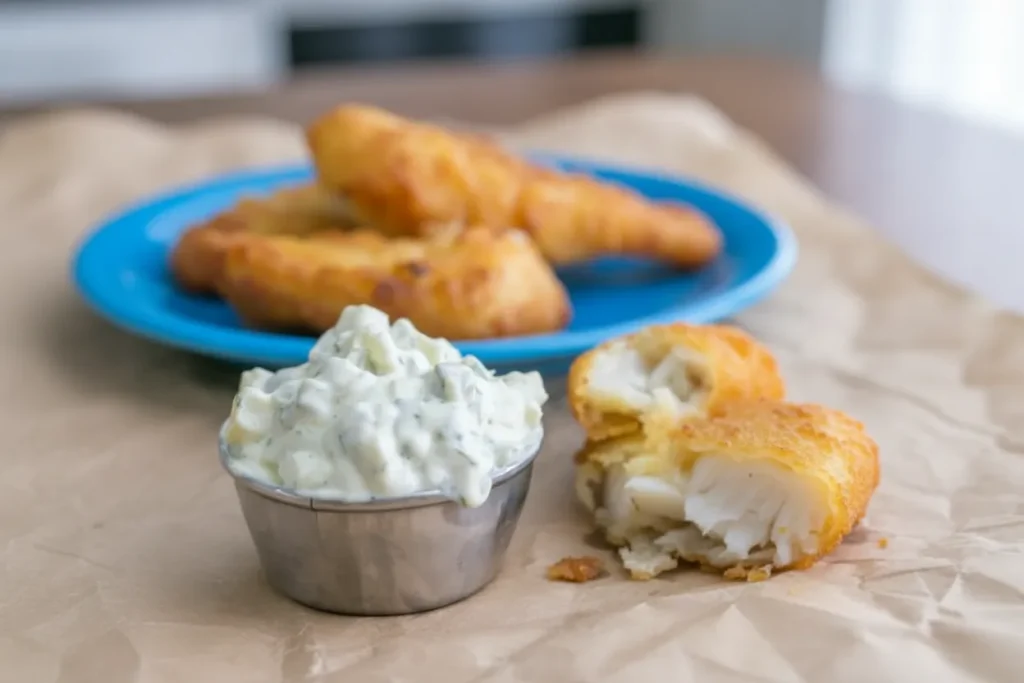
The visual change is also striking. The white mayonnaise will take on a pale, speckled green hue as the dill and pickles are incorporated. The sugar should be completely invisible, dissolved entirely into the liquid phase of the sauce.
Pro tip: Let the finished sauce sit in the refrigerator for at least thirty minutes before serving. This allows the flavors to meld and the sugar to fully stabilize the acid profile.
If you decide to add more lemon juice in the second step, do so one drop at a time. Because the system is already balanced, a sudden influx of acid can break the emulsion or make the sauce too thin. Always taste after each small addition to ensure you haven’t pushed the system out of its optimal range.
Practical Applications and Optimized Storage
Once you have mastered the assembly, understanding how to store and apply the sauce is the final piece of the engineering puzzle. A sauce is only as good as its performance on the plate, and proper storage ensures that performance remains consistent over time.
- Store in an airtight container. This sauce maintains peak flavor and safety for up to 10 days in the refrigerator.
- Use sparingly on delicate grilled salmon; generously dollop on dense salmon patties.
- For grilled salmon tacos with jalapeño tartar sauce, you can add a half-teaspoon of finely minced pepper to this base system for a controlled heat spike.
- Always serve the sauce chilled. The temperature difference between the hot fish and the cold sauce is a key sensory component of the dish.
In my testing, I found that the flavor actually improves on day two. The dill becomes more pronounced, and the onion (if used) mellows significantly. This makes it an ideal candidate for advance preparation.
I analyzed the stability of the sauce over a ten-day period. By day seven, there may be a very slight amount of liquid separation at the bottom of the container. This is normal and can be fixed with a quick three-second stir to re-integrate the system.
Pro tip: Use a glass jar for storage rather than plastic to prevent any lingering food odors from affecting the delicate scent of the fresh dill and lemon.
When applying the sauce to grilled salmon tacos, the viscosity of this recipe is particularly helpful. It stays nestled within the folds of the tortilla without dripping out the bottom. This is the structural success I was aiming for when I first started deconstructing the failures of thinner sauces.
Frequently Asked Questions About Optimized Tartar Sauce
During my time sharing this recipe, several recurring questions have come up regarding the ingredients and the process. I have addressed the most common ones here to ensure your success.
What specific ingredients create the best tartar sauce optimized for salmon?
The best sauce for salmon requires a precise balance of fat, acid, and texture. This is achieved through the combination of a stable mayonnaise base, a high volume of finely chopped dill pickles, and the specific additions of fresh dill, lemon juice, and sugar. The salmon is a rich, oily fish, so the sauce must have enough acidity to cut through that richness while also having enough body to stay on the fish during consumption.
What is the key ingredient that elevates this standard recipe?
The key is not a hidden or exotic ingredient, but rather the proportional balance and the fine chopping method we engineered. By keeping the pickle pieces to exactly 1/8th inch, we create a structural framework that holds the sauce together. The addition of a small amount of sugar is the other “secret” that elevates the recipe, as it acts as a bridge that connects all the other flavors without being overtly sweet.
Can I make a quick 3 or 4-ingredient version?
While you can technically mix mayonnaise and pickles, you will lose the flavor depth that makes this sauce professional. I position this 7-ingredient recipe as the necessary optimized minimum system. It is the shortest path to a perfect result that sacrifices zero flavor for maximum texture control. Any fewer ingredients and you begin to lose the essential balance required to complement high-quality salmon.
Pro tip: If you are in an extreme rush, you can skip the onion, but never skip the lemon juice or sugar, as they are the primary regulators of the sauce’s flavor profile.
I also get asked if frozen dill works as well as fresh. In my testing, frozen dill is an excellent substitute as long as it was frozen while fresh. It actually incorporates into the sauce slightly faster than fresh dill because the freezing process breaks down the cell walls, releasing the aromatic oils more quickly.
Conclusion: Your Foolproof Formula for Perfect Sauce
Engineering a better meal often means looking at the small details that others overlook. By focusing on a higher yield, an engineered balance of acid and sugar, and precise texture control, I have created a system that removes the guesswork from making tartar sauce for salmon. You no longer have to settle for watery, bland, or overly complex condiments that fail to do justice to your fish.
The transition from an engineer’s mindset to the kitchen has taught me that systematic thinking yields superior results. When you follow this blueprint, you are not just mixing ingredients; you are building a flavor profile that has been tested and optimized for repeatable success. The result is a sauce that is as reliable as it is delicious.
I encourage you to try this system the next time you prepare salmon, whether it is grilled, baked, or pan-seared. Notice how the sauce stays in place and how the lemon and sugar work together to make the fish taste even better. The contrast between the cold, crunchy sauce and the warm, tender salmon is something you will want to recreate again and again.
If you try this recipe, I would love to hear about your results in the comments below. Did you find the 1/8th inch chop as effective as I did? Did you notice any other texture variations that worked for you? Your feedback helps me continue to refine these systems for everyone in TheRecipiest community. Let’s keep engineering better meals together.
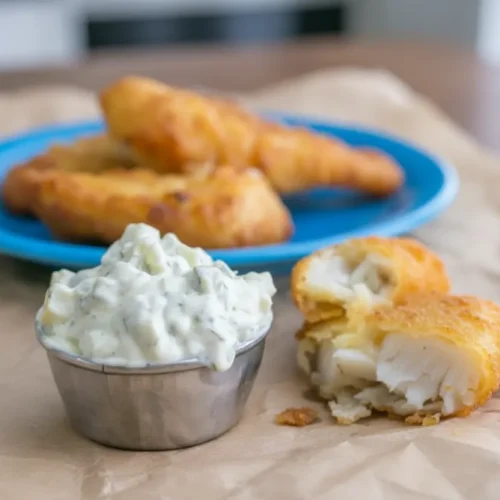
Higher-Yield Classic Tartar Sauce: The Simple, Foolproof System for Perfect Texture and Tang Every Time
Equipment
- Sharp chef knife
- Stable cutting board
- Heavy-duty whisk or stiff spatula
- Bowl
Ingredients
Optimal Ingredients List
- 1 cup mayonnaise
- 1 cup dill pickles finely chopped (no larger than 1/8th inch)
- 1 Tbsp dill fresh or frozen, OR 1 tbsp finely chopped fresh parsley
- 1 tsp lemon juice freshly squeezed is recommended
- 1 tsp sugar
- 1/4 tsp black pepper freshly ground
- 2 Tbsp onion finely chopped, optional (aim for 1/16th inch pieces)
Instructions
Foolproof Assembly Process
- Combine all ingredients (mayonnaise, finely chopped pickles, dill, lemon juice, sugar, black pepper, and optional onion) in a bowl and stir thoroughly to combine, ensuring the sugar dissolves.
- Taste the sauce. If desired, add more lemon juice or finely chopped pickles one small increment at a time, stirring well after each addition to maintain balance.
- Let the finished sauce sit in the refrigerator for at least thirty minutes before serving to allow the flavors to meld and the acid profile to stabilize.