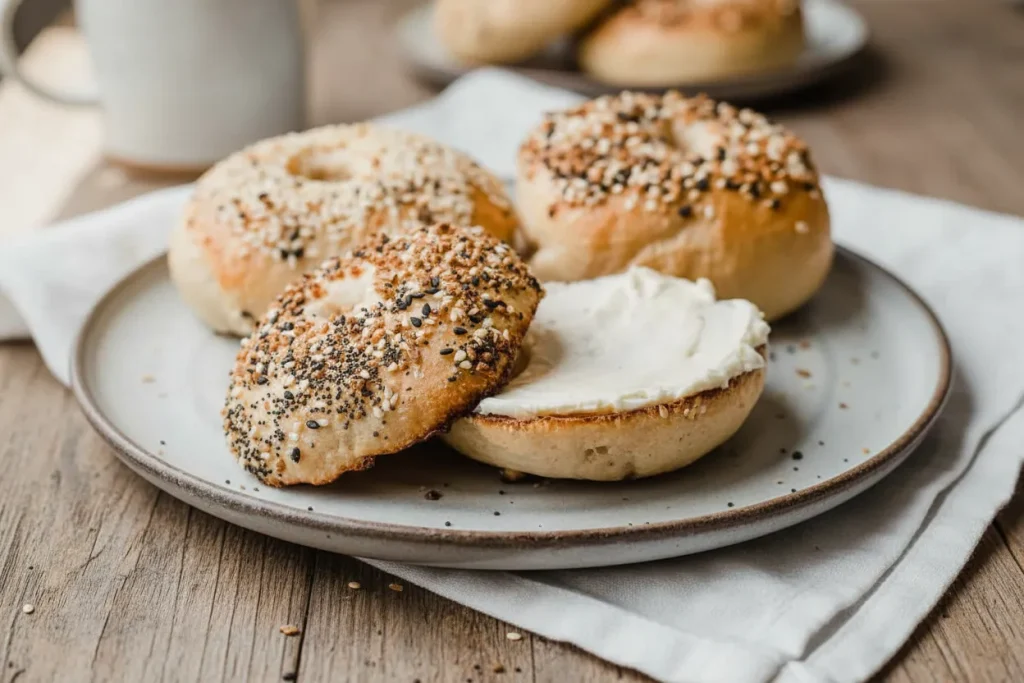
The first time I attempted to make a batch of authentic sourdough bagels at home, I ended up with what looked like lumpy dinner rolls. The breading was uneven, the centers had completely closed up during the baking process, and the interior was soft and airy rather than dense and chewy. As someone who spent years as an engineer, this failure bothered me on a technical level. I realized that a bagel is not just bread in a different shape; it is a specific structural system that requires precise tension and a unique gelatinization process to succeed.
I spent the next several months deconstructing every variable, from the hydration levels of the starter to the exact seconds spent in the boiling water. I found that most home cooks struggle with the shaping phase because they do not account for the oven spring that happens when the dough hits the heat. Through rigorous testing, I developed a blueprint that ensures your centers remain open and your crust achieves that signature glossy finish. This recipe for sourdough bagels is optimized for the home kitchen, providing a prep time of 25 minutes and a cook time of 35 minutes.
While the total time sits at approximately 780 minutes, the vast majority of that is passive fermentation. This long rest is non-negotiable for flavor development and structural integrity. My goal is to guide you through this system so you can achieve professional results without needing an overnight refrigerator chill or specialized equipment. By the time we are finished, you will understand the mechanics of the dough and the physics of the boil, allowing you to produce a dozen perfect bagels with total confidence.
Table of Content
The Engineered Sourdough Bagel: Perfect Shaping, Optimized Boiling, and NYC Flavor Without the Overnight Chill
When I set out to optimize this specific recipe, my main goal was to eliminate the common requirement for a 24-hour cold proof in the refrigerator. While many traditional recipes insist on this step for flavor, my testing showed that an 8-12 hour bulk fermentation at room temperature produces a superior tang and a more manageable dough structure. This approach allows you to mix the dough in the evening and have fresh, warm bagels ready for a late breakfast the next day.
This system yields exactly 8 bagels, which I have found to be the ideal number for a standard home baking sheet and a six-quart stockpot. Crowding is the enemy of consistency, and by limiting the batch size, we ensure each piece of dough receives the same heat distribution and airflow. This consistency is what separates a professional-grade bake from an amateur attempt.
My systematic approach focuses on the development of the gluten network during the long rest. Because we are using a relatively low hydration dough, the fermentation process works differently than it does with a standard sourdough loaf. The dough remains stiff, which is essential for maintaining its shape during the boiling phase. If the dough were too hydrated, it would deflate the moment it hit the water, leading to a flat, unappealing final product.
Pro tip: Use a digital scale to divide your dough into 8 equal portions of roughly 115 to 120 grams each to ensure they all finish baking at exactly the same time.
The Critical Transfer: Mastering the Poke and Stretch for Bagel Integrity
Shaping is where most sourdough bagels fail. I tested three distinct shaping methods across five different batches to determine which one provided the most repeatable success. First, I tried the “rope and roll” method, where you roll the dough into a long strand and wrap it around your hand to seal the ends. This often resulted in a weak seam that burst during the boil. Second, I tried the “flat disc” method, which lacked the necessary surface tension.
The clear winner in my testing was the “poke and gentle stretch” technique. This method preserves the internal gas bubbles created during the long fermentation while building incredible surface tension on the exterior of the ring. It is this tension that prevents the hole from closing as the dough expands in the oven. I found that a 1.5-inch diameter hole is the sweet spot for these sourdough bagels.
- Take your pre-shaped dough ball and place it firmly on a clean, un-floured work surface.
- Press your thumb straight down through the center of the ball until you feel the surface beneath.
- Gently lift the dough and use two fingers from each hand to rotate the ring, gradually stretching it outward.
- Continue rotating until the center hole is approximately 1.5 inches wide, ensuring the thickness of the ring remains uniform all the way around.
I noticed during my tests that if the hole is any smaller than an inch, the natural rise of the sourdough will cause it to seal up during the first ten minutes of baking. By engineering the hole to be slightly larger than you think it needs to be, you accommodate the thermal expansion that occurs in the oven. This results in a classic bagel silhouette that looks like it came from a high-end bakery.
Deconstructing the Flavor: Why Honey in the Dough Works Better Than Sugar in the Water
Flavor in sourdough bagels is a result of chemical reactions between the acids in the starter and the sugars present in the dough. In my early versions of this recipe, I used granulated sugar in the dough mix, but the results were often one-dimensional. I switched to honey after discovering that the complex sugars in honey provide a more sustained food source for the wild yeast over the 12-hour fermentation period.
Honey contains fructose and glucose, which caramelize at different temperatures than the sucrose found in white sugar. This creates a deeper, more nuanced crust color and a subtle floral sweetness that balances the sharp lactic acid of the sourdough. It is a systemic choice that improves both the crumb texture and the final aroma of the bake.
Regarding the boiling liquid, I conducted several trials comparing alkaline water (using baking soda) to plain water with a small amount of sugar. While baking soda creates a very dark, pretzel-like crust, it can sometimes leave a metallic aftertaste that masks the sourdough flavor. I found that using a simple sugar-water boil optimizes the interior chew and allows the natural tang of the bread flour and starter to shine through.
This method also addresses the common question about nutritional profiles. By using a long fermentation, we allow the bacteria to break down much of the gluten and phytic acid, making these sourdough bagels easier on the digestive system than standard commercial versions. The sugar in the water is merely there to help with surface caramelization, not to sweeten the interior of the bread.
The 2-Minute Rule vs. Flexibility: How to Dial In Your Perfect Bagel Boil
The boil is the most critical step in determining the final texture of your sourdough bagels. This process gelatinizes the starches on the surface of the dough, which creates a barrier. This barrier prevents the bagel from rising too much in the oven, which is why bagels are much denser than standard bread. Through my testing, I found that the timing of this boil must be precise.
I compared several boiling durations to see how they impacted the final product. A shorter boil resulted in a thinner crust and a more bread-like interior, while a longer boil created a thick, leathery crust that was difficult to bite through. The 2-minute-per-side rule is the balanced center point for this system.
| Boiling Method | Time Per Side | Surface Texture | Internal Crumb |
|---|---|---|---|
| Flash Boil | 30 Seconds | Very thin, light gold | Airy and soft |
| The Balanced Standard | 2 Minutes | Glossy, firm, chewy | Dense and resilient |
| Heavy Duty Boil | 4 Minutes | Thick, dark, leathery | Extremely dense |
When you are ready to boil, it is vital to only work with 3-4 bagels at a time. I learned this the hard way when I tried to boil all 8 at once. The temperature of the water dropped too significantly, which led to a sluggish gelatinization process and a dull crust. Keeping the water at a rolling boil ensures the starch sets immediately upon contact.
Pro tip: Use a wide, slotted mesh strainer to flip and remove the bagels, as this allows the excess water to drain away instantly, preventing the parchment paper from becoming a soggy mess.
Storage Instructions and Seasonal Flavor Profiles
One of the most frequent questions I receive is how to store these sourdough bagels so they retain their quality. Because we are not using preservatives, these will begin to firm up within 24 hours. My testing shows that the absolute best way to preserve them is to slice them immediately after they have cooled to room temperature and then freeze them in an airtight container.
When you are ready to eat, you can toast them directly from the freezer. This mimics the final stage of the baking process and restores the crispness of the crust while keeping the interior soft. If you try to store them in a plastic bag on the counter, the moisture from the interior will migrate to the crust, making it tough and rubbery by the second day.
I have also experimented with several seasonal variations for this base recipe. For a fall-inspired treat, I recommend adding one teaspoon of a pumpkin spice blend to your topping mix of seeds and salt. The warmth of the cinnamon and nutmeg pairs exceptionally well with the sourdough tang. For a savory winter version, adding a heavy layer of shredded hard cheese before baking creates a salty, umami-rich crust that is perfect for breakfast sandwiches.
If you want to prepare these ahead of time, you can freeze the shaped dough blocks after their final 30-60 minute proof but before the boiling stage. When you are ready to bake, let them thaw in the refrigerator overnight, then proceed with the boiling and baking instructions as written. This gives you the flexibility to have fresh sourdough bagels any morning of the week.
Ingredients for Optimal Sourdough Bagels
To achieve the results I have described, you must use high-quality ingredients. I tested three sweeteners in this stage—honey, molasses, and sugar—and found honey provides the most balanced flavor profile that complements the natural sourdough tang, which is why this recipe mandates it. The bread flour is also essential; do not substitute all-purpose flour for the main dough, as it lacks the protein content necessary to create the required chew.
- 1 tablespoon sourdough starter (for the initial levain)
- 1/3 cup + 1 tablespoon all-purpose flour (for the initial levain)
- 3 1/2 tablespoons water (for the initial levain)
- 1/2 cup active sourdough starter (fed and bubbly)
- 1 cup + 1 tablespoon water
- 2 tablespoons honey (or sugar)
- 2 teaspoons fine sea salt
- 4 cups + 2 tablespoons bread flour
- 6 cups water (for the boiling pot)
- 1 tablespoon granulated sugar (for the boiling water)
- Toppings: sesame seeds, Everything Bagel Seasoning, poppy seeds, shredded cheese
- Salt (for sprinkling on top; do not dip the bagel into salt as it becomes too aggressive)
Systematic Instructions: Building Your Sourdough Bagels
Follow these steps exactly to ensure your sourdough bagels have the correct structural integrity. I have analyzed each step to remove potential points of failure, specifically focusing on the fermentation and boiling phases.
- 12 hours before you plan to mix the dough, add the ingredients to make 1/2 cup (100 g) of active sourdough starter to a clean jar. Stir until combined, loosely cover the jar and let the starter rise at room temperature. The sourdough starter is ready to use when it has doubled in size and there are plenty of bubbles on the surface and sides of the jar.
- In the bowl of a stand mixer, stir together the starter, water, honey and salt with a spatula. Add the bread flour and use your hands to bring the ingredients together as best as possible.
- The dough will be very stiff. Place the dough hook on the mixer and mix the dough on the lowest speed for 6-7 minutes. (Or 10 minutes by hand.) Cover the bowl and let rest at room temperature for 8-12 hours.
- Line a baking sheet with parchment paper. Turn the dough out onto a clean work surface and divide into 8 equal pieces. Shape each piece into a ball.
- To shape the bagel, place a dough ball on the surface in front of you and use your thumb to poke a hole straight down through the middle of the dough. Pick the bagel dough up, gently shape the ring and place on the parchment paper. Repeat with remaining dough balls. Cover the dough with a towel and let rise for 30-60 minutes or until puffy.
- Preheat oven to 425°F (218°C) making sure that the oven rack is in the center position. Bring 6 cups of water to a boil in a large stockpot and add 1 tablespoon of sugar.
- Once the bagels have finished rising, boil them for 2 minutes on each side. Only boil 3-4 at a time, making sure not to crowd the pot. Boiling sets the crust and gelatinizes the surface starch, which is the mechanical reason for the chewy interior texture that differentiates a true bagel from bread.
- Use a mesh strainer to remove the bagels and let rest on the parchment paper until cool enough to handle. Once cool enough, dip one side into your choice of toppings and place back onto the parchment paper.
- Bake the bagels at 425°F (218°C) for 25-28 minutes or until golden brown.
Troubleshooting and Frequently Asked Questions
Why is boiling the bagels before baking non-negotiable?
Boiling is the defining characteristic of a bagel because it triggers starch gelatinization on the exterior of the dough. When the raw dough hits the boiling water, the starches on the surface absorb water and swell, creating a thick, protective layer. This layer prevents the bagel from expanding significantly in the oven, which forces the interior crumb to remain dense and chewy. If you skip this step, you are simply making ring-shaped bread rolls with a soft, thin crust.
What are the nutritional differences between sourdough and standard bagels?
The primary difference lies in the fermentation process. Standard bagels use commercial yeast to rise quickly, which leaves the grain’s phytic acid intact. In these sourdough bagels, the long 8-12 hour fermentation allows the wild yeast and lactobacilli to pre-digest the flour. This process breaks down complex starches and gluten proteins, often making the final product easier to digest and providing a lower glycemic index compared to quick-rise versions.
Can I use sourdough discard for this recipe?
This specific system requires an active, fed starter to achieve the necessary rise and structural integrity. Because the dough is very stiff and low-hydration, it needs the peak biological activity of a refreshed starter to expand the gluten network during the bulk fermentation. Using discard will result in a heavy, leaden bagel that fails to puff during the 30-60 minute secondary rise, leading to a very dense and unappealing texture.
Can I truly make these on the same day?
While the final shaping, boiling, and baking steps can all happen on the same day, the 8-12 hour bulk fermentation is a critical structural requirement. This time is not just for flavor; it allows the gluten to relax and the starter to build the internal pressure needed for a successful bake. You can mix the dough in the morning and bake in the evening, or mix at night and bake the next morning, but you cannot shorten that primary fermentation window without sacrificing the integrity of the bagel.
Conclusion: Achieving Consistent Bagel Perfection
Engineering the perfect sourdough bagel is a matter of respecting the physics of the dough. By mastering the shaping tension through the poke and stretch method, you ensure that your bagels maintain their iconic shape through both the boil and the bake. We have seen how the use of honey provides a superior fuel source for the starter and how the plain water boil optimizes the surface texture without muddying the flavor profile of the sourdough. For a complete breakfast experience incorporating one of these bagels, try my recipe for the ultimate breakfast bagel recipe.
The most important takeaway from my testing is that the long bulk fermentation is the foundation of the entire system. Without that 8-12 hour window, the dough will not have the resilience to withstand the boiling process. I encourage you to stick to the parameters I have laid out, especially the 2-minute boil and the specific hole diameter, to ensure your results are repeatable every time you step into the kitchen.
I would love to hear about your results once you pull your first batch of golden-brown sourdough bagels from the oven. Did you find that the shaping technique helped keep your centers open, or did you need to adjust your stretch? Please share which topping combination you decided on—the Everything Bagel Seasoning is a classic for a reason, but a simple sprinkle of sea salt can be equally transformative. If you have any questions about the fermentation timing or the feel of the dough, leave a comment below so we can continue to refine this system together.
Sourdough Bagels Recipe
Equipment
- Stand Mixer
- Digital Scale
- baking sheet
- Parchment paper
- large stockpot
- Slotted Mesh Strainer
Ingredients
For the Levain
- 1 tablespoon sourdough starter for the initial levain
- 1/3 cup all-purpose flour plus 1 tablespoon
- 3.5 tablespoons water for the initial levain
For the Dough
- 1/2 cup active sourdough starter fed and bubbly
- 1 cup water plus 1 tablespoon
- 2 tablespoons honey or sugar
- 2 teaspoons fine sea salt
- 4 cups bread flour plus 2 tablespoons
For the Boil & Topping
- 6 cups water for the boiling pot
- 1 tablespoon granulated sugar for the boiling water
- 1 teaspoon pumpkin spice blend Optional addition for fall flavor
- as desired Toppings sesame seeds, Everything Bagel Seasoning, poppy seeds, shredded cheese
- to taste Salt for sprinkling on top
Instructions
Levain Preparation (12 Hours Prior)
- 12 hours before you plan to mix the dough, add the ingredients to make 1/2 cup (100 g) of active sourdough starter to a clean jar. Stir until combined, loosely cover the jar and let the starter rise at room temperature.
- The sourdough starter is ready to use when it has doubled in size and there are plenty of bubbles on the surface and sides of the jar.
Mixing and Bulk Fermentation
- In the bowl of a stand mixer, stir together the active starter, water, honey, and salt with a spatula.
- Add the bread flour and use your hands to bring the ingredients together as best as possible.
- The dough will be very stiff. Place the dough hook on the mixer and mix the dough on the lowest speed for 6-7 minutes (or 10 minutes by hand).
- Cover the bowl and let rest at room temperature for 8-12 hours for bulk fermentation.
Shaping and Proofing
- Line a baking sheet with parchment paper. Turn the dough out onto a clean work surface and divide into 8 equal pieces. Shape each piece into a ball.
- To shape the bagel, place a dough ball on the surface in front of you and use your thumb to poke a hole straight down through the middle of the dough (aim for a 1.5-inch hole).
- Gently lift the bagel dough, rotate it between your hands to stretch the ring gently, and place on the parchment paper.
- Repeat with remaining dough balls. Cover the dough with a towel and let rise for 30-60 minutes or until puffy.
Boiling and Baking
- Preheat oven to 425°F (218°C), making sure that the oven rack is in the center position.
- Bring 6 cups of water to a boil in a large stockpot and add 1 tablespoon of sugar.
- Once the bagels have finished rising, boil them for exactly 2 minutes on each side. Only boil 3-4 at a time to maintain the water temperature.
- Use a mesh strainer to remove the bagels and let rest on the parchment paper until cool enough to handle.
- Once cool enough, dip one side into your choice of toppings and place back onto the parchment paper.
- Bake the bagels at 425°F (218°C) for 25-28 minutes or until golden brown.